If you have ever wondered why some garments come out perfect every single time — while others miss the mark completely — the answer usually comes down to one thing: tech packs and specs. In made-to-order production especially, a clear and detailed tech pack is not optional. It is the foundation of everything.
Without it, factories guess. And when factories guess, brands pay the price in errors, delays, and costly rework.
What Exactly Is a Tech Pack?
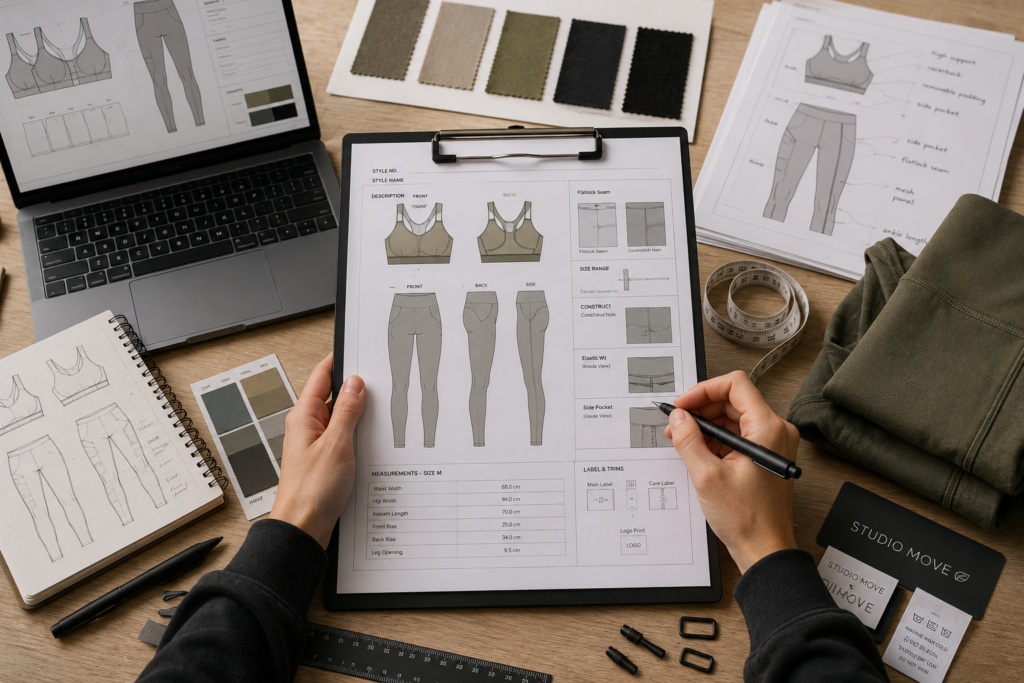
A tech pack — short for technical package — is a detailed document that tells a factory exactly how to build your garment. Think of it as a blueprint. Just as a construction crew cannot build a house from a rough sketch, a factory cannot produce a garment accurately from just a mood board or a photo reference.
A well-prepared tech pack covers every single detail. It removes guesswork and creates a shared language between your design team and the production floor. This is especially critical when working with a made-to-order apparel manufacturer, where each order is produced fresh and must match exact specifications every time.
What Goes Inside a Tech Pack?
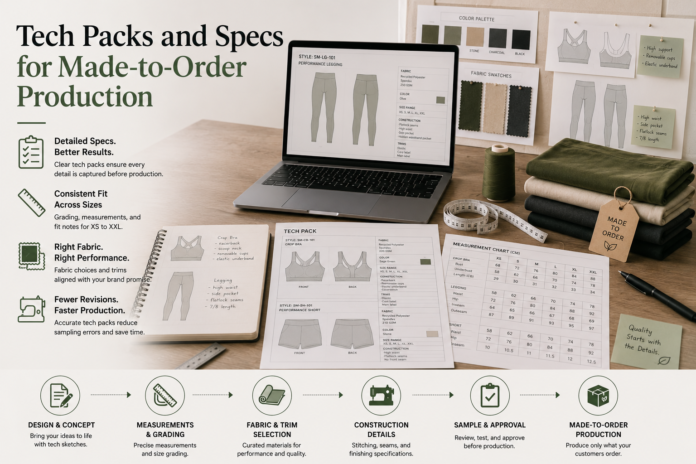
A complete tech pack contains several key components. Here is what every solid tech pack should include:
- Flat technical sketches: Front, back, and side views of the garment with construction notes. These give the factory a clear visual reference. They also highlight seam placements, pocket positions, zipper placement, and any other design details that words alone cannot capture.
- Measurement specifications and grading: Exact measurements for every size in the range, along with grading increments between sizes. This section connects directly with proper fit development and size grading, which ensures the garment fits correctly across all sizes — not just the sample size.
Additionally, a complete tech pack includes fabric details, trim lists, stitching types, seam allowances, label placement diagrams, finishing instructions, and quality checkpoints. In short, nothing is left to interpretation.
Why Tech Packs Matter More in Made-to-Order
In bulk production, factories produce large quantities and have room to adjust minor inconsistencies across thousands of units. Made-to-order production works differently. Because each batch is produced only after an order arrives, there is much less margin for error.
Furthermore, made-to-order relies heavily on speed. Orders come in and production begins quickly. Therefore, the factory must have all the information upfront. A missing measurement or an unclear fabric spec can stall the entire order.
This is why tech pack development is considered the first and most important step before any garment goes into production. It sets the standard for every unit that follows.
How Tech Packs Connect to the Broader Production Process
A tech pack does not exist in isolation. Instead, it feeds directly into every downstream production step. Once the tech pack is finalized, the factory moves to sampling and pattern making. The pattern maker uses the tech pack specifications to create the first physical version of the garment.
After sampling, the production team references the same tech pack during cutting, sewing, and finishing. This means every department works from the same document — which dramatically reduces miscommunication between teams.
Moreover, tech packs play a key role in CMT clothing manufacturing arrangements, where the factory handles cutting, making, and trimming based on materials and specs provided by the brand. In this model, the tech pack is essentially the entire instruction set the factory works from.
Specs That Brands Often Overlook
Many brands focus on fabric and style details but forget some critical specs. Here are the ones most commonly missed:
- Seam allowances and stitch density: These directly affect how the garment feels, holds together under stress, and passes quality control. Forgetting to specify them can result in seams that fray or unravel after a few washes.
- Label placement and branding details: Where exactly the woven label sits, the hang tag position, and care label requirements are all part of a complete spec sheet. Brands that want contract clothing manufacturing should always include full branding specs inside the tech pack to avoid back-and-forth revisions.
Tech Packs and Sustainable Production
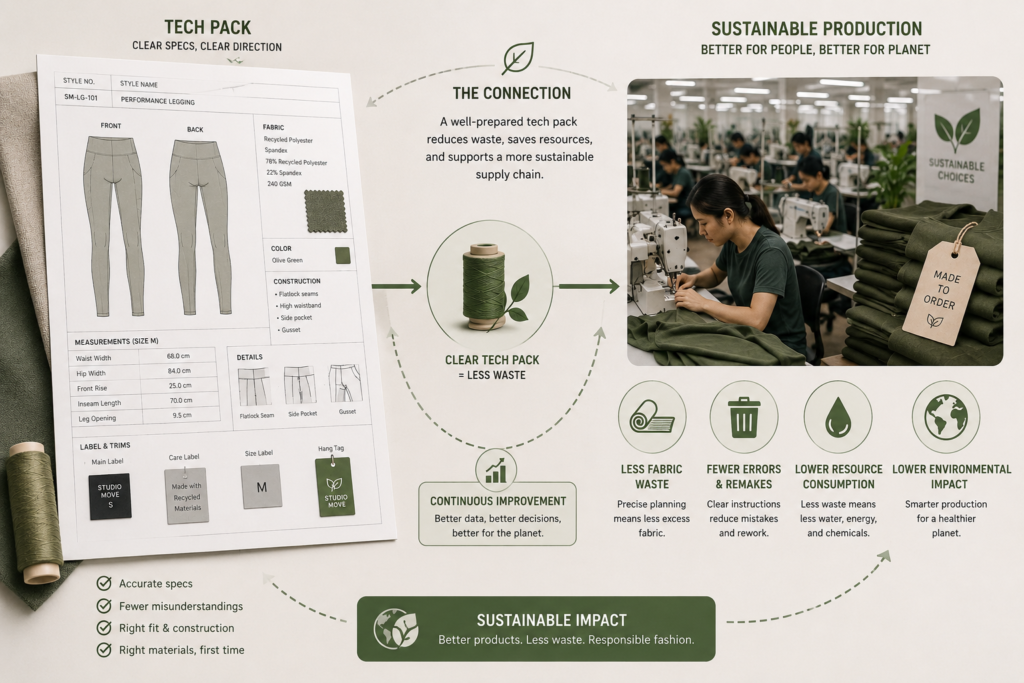
There is also an environmental benefit to thorough tech packs. When specifications are clear from the start, factories waste far less fabric during sampling and production. Fewer errors mean fewer remakes. Fewer remakes mean less material waste.
This aligns naturally with sustainable apparel manufacturing, where reducing waste at every stage of production is a core goal. In that sense, a well-written tech pack is also a sustainability tool.
Final Thoughts
Tech packs and specs are not just paperwork. They are the single most powerful tool a brand has to protect its quality, speed up production, and reduce costly mistakes. In made-to-order production especially, they make the difference between a garment that lands exactly right and one that goes back to the factory floor.
Invest in your tech packs first. Everything else in production follows from them.
FAQs
What are tech packs and specs in apparel manufacturing?
Tech packs are detailed production documents that contain all specifications a factory needs to produce a garment — including measurements, materials, stitching details, trims, and finishing instructions.
Why are tech packs especially important for made-to-order production?
In made-to-order production, garments are manufactured immediately after an order arrives. There is no room to adjust errors across large quantities, so precise specs from the start are essential.
Can a brand submit rough sketches instead of a full tech pack?
Rough sketches are a starting point, but they are not enough for accurate production. A professional tech pack translates those sketches into actionable manufacturing instructions.
What happens if a tech pack is incomplete?
Incomplete tech packs lead to factory guesswork, production errors, sampling delays, and costly rework — all of which increase lead times and overall costs.
How do tech packs support size consistency across a range?
Tech packs include grading specifications that define exact measurement differences between each size. This ensures consistency in fit across the full size range, not just the sample size.