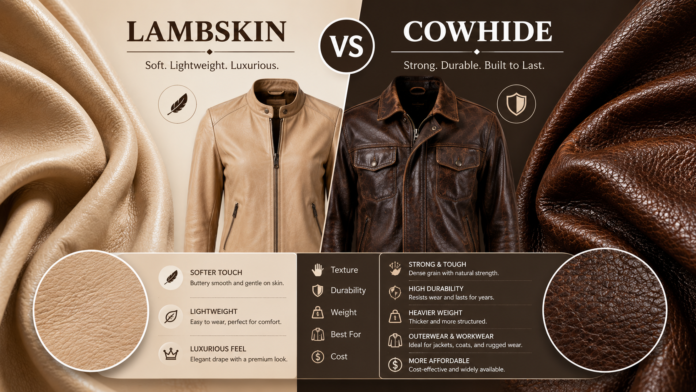
When it comes to choosing a leather garment, the Lambskin vs Cowhide Leather decision is one of the first and most important calls you’ll make. These two hides sit at almost opposite ends of the leather spectrum one prized for its softness and drape, the other for its raw strength and durability and picking the wrong one can mean the difference between a garment that lasts for decades and one that wears out within a couple of years.
Both leathers have earned their place in apparel for good reason, but they’re built for very different jobs, and neither one is a straightforward upgrade over the other. In this guide, we’ll break down how lambskin and cowhide actually compare across durability, comfort, and appearance, where each one performs best, and how to decide which is the right fit for your next garment or apparel program.
What Is Lambskin Leather?
Lambskin comes from young sheep and is known for being the softest, lightest leather commonly used in apparel. It typically measures only 0.5 to 0.8mm thick, with a fine, tightly packed fiber structure that gives it an almost fabric-like drape and an exceptionally smooth feel against the skin.
Because it’s so thin and supple, lambskin requires little to no break-in period it feels comfortable and flexible from the very first wear. This is exactly why it’s the material of choice for fitted, fashion-forward jackets and premium outerwear, where movement and comfort matter more than raw toughness.
Lambskin’s fine grain also takes dye and finishing exceptionally well, which is part of why it’s so often used for richly colored or heavily styled leather pieces. The trade-off for all that softness is that lambskin simply can’t match the structural strength of a heavier hide, which matters most once durability becomes the priority.
What Is Cowhide Leather?
Cowhide is the most widely used leather in the world and sits firmly on the other end of the spectrum from lambskin. It’s thick and dense, typically ranging from 1.0 to 1.4mm, with a tightly interlocked fiber structure that gives it outstanding resistance to abrasion, tearing, and everyday wear and tear.Unlike lambskin, cowhide starts out noticeably stiffer and needs time to soften and mold to the body. That trade-off is part of the appeal for people who want a garment built to last, since cowhide develops a bold, natural patina and only grows more characterful with years of regular use.
Because cattle hides are also significantly larger than sheep hides, cowhide tends to offer a better yield per animal, which is one of the reasons it’s generally more affordable and widely available than lambskin at a comparable quality level.
Lambskin vs Cowhide Leather: Durability Compared
Durability is usually the deciding factor in the Lambskin vs Cowhide Leather comparison. Cowhide’s thickness and dense fiber structure make it dramatically more resistant to abrasion, punctures, and everyday rough handling, which is why it’s the standard choice for work gloves, heavy-duty jackets, and apparel that needs to survive years of hard use.Lambskin, by contrast, is far more delicate. Its thin, loosely woven structure makes it prone to stretching, scuffing, and tearing under repeated stress, so it’s better suited to lighter, more controlled use rather than industrial or high-abrasion environments.
A lambskin jacket worn occasionally can still last for years, but the same hide subjected to daily rough handling would wear out far faster than cowhide in the same role.Neither leather is “worse” here they’re simply built for different demands, and matching the hide to the actual use case matters more than chasing the “stronger” option by default.
Comfort, Feel, and Appearance
Where cowhide loses ground to lambskin is comfort. Lambskin’s fine fiber structure gives it a soft, almost buttery feel right out of the gate, along with a natural drape that makes it popular for fitted jackets, gloves, and fashion pieces where how the garment moves matters as much as how it protects.Cowhide feels firmer and more structured from the start, and while it eventually softens with wear, it never quite matches lambskin’s initial suppleness. In exchange, cowhide offers a bolder, more rugged look and develops a richer patina over time, which many people specifically want in a long-term leather garment.
Lambskin vs Cowhide Leather: Key Differences at a Glance
Here’s a quick side-by-side summary of how these two leathers compare on the qualities that matter most in apparel:
- Thickness :Lambskin: 0.5-0.8mm; Cowhide: 1.0-1.4mm
- Durability :Cowhide is significantly more abrasion- and tear-resistant
- Comfort :Lambskin is softer and needs no break-in period
- Best for :Lambskin suits fashion-forward jackets; cowhide suits rugged, long-term wear
- Patina :Both develop character over time, though cowhide’s is bolder and more pronounced
- Price :Lambskin is typically more expensive per hide due to lower yield per animal
Choosing the Right Leather for Industrial and Protective Apparel
For heavy-duty protective apparel, the Lambskin vs Cowhide Leather decision usually isn’t much of a debate cowhide’s density and abrasion resistance make it the default choice across general workwear collections built for daily industrial use. Cowhide gloves in particular are often tested to standards like EN 388, which rates protective gloves on abrasion, cut, tear, and puncture resistance, giving employers a concrete way to compare glove performance rather than relying on guesswork.
In higher-risk environments like oil and gas, where components are often layered with flame-resistant materials, cowhide’s toughness makes it a common material within oil and gas workwear setups. For outdoor roles needing added moisture protection, leather is also sometimes paired with weatherproof materials found in waterproof workwear collections.
Choosing the Right Leather for Corporate and Branded Apparel
For corporate or client-facing apparel, priorities shift toward comfort and appearance, which is where lambskin tends to have an edge for premium accents and outerwear used in corporate uniforms built around a refined, polished image. That said, cowhide remains a practical choice where uniforms also need to withstand heavy daily handling.Because different roles have very different demands, from rugged industrial durability to soft, presentable finishes, many businesses work with industry-specific work wear suppliers who can match the right hide to the specific requirements of a trade or brand.
Which Leather Should You Choose?
There’s no single right answer in the Lambskin vs Cowhide Leather debate the better choice depends entirely on how the garment will be used. If long-term durability and resistance to rough handling are the priority, cowhide is the clear choice.If softness, drape, and immediate comfort matter more than raw toughness, lambskin is generally the better fit, particularly for fashion pieces or apparel that won’t face heavy daily wear. Budget and intended lifespan are also worth weighing here a lambskin jacket bought for occasional wear can offer excellent value, while the same hide used in a daily work environment would likely need replacing far sooner than cowhide.
For businesses sourcing leather at scale, working with a manufacturer that can source and construct either hide consistently makes it far easier to get predictable results across an entire order, particularly when different garments in the same product line call for different hides.
The Role of Custom Manufacturing in Leather Apparel
As demand grows for well-made leather apparel, more businesses are turning to custom manufacturers who can match the right hide to their specific durability, comfort, and branding requirements, rather than relying on generic off-the-shelf options.At ECO-JERSEY, we manufacture and supply custom apparel including cowhide and lambskin-based workwear and accessories to businesses around the world. Whether a company needs rugged cowhide components for industrial protective gear or refined lambskin accents for premium corporate pieces, our team works directly with clients to produce apparel that matches their exact specifications.
Conclusion
Understanding the differences in the Lambskin vs Cowhide Leather comparison makes it much easier to choose the right garment or supplier for the job. Cowhide offers unmatched durability and a bold, rugged character that develops over years of use, while lambskin offers a soft, refined feel that suits fashion-forward and premium apparel. Neither hide is objectively better the right choice comes down to how the garment will actually be worn.
For businesses looking to source reliable leather apparel whether for protective workwear or branded uniforms working with an experienced manufacturer like ECO-JERSEY ensures every garment is built with the right hide for the job.
FAQs
What is the difference between lambskin and cowhide leather?
Lambskin is thinner, softer, and lighter, typically 0.5 to 0.8mm thick, while cowhide is thicker and more durable, typically 1.0 to 1.4mm thick, making it far more resistant to abrasion and everyday wear.
Is lambskin or cowhide better for a leather jacket?
It depends on the priority: lambskin offers superior softness and comfort with no break-in period, while cowhide offers significantly greater durability for jackets that need to withstand years of regular use.
Which lasts longer, lambskin or cowhide leather?
Cowhide generally lasts longer than lambskin because its thicker, denser fiber structure resists abrasion, tearing, and stretching far better under regular use.
Is lambskin leather more expensive than cowhide?
Yes, lambskin is typically more expensive per hide than cowhide, largely because sheep produce smaller hides with a lower usable yield compared to cattle.
Is cowhide good for work gloves and protective apparel?
Yes, cowhide is a common choice for work gloves and protective apparel because of its natural resistance to abrasion and punctures, and cowhide gloves are often tested against standards like EN 388 for mechanical protection