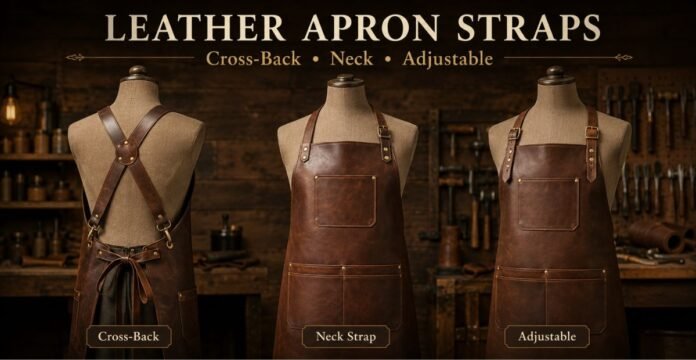
Leather aprons provide a barrier between clothing and the work environment and keep clothing safe. The leather is only one part of a comfortable leather apron. The system for strapping the apron is equally important. A well thought out strapping system enables even weight distribution and makes a significant difference in the comfort of everyday use of the apron. A poorly designed strapping system can spoil the comfort of an expensive leather apron. There are several different options in terms of buckling, hanging, sliding and adjusting.
Why Leather Apron Straps Matter
The main job of leather apron straps is to keep the apron secure without limiting normal body movement. Straps also carry part or all of the apron’s weight, so their position affects comfort. This becomes more important with thick, full-length aprons used for welding, metalwork, woodworking, and other demanding jobs. Buyers comparing different designs can first look at a wider range of leather aprons to see how apron size, coverage, pockets, and strap placement work together. Good straps should hold the apron close enough for protection while still allowing the worker to bend, reach, turn, and walk naturally.
Neck Strap Systems for Simple Apron Designs
The neck strap system is a simple way to incorporate a leather strap apron. One strap crosses over the back of the neck. Waist straps support the lower apron portion against the body. This design is easy to understand and quick to use. There is no need for an intricate harness system. Lightweight aprons designed for short-term use work well with the neck strap system. Heavy leather aprons can create neck and back discomfort. For neck strap aprons, softer, wider neck straps can help. These straps can also be adjusted to further relieve neck discomfort.
Cross-Back Leather Apron Straps
Cross-back leather apron straps run over the shoulders and cross across the wearer’s back instead of hanging directly from the neck. This design spreads apron weight across a wider area of the upper body. It is often useful for heavier aprons or jobs where the wearer keeps the apron on for many hours. A bib leather apron can use this type of strap arrangement to combine upper-body coverage with a more balanced fit. Cross-back systems may take slightly longer to adjust than a basic neck strap, but once fitted correctly, they can reduce neck pressure and help keep the apron centered during active work.
Adjustable Strap Systems for Different Body Sizes
Custom leather apron straps help one design accommodate differing body types. A standard leather apron strap design can be easily customized using buckles, adjustment sliders, snaps, even holes, D-rings, webbing and other associated hardware. The goal is not to simply change the length of the leather apron straps. The correct adjustments control the placement of the leather apron bib and the waist section as well as the fit of the leather apron close to the body. This type of adjustment system is especially useful when employees are required to wear varying layers of clothing during the different seasons of the year.
Important Features to Check in Leather Apron Straps
When comparing leather apron straps, buyers should look beyond appearance and check how the complete system will perform during actual work. Important points include:
- Strap width: Wider straps can spread pressure over a larger area.
- Adjustability: The wearer should be able to change the fit without difficulty.
- Attachment points: Rivets and stitching should hold the straps securely to the apron.
- Hardware quality: Buckles, D-rings, sliders, and snaps should operate smoothly.
- Edge finish: Smooth strap edges can reduce rubbing against clothing and skin.
- Strap length: There should be enough adjustment for different body sizes and clothing layers.
- Weight distribution: Heavy aprons should not place unnecessary pressure on one small area.
- Movement: The system should allow reaching, bending, turning, and walking.
- Replacement: Removable straps can be easier to repair or replace after long-term use.
Leather Straps Versus Webbing Straps
Not all leather apron straps are composed solely of leather. When designing leather aprons, many people utilize leather straps since leather straps enhance the appearance of the apron and lend well to the construction of the body material. Webbing straps are often easier to adjust than leather ones, and also are often lighter. Some aprons utilize leather attachment points in conjunction with textile webbing and metal hardware. Neither leather attachment points nor textile webbing is better than the other in each situation.
Strap Design for Heavy Full-Grain Aprons
Heavy leather changes the demands placed on leather apron straps because the strap system must support more weight. A full-grain apron can offer a substantial structure, but its harness should be designed to keep that weight balanced across the body. Cross-back systems are often worth considering for this reason. Buyers looking at full-grain leather aprons should examine the strap width, connection points, hardware, and adjustment range together rather than judging the leather alone. Strong leather does not compensate for weak rivets, poor stitching, narrow straps, or hardware that slips during use.
How Strap Width Affects Comfort
The width of your leather apron straps can be noticeable when working for extended periods. More narrow straps torch a small area, while wider straps spread the pressure across your shoulder, back and/or neck. That said, the best fit is typically somewhere in between the extremes. Very wide and/or stiff straps may cut down your range of motion due to poor fit. The best width is dependent on many factors such as the weight of the apron, the material of your straps, the thickness of the leather and where the strap is located on your body.
Choosing Leather Apron Straps for Different Trades
The best leather apron depending on how you’ll use them, and here are a few examples. A chef, a barber, a crafts/wood worker, a blacksmith and a welder can have different needs for the same apron. A lightweight waist or bib apron can work well with simple a system that allows for easy adjustability. Heavier workshop aprons can benefit from cross-back leather apron straps. Buyers should also consider the weight in the pockets since that can increase the overall load on the straps. The balance of the system, protection, movement, ease of adjustment and time you’ll spend working are all important factors to consider.
Strap Hardware, Stitching, and Attachment Points
The best leather apron straps can include multiple parts. The straps themselves can only go so far. There are many stress points that come with the design of aprons. These points include snap buckles, D-rings, rivets, slider snaps, and stitching. The hardware should be strong and attached correctly. The stitching should be neat and hold the rivets firmly against the apron. The hardware should not come in contact with the user’s body. The straps should not be comfortable in the wrong places. The systems should be evaluated holistically.
Conclusion
Comfortable leather apron straps improve the flexibility and ease of use of a leather apron. Aprons with neck straps are not the most suitable for heftier aprons, and cross backs distribute weight across the shoulders. Greater flexibility is offered by systems with adjustable straps. The buyers should look at the hardware, stitching, strap width, material, attachment points, and weight distribution of the straps. The best leather apron straps incorporate all of these features and are not simply the strongest. The purpose of leather apron straps is to securely hold the apron in place in order to provide the freedom to the wearer to move around comfortably.
FAQs
Are cross-back leather apron straps better than neck straps?
Cross-back leather apron straps can be more comfortable on heavy aprons because they spread weight across the shoulders instead of placing most of it around the neck. Neck straps can still be practical for lighter aprons and shorter working periods.
How should leather apron straps fit?
Leather apron straps should hold the apron securely without pulling tightly against the neck, shoulders, or waist. The bib should cover the intended area while still allowing normal bending, reaching, and turning.
Can leather apron straps be adjustable?
Yes. Adjustable leather apron straps may use buckles, holes, sliders, D-rings, snaps, or webbing components. Adjustment helps the same apron accommodate different body sizes and clothing layers.