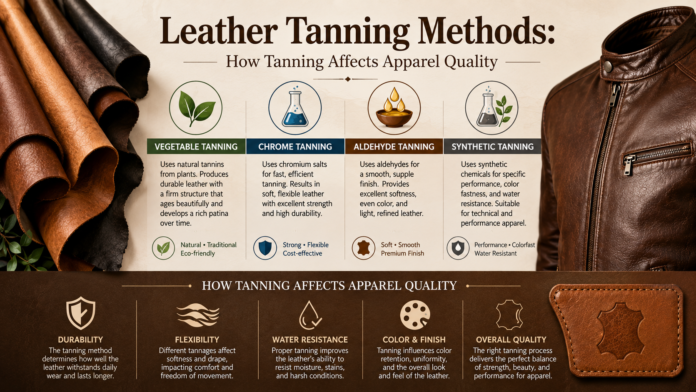
Long before a hide becomes a jacket, apron, or pair of gloves, it goes through tanning the process that turns raw animal skin into a stable, usable material. Understanding leather tanning methods matters more than most buyers realize, because the tanning process determines almost everything about how a finished garment will feel, perform, and age over time.
There are two dominant tanning methods used in apparel production today, along with a hybrid approach that borrows from both, and each leaves a distinct fingerprint on the finished material. In this guide, we’ll break down how each method actually works, how they compare in durability and appearance, and why the tanning process behind a garment matters just as much as the leather grade itself.
What Is Leather Tanning?
Tanning is the chemical process that stabilizes raw animal hide, preventing it from decaying and transforming it into the durable, flexible material we recognize as leather. Without tanning, hide would break down within days; with it, a well-made leather garment can last for decades, which is exactly why the method used matters so much to anyone buying or manufacturing leather apparel.
The tanning process works by binding stabilizing compounds either natural tannins or mineral salts to the collagen fibers within the hide. Which compound is used, and how long the process takes, is what separates these two core approaches from one another, and it’s also what ultimately shapes the character of the finished apparel, from its initial feel to how it looks after years of wear.
Vegetable Tanning: The Traditional Method
Vegetable tanning is the oldest tanning approach still used in apparel today, using natural tannins extracted from tree bark, leaves, and other plant materials to stabilize the hide. It’s a slow process, often taking several weeks to a couple of months, since the tannins need time to fully penetrate and bond with the hide’s fibers.
The result is leather with a firm, structured feel that develops a rich, deepening patina as it’s exposed to oils, sunlight, and handling over time. Because of its strength and natural resistance to wear, vegetable-tanned leather is often chosen for products meant to be used daily and kept for years, though it typically comes at a higher cost due to the time and labor involved.
Chrome Tanning: The Modern Standard
Chrome tanning is by far the most widely used of all leather tanning methods, accounting for roughly 80 to 90 percent of leather produced worldwide. It uses chromium III sulfate, a stable and safe compound, to stabilize the hide in a matter of hours or days rather than weeks, which is why chrome-tanned leather dominates large-scale apparel manufacturing.
The process produces leather that is soft, pliable, and consistent in color right from the tannery, with better initial water resistance than vegetable-tanned leather. This softness comes at the expense of some long-term character, since chrome-tanned leather doesn’t develop the same deep, natural patina as its vegetable-tanned counterpart, and it tends to age in a more uniform way rather than gaining pronounced markings from years of wear.
Combination Tanning: A Blend of Both Approaches
Combination tanning, sometimes called “combo tan,” uses both vegetable tannins and chromium salts in sequence to try to capture the strengths of each leather tanning method. The goal is leather that holds some of vegetable tanning’s structure and aging character while gaining chrome tanning’s flexibility and faster production time.
This approach has become increasingly popular for apparel that needs a balance of durability and comfort without the full cost and lead time of pure vegetable tanning, making it a practical middle-ground option for manufacturers producing at scale. It’s often chosen for garments that need to feel comfortable relatively quickly while still holding up to regular, sustained use.
Safety and Regulation in Chrome Tanning
One point of confusion around chrome tanning is safety. The chromium III compound used in tanning is stable and considered safe it’s even found in dietary supplements but under certain conditions, such as high heat or prolonged UV exposure, it can oxidize into chromium VI, a substance linked to skin sensitization.
To address this, the EU’s REACH regulation restricts chromium VI in leather articles that contact skin to under 3mg/kg, tested using the EN ISO 17075 method. Reputable tanneries manage their processes specifically to prevent this oxidation, and buyers sourcing chrome-tanned leather at scale should confirm their supplier tests and complies with this standard.
This distinction matters for buyers who may have heard concerns about “chromium in leather” without knowing which form is actually being referenced. Chromium III, the compound used in tanning itself, is not the substance regulators are concerned about it’s the potential formation of chromium VI afterward that responsible tanneries actively test and control for.
Comparing Leather Tanning Methods for Apparel
Choosing between leather tanning methods largely comes down to what the finished garment needs to do. Vegetable-tanned leather suits apparel where long-term durability, natural aging, and structure matter most, such as heavy-duty jackets, belts, and work accessories meant to last for years. Chrome-tanned leather suits apparel where softness, flexibility, and consistent color matter more, such as fitted jackets, gloves, and fashion-forward pieces, and it remains the practical default for most large-scale apparel production.
Combination-tanned leather offers a practical middle path for businesses that want a balance of both qualities without the extended production time of pure vegetable tanning, particularly for apparel programs that need to be produced consistently at volume. For many buyers, the deciding question isn’t which method is “better” overall, but which set of trade-offs fits the way the garment will actually be used.
Tanning Methods in Industrial and Protective Apparel
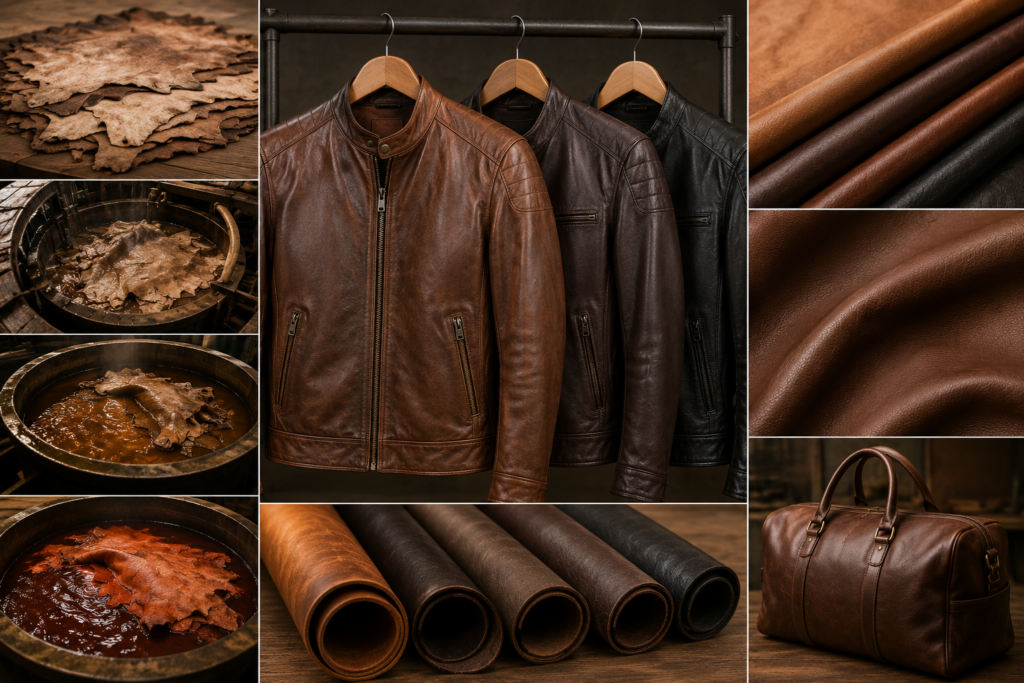
The tanning method behind a piece of protective leather apparel has a direct impact on how it performs. Vegetable-tanned leather’s natural structure and resistance to abrasion make it a strong choice for heavy-duty gloves, aprons, and jackets used across general workwear collections built for daily industrial use.
In demanding environments like oil and gas, where leather is often layered with flame-resistant materials, the added structure of vegetable or combination-tanned leather is frequently preferred within oil and gas workwear setups. Chrome tanning’s better initial water resistance also makes it a common choice where leather is paired with weatherproofing, an approach often seen in waterproof workwear collections.
Tanning Methods in Corporate and Branded Apparel
For corporate and client-facing apparel, chrome tanning’s consistent color and softer initial feel make it a practical choice for polished corporate uniforms that need a uniform look across an entire team without a lengthy break-in period.
Because different trades demand different balances of durability and comfort, many businesses work with industry-specific work wear suppliers who can match the right tanning method to the specific requirements of a role or brand.
The Role of Custom Manufacturing in Leather Apparel
As demand grows for well-made leather apparel, more businesses are turning to custom manufacturers who understand how different tanning approaches affect durability, appearance, and cost, rather than relying on generic off-the-shelf sourcing. Knowing which method went into a garment also helps set realistic expectations for how it will look and feel years down the line.
At ECO-JERSEY, we manufacture and supply custom apparel including leather-based workwear and accessories to businesses around the world. Whether a company needs the rugged durability of vegetable-tanned leather for industrial gear or the consistent finish of chrome-tanned leather for corporate uniforms, our team works directly with clients to produce apparel that matches their exact specifications.
Conclusion
Understanding leather tanning methods makes it much easier to judge why one leather garment costs more than another, or why two jackets that look similar on the surface age so differently over time. Vegetable tanning offers unmatched character and durability for leather built to last, while chrome tanning offers speed, softness, and consistency for apparel produced at scale, and combination tanning sits between the two for buyers who want a bit of both.
For businesses looking to source reliable leather apparel whether for protective workwear or branded uniforms working with an experienced manufacturer like ECO-JERSEY ensures every garment is built with the right tanning method for the job.
FAQs
What are the main leather tanning methods?
The two main approaches are vegetable tanning, which uses natural plant tannins, and chrome tanning, which uses chromium salts, along with combination tanning that blends both methods.
What is the difference between vegetable tanning and chrome tanning?
Vegetable tanning is a slower, traditional process using plant tannins that produces firm leather with a natural patina, while chrome tanning is a faster process using chromium salts that produces softer, more uniform leather.
Is chrome-tanned leather safe?
Yes, chrome-tanned leather is safe when produced correctly, since it uses stable chromium III rather than chromium VI, and regulations like the EU’s REACH standard limit chromium VI to under 3mg/kg in leather that contacts skin.
Which tanning method produces more durable leather?
Vegetable-tanned leather is generally considered more durable over the long term due to its dense fiber structure, while chrome-tanned leather offers strong everyday durability with better initial water resistance.
How long does vegetable tanning take compared to chrome tanning?
Vegetable tanning typically takes several weeks to a couple of months, while chrome tanning can be completed in a matter of hours to a few days, making it far more efficient for large-scale production.