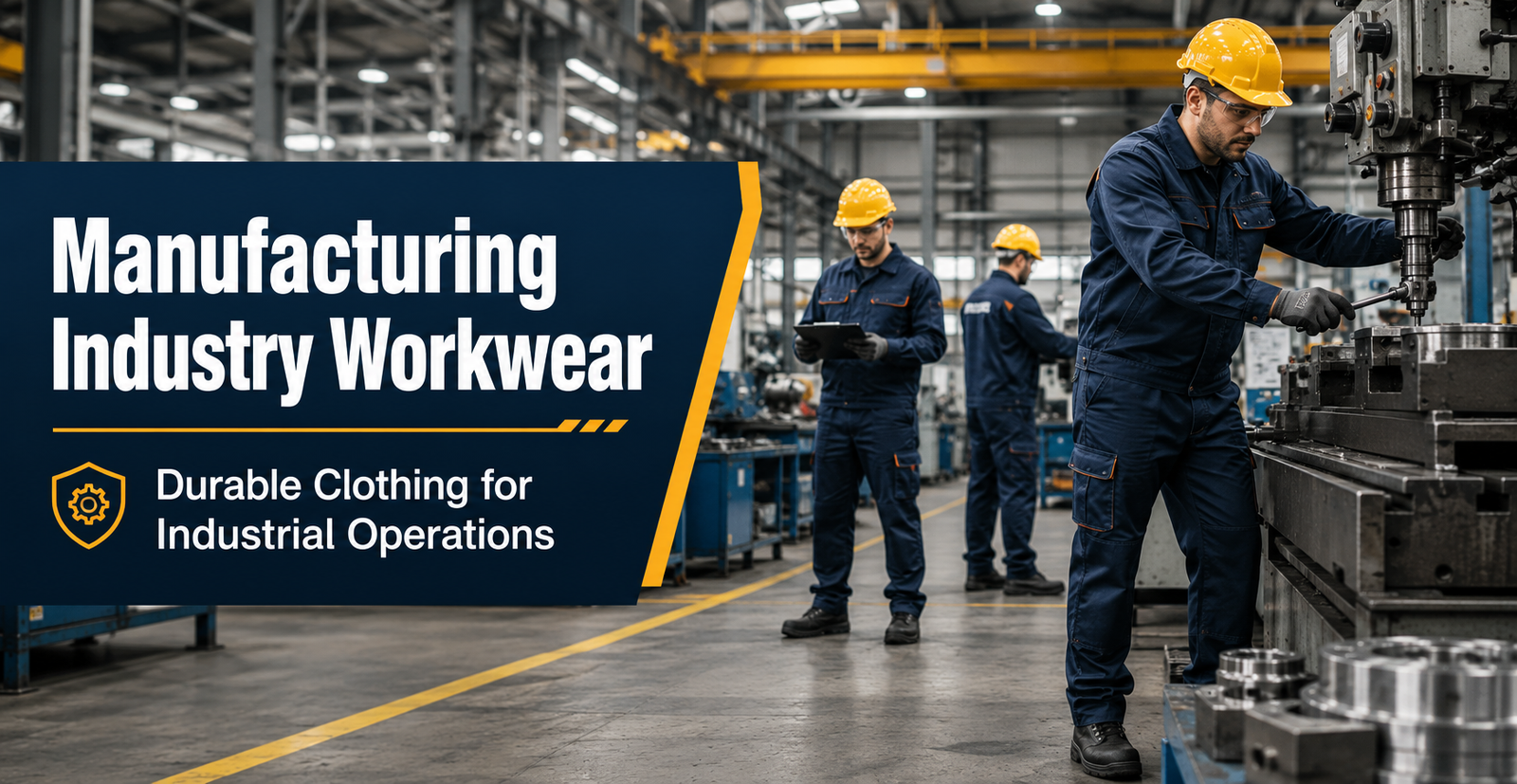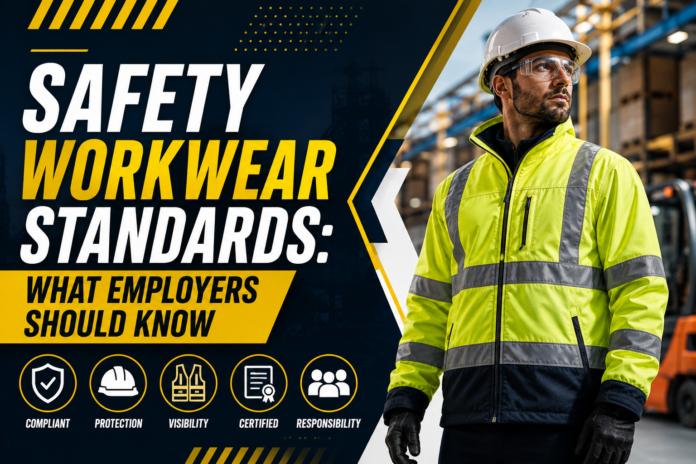
Safety workwear standards assist employers in selecting the appropriate clothing for employees who are exposed to workplace hazards. Workwear is more than just looking professional. Workwear is important for many jobs because it protects workers against low visibility, rain and heat, chemicals, dirt, and other hazards.
Safety clothing should not be chosen by employers based on price, color or appearance. Workwear must be chosen according to the job’s actual risk, weather conditions, visibility requirements, and other industry-specific factors. Businesses can compare the different types of protective clothing and professional clothing in the collection for workplace teams.
What are safety workwear standards?
Safety Workwear Standards are guidelines and performance requirements which help employers to choose the right protective clothing for their workers. These standards can cover visibility, fire resistance, waterproof protection and garment durability. They may also include labeling, testing and correct usage.
Workplace hazards are the basis for good safety workwear standards. OSHA states that personal protective equipment (PPE) is required when administrative, engineering, or work practices are insufficient to protect workers. Employers must use PPE as needed.
Why Workwear is Important for Employers
Workwear affects safety, comfort, productivity and the company’s image. When employees wear the incorrect clothing, they could be less visible, less protected against weather or more vulnerable to workplace hazards. Poor clothing can make workers uncomfortable and lead to incorrect usage.
Before selecting clothing, employers should consider the job roles of each employee. Clothing for a warehouse worker, a road worker, an oil and gas worker or occupant of a office may be different. A uniform that works for one department may not work for another.
Assess Workplace Hazards
The first step in reducing workplace hazards is to identify them. Employers must not just look at the job title, but also what employees face on a daily basis. Hazards can include low light, moving vehicles, heat, chemicals, sparks, and slippery surfaces.
OSHA’s page on PPE standards also directs employers to different PPE requirements based on industry and type of hazard, which demonstrates why the selection of workwear should be based upon actual workplace conditions.
High-Visibility Workwear requirements
Wherever workers need to be visible by drivers, forklift or machine operators, or any other moving team, it is essential that they wear high-visibility clothing. It is important to wear high-visibility clothing in warehouses, logistic yards, construction areas, roadwork zones, and transport operations.
‘s hi-vis collection is perfect for teams who need to wear bright colors with reflective details. ANSI/ISEA 107 defines criteria for high visibility safety apparel including design, performance and labeling. ISO 20471 specifies the requirements for high visability clothing that visually signals wearer’s appearance.
Oil and Gas Workwear Standards
The oil and gas industry can be a hazardous environment, with flames, sparks and heat. It may also involve outdoor work, heavy machinery and conditions on the site. These teams need to choose their workwear with care, as normal clothing may be inappropriate for the job.
Employers should review oil & gas workwear if they require garments for environments with higher demands. Clothing should be examined for its protection level, fabric strength and comfort, as well as fit, wash instructions, and suitability to the site.
Waterproof Workwear Standards
When employees are working in wet conditions, such as rain, washing zones, outdoor loading areas, or cold temperatures, they need to wear waterproof workwear. Wet clothing can cause discomfort, reduce concentration, and interfere with movement.
Waterproof Workwear must protect against wet weather conditions, while allowing for practical movement. Employers should consider the following: seam quality, fabric, breathability, closures and hood design.
Corporate Uniforms & Safety Boundaries
Corporate uniforms tend to be designed with brand recognition, customer recognition and professionalism in mind. Safety garments may not be always safety clothing unless they have protective features that are required for the job.
Corporate Uniforms are ideal for office, retail, reception, and customer service roles. Employers should not consider a corporate shirt or jacket as protective clothing unless they are used for a safety-related purpose.
Specialized Workwear
Different industries need different workwear. Safety jackets and hi-vis vests may be needed in a warehouse. Rainwear may be needed by a delivery team. A clinic might need professional clean coats. A site with heavy industrial activity may require tougher protective clothing.
‘s collection of industry-specific workwear helps employers to think about the job roles instead of buying uniforms for everyone. This method reduces errors and allows workers to get clothing that is appropriate for their tasks.
What safety standards apply to different types of workwear?
The standards for each garment are different. Color, reflective tape and visibility class can be used to judge a hi-vis vest. Waterproof clothing can be judged on its water resistance, seals, and breathability. Industrial clothing might need to be made with stronger fabrics or with safety in mind.
Before purchasing, employers should ask themselves three questions: What hazards are present? What level of protection is provided by the garment? Does the garment fit the worker correctly? By asking these questions, you can make your workwear choice more practical and safer.
Size, Fit, and Comfort
The safety garment should fit properly. Clothing that is too loose may catch on equipment. Clothing that is too tight may restrict workers’ movements or expose certain body parts when they bend, reach or climb.
Comfort is important. Wearing comfortable clothing is important. Workwear that is comfortable should allow for movement and support long shifts, as well as sitting, lifting, driving, and walking. Employers should offer a range of sizes to fit different body types.
Labeling and Product Information
Before purchasing workwear, employers should read labels and check product details. Product descriptions should include information about the garments’ purpose, fabric, care instructions and visibility features.
The employer should verify that the product has been tested for the hazard. The use of vague words such as “heavy duty,” “safe,” and “protective” is not sufficient. The product must be able to support the claim.
Train workers on correct use
The best workwear will fail if it is not worn correctly. The employees should be able to identify when and how to wear each piece of clothing, as well as how to properly fasten, layer, and report any damage.
A hi-vis jacket, for example, should not be covered with a dark outer layer. In the rain, waterproof workwear must be properly closed. In hazardous zones, industrial clothing should never be substituted with casual clothing.
Cleaning, Inspection and Replacement
Regular inspection of workwear is recommended. Workwear can be affected by a worn-out waterproof coat, a faded hi-vis material, cracked reflective tapes, torn or broken seams, heavy stains and worn-out zippers.
Employers need to create simple rules for replacement. Clothing should be replaced, cleaned, or repaired. It is dangerous to keep old, damaged clothing in use. This can also make your company appear careless.
Documentation and employer responsibility
Employers must keep a record of all workwear decisions made, particularly for clothing that is safety-related. These can include hazard assessment, garment specifications and employee training. They may also include issue records, wash instructions, and replacement dates.
The requirements can vary depending on the country, industry and local laws. Before finalizing a program for safety clothing, employers should verify the most recent local regulations. It is particularly important in high-risk industries like construction, oil and gasoline, transportation, utilities, manufacturing, and manufacturing.
Safety Workwear Standards Checklist
Check this checklist to ensure that you are buying the right safety clothing for your workplace.
- Before choosing clothing, identify workplace hazards.
- Workwear should be matched to the actual role of the worker.
- Wear hi-vis clothing when visibility is needed.
- Select waterproof clothing to wear in wet weather.
- Choose clothing that is specific to the industry for jobs with higher risks.
- Check the label for fabric information and instructions on how to care for it.
- Be sure to choose garments that fit the different body types.
- Work with workers to ensure they understand the correct way of using and layering.
- Check your clothing for wear, damage and fading.
- Replace clothing when the safety performance of garments is reduced.
Employer mistakes that are common
A common mistake made by employers when it comes to safety workwear is purchasing uniforms for each employee. Different departments may have different weather conditions, hazards, and needs for movement. The same garment can cause comfort issues or protection gaps.
A second mistake is to choose clothing solely based on price. After a few washings, low-cost workwear can fade, tear, shrink, lose its waterproof properties, or become uncomfortable. Quality garments are often more durable and last longer.
Conclusion
Employers should not choose workwear based on style or price alone, but rather based on safety. Clothing should be chosen according to the work environment, worker’s role, season, comfort requirements, and level of protection required.
Workwear programs that are effective include hazard assessments, the correct selection of garments, the proper sizing and worker training. They also include regular inspections, timely replacement, and regular inspections. Workwear can become more than just a uniform when employers take care of these details. Workwear is an important part of creating a professional and safer workplace.
FAQs
Why do employers require safety workwear?
Employers must provide safety workwear for their workers to protect them from hazards on the job, such as rain, heat and dirt.
Does all workwear qualify as PPE?
Not all workwear qualifies as PPE. Clothing is sometimes worn for comfort or branding, but PPE must be matched to a specific workplace risk.
What is the most crucial step to take before purchasing safety workwear?
It is important to check the actual workplace hazards and choose clothing that suits the worker’s job.
When should high-visibility workwear be worn?
Wearing hi-vis clothing is recommended for workers who need to be visible around vehicles, machinery, roadworks, or areas with low light.