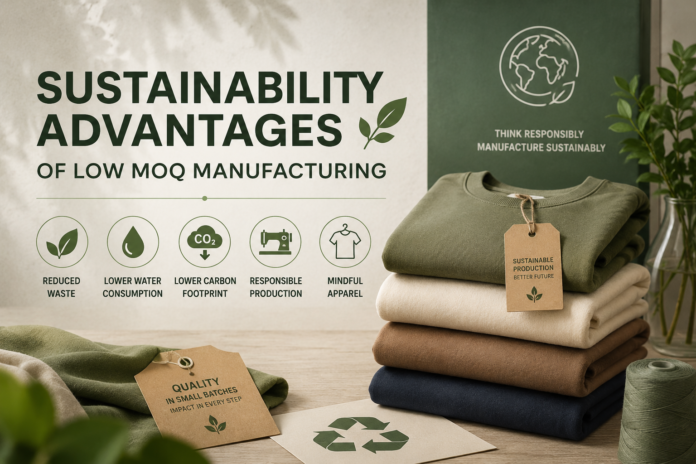
Sustainability has become one of the necessities of the fashion industry instead of just being a use-and-throw term. With consumers being more aware and considerate about the environment regarding the apparel they are wearing, brands are also trying to innovate strategies to keep their business functional in the market and reduce waste. Achieving sustainable operations with Low MOQ Manufacturing is one of the best-known strategies of accomplishing this as a business.
Low mOQ clothing manufacturing allows brands to produce smaller batches of clothing, which not only reduces financial risk but also provides significant environmental advantages. In this article, we’ll explore how low MOQ manufacturing contributes to sustainability and highlight related manufacturing solutions offered by Eco Jersey.
What is Low MOQ Manufacturing?
MOQ is defined as the smallest quantity of units that the manufacturer is going to produce in a single purchase order. The manufacturers in the olden days often asked their clients for hundreds or even thousands of units for a design, therefore causing waste, overproduction, and stock. Low MOQ, however, tends to produce small batches of as few as 50 or 100 units, meaning that orders can be done in smaller quantities.
The greater ease that comes with that is advantageous, especially for a startup, independent designers, and e-commerce brands. By working with what is necessary, businesses can avoid waste and overstock. Therefore, efficient operations can be practiced in a business.
EcoJersey’s Low MOQ Clothing Manufacturing service is designed to help brands scale responsibly while maintaining high-quality standards.
How Low MOQ Manufacturing Promotes Sustainability
Reduced Waste
Overproduction is one of the biggest contributors to waste in the fashion industry. Large orders often result in unsold inventory that may end up in landfills. With Low MOQ Clothing Manufacturing, brands produce only the quantity they need, significantly reducing excess fabric and unsold items.
For brands focused on eco-friendly practices, combining low MOQ with Sustainable Apparel Manufacturing ensures that materials and processes are environmentally responsible.
Efficient Use of Resources
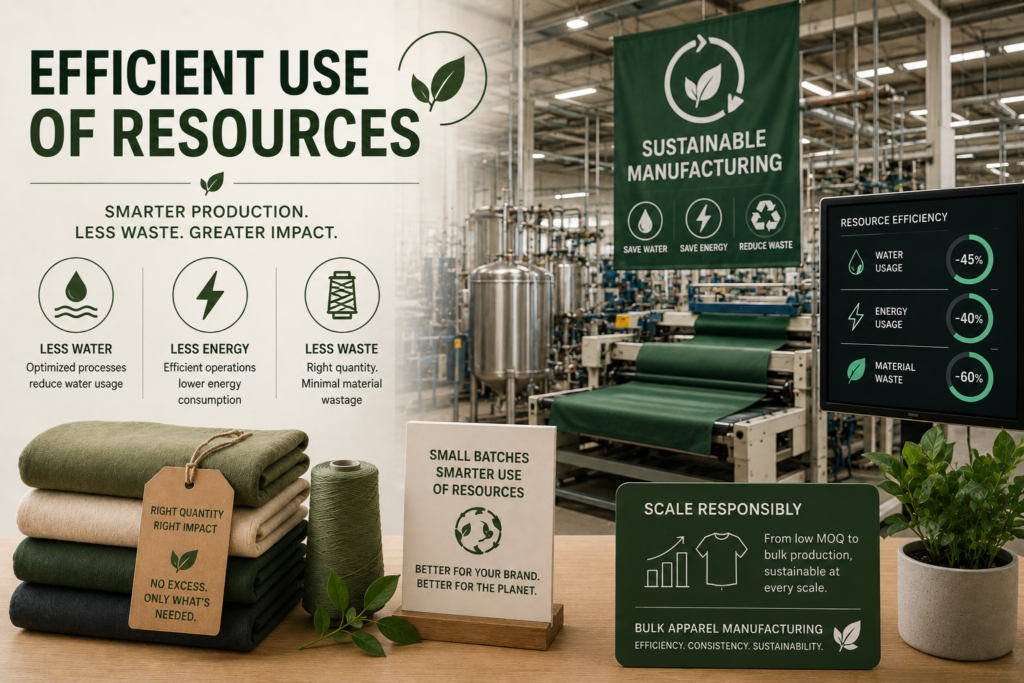
Smaller production runs mean that water, energy, and raw materials are used more efficiently. For example, in bulk production, large dye lots may require excess water and energy, while low MOQ batches optimize resource use for the exact quantity needed.
EcoJersey also provides Bulk Apparel Manufacturing for when brands scale up, ensuring that even larger production runs follow efficient, sustainable practices.
Flexible, Demand-Driven Production
Low MOQ allows brands to respond quickly to market trends without overproducing. This demand-driven approach ensures that production aligns with actual sales, preventing wasted inventory and reducing the environmental footprint of unsold goods.
Services like Made-to-Order Apparel Manufacturing and FPP Apparel Manufacturing from EcoJersey support this model, offering customized production runs tailored to demand.
Improved Supply Chain Sustainability
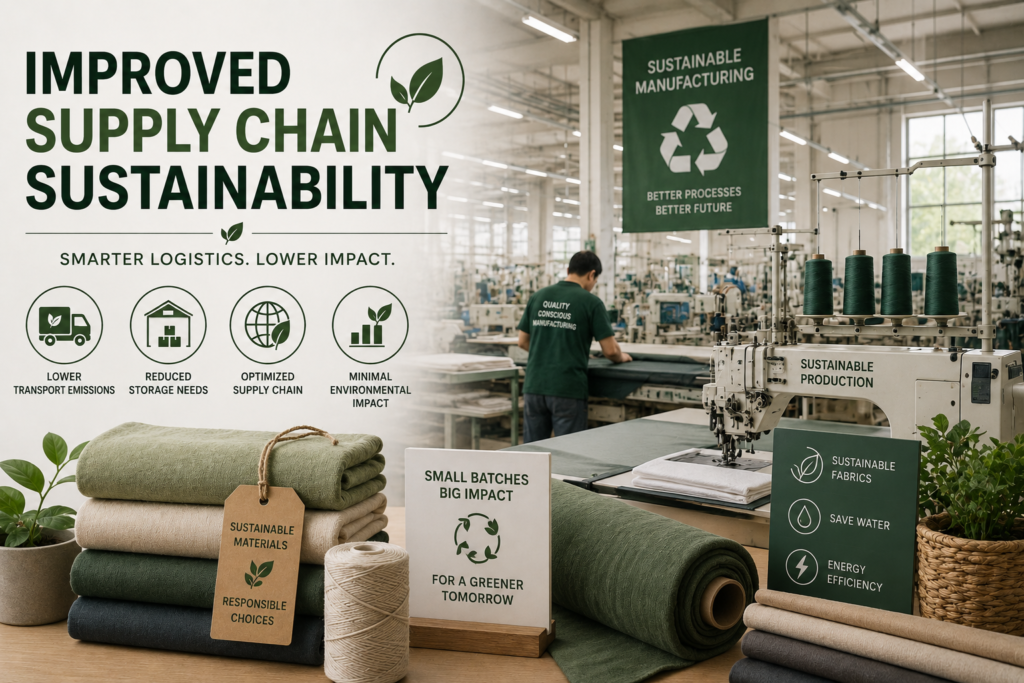
Producing smaller batches allows manufacturers and brands to plan logistics more efficiently, reducing transportation emissions and storage requirements. Partnering with a reliable manufacturer, like those providing CMT Clothing Manufacturing or Contract Clothing Manufacturing, ensures that both production and supply chain processes are optimized for minimal environmental impact.
Enhanced Material Choice
Thanks to low minimum order quantities (MOQ), brands are now able to test out sustainable fabrics and materials without the fear of being stuck with unwanted bulk inventory. This now offers the opportunity to incorporate organic cotton, recycled materials, and environmentally friendly dyes, further extending the reduction of a brand’s impact on the environment.
EcoJersey provides sustainable options in the Low MOQ Clothing Manufacturing process with a focus on maintaining the high-value aspect of quality for brands, to provide more room to make environmentally based decisions.
Conclusion
Low MOQ Clothing Manufacturing offers more than just flexibility and cost savings—it is a powerful tool for sustainable apparel production. By producing smaller batches, brands can reduce waste, use resources more efficiently, and align production with actual market demand. Combining low MOQ practices with sustainable solutions like those offered by EcoJersey—from Low MOQ Clothing Manufacturing to Sustainable Apparel Manufacturing—helps brands stay competitive while minimizing their environmental impact.
Whether you are a startup, an e-commerce brand, or a designer focused on responsible fashion, Low MOQ Clothing Manufacturing is a practical and eco-conscious choice that benefits both your business and the planet.
FAQs
What is low MOQ manufacturing?
Low MOQ (Minimum Order Quantity) manufacturing allows brands to produce small batches of clothing, often as low as 50–100 units, instead of large bulk orders.
How does low MOQ manufacturing support sustainability?
It reduces overproduction, minimizes waste, optimizes resource use, and aligns production with actual market demand, lowering the environmental impact.
Can I use sustainable materials with low MOQ manufacturing?
Yes! Many manufacturers, including EcoJersey, offer options to use organic, recycled, or eco-friendly fabrics in small-batch production.