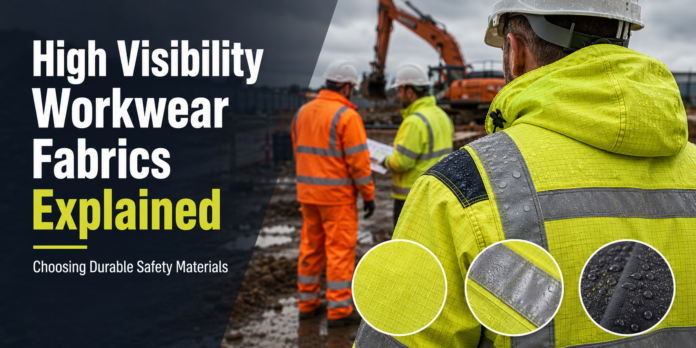
High visibility workwear fabrics are used to make workers easier to see in busy, dark, or risky places. These fabrics are not just bright yellow, orange, or lime cloth. They are built to reflect light, hold strong color, resist daily wear, and help the body stay comfortable during long shifts. A good safety garment should be easy to see in daylight, low light, rain, fog, dust, and around moving vehicles. That is why fabric choice matters as much as design. A cheap bright vest may look safe at first, but it can fade, tear, shrink, or lose reflective power after regular washing. Strong high visibility workwear fabrics give workers better visibility, better movement, and better protection while doing real jobs. The best choice depends on the job site, weather, risk level, washing needs, and how long the garment must last. This guide explains each fabric choice in simple words so buyers can pick safer materials with confidence.
High Visibility Workwear Fabrics: The Simple Answer
High visibility workwear fabrics are special materials made with bright fluorescent color and reflective tape or reflective panels. Fluorescent color helps workers stand out during the day because it reacts strongly to natural light. Reflective material helps workers stand out at night because it bounces light back toward car headlights, machinery lights, and torches. These two features work together, but they are not the same thing. A bright fabric may be easy to see in sunlight, yet it may not be enough at night without reflective parts. A reflective strip may shine in headlights, yet it may not make the whole worker visible in daytime if the base fabric is dull. This is why high visibility workwear fabrics must be planned as a full system. The base cloth, color strength, reflective trim, stitching, garment fit, and wash care all affect safety. When these parts work together, the garment becomes more useful, more durable, and easier to trust on a serious work site.
Where These Fabrics Are Used Most
High visibility workwear fabrics are common in road work, construction, warehouse yards, delivery teams, rail work, airport ground work, traffic control, emergency services, and outdoor maintenance. These places often have moving vehicles, heavy tools, low light, bad weather, or workers standing near machines. For safety uniforms and site clothing, many companies start with a full hi-vis workwear range because it helps them compare vests, jackets, rainwear, and layered options in one place. This matters because one garment does not fit every job. A road worker may need a lightweight vest in summer, but a winter crew may need an insulated jacket with reflective tape. A warehouse worker may need breathable cloth because the shift is long and active. A rain crew may need waterproof fabric with sealed seams. High visibility workwear fabrics should match the real work, not just the color rule. When the fabric matches the task, workers stay safer and more comfortable.
Polyester: The Most Common Safety Fabric
Polyester is one of the most used materials in high visibility workwear fabrics because it is strong, light, quick drying, and good at holding bright color. It can be made into mesh, plain woven fabric, softshell fabric, fleece-backed fabric, or waterproof coated fabric. Polyester does not absorb much water, so it dries faster than cotton and stays lighter in damp conditions. It also handles repeated washing better when the dye, coating, and reflective tape are properly selected. This makes it useful for safety vests, hi-vis jackets, rainwear, and uniforms that need regular cleaning. Polyester can also be made more breathable by using mesh panels or lighter fabric weights. However, not all polyester is the same. Cheap polyester may feel stiff, trap heat, or lose shape. Better polyester has a balanced hand feel, clean stitching, good color fastness, and stable reflective placement. For many buyers, polyester is the safest starting point because it gives a practical mix of visibility, price, and durability.
Cotton Blends: Better Comfort, Different Limits
Cotton blends are sometimes used in high visibility workwear fabrics when workers need a softer feel, better skin comfort, or a more natural touch. Cotton can feel pleasant during long hours, especially in dry conditions, but pure cotton is not always the best choice for heavy-duty hi-vis work. It absorbs moisture, dries slowly, and can become heavy when wet. That is why many manufacturers blend cotton with polyester. A cotton-poly blend can give better comfort than plain polyester while still keeping some strength and faster drying ability. These blends are useful for shirts, trousers, light jackets, and uniforms used in less wet environments. Still, buyers should be careful with color performance. Fluorescent colors may not stay as sharp on cotton as they do on polyester, especially after many washes. If the job needs strict visibility, frequent washing, or wet-weather use, high visibility workwear fabrics with more polyester usually perform better. Cotton blends are best when comfort is important and the risk level is moderate.
Mesh Fabrics for Heat and Long Shifts
Mesh high visibility workwear fabrics are used when workers need airflow more than warmth. Mesh has tiny open spaces in the cloth, so air can move through it easily. This helps reduce heat stress in summer, indoor warehouses, outdoor traffic control, and active jobs where workers keep moving. Mesh is common in safety vests because the garment can stay light while still carrying bright color and reflective tape. For buyers who need simple, easy-to-layer gear, a custom safety vest can be useful when the fabric, tape placement, logo position, and sizing need to match a team’s work needs. Mesh is not the strongest option for every job, though. It can snag on tools, rough edges, or sharp surfaces if the knit is too open. For heavy construction or brush work, a stronger woven fabric may last longer. Still, mesh remains a smart choice for hot weather because a visible worker also needs to stay cool, alert, and able to move freely.
Waterproof and Weather-Resistant Fabrics
Weather is a major reason to choose better high visibility workwear fabrics. Rain, fog, wind, and cold can all reduce visibility and make workers uncomfortable. Waterproof hi-vis fabric usually has a coated or laminated layer that blocks water from passing through. Some garments also use sealed seams, storm flaps, and water-resistant zippers to stop leaks. Water-resistant fabric is different because it can handle light rain, but it may not protect workers in heavy rain for long. For wet conditions, buyers should check rain protection and not only color. A bright jacket that soaks through can become heavy, cold, and unsafe during a long shift. Breathability is also important because a fully sealed jacket can trap sweat inside. Good rainwear tries to balance waterproofing and comfort. High visibility workwear fabrics for wet weather should also keep reflective tape secure after movement and washing. If the garment cracks, peels, or loses tape, it may no longer support safe work in poor weather.
Softshell, Fleece, and Insulated Materials
Cold-weather high visibility workwear fabrics need more than bright color. They must help workers stay warm without making movement difficult. Softshell fabric is popular because it has stretch, wind resistance, and a smooth outer face. It works well for active workers who need comfort and movement. Fleece-backed fabric is warmer and softer, so it is useful in cold but dry conditions. Insulated hi-vis jackets use padding between the outer shell and lining to hold heat in winter. A high visibility jacket can be a better choice than a thin vest when workers face cold mornings, outdoor sites, or long exposure to wind. The main issue is balance. Too much insulation can make workers sweat, while too little warmth can make them stiff and distracted. The outer fabric should resist abrasion, the lining should feel comfortable, and the reflective tape should stay flexible. For winter teams, high visibility workwear fabrics should protect both visibility and body comfort.
Key Fabric Features to Check Before Buying
When choosing high visibility workwear fabrics, buyers should look beyond the first photo and check the full fabric performance because real job sites quickly show weak material:
- Bright fluorescent color should stay clear after washing.
- Reflective tape should be strong, smooth, and well placed.
- Fabric weight should match weather and job movement.
- Stitching should be neat around tape, pockets, and stress points.
- Breathability should be enough for long shifts.
- Waterproof fabric should have proper coating or lamination.
- Mesh should allow airflow without tearing too easily.
- Softshell should stretch without losing shape.
- Zippers, snaps, and trims should handle dirt and daily use.
- The garment should fit over base layers without blocking movement.
This checklist helps buyers avoid weak garments that only look good online. High visibility workwear fabrics should be judged by safety, wash life, comfort, and fabric strength together. A worker may wear the same garment for many hours, so even small fabric problems can become big problems on the job.
Choosing Fabric by Job Type
The best high visibility workwear fabrics depend on the job type. Road crews need strong color, wide reflective coverage, and materials that can handle dust, sun, and traffic exposure. Construction workers need stronger woven fabrics because they move around rough surfaces, tools, concrete, and metal edges. Warehouse and logistics teams often need lightweight, breathable garments because they walk, lift, and load for long periods. Rain crews need waterproof or water-resistant outerwear with secure seams. Cold-weather workers need fleece, softshell, or insulated jackets. For light indoor work, a vest may be enough. For outdoor high-risk work, jackets, trousers, or full uniform systems may be better. Buyers should also think about washing. A garment used every day must keep color and tape quality after repeated cleaning. High visibility workwear fabrics should never be chosen only because they are cheap. A slightly better fabric can reduce replacement costs, improve worker comfort, and make the whole safety uniform look more professional.
Common Mistakes Buyers Should Avoid
Many buyers make the mistake of thinking all high visibility workwear fabrics are the same because the garments look bright in product photos. This is risky. Some fabrics fade fast, some reflective tapes crack, and some garments feel too hot for daily use. Another mistake is choosing a thick fabric for every job. Thick can mean stronger, but it can also mean heavier and less breathable. A summer team may work better in lighter mesh, while a winter team may need insulation. Some buyers also forget fit. A garment that is too tight can restrict movement, while a garment that is too loose can catch on equipment. Another mistake is ignoring washing instructions. High heat, harsh chemicals, and rough washing can damage reflective tape and color. Buyers should also avoid using non-hi-vis fashion fabrics for safety jobs. High visibility workwear fabrics are made for visibility and work conditions, not just appearance. The right choice protects workers, brand image, and long-term uniform value.
Conclusion
The best high visibility workwear fabrics are the ones that match the job, weather, risk level, and comfort needs of the worker. Polyester is often the best all-round choice because it is strong, light, quick drying, and good at holding fluorescent color. Mesh is better for heat and airflow. Waterproof coated fabric is better for rain. Softshell, fleece, and insulated materials are better for cold weather. Cotton blends can feel softer, but they need careful selection because they may not hold bright color as well as polyester. The simple rule is this: choose fabric for the real work site, not only for the product photo. Strong high visibility workwear fabrics should stay bright, keep reflective parts secure, allow easy movement, and handle repeated use. When buyers focus on safety, comfort, and durability together, they get workwear that supports workers every day and lasts longer.
FAQs
What are high visibility workwear fabrics?
High visibility workwear fabrics are bright safety materials used to make workers easier to see in daylight, low light, and risky job areas. They often use fluorescent colors with reflective tape so the garment stands out during both day and night work.
Which fabric is best for high visibility workwear?
Polyester is usually the best all-round fabric for high visibility workwear because it is lightweight, strong, quick drying, and good at holding bright fluorescent colors. Mesh polyester is better for heat, while coated polyester is better for rain.
Are high visibility workwear fabrics waterproof?
Some high visibility workwear fabrics are waterproof, but not all of them. Waterproof hi-vis garments usually have a coating, lamination, or sealed seams. Basic mesh vests and simple polyester shirts are usually not made for heavy rain.
How do I choose durable high visibility workwear?
Choose durable high visibility workwear by checking fabric weight, color fastness, reflective tape quality, stitching, breathability, weather protection, and washing instructions. The best garment should match the worker’s job, climate, and daily movement.