
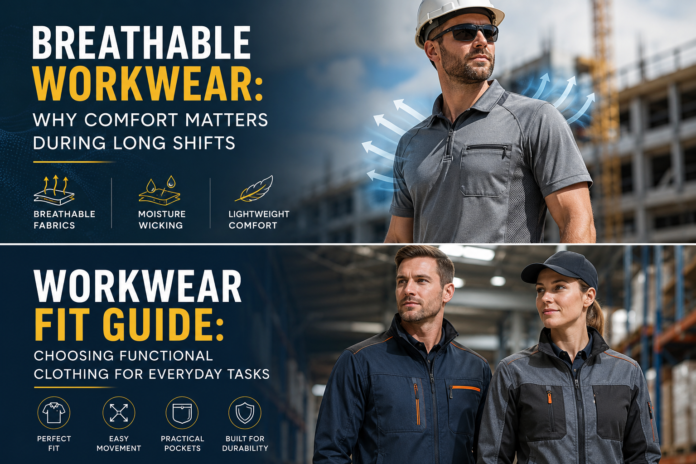
Long shifts can feel much harder when clothing traps heat, sweat, and body moisture. Breathable workwear is designed to help workers stay cooler, drier, and more comfortable while they move, bend, lift, walk, climb, or stand for many hours. It does not mean the clothing is weak or thin. Good breathable workwear balances airflow, sweat control, durability, and safety. This matters in factories, warehouses, construction areas, road work, oil and gas sites, kitchens, workshops, and outdoor jobs. When a worker feels too hot, heavy, or wet, focus drops and tiredness comes faster. Comfortable clothing helps the body manage heat better, so the worker can stay active and alert for longer. Breathable workwear is not only about comfort; it also supports safer movement, better performance, and a more professional working day.
breathable workwear: What It Really Means
Breathable workwear means work clothing that allows heat and moisture to move away from the body instead of staying trapped inside the fabric. During a long shift, the body naturally produces heat. If the fabric blocks airflow, the worker may feel sticky, tired, and uncomfortable. Breathable workwear uses fabric structure, fiber choice, ventilation zones, and smart garment design to reduce that problem. Some fabrics allow air to pass through more easily. Some fabrics pull sweat away from the skin so it can dry faster. Some garments include mesh panels, underarm vents, gussets, or lighter fabric zones where the body heats up most. The best breathable workwear does this while still protecting the worker from dirt, rubbing, wind, light rain, or workplace hazards. In simple words, breathable workwear helps the body breathe while still doing the job it was made for.
Why Comfort Matters During Long Shifts
Comfort is important because workers do not wear work clothes for only a few minutes. They often wear them for eight, ten, or even twelve hours. If the clothing feels too hot, stiff, rough, or heavy, the worker keeps noticing the discomfort all day. This can reduce concentration and slow down movement. Better workwear should support the body instead of fighting against it, especially when the job includes lifting, walking, bending, or repeated tasks. Breathable workwear helps reduce the feeling of trapped heat, which makes the shift easier to manage. A comfortable worker can move with more confidence and less irritation. This is why companies should not choose uniforms only by color, price, or appearance. The real test is how the clothing feels after many hours of use in real working conditions.
How Breathable Workwear Helps Control Heat
Heat control is one of the biggest reasons to choose breathable workwear. When the body gets too hot, sweat increases, the heart works harder, and energy drops faster. Breathable fabric helps release warm air from inside the garment. This is useful for outdoor workers, warehouse teams, road crews, and people working near machines or heat-producing equipment. In high-visibility jobs, comfort is also important because workers may need protective colors and reflective details while still needing airflow. That is why well-designed hi-vis workwear should not feel like a plastic cover over the body. Breathable workwear can help workers stay visible and comfortable at the same time. It allows safety features to work together with body comfort instead of forcing workers to choose one over the other.
Moisture Control and Sweat Management
Sweat is normal during physical work, but wet clothing can create serious discomfort. When sweat stays on the skin, the worker may feel cold in wind, sticky in heat, and irritated in areas where fabric rubs. Breathable workwear helps by moving moisture away from the skin and allowing it to dry more quickly. This is often called moisture-wicking. It is especially useful in shirts, base layers, trousers, coveralls, and work jackets worn during active tasks. Cotton may feel soft, but it can hold moisture for a long time. Polyester blends, nylon blends, mesh fabrics, and technical workwear fabrics often dry faster. However, the best choice depends on the job. Breathable workwear should keep the worker dry enough to feel comfortable without losing strength, shape, or protection during long use.
Fabric Choice Makes a Big Difference
Fabric is the heart of breathable workwear. A good fabric must be strong enough for work but not so heavy that it traps too much heat. Lightweight polyester blends can dry fast and handle repeated washing. Cotton-rich blends can feel soft and natural but may need special finishing to improve moisture control. Ripstop fabrics can offer strength without becoming too bulky. Stretch fabrics help movement, but they should not be too tight because tight clothing can reduce airflow. Mesh zones are useful in areas like the back, underarms, and side panels. Breathable workwear may also include antibacterial or anti-odor finishes, but fabric quality still matters more than marketing words. A worker needs clothing that performs after many washes, not only when it is new. The best fabric choice depends on temperature, job risk, movement level, and daily wear time.
Fit, Movement, and Body Comfort
Fit is just as important as fabric. Even the best breathable workwear can feel uncomfortable if it is too tight, too loose, or badly shaped. Tight clothing may block airflow and make sweat feel worse. Loose clothing may catch on tools, machinery, or equipment. A good workwear fit gives enough space for movement while keeping the garment safe and professional. Workers need room in the shoulders, knees, elbows, waist, and seat area because these parts move often during a shift. Stretch panels, gussets, shaped knees, and adjustable waistbands can make breathable workwear more practical. Comfortable work clothes should allow workers to climb stairs, sit, crouch, carry items, and reach overhead without pulling or restriction. When clothing moves with the body, workers feel less tired and more in control.
Key Features of Good Breathable Workwear
Good breathable workwear should combine comfort, safety, and durability in one design, and the most useful features are easy to understand:
- Lightweight fabric helps reduce heat build-up during long shifts.
- Moisture-wicking material moves sweat away from the skin.
- Ventilation panels allow warm air to escape faster.
- Stretch zones support bending, lifting, and walking.
- Soft inner fabric reduces rubbing and skin irritation.
- Strong seams help the garment last through hard work.
- Quick-dry performance helps clothing feel fresh for longer.
- A proper fit keeps movement easy without feeling unsafe.
- Durable fabric protects against daily wear and repeated washing.
- Job-specific design makes breathable workwear more useful for real tasks.
Breathable Workwear for Different Job Sites
Different workplaces need different levels of comfort and protection. A warehouse worker may need lightweight shirts and flexible trousers. A road worker may need breathable high-visibility clothing. A construction worker may need tougher fabric with reinforced knees and tool pockets. Oil and gas workers may need flame-resistant, anti-static, or multi-risk garments, so comfort must be added without reducing safety. In harsh sites, oil and gas workwear should be protective but still wearable for long hours. Breathable workwear is important in these jobs because workers may face heat, movement, dirt, pressure, and risk in the same shift. The right garment should match the task. A one-style uniform for every job is often not the best answer because each worksite creates different comfort problems.
Common Mistakes When Choosing Workwear
One common mistake is choosing the heaviest clothing because it looks stronger. Heavy fabric can be useful in some jobs, but it may also trap heat and make workers tired faster. Another mistake is choosing very thin clothing without checking durability. Breathable workwear must still survive washing, rubbing, stretching, and daily use. Some companies also ignore fit and only order standard sizes without testing movement. This can lead to tight shoulders, short sleeves, poor bending comfort, or waist discomfort. Another mistake is using the same clothing for indoor and outdoor teams even though their heat levels are different. Workers should also avoid wearing too many non-breathable layers under breathable workwear because those layers can block airflow. The best choice comes from balancing comfort, safety, fabric quality, and real job conditions.
Conclusion
Breathable workwear matters because long shifts are easier when the body stays cooler, drier, and freer to move. It helps workers manage heat, sweat, and tiredness without giving up durability or safety. The best breathable workwear uses the right fabric, smart fit, moisture control, ventilation, and job-specific design. It should feel comfortable in real work, not only look good in a catalog. Companies that choose breathable workwear carefully can support better focus, safer movement, and higher worker satisfaction. For workers, the right clothing can make a hard day feel more manageable. For businesses, it can improve the way teams look, feel, and perform. In the end, breathable workwear is not a luxury; it is a practical part of building a safer and more comfortable workplace.
FAQs
What is breathable workwear?
Breathable workwear is clothing designed to let heat and moisture move away from the body. It helps workers feel cooler, drier, and more comfortable during long shifts.
Is breathable workwear only for summer?
No, breathable workwear is useful in every season. In summer, it helps reduce heat. In winter, it helps manage sweat under layers so workers do not feel damp and cold.
Which fabric is best for breathable workwear?
Polyester blends, cotton-poly blends, ripstop fabrics, mesh panels, and moisture-wicking materials are common choices. The best fabric depends on the job, weather, and safety needs.
Why does breathable workwear matter for safety?
Breathable workwear helps reduce discomfort, overheating, and movement restriction. When workers feel comfortable, they can focus better and move more safely during long tasks.


