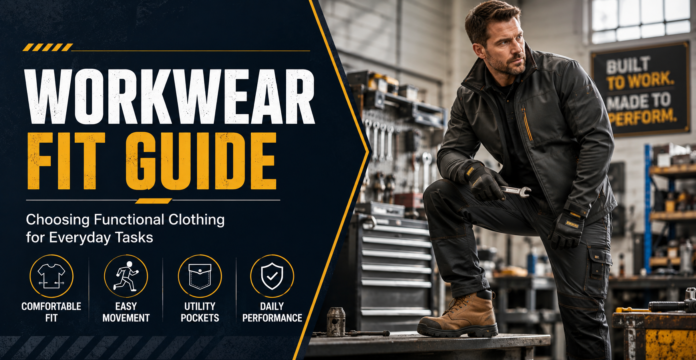
Choosing the right workwear is not only about looking professional. It is also about comfort, safety, movement, and daily performance. A good workwear fit guide helps workers understand how clothes should feel while bending, lifting, walking, climbing, driving, or working for long hours. Workwear that is too tight can limit movement, cause sweating, and make tasks harder. Workwear that is too loose can catch on tools, machinery, corners, or equipment. The best fit sits between comfort and control. It gives enough room to move but still keeps the body protected. This workwear fit guide explains how to choose functional clothing for everyday tasks in a simple way, so even a beginner can understand what to check before buying work shirts, trousers, jackets, uniforms, and safety clothing.
Why Workwear Fit Matters for Daily Jobs
A proper fit matters because work clothing is used for action, not just appearance. In many jobs, workers move their arms, knees, shoulders, back, and waist again and again during the day. If clothing does not fit well, it can slow the worker down and create discomfort. A useful workwear fit guide always looks at the job first. A warehouse worker may need flexible trousers and strong seams. A construction worker may need reinforced knees and a jacket that allows arm movement. A factory worker may need clothing that does not hang loose near machines. Good workwear should support the body during real tasks instead of fighting against it. The right fit can reduce irritation, improve confidence, and help workers stay focused on the job instead of adjusting their clothes all day.
Workwear Fit Guide for Shirts and Upper-Body Clothing
A shirt or upper-body garment should allow easy shoulder and arm movement without pulling across the chest or back. When trying on work shirts, workers should raise both arms, reach forward, and twist slightly to check comfort. If the fabric pulls too much at the buttons, sleeves, or shoulder seams, the shirt may be too small. If the sleeves hang over the hands or the body looks baggy, the shirt may be too large. This workwear fit guide recommends choosing shirts that give enough room for base layers in cold weather but still look neat. The collar should not feel tight around the neck, especially during long shifts. For corporate teams, uniforms should look clean and consistent, but comfort must still come first because uncomfortable clothing affects daily work quality.
Workwear Fit Guide for Trousers and Lower-Body Movement
Work trousers should fit at the waist without needing constant pulling or adjustment. The waistband should stay in place when walking, bending, or carrying tools. A strong workwear fit guide checks the seat, thigh, knee, and ankle areas because these zones handle most movement. The seat should not feel tight when sitting or squatting. The thighs should have enough space for climbing stairs or stepping into vehicles. Knees need room for bending, especially in construction, maintenance, warehouse, and field jobs. Trouser length is also important. If trousers are too long, they may drag under the shoes and become unsafe. If they are too short, they may expose the ankles when bending. Good work trousers should support movement while staying controlled and professional.
Choosing the Right Fit for Safety Workwear
Safety workwear must fit correctly because poor fit can reduce protection. High-visibility clothing, for example, should be easy to see and should not be hidden under other layers. A jacket that is too large may cover reflective tape in a messy way, while trousers that are too loose may become a trip hazard. This workwear fit guide suggests checking safety clothing while wearing the same layers used during real work. For road workers, security teams, site staff, and outdoor workers, hi-vis workwear should stay visible from different angles and should not restrict walking, lifting, or arm movement. Safety clothing should also match the task environment. The goal is simple: the worker should be protected, visible, and comfortable at the same time.
Fit for Weather, Rain, and Outdoor Conditions
Outdoor workers need clothing that fits well over inner layers without becoming bulky. In cold or wet weather, workers often wear base layers, mid-layers, and outer jackets. If the outerwear is too tight, it compresses the inner layers and reduces comfort. If it is too loose, wind and rain can enter easily. This workwear fit guide recommends choosing waterproof jackets and trousers with enough space for movement but with adjustable cuffs, hems, and waistbands. Good waterproof workwear should protect against rain while still allowing the worker to bend, walk, and lift without feeling trapped. The hood should fit over the head or helmet without blocking vision. Outdoor workwear should protect the body while keeping movement natural and safe.
Fit for Industry-Specific Workwear
Different industries need different types of fit. A mechanic may need close-fitting sleeves so fabric does not hang near engines or tools. An oil and gas worker may need protective clothing with enough room for movement but not so loose that it becomes unsafe. A delivery driver may need lightweight workwear that feels comfortable while sitting, walking, and carrying packages. This workwear fit guide explains that one fit does not work for every job. Industry-specific clothing should match the task, environment, and safety rules. Workers should think about heat, moisture, tools, machinery, lifting, and movement before choosing sizes. A good fit is not always the tightest or loosest option. It is the one that helps the worker do the job safely and comfortably.
One Practical Checklist Before Buying Workwear
A simple checklist can help workers avoid common fitting mistakes before they buy uniforms or safety clothing. This workwear fit guide suggests testing clothing in real body positions, not just standing straight in front of a mirror.
- Raise your arms and check if the shirt pulls at the shoulders.
- Bend your knees and check if the trousers feel tight.
- Sit down and check if the waistband stays comfortable.
- Walk a few steps and check if the fabric moves naturally.
- Check sleeve length, trouser length, and collar comfort.
- Make sure pockets are easy to reach while working.
- Test outerwear over the layers you normally wear.
- Make sure loose fabric does not hang near tools or machines.
This small fitting test can prevent discomfort, safety problems, and poor daily performance.
Common Workwear Fit Mistakes to Avoid
One common mistake is choosing a size only by looking at the label. Sizes can change between brands, fabrics, and clothing styles. Another mistake is buying clothing that looks good while standing still but feels bad during movement. This workwear fit guide advises workers to test every garment in job-like positions. Tight shoulders, short sleeves, low waistbands, and narrow thighs can become serious problems during long shifts. Loose clothing can also create issues because it may catch on tools, look unprofessional, or reduce safety. Workers should also avoid ignoring fabric type. Stretch fabric may fit closer to the body, while rigid fabric may need more room. Fit should always be judged by comfort, safety, movement, and job needs together.
How Fabric Affects Workwear Fit
Fabric plays a big role in how workwear fits and feels. A cotton-rich fabric may feel soft and breathable, but it may not stretch much unless blended with elastane. Polyester blends may feel lighter, stronger, and quicker to dry, depending on the garment. Heavy fabrics may protect better in tough jobs, but they can feel stiff if the fit is too tight. This workwear fit guide reminds buyers that fabric weight, stretch, thickness, and breathability all affect comfort. For hot workplaces, breathable fabrics can reduce discomfort. For rough workplaces, stronger fabrics can help clothing last longer. The best fit is not only about size. It is also about how the fabric moves with the body during real tasks.
Workwear Fit Guide for Professional Appearance
Workwear should also make teams look organized and professional. A uniform that fits well gives a better first impression to customers, managers, visitors, and coworkers. However, professional appearance should never come at the cost of comfort. This workwear fit guide recommends choosing clean cuts, correct lengths, and practical shapes that match the job role. Office-based staff may need a neater and slightly more tailored fit. Field workers may need more room for movement and layering. Supervisors may need clothing that looks smart but still works on-site. The goal is balance. Workwear should look tidy, support brand image, and allow the worker to perform daily tasks without discomfort or restriction.
Conclusion
The right workwear fit can make a big difference in comfort, safety, and daily performance. A good workwear fit guide helps workers choose clothing that supports movement, protects the body, and looks professional. Shirts should allow arm movement, trousers should support bending and walking, and outerwear should protect against weather without feeling bulky. Safety clothing must stay visible and secure, while industry-specific clothing should match real job conditions. The best workwear is not simply tight, loose, heavy, or stylish. It is functional, comfortable, and suitable for everyday tasks. By following this workwear fit guide, workers and businesses can choose clothing that feels better, lasts longer, and helps every shift run more smoothly.
FAQs
What is the best fit for workwear?
The best workwear fit gives enough room for movement without being too loose. It should feel comfortable when walking, bending, lifting, sitting, and reaching.
Should workwear be tight or loose?
Workwear should not be too tight or too loose. Tight clothing can restrict movement, while loose clothing can become unsafe around tools, machines, and job sites.
How do I know if my work trousers fit correctly?
Work trousers fit correctly when the waistband stays comfortable, the knees bend easily, the seat does not pull, and the length does not drag under the shoes.
Why is fit important in safety workwear?
Fit is important in safety workwear because poor sizing can reduce visibility, limit movement, cause discomfort, or create hazards during daily tasks.