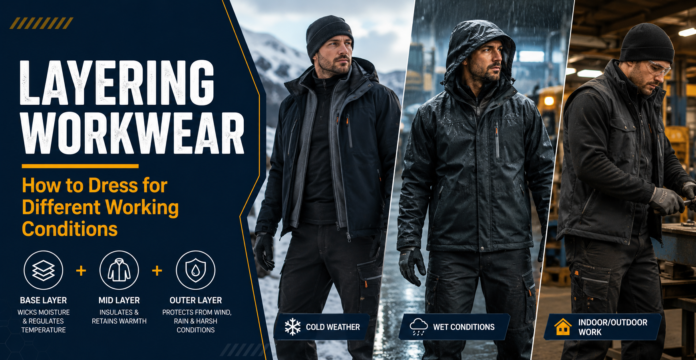
Layering workwear means wearing different clothing layers so your body stays protected, comfortable, and ready for the job. It is not only about wearing more clothes in cold weather. It is about choosing the right base layer, middle layer, and outer layer for the work area. A worker on a windy construction site needs different clothing than a worker inside a warehouse. A road worker needs visibility, while a plumber may need waterproof protection. Good layering workwear helps control sweat, body heat, wind, rain, dust, and jobsite risks. The main idea is simple: each layer has its own job. The first layer manages sweat, the second layer keeps warmth, and the outer layer protects against weather and hazards. When workers understand layering workwear, they can dress better for long shifts without feeling too hot, too cold, or restricted while working.
Why Layering Workwear Matters on Every Site
Layering workwear matters because working conditions can change many times in one day. A worker may start early in cold weather, feel warm by midday, and then face wind or rain later. If the clothing is not layered properly, the worker may sweat too much, feel cold after sweating, or become uncomfortable during heavy tasks. Layering workwear also improves safety because workers can remove or add layers without losing basic protection. For example, a worker should not remove a high-visibility layer just because they feel warm. Instead, they should wear breathable layers under the safety garment. Proper layers also help reduce tiredness. When the body spends less energy fighting heat or cold, the worker can focus better. This is why layering workwear is useful for construction, roadwork, warehouses, factories, oil and gas sites, delivery teams, and outdoor maintenance jobs.
Start with the Base Layer
The base layer is the clothing that touches the skin, so it must feel soft, breathable, and comfortable. In layering workwear, the base layer should move sweat away from the body instead of holding it. Cotton may feel nice at first, but it can stay wet for a long time after sweating. Synthetic blends, merino wool, or moisture-wicking fabrics are often better for active work because they dry faster. A good base layer should fit close to the body but should not feel tight or painful. Workers who need flexible clothing can explore general workwear options that support movement, comfort, and daily use. The base layer is very important in cold weather because wet clothing can make the body lose heat faster. In warm weather, a breathable base layer helps workers feel cooler and less sticky during long shifts.
Use a Mid Layer for Warmth and Comfort
The mid layer is the part of layering workwear that helps keep the body warm. It sits between the base layer and the outer layer. Common mid layers include fleece jackets, sweatshirts, quilted vests, softshell jackets, and insulated work shirts. The right mid layer depends on how cold the jobsite is and how active the worker will be. A worker who moves a lot may only need a light fleece, while someone standing outside for long hours may need thicker insulation. The mid layer should not be too bulky because heavy clothing can slow movement and make bending, lifting, or climbing harder. Good layering workwear gives warmth without making the worker feel trapped. A zippered mid layer is useful because it lets workers open the front when they feel warm and close it again when the temperature drops.
Choose the Right Outer Layer for Weather
The outer layer protects the worker from wind, rain, snow, dust, and rough surfaces. In layering workwear, this is the layer people see first, but it should not be chosen only for looks. It must match the real working condition. If the job is outdoors during rainy weather, the outer layer should be water-resistant or waterproof. If the job is windy, the outer layer should block wind but still allow some breathability. Workers who face wet sites can use waterproof workwear as the final protective layer over a breathable base and warm mid layer. The outer layer should also have useful features such as strong seams, adjustable cuffs, secure pockets, and enough room to fit over other layers. Good layering workwear works best when the outer shell protects without making the worker overheat.
Bullet Point Guide for Simple Layering
A simple layering workwear system is easy to remember when every layer has a clear purpose.
- Base layer: Keeps sweat away from the skin.
- Mid layer: Adds warmth without blocking movement.
- Outer layer: Protects from wind, rain, dirt, and jobsite hazards.
- High-visibility layer: Helps workers stay seen near vehicles and machines.
- Waterproof layer: Keeps workers dry in rain or wet conditions.
- Breathable fabric: Helps body heat escape during active work.
- Flexible fit: Allows bending, lifting, walking, and climbing.
- Strong seams: Help clothing last longer during rough tasks.
- Easy removal: Lets workers adjust clothing when the weather changes.
This is the easiest way to understand layering workwear. Each item should solve one real problem instead of just adding extra clothing.
Layering for Cold Working Conditions
Cold weather layering workwear should protect the body from freezing air while still allowing movement. The base layer should keep sweat away because wet skin becomes cold quickly. The mid layer should hold warmth, and the outer layer should block wind. Workers should also protect the hands, feet, neck, and head because heat can escape from these areas. Thick socks, gloves, neck warmers, and warm hats can make a big difference during outdoor jobs. However, workers should avoid wearing too many heavy layers because this can cause sweating during physical work. Once sweat cools down, the body can feel even colder. The best cold-weather layering workwear is warm, breathable, and adjustable. Workers should be able to remove a layer during heavy tasks and add it again during breaks or slower work.
Layering for High-Visibility Jobs
High-visibility jobs need layering workwear that keeps workers seen in low light, traffic areas, and busy worksites. Road crews, construction workers, airport staff, warehouse teams, and utility workers often need bright colors and reflective tape. The mistake many workers make is wearing warm clothing over their safety vest, which hides the visible layer. A better method is to choose warm and weather-ready layers that still keep visibility on the outside. Workers can use hi-vis workwear as the outer layer so safety markings stay clear during the whole shift. The base and mid layers can still give warmth and comfort underneath. Good layering workwear should never reduce visibility. If workers cannot be seen clearly, the outfit is not doing its full safety job, even if it feels warm or comfortable.
Layering for Wet, Windy, and Muddy Sites
Wet and muddy worksites need layering workwear that keeps water out but still lets the body breathe. If the outer layer traps too much heat, workers may sweat inside their clothing and feel damp even without rain entering. This is why breathable waterproof fabrics are helpful. The base layer should dry quickly, and the mid layer should still provide warmth if the temperature drops. Workers should also pay attention to cuffs, collars, zippers, and seams because water can enter through weak points. Windy conditions need a strong outer shell because wind can remove body heat very quickly. Muddy sites also need easy-clean fabrics and strong lower-body protection. Proper layering workwear helps workers stay dry, warm, and cleaner for longer, especially when they work near water, soil, concrete, pipes, drainage areas, or outdoor machinery.
Common Mistakes Workers Should Avoid
Many workers think layering workwear means wearing the thickest clothes possible, but this is not always safe or comfortable. Too much clothing can cause overheating, sweating, and slow movement. Another mistake is wearing cotton as the only base layer in cold or wet conditions. Cotton can hold moisture and make the worker feel cold later. Some workers also choose tight outerwear that does not leave enough room for a mid layer. This makes movement harder and can damage the clothing faster. Another common problem is covering reflective tape with a jacket or hoodie. This reduces visibility and increases risk near vehicles. Workers should also avoid loose hanging clothing around machines because it can get caught. Smart layering workwear should feel balanced: warm enough, breathable enough, visible enough, and flexible enough for the task.
Conclusion
Layering workwear is one of the simplest ways to improve comfort, safety, and performance during long working hours. The best system starts with a breathable base layer, adds a warm mid layer when needed, and finishes with an outer layer that matches the jobsite risk. Cold weather needs warmth and wind protection. Wet weather needs waterproof protection. High-risk areas need visibility. Rough work needs durable fabrics and strong stitching. Good layering workwear should help workers move freely, stay dry, stay warm, and remain visible without feeling heavy or uncomfortable. The final rule is easy: dress for the task, the weather, and the safety risk together. When workers understand layering workwear, they can handle changing conditions with more confidence and less discomfort.
FAQs
What is layering workwear?
Layering workwear means wearing a base layer, mid layer, and outer layer so workers stay comfortable and protected in different job conditions.
What is the best first layer for workwear?
The best first layer is a breathable, moisture-wicking base layer that helps move sweat away from the skin and keeps the worker dry.
How many layers should workers wear?
Most workers need three main layers: a base layer for sweat control, a mid layer for warmth, and an outer layer for weather or safety protection.
Is layering workwear useful in summer?
Yes, layering workwear can help in summer if the layers are lightweight, breathable, and designed to manage sweat without overheating the worker.