The motorcycle accessory market has evolved into a highly specialized category. Even within the same broad category, a commuter’s glove requirements are different from those of an off-roader or winter commuter.
Understanding the different types of motorcycle equipment can help clothing companies and retailers who stock motorcycle accessories build catalogs that serve genuinely diverse riding needs, rather than offer a generic option. The guide explains the different types of gear available and what makes them unique. It also explains how to choose which ones should be included in an accessory line-up.
The Types of Motorcycle Gear Can Vary Significantly
The riding accessories are used for a variety of purposes beyond protection. They can be useful in managing temperature, enhancing performance on specific terrains and improving grip. This diversity is reflected in the types of gear used for motorcycles. A single glove can’t be optimized to provide comfort on the road, grip off-road, and warmth during cold weather without compromising somewhere.
Buyers who are aware of these differences can then match their inventory with the needs of riders, rather than stocking a generic accessory range and hoping that it will fit every situation. It is especially important for gloves where the differences between different categories are often based on specialized features which have a dramatic impact on real-world safety and performance.
All-purpose Standard Riding Gloves
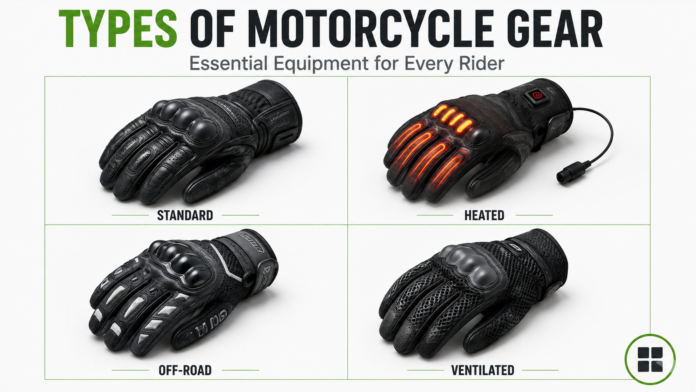
The standard gloves are the most popular in motorcycle catalogs. They offer a balance of protection, comfort, and grip for general road riding. Motorcycle Gloves for Men, and Motorcycle Gloves for Women are both included in this category. They combine certified knuckle protection with leather or textile reinforced gloves.
Standard gloves are the most popular product in a catalog of motorcycle accessories. They can be used for commuting and casual riding as well as moderate touring. When building this category, retailers should make sure that there are separate men’s and woman’s options rather than relying on a single unisex style for both.
The Best Heated Gloves to Ride in Cold Weather
Standard gloves can’t address the challenge of maintaining dexterity when conditions are colder than comfortable. The heated gloves are designed to solve the problem directly. They have heating elements which keep your hands warm and functional in cold weather, whether you’re riding on a high altitude route or commuting during winter.
The use of this type of gear is on the rise as more riders realize that cold-numbing hands are a real safety issue and not merely a comfort one. This reduces dexterity, which directly impacts brake and throttle controls. Customers in colder climates will want to stock up on heated gear, as they are a safety measure rather than an expensive luxury.
Hand-made Off-Road & Dirt Bike Gloves to Survive Rugged Terrain
Off-road riding introduces different demands than paved commuting or touring, prioritizing grip texture and reinforced knuckle protection suited to lower-speed, higher-fall-frequency conditions. The dirt bike gloves are designed to meet the demands of technical terrain. They offer tactile control, rugged construction and durability.
The gear used for adventure tours tends to be similar, as many riders mix paved and non-paved roads within the same route. Dirt bike gloves are a great complement for those who stock up on adventure gear or other off-road products.
Gear that is Ventilated or Warm Weather Gear
Accessories that can manage heat without sacrificing protection are needed for hot climates, long rides in summer and warm weather. Perforated and mesh panels are used in the lower risk zones, while reinforced protection is provided at the palm and knuckles.
It is important that riders who live in hotter climates have the right motorcycle gear. Insufficient airflow may cause riders to forgo protective gear altogether rather than endure excessive heat during a ride. Customers serving markets with hot climates should make sure ventilated gear is available alongside the standard equipment, so that riders have a comfortable choice and not be forced to choose between safety and comfort.
Specific Gear for Riding Disciplines
Rather than focusing on general categories, some riding disciplines require accessories that are designed around very specific requirements. From track gloves with a focus on maximum grip, minimal weight, and comfort over long distances, to touring designs aimed at all-day comfort, these demands go beyond the standard category. Knowing where the rider falls in terms of their primary riding discipline can help determine what features are most important to them.
The specialization goes beyond gloves and includes other accessories, but gloves are still the first purchase that is critical because of how hand function directly affects fall risk. When building an extensive catalog, buyers should realize that riders own different gear for various riding situations and not expect a single item to fit all scenarios.
The Key Features of Each Gear Type
No matter which motorcycle product a customer chooses, there are a few features that separate the genuine protective gear from those products designed to look like it.
- Knuckle armor that meets recognized impact protection standards, regardless of glove categories
- Grip Performance, especially in palm zones. Handling and control are heavily dependent on the material texture.
- Temperature-appropriate design, whether heated, ventilated, or balanced for general conditions
- High-wear reinforced zones protect the palm and fingertips from repetitive flexing.
- Fit options for men and women.
- Construction that is terrain-appropriate. This means matching the grip texture, reinforcement and other features to the intended riding conditions.
What is the right mix of types for your catalog?
Understanding the conditions that buyers of motorcycles face is the first step in selecting the best combination of gear. Catalogs that cater to urban commuters will benefit from offering a wide range of standard options and heated gear, while catalogs catering to adventure and off-road riders need dirt bike gloves and rugged accessory offerings as their core products.
Buyers should then consider the climate, seasonal demands, and riding styles, as a region may require heated or ventilated gear depending on when it is. By comparing the catalog with expected demand, you can avoid stocking up on categories that are unlikely to sell and ensure genuine gaps in your inventory.
Last Thoughts
Motorcycle gear today reflects the wide range of riding situations and needs, including daily commutes and off-road excursions. The right catalog mix is about matching the gear types to real rider needs, rather than stocking generic items and hoping they fit.
Eco-Jersey helps brands and retailers build that mix. From standard gloves and heated ones to off-road-specific choices for women and men. Browse the catalog of motorcycle gear, or ask for a consultation on sourcing to create a line-up that is tailored to your customers.
FAQs
Which are the most common types of motorcycle equipment?
There are four main categories: standard riding gloves (heated), off-road dirt bikes or dirtbike gloves and ventilated, warm-weather gloves. Each type is designed to address different riding situations and requirements.
Should I have different gloves in different seasons?
Yes, many riders need to, as heated gloves improve dexterity during cold weather, while ventilated gloves reduce heat accumulation during the warmer months.
Can off-road riding gloves be used for road riding?
They can, but they are optimized for low-speed technical terrain. Standard road gloves perform much better on paved roads.
Does a motorcycle retailer need to stock all types of gear?
No. It depends on the climate of the rider and their riding style. So, it’s best to begin with the most popular categories.