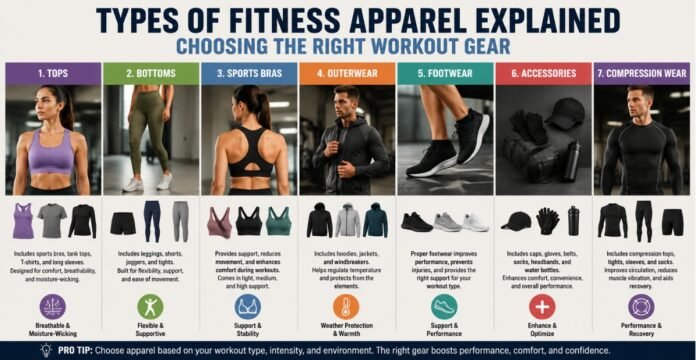
Fitness apparel includes clothing for working out and clothing for daily activities. Fitness apparel includes workout t-shirts, tank tops, sports bras, leggings, shorts, joggers, hoodies, and compression clothing. Each serves a unique purpose. Some clothing helps your body stay cool, while other clothing helps body support and coverage. Choosing correct fitness apparel can help exercise be comfortable and help avoid rubbing, sweating, slipping, or restricted movement.
Types of Fitness Apparel for Different Workouts
The best types of fitness apparel depend on the way you plan to exercise. Running needs lightweight clothing that does not become heavy with sweat. Strength training needs flexible garments that allow you to squat, press, pull, and stretch. Yoga requires soft fabric, good stretch, and a secure fit. Walking and light exercise may only require a breathable top and relaxed bottoms. You can explore different styles in the Eco Jersey fitness apparel collection, which includes gym-focused tops and bottoms. When comparing types of fitness apparel, choose comfort and function before colour or fashion.
Workout T-Shirts for Everyday Training
Workout T-shirts are a staple of fitness apparel. Good training t-shirts should be comfortable and lightweight. They should fit well in the shoulders and neck, leaving your arms free to move. Regular-fit t-shirts are good for walking, cycling, and hitting the gym. For running, a snugger, slim-fit t-shirt will be better. Cotton t-shirts are soft, but heavy t-shirts tend to suck once they get wet. Performance blends dry quicker and are a better choice for fitness apparel. T-shirts should also fit the back and should stretch less when you raise your arms overhead.
Tank Tops and Stringers for Upper-Body Movement
Tank tops and stringers are types of fitness apparel that leave the shoulders and arms open. This makes them useful for weight training, bodybuilding, warm gyms, and summer exercise. Larger arm openings can improve movement during curls, rows, presses, and shoulder exercises. However, the garment should still provide enough coverage for comfortable training. For example, graphics stringers combine a Y-back athletic shape with an eye-catching gym design. When choosing these types of fitness apparel, check the neckline, armhole depth, back shape, fabric weight, and overall fit.
Sports Bras for Support and Comfort
Sports bras are specially designed to help control movement that would otherwise be difficult or uncomfortable during physical activity. Yoga, walking, and stretching may all be considered low movement activities that require low support bras. Activities like training and cycling may require a medium support bra, while running and jumping require a high support bra. While high support bras are recommended for more movement intensive activities, the straps and the band should not constrict or limit the ability to breathe. Sports bras come in many styles and colors, but should be chosen based on body size and the level of comfort, not on appearance.
Leggings and Compression Bottoms
Leggings are an extremely versatile piece of fitness apparel that may be worn for any activity, including fitness training that takes place in the comfort of your home. The material should be both stretchy and able to return to the original shape. For a better sense of support, compression bottoms are a great option. While they may be more supporting, they should still not be painful or leave deep indentations. Sports apparel may be used for a variety of activities, but should have seams that are flat and a waistband that remains in place.
Joggers and Training Pants
Joggers and training pants are relaxed types of fitness apparel that work well for warm-ups, strength sessions, travel, and cooler weather. Tapered joggers sit closer around the ankle, while wider training pants provide more airflow and room for movement. Lightweight woven fabrics can work well for outdoor exercise, while soft knitted fabrics feel comfortable during casual gym sessions. Some breathable pumper pants offer a wider shape for people who prefer more space around the thighs and legs. These types of fitness apparel should have a secure waistband and enough room for lunges, squats, and stretching.
Workout Shorts for Hot Conditions
Workout shorts can be used while exercising in the heat, running, lifting, training, and cycling. Shorts that are cut close to the upper thigh are less constrictive, while longer shorts provide more coverage. Workout shorts can have a looser fit or a liner for support and an athletic fit. The waistband should lay flat and should not roll or slide. Shorts can have pockets, but can bounce if heavy items are placed in them. When choosing shorts, consider the length, fit, how stretchy they are, the fabric thickness, and how they feel when wet.
Hoodies and Layers for Warm-Ups
Hoodies, sweatshirts, and lightweight jackets are fitness apparel that are used before, after, and during outdoor workouts. They help keep your muscles warm while you get ready to move. In mild weather, a thin layer might be just enough, while on cold mornings, a thicker hoodie might be needed. It should not feel like it’s weighing down your chest and arms. When your body warms up, it’ll be easier to take a zip-up off. These are also great to use when traveling to the gym, cooling down, and for comfort between training sessions.
Quick Guide to Choosing Workout Gear
The right types of fitness apparel should match your activity, comfort needs, body movement, and training environment.
- Choose breathable tops for cardio and warm indoor gyms.
- Choose supportive sports bras for running and jumping.
- Choose stretch leggings for yoga and lower-body training.
- Choose secure shorts for lifting and summer workouts.
- Choose joggers and hoodies for warm-ups and cool weather.
- Choose the correct size instead of painfully tight clothing.
- Check the seams, waistband, stretch, and fabric recovery.
- Wash types of fitness apparel according to the care label.
Conclusion
Many people experience the different types of fitness apparel as a confusing frustration. With the categories of movement, support, temperature, and comfort, selecting workout gear gets easier. General training might rely on t-shirts and tank tops, while a sports bra provides the best movement control, leggings assist supportive flexible exercise, and shorts and joggers offer temperature control. Fitness apparel also shouldn’t rub, slip, or overheat. Instead of bending to the trends, wear clothing that fits your real routine. The most effective fitness apparel is what you wear comfortably and consistently.
FAQs
What Are the Main Types of Fitness Apparel?
The main types of fitness apparel include workout T-shirts, tank tops, sports bras, leggings, compression clothing, shorts, joggers, hoodies, sweatshirts, and lightweight training jackets. Each category provides a different level of movement, support, coverage, or warmth.
Which Fitness Apparel Is Best for Beginners?
Beginners should choose simple types of fitness apparel such as a breathable T-shirt, comfortable shorts or leggings, suitable underwear or a sports bra, and a lightweight warm-up layer. Every item should allow easy movement without feeling too tight.
Should Workout Clothes Be Tight or Loose?
Both fits can work well. Tight types of fitness apparel can reduce loose fabric during fast movement, while relaxed clothing may provide greater airflow and comfort. The correct fit should never restrict breathing, blood flow, bending, or stretching.