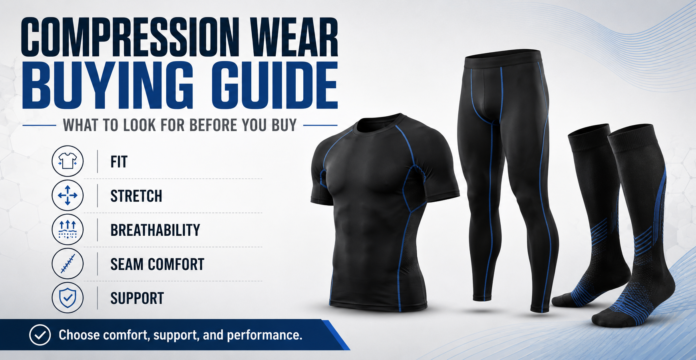
The guide to buying compression wear is essential because compression garments are designed to fit snugly and to support movement. These products are different from loose workout clothes. These products need to have a strong stretch, a good recovery, smooth edges, and a secure fitting. Poor compression clothing can be too tight, cause irritation, lose its shape or roll down. Good compression clothing should be supportive, but not painful. The clothing should be comfortable and allow the wearer to move, train or travel more easily. compression wear buying guide should not be chosen based on color or style. Details matter.
Compression Wear Buying Guide Basics
Compression wear buying guide basics start with understanding the purpose of the garment. A full category like the compression wear collection can include leggings,T-shirts, sweatshirts, socks, base layers, and shorts. Every product is used for a specific purpose. Some compression clothing is made to be worn in the gym. Some compression wear buying guide garments are designed for travel, running, recovery, layers, and daily support. Best compression clothing should be close fitting, flexible, breath well and return shape to its original form after use. Before buying, buyers should consider the activity level, fit, fabric, comfort of seams, and maintenance needs.
Check the Compression Level
The compression level of compression clothing is an important part of any buying guide. It should be firm enough to provide support, yet not painful. Light compression is suitable for everyday wear, casual exercises, traveling, and travel. For training, active movements, and running, medium compression is better. Selecting a stronger compression is important because some people may find it too tight. Before buying, buyers should review product specifications and size recommendations. The compression wear buying guide should be secure and smooth. It must also fit comfortably for the activity.
Fabric Quality and Stretch
The fabric quality should be a major consideration in any guide to buying compression clothing. The fabric of compression wear buying guide should be smooth, strong, and flexible. The fabric should be able to stretch and recover after usage. Stretch recovery is what we call this. The garment can lose its support very quickly if the fabric does not stretch back. Polyester, nylon spandex elastane or stretch blends are all common compression fabrics. Fabrics should feel smooth, not thin or weak. A good compression fabric will support your body without making you feel heavy. A better fabric will give you a longer-lasting performance.
Fit and Body Comfort
The fit is the key to a successful compression clothing guide. The compression wear buying guide must fit close to the skin, without pinching, digging, or limiting breathing. It should be firm and feel smooth on the skin. The fit could be too small if it causes deep marks or discomfort. The fit could be too large if it slides or feels loose. A product like a compression t-shirt should support the upper body while allowing arm movement. Comfort should always stay part of the fit decision.
Breathability and Sweat Control
The ability to breathe is an important factor in the buying guide for compression clothing, as compression wear buying guide garments are worn close to skin. Heat and sweat buildup can occur quickly during workouts or prolonged wear. Fabric that breathes helps the air to move, and it makes the clothing feel more fresh. Fabrics that control moisture can move sweat from your skin, so you don’t feel heavy or sticky. It is ideal for daily activities, gym training, travelling, biking, or running. The fabric should be breathable, and appropriate for the current season. A good compression garment should provide support without trapping excessive heat.
Seam Quality and Anti-Chafe Comfort
The seams are important in the buying guide for compression apparel because it is close to your skin. The rough seams may cause irritation when moving. Comfort can be improved by smooth seams and flat seams. Check side seams and shoulder seams. Also, check sleeve, crotch, waistband, hems and ankle openings. When the fabric stretches, weak stitching may break. A product like compression leggings needs strong seams around the waist, hips, knees, and lower legs because these areas move often. Good stitching helps compression wear feel better and last longer.
Waistband, Cuffs, and Openings
The details of a buying guide for compression wear buying guide clothing include the cuffs and waistbands. The waistband of leggings must be able to stay in place and not dig into your body. The neckline and sleeves of t-shirts need to feel comfortable and not be too tight. Base layers and hoodies should not restrict arm movements. Stockings shouldn’t cut into your skin. The openings of the garment should be secure, but not uncomfortable. The garment may become uncomfortable to wear if the edges are too snug. The garment could not be supported properly if the edges are too loose.
Simple One-Line Buying Checks
These checks make a compression wear buying guide easier to follow before buying or approving production.
- Check compression level because support should feel firm, not painful.
- Check fabric stretch because movement needs flexibility.
- Check recovery because the garment should return to shape.
- Check breathability because close-fit clothing can trap heat.
- Check seams because rough stitching can cause irritation.
- Check waistband comfort because it should stay secure.
- Check care instructions because elastic fibers need gentle handling.
These one-line checks help buyers compare compression wear without difficult fabric terms.
Choosing the Right Product Type
The product type plays a key role in a buying guide for compression wear because every garment targets a specific area. Compression T-shirts are great for the upper body. They also work as base layers. Leggings that support your legs can be worn for running, yoga or even gym training. Layering and comfort can be combined with compression hoodies. Compression stockings provide support for the legs when traveling, standing or using them daily. A product like compression stockings should be chosen carefully for fit, stretch, and comfort because it stays close to the calves and ankles. The right type depends on the buyer’s need.
Final Guide Before You Buy
This guide’s final recommendation is to choose compression clothing based on fit, fabric quality and stretch recovery. Also, consider comfort at the seams. Choose compression wear based on more than just color, style, or price. The compression garment should be supportive but not painful. It should be able to move with your body, stay in position, control sweat and maintain shape after washing. Before making a purchase, buyers should consider the following: waistband support and openings, stitching quality, opacity of fabric, care instructions, product type, etc. A useful compression wear buying guide can improve product pages, build buyer trust and help customers select garments that actually work.
FAQs
What is a compression wear buying guide?
A compression wear buying guide explains what buyers should check before choosing compression garments, including fit, stretch, support, breathability, seams, and comfort.
How should compression wear fit?
Compression wear should fit close to the body and feel supportive, but it should not feel painful, restrict breathing, or limit movement.
Which fabric is best for compression wear?
Good compression fabric should be smooth, flexible, breathable, durable, and able to return to shape after stretching.
Why is stretch recovery important?
Stretch recovery is important because compression garments must return to their original shape after movement to keep support and fit.