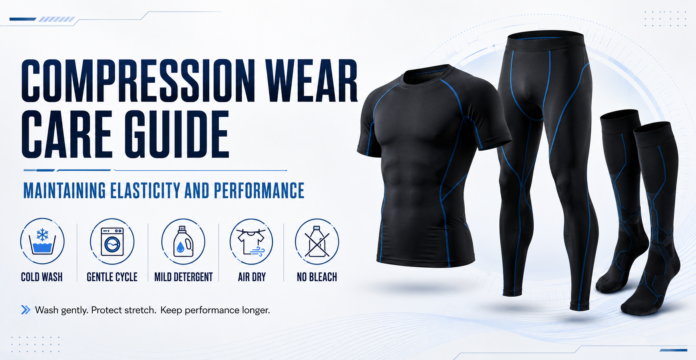
Compression garments rely on recovery and stretch. The garments fit snugly against the skin and provide a comfortable feeling for workouts, travelling, recovering, or everyday movement. The fabric may lose its elasticity if it is washed and dried incorrectly. If compression garments lose their support, they may no longer perform as well. Careful handling protects the shape, colour, stretch, stitching and comfort of clothing. Compression wear should be treated with care because the performance of compression wear care guide clothing depends on its ability to maintain its original shape.
Compression Wear Care Guide Basics
Compression wear care guide basics start with simple habits: wash gently, use cold water, avoid high heat, and store garments properly. A full category like the compression wear collection can include leggings, T-shirts, base layers, shorts and stockings are all garments that require different care. These garments are usually made with elastic fibers to help stretch the fabric and get it back into shape. The fibers should be treated gently. The performance of compression wear can be reduced by harsh washing, detergents, bleach and high dryer temperatures. Compression wear can last longer with simple care.
Wash After Sweaty Use
Washing after sweaty wear is a key part of any compression wear care guide. As compression clothing is worn close to the body, it may collect sweat, oils, deodorant and other odors. The odor of sweaty clothing can be difficult to remove if it is kept in the gym bag too long. Fabric may feel dingy. Hang the garment in an airy place to let it dry out if you can’t wash it right away. Don’t leave wet compression clothing in a bag or on a laundry heap. The airflow reduces odor and makes the garment easier for you to clean.
Turn Garments Inside Out
In a guide on how to care for compression wear, turning garments inside-out is an easy but helpful step. Because the inside of compression wear care guide garments is closest to the skin, it tends to collect the most body oils and sweat. This area is cleaned better by washing inside out. This protects the outer surface of the garment from being rubbed during the washing cycle. It can reduce fading and surface damage. Leggings, T-shirts, Hoodies, Shorts and Base Layers can be washed inside-out. This is a simple habit that will protect both the cleanliness and appearance of the garment while extending its life.
Use Cold Water and Gentle Cycle
One of the most crucial tips in a guide on how to care for compression wear is using cold water. Hot water can damage elastic fibers and fabric, cause color to fade, or change the shape. Cold water is safer and gentler for most compression wear care guide garments. It is better to use a gentle cycle because compression fabrics may stretch, twist or rub excessively when washed in a harsh way. A garment like a compression t-shirt needs stretch recovery and close-body comfort, so gentle washing helps protect its fit. Buyers should avoid heavy wash cycles unless the care label allows them. Gentle washing supports longer-lasting performance.
Choose Mild Detergent
The detergent you choose is important in the care guide for compression wear care guide because chemicals that are too strong can damage stretch fibres. Use a mild detergent. A buildup can occur if you use too much detergent. This buildup can trap odors, reduce breathing, and make garments stiff. Bleach can damage the color and weaken fabric. Use caution when using harsh stain removers. Compression clothing must feel clean, but not lose its flexibility and softness. Mild detergents help remove sweat and odors while protecting fabric performance and elasticity.
Avoid Fabric Softener
The care guide for compression wear should warn the buyer to avoid fabric softener. Fabric softener can reduce the ability of performance fabrics to breathe, stretch and manage moisture by coating them. The coating can also trap odors inside the garment. compression wear care guide shouldn’t feel soft due to a heavy chemical coating. It should maintain its natural stretch and recover. The problem may be detergent residue or softener buildup. Fabric softener can make compression garments smell, feel, and look cleaner.
Air Dry to Protect Elasticity
The drying process is an important part of a compression garment care guide, as high dryer temperatures can damage elastic fibres. The most safe method is air drying. After washing the garment, gently reshape it and hang it up in a shady, airy area. Avoid twisting the fabric or wringing it hard as this can damage the seams. Direct sunlight can fade fabric colors and cause surface damage. A product like compression leggings needs strong recovery around the waist, knees, hips, and legs, so gentle drying helps protect fit and support.
Simple One-Line Care Checks
These checks make a compression wear care guide easy to follow after every use.
- Air out sweaty compression wear before washing.
- Turn garments inside out before putting them in the machine.
- Use cold water to protect elasticity and color.
- Choose mild detergent and avoid using too much.
- Avoid bleach because it can weaken fabric fibers.
- Skip fabric softener because it can reduce performance.
- Air dry compression wear instead of using high dryer heat.
These one-line checks help buyers protect compression garments without difficult fabric terms.
Store Compression Wear Properly
The storage of compression wear is important because it can influence the shape of the garment. Store compression wear completely dry. Fold the garments instead of stuffing into a gym bag or drawer. Hanging heavy, wet clothes can stretch fabric. Compression items need to be kept in a dry, clean place away from heat. A product like compression stockings should be folded carefully so the elastic areas do not become twisted or pulled. Proper storage helps garments stay supportive and ready to wear.
Final Guide to Maintain Performance
This guide to compression wear is concluding with a simple advice: Protect the fabric, protect the stretch and fit. The best compression garments are those that retain their original form and support. The buyer should use cold water and a mild detergent. Avoid bleach, do not use fabric softener or skip the fabric conditioner. Air dry your garments, and store them properly. These steps should be clearly explained on the product pages, as customers want to understand how they can protect their purchases. A useful compression wear care guide increases customer confidence and ensures that garments remain comfortable, supportive and perform well after multiple wears and washings.
FAQs
What is a compression wear care guide?
A compression wear care guide explains how to wash, dry, store, and protect compression garments so they keep elasticity, shape, support, and performance.
How should compression wear be washed?
Compression wear should be washed inside out with cold water, mild detergent, and a gentle cycle to protect stretch fibers and fabric recovery.
Can compression wear go in the dryer?
Air drying is better because high dryer heat can weaken elastic fibers, reduce support, shrink fabric, and damage garment performance.
Why should fabric softener be avoided?
Fabric softener can coat compression fabric, trap odor, reduce breathability, and weaken performance features like stretch and moisture control.
How can buyers make compression wear last longer?
Buyers can follow a compression wear care guide by washing gently, avoiding heat, using mild detergent, skipping fabric softener, and storing garments dry.