
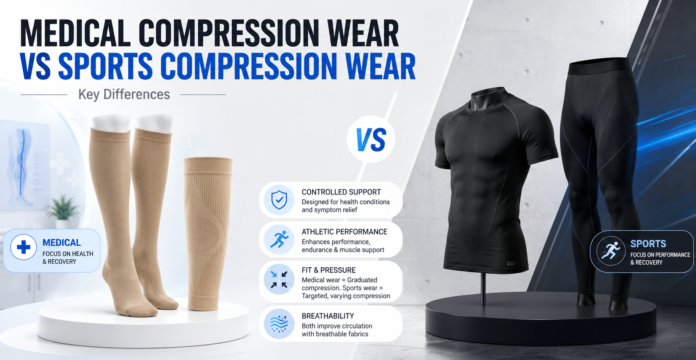
It is important to compare medical compression wear with sports compression wear, as both garments can look the same at first. Both garments fit closely to the body and stretch when you move. They also give off a firm feel. Their main purpose may be different.medical compression wear vs sports compression wear clothing is typically made to control pressure and provide support. Sports compression wear is typically made for travel, training, working out, gym sessions, and athletic movements. The appearance of the product should not be the only factor to consider when buying. Before buying, buyers should consider the product’s purpose, pressure level, fabric quality, comfort, seams and breathability.
Medical Compression Wear vs Sports Compression Wear Basics
Medical compression wear vs sports compression wear starts with understanding the product category. A full category like the compression wear collection can include leggings, Stockings, hoodies and shorts are all base layers. Some products are designed for athletic purposes, while others focus on pressure and support. medical compression wear vs sports compression wear tends to be more precise in terms of fit and pressure. Sports compression tends to be more flexible and performance-oriented. Although both require good recovery and stretch, the design goals are not always the exact same. Details are important.
What Is Medical Compression Wear?
Medical compression wear is usually more focused on controlled support. This type of compression wear is used by buyers who need firm pressure on specific body parts such as the legs, calves or ankles. These garments are designed to fit tightly and provide more pressure than normal activewear. Fit and pressure are important when choosing medical compression wear vs sports compression wear. Uncomfortable garments can be caused by poor sizing, tightness, or looseness. Before using medical-style compressive garments, buyers should follow the product instructions and select the right size.
What Is Sports Compression Wear?
Sports compression clothing is a subset of medical compression wear vs sports compression wear garments. It’s usually designed for travel, recovery, workouts, running, cycling and gym use. The fabric used in sports compression garments is flexible and close-fitting, without blocking movement. A product like a compression t-shirt can support the upper body during training and also work as a base layer under other clothing. Sports compression should feel firm, breathable, and comfortable. It should help the wearer move with confidence during real activity.
Compression Level and Pressure
Medical compression wear and sports compression wear differ in terms of pressure. medical compression wear vs sports compression wear can use more controlled pressure in support garments and stockings. Sports compression clothing is usually firmer and more athletic than medical style compression. It is important for buyers to understand that tight clothing does not always mean proper compression. The compression garment should be supportive, smooth and comfortable. The garment may not fit properly if it causes pain, numbness or discomfort. While medical compression should fit the needs of users, sports compression should allow for movement.
Fit and Measurement
Fit is important when comparing medical compression clothing to sports compression clothing. medical compression wear vs sports compression wear can require more precise sizing, as the pressure needs to be placed correctly on the body. The sports compression wear needs to fit snugly, but is selected by standard size charts or comfort preference. The garment shouldn’t roll, slide or pinch. Leggings should have a secure waistband. T-shirts should have a firm, but flexible shoulder and chest area. Stockings should have a smooth fit at the ankle and calf. Good fit increases comfort and support.
Fabric and Breathability
The fabric quality can make a difference in the way medical compression wear vs sports compression wear feels compared to sports compression wear. Medical compression fabrics may be more focused on pressure control and shape retention. Sports compression fabrics are usually more focused on comfort, quick-drying, and sweat control. A product like compression leggings should support the waist, hips, thighs, knees, and legs while allowing movement during workouts. Breathability is important because compression garments sit close to the skin. If fabric traps heat and sweat, the garment can feel sticky or uncomfortable. Good fabric should balance support and comfort.
Movement and Performance Use
Sports compression wear is designed for active movement. Sports compression wear is designed to allow active movement. It should be able to allow for squats and other active movements such as running, stretching, cycling or gym training. medical compression wear vs sports compression wear can be more focused on pressure support, and not always designed for intense workouts. It does not mean that one is superior to the other. Each has a specific purpose. Sports compression is best for athletes who want to perform better and move more comfortably. When controlled support is needed, they should opt for medical-style compression.
Simple One-Line Difference Checks
These checks make medical compression wear vs sports compression wear easier to compare before buying.
- Choose medical compression when controlled support is the main need.
- Choose sports compression when movement and training comfort matter.
- Check pressure because tight clothing is not always proper compression.
- Check fabric because breathability affects long wear.
- Check stretch because movement needs flexibility.
- Check recovery because the garment should return to shape.
- Check seams because rough stitching can cause irritation.
These one-line checks help buyers understand medical compression wear vs sports compression wear without difficult product terms.
Product Types and Use Needs
Medical compression wear is different from sports compression wear. Compression tees can provide support for the upper body when training or layering. Compression leggings support the lower body during travel, fitness, and workouts. Compression hoodies combine comfort and layering with a close-fitting fit. Compression stockings can be used to support the lower leg and should always be measured carefully. A product like compression stockings needs strong elastic recovery, smooth openings, and comfortable pressure around the lower legs. Buyers should choose the garment type based on where support is needed and how the product will be used.
Final Guide for Choosing the Right Type
Choose based on the purpose, comfort, fit and level of support. medical compression wear vs sports compression wear is typically more focused on pressure control and support requirements. Sports compression wear is more focused on comfort, workouts, sweat control and athletic performance. Before buying, buyers should consider fabric quality, stretch recovery and comfort of seams, breathability, size, care instructions, and sizing. Brands need to explain clearly the purpose of their products, as customers want to know if they are made for daily active wear, performance or support. Buyers can make better decisions with a clear guide.
FAQs
What is the main difference between medical compression wear and sports compression wear?
The main difference is purpose. Medical compression wear focuses more on controlled support, while sports compression wear focuses more on workouts, movement, and athletic comfort.
Is sports compression wear the same as medical compression wear?
No, sports compression wear is not always the same as medical compression wear. The pressure level, fit, fabric, and product purpose can be different.
Which compression wear is better for workouts?
Sports compression wear is usually better for workouts because it is designed for movement, stretch, breathability, and sweat control.
What should buyers check before choosing compression wear?
Buyers should check fit, pressure, fabric quality, stretch recovery, seam comfort, breathability, garment type, and care instructions.


