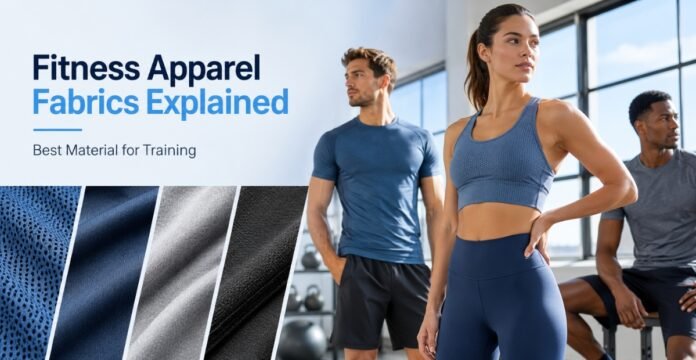
The right clothing can make a hard workout feel more comfortable. Good fitness apparel fabrics help manage heat, sweat, movement, and rubbing. Poor materials may feel heavy, sticky, rough, or too tight after only a few minutes. A runner usually needs light and fast-drying clothing, while a weightlifter may need stronger fabric with dependable stretch. When viewing the fitness apparel collection, look beyond style and color. Fitness apparel fabrics should move with the body, stay comfortable, and survive regular washing. Learning about fitness apparel fabrics helps you choose training clothes that support your activity instead of distracting you.
What Makes Fitness Apparel Fabrics Perform Well?
The best fitness fabrics are made from materials that manage the trade offs between stretch, softness, and durability. Good stretch and trade off help allow a garment to keep its shape – even after squats, runs, and other potentially shape altering movements. Fabric structure is also really important. A lightweight single knit may feel cooler than a thick double knit, even though its the same fiber. Judging fitness apparel fabrics by fiber names alone, is limiting. The best fitness fabrics are made with the right fibers, the right yarn, the right knits, as well as the right finishes and weights for the intended activity.
Polyester for Sweaty Workouts
Polyester is a go-to fabric for workout clothes for a reason. It is lightweight, strong, and quick to dry. Polyester absorbs none to very little moisture, making it a good candidate for fabrics designed to transport sweat to the surface to evaporate. For this reason, polyester is a good option for running, cycling, circuit training, and high-impact workouts. That said, polyester fabrics are not all equal. Thin and breathable polyester fabrics can feel totally different from polyester fabrics that are cheap and thick. Comfort can depend on the fabrics knit structure, ventilation, thickness, and finishing treatments.
Nylon for Softness and Strength
Nylon (polyamide) is a good fabric option for leggings, cycling clothes, fitted shorts, sports bras, and compression tops because it is smooth, strong, and resistant to rubbing. Nylon fabrics are also great for close fitting apparel because they are softer against the skin than polyester textiles and can withstand repeated movement and contact to benches, mats, and equipment. Some nylon-elastane fabrics can provide a good balance of air flow, moisture management, and quick drying ability. Although nylon may cost more than polyester, its soft and premium feel is often well justified.
Cotton for Light Exercise and Comfort
Cotton offers a soft and comforting feel which is ideal for clothing meant for walking, stretching, or even lifting. Cotton is also suitable for clothing meant for daily use. Cotton is also moisture retentive, which adds some weight to a cotton shirt when soaked with sweat from a more intense workout. In these situations, rapid drying is preferred over comfort. Cotton fitness apparel fabrics, especially those made using modern technology, which can move moisture better, or those made with cotton blends can dry better than regular cotton, are a better alternative. A relaxed cotton tee is better used as a pre or post workout tee.
Elastane for Stretch and Shape Recovery
Elastane, or spandex, is used to add stretch and recovery to fitness apparel. Alone, or more preferred, with other fibers, elastane workout apparel, along with the other fabrics, moves with the body and aids recovery. In addition to recovery, elastane apparel returns to its original dimensions after being stretched. While elastane apparel is great, more elastane in the fabric mix doesn’t always mean a better end product. For some fabrics, a high elastane content can mean a warmer or less breathable fabric. A better balance of elastane is needed for the apparel, while still maintaining the structural integrity of the fabric.
Blends Can Balance Different Benefits
Blended materials combine the useful features of two or more fibers. Cotton-polyester can offer softness with improved drying, while nylon-elastane can provide a smooth feel with strong stretch. Polyester-elastane is common when designers want quick drying, support, and shape recovery. Eco Jersey’s graphics stringers use a 65% cotton and 35% polyester blend, which shows how one garment can combine casual comfort with workout function. Blended fitness apparel fabrics are often more practical than single-fiber materials because the ratio can be adjusted for a specific use. However, fitness apparel fabrics still need good yarn, knitting, stitching, and finishing to perform well.
Fabrics for Hot Weather and Gentle Training
Hot-weather training needs light fitness apparel fabrics that allow air to move and do not remain wet for too long. Lightweight polyester or nylon knits can suit running and fast exercise because they can dry quickly. Cotton blends may suit walking, stretching, and easy gym sessions when softness is more important. Linen-cotton can also feel airy for yoga, warm-ups, travel, or relaxed movement rather than tight, high-impact training. The linen-cotton pumper pants show how a loose garment can be designed around airflow and easy movement. In warm conditions, fitness apparel fabrics should be light in both fiber choice and fabric construction.
Fabrics for Strength Training and Cardio
Combining different types of training subjects apparel to differing training stresses. Fabrics used in apparel for lifting/strength training must be durable, flexible, and be able to withstand friction and stress. Strength training apparel is typically made of polyester/elastane and nylon/elastane blends. Opacity and thickness of leggings, shorts, and compression apparel used in strength training is generally greater than thinner and lighter fabrics used in cardio apparel, which are used for running, cycling, and intensive training. Cardio training fabrics lose and gain heat and sweat.
A Simple Fabric Buying Checklist
Before buying fitness apparel fabrics, check the label, feel the material, stretch it gently, and think about your usual workout. Good fitness apparel fabrics should match the amount of sweat, movement, heat, and friction you expect.
- Choose lightweight polyester for sweaty cardio and faster drying.
- Choose nylon blends for smooth, strong, close-fitting garments.
- Choose cotton for light activity, warm-ups, and casual comfort.
- Choose elastane blends when stretch and shape recovery matter.
- Choose thicker, opaque knits for leggings and fitted bottoms.
- Choose mesh or open-knit zones when extra airflow is needed.
- Choose balanced blends when one garment needs several benefits.
Conclusion
Selecting training materials is much simpler when you begin the selection process with the activity in mind. Heavy sweating with quick drying means you’ll want to work with polyester. Softer and stronger fabrics with a smoother and fitted feel will work with nylon. For comfort with added stretch in the direction of needed movement, cotton is an excellent choice with the addition of some elastane. Working with blends combines all of these suggestions, however, the knit structure and fabric weight are of the utmost importance. The best fabrics to use for fitness apparel are often the least costly. The best materials are those that match your workout, the weather, care, and your movement.
FAQs
Which fitness apparel fabrics are best for heavy sweating?
Lightweight polyester and nylon blends are usually good choices because well-designed versions can move moisture and dry quickly. Look for breathable knits and ventilation zones.
Is cotton suitable for gym workouts?
Cotton can work for walking, stretching, warm-ups, light lifting, and casual gym sessions. It may become heavy during long or very sweaty workouts because untreated cotton holds more moisture.
How much elastane should workout clothing contain?
There is no single perfect percentage. Loose tops may need little elastane, while leggings and compression garments normally need more. Fit, knit structure, and garment purpose matter as much as the number on the label.