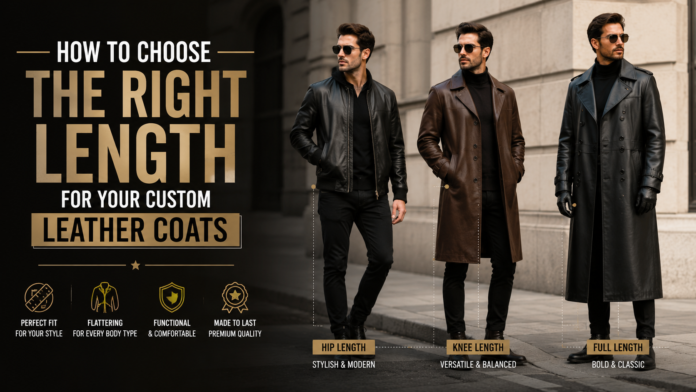
Length is one of those details that looks simple on paper but makes an enormous difference in how a leather coat actually feels, moves, and sells. Get it right and the coat looks intentional, polished, and wearable. Get it wrong and even the best leather and stitching won’t save it. Choosing the right length for custom leather coats isn’t just a style decision — it’s a practical one that affects production, fit across different body types, and how your customers actually use the garment. If you’re working with a leather apparel manufacturer on a custom coat line, length should be one of the very first conversations you have — not an afterthought.
Here’s everything you need to think about before you finalize that spec sheet.
Why the Right Length for Custom Leather Coats Matters More Than You Think
Creating a custom leather coat is far more difficult than crafting a simple t-shirt, tank top, or other casual clothing. The longer the coat, the more leather is required, the more complicated the design gets, and the more cumbersome the coat becomes. A coat that is longer than its intended length by even just a couple inches can feel constricting and uncomfortable. In contrast, creating a coat that is shorter than its intended length removes the elegance and warmth (the purpose) of a coat. The right length for custom leather coats is the length that satisfies the proportion of the design while fulfilling its purpose and being comfortable to wear. This balance looks different for every person, so be sure to keep this in mind when creating your coat. This is why experienced leather coats manufacturers always ask about your target customer before they cut a single pattern. A coat built for a tall man has very different length considerations than one designed for petite women.
The Four Main Length Categories
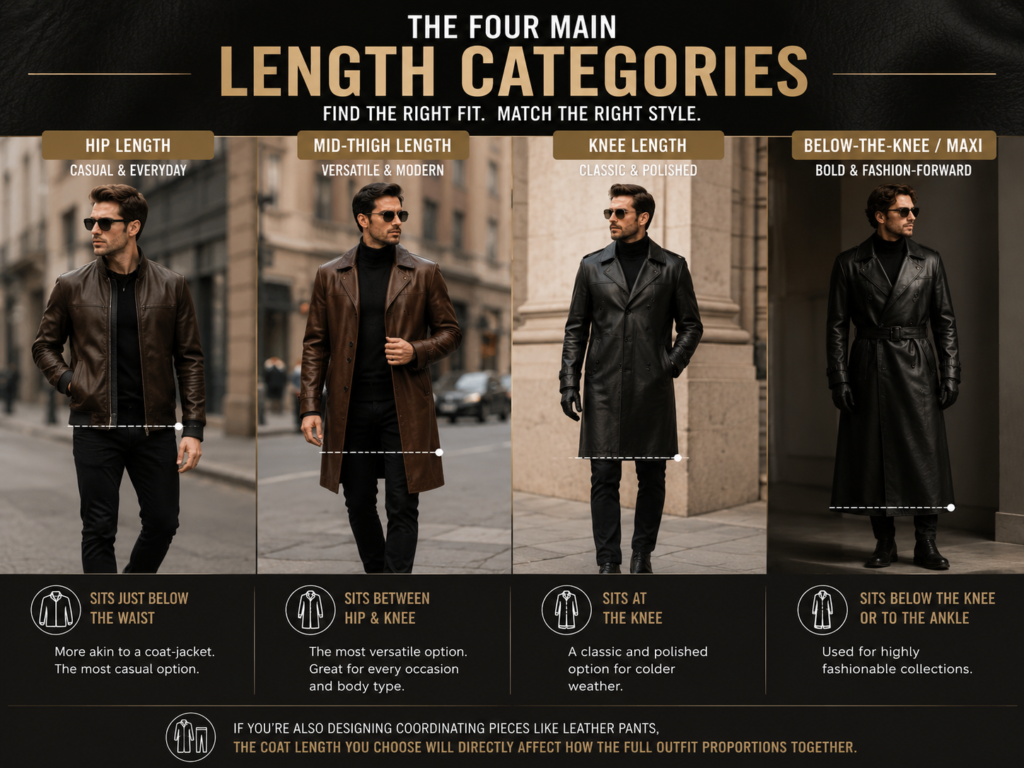
Before diving into the custom coat design process, understanding the four main leather coat length categories is essential:
- Pro Tip — If you are also designing coordinating pieces like leather pants, the coat length you choose will directly affect how the full outfit proportions together.
- Hip-Length Coats — The most casual option, sitting just below the waist. They have a coat-jacket feel and work best for relaxed, everyday styling.
- Mid-Thigh Coats — The most versatile option, falling between hip and knee length. They suit every occasion and every body type with ease.
- Knee-Length Coats — A classic and polished choice, ideal for colder weather and more formal settings.
- Below-the-Knee & Maxi Coats — Reserved for highly fashionable and statement collections, offering a bold and dramatic silhouette.
Consider the Customer’s Body Type First
Not accounting for different body types causes major issues when adjusting patterns for different sizes. Custom company leather coats differ when purchased for the customer. For shorter customers, longer coats hitting below the knee become overwhelming by shortening the legs and adding heaviness to the overall body frame. For taller customers, longer coats are flattering and add length. If your brand sells to a wider range of body types, consider offering the same coat in multiple lengths or grading your pattern carefully across sizes. A manufacturer producing leather jackets alongside your coats will already understand this — jackets require the same kind of fit thinking, just on a shorter scale.
Think About How the Coat Will Actually Be Worn
When making style decisions, consider function. Depending on city traffic, coats can be an inconvenience to quick, short runs. Mid-thigh coats are not too long to make jumping in and out of a coat cumbersome, nor too short to make them look styling and good. Long coats are perfect to help you make an entrance. If your customers are also buying leather skirts or leather vests to layer underneath, the coat length needs to work with those pieces — not compete with them visually.
The Right Length for Custom Leather Coats and Fabric Weight
Something that truly amazes many owners of new brands is the relationship between the length of a coat and the type of leather you need to use. The longer the coat, the weight of the leather matters, since you want the coat to hang without collapsing or bunching. If you use lightweight leather on a coat that reaches the floor, the coat will drape unevenly, and will look extremely unprofessional. The shorter the length of the coat, the more flexibility you have with leather weight, since the coat will have less length to control. This is why you can’t design the length of a leather coat and choose the leather for the coat at different times. The manufacturer you pick will use the weight and finish of leather to match the level of control you need to the silhouette of the coat. This also ties into your accessories line — the leather used in leather belts that come with the coat needs to complement rather than clash with the coat’s leather in both texture and finish.
Gender Differences in Coat Length
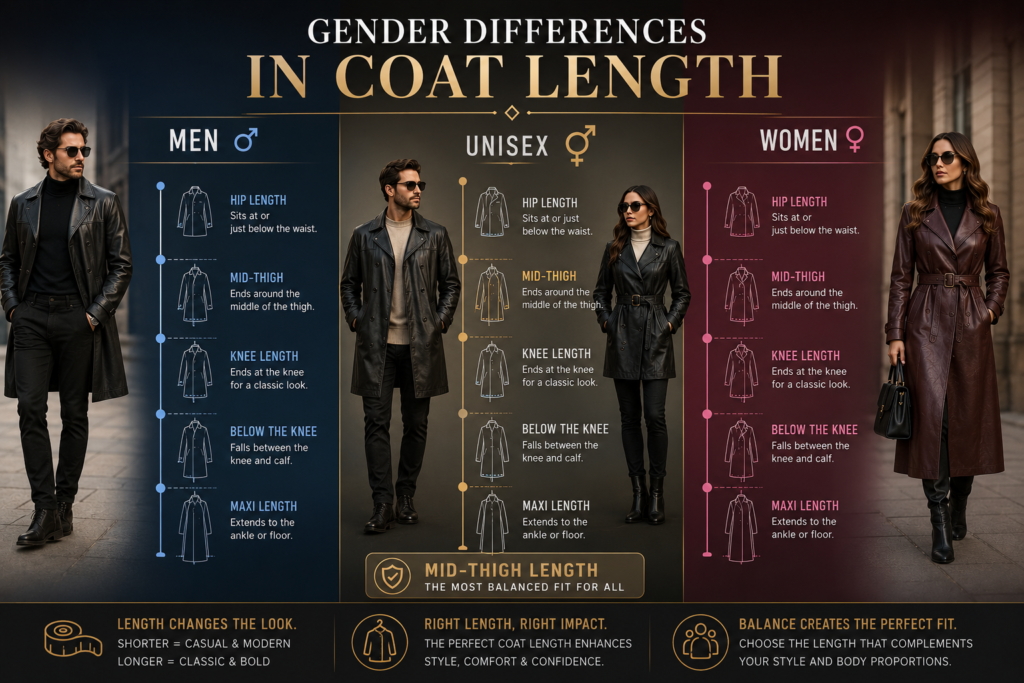
Men’s and women’s leather coats exist on completely different ends of the spectrum when it comes to length, and ignoring this can lead to a product that feels off, even if the customer can’t explain why. Historically, men’s leather coats have always landed at thigh to knee length. Any styles that are longer than that are very fashion-forward for men and require a more confident carry. Women’s leather coats can have more variety and range, from right at the hip to all the way to the floor. Longer styles are usually more expected across different style categories. Building a unisex line presents its own challenges, however, finding a length that works across genders is not impossible — mid-thigh with an easy fit is typically the safest option. Brands that also produce leather gloves and leather bags as part of the same collection should keep coat length in mind when styling the full look — everything needs to feel cohesive.
Practical Tips Before You Finalize Your Coat Length
Before you sign off on your final spec sheet, do these things. First, make a physical toile or muslin in your intended length before cutting into actual leather to avoid costly mistakes — this surefire way to save money. In the second place, do not solely rely on fit models to show how your actual customer would look. You should try your coat length on actual customers instead of fit models. Finally, try to simulate as many real-life scenarios that you can. This can include walking, sitting or even getting in and out of a car. More movement than a static fitting is the best way to catch fitting issues. Lengths that are even good for standing can feel very restricting in a normal movement. If you’re also producing leather aprons or other long leather pieces alongside your coat line, the same principle applies — test every length in motion, not just on a hanger.
Final Thoughts
Choosing the right length for custom leather coats is one of those decisions that looks straightforward until you start factoring in body types, leather weight, end use, and how the cape coat works alongside the rest of your collection. There’s no single correct answer — only the answer that’s right for your customer and your brand. Work closely with your manufacturer from the sampling stage, test lengths on real bodies, and don’t rush the process. A well-proportioned custom leather coat built to the right length will sell itself. One that’s even slightly off will come back as a return with a vague complaint about fit — and that’s always more expensive than getting it right the first time.
FAQs
What is the most versatile length for a custom leather coat?
Mid-thigh length is generally the most versatile option. It flatters a wide range of body types, works across casual and semi-formal occasions, and is practical for everyday wear. If you’re launching your first leather coat and want it to appeal to the widest audience, mid-thigh is the safest and smartest choice.
How does coat length affect the cost of production?
Longer coats use significantly more leather, require heavier lining, and involve more complex pattern-making to ensure the silhouette hangs correctly. This means a below-the-knee coat will cost noticeably more to produce per unit than a hip-length coat, even if everything else — leather type, hardware, stitching — is identical.
Should I offer multiple lengths in the same coat style?
If your budget allows, yes. Offering the same coat design in two lengths — for example mid-thigh and knee-length — gives customers more options and can significantly increase conversions. Just make sure the pattern is properly graded for each length rather than simply hemmed, as proportions shift when you change the length.