Home Blog Page 26

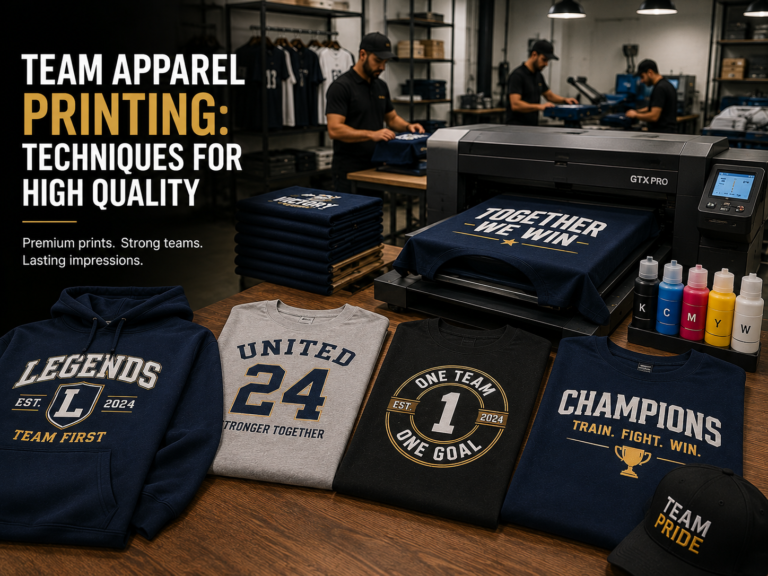
Team Apparel Printing: Techniques for High Quality

Clubs, sports teams and organizations depend on high-quality printing for team apparel to present their members’ identity and spirit. When it comes down to tailored designs for uniforms, jerseys, and promotional apparel, making an informed choice of printing technique can mean an added advantage due to the optimal print quality, delivery of the desired prints and the printed designs.

The importance of quality printing for clubs and teams

Team apparel has always been more than just colors and logos. High-quality printing means:

  • Designs don’t lose their appeal even after multiple washes
  • Logos are neatly and evenly printed
  • There is no discrepancy from brand colors
  • Garments don’t lose a polished and professional appearance

Partnering with experienced manufacturers offering custom printing services guarantees your team uniforms meet these standards.


Most Popular Printing Techniques for Teams & Clubs

1. Screen Printing

Great for large orders and bright colors. The designs are sturdy and last even with repeated washing.

2. Heat Transfer

A great method with flexibility and high accuracy for smaller orders and complicated, multi-color designs.

3. Sublimation Printing

Great for all over prints. Sublimation printing works best on light colored printing and sportswear.

4. Embroidery

Works for polo shirts, jackets and caps. Logos and designs are very clearly printed and will last a long time.

Combining these techniques with sampling and pattern-making services ensures your designs are perfect before full production.


Printing Integration Into Team Apparel Production

Maximize efficiency and quality with these tips:

  • Sync up printing with the cutting, stitching, and finishing
  • Use tech packs to indicate design and size details for each garment
  • Quality control each production stage
  • Work fast, but not at the expense of quality for large volumes

Manufacturers skilled in contract clothing manufacturing can help clubs and teams scale production efficiently.


Clubs – Branding and Uniformity

Custom labels, logos and branded tags elevate a team’s clothing to a premium look and establish brand recognition. Services like custom labeling and branding allow your team apparel to look premium and consistent across all items.


Benefits of Professional Team Printing

High-quality printing has many perks, such as:

  • Designs that withstand wear and tear
  • Appearance consistency for players, coaches, and fans
  • Logos centered and even across all apparel
  • Quick turnaround times for bulk orders
  • Team identity and brand makeovers

No matter the batch, 50 or 5,000 pieces, everything printed professionally is consistent and eye-catching.


Final Thoughts

Unarguably, investing in good printing for clubs and teams guarantees a consistent look with quality. Whether heat press and screen printing, embroidery, or sublimation, good quality printing makes teams feel proud wearing their brand.

We give clubs and teams the ability to produce quality and durable custom teamwear. Get Quote Now if you’re ready to start, or Contact Us if you would like a professional to guide you.


FAQs

What is the best printing method for jerseys?

For bulk, good quality screen printing; for multi colors in lower numbers, a heat method; all over prints, sublimation; and for a premium look, embroidered logos.

Are custom prints only for large teams?

Not at all, even teams with small numbers can stay competitive with quality and consistent prints through low minimum order quantity manufacturers.

How is consistency achieved with large orders?

With tech packs and quality checks, consistency is ensured with standard printing across every piece produced.
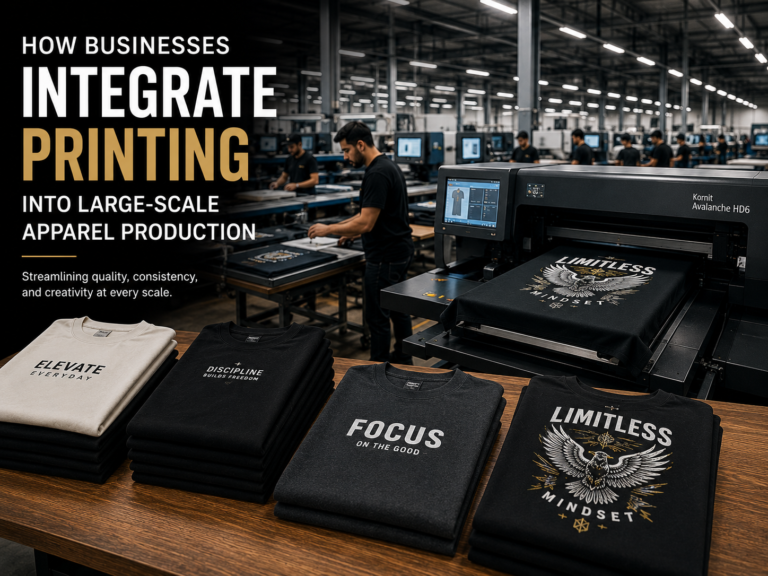
How Businesses Integrate Printing into Large-Scale Apparel Production

When managing brands, startups, or teams, it’s crucial to be able to scale up production while integrating quality printing into the design. Businesses require systems that can be relied upon to complete the job efficiently while ensuring consistency and maintaining quality branding across prints.

Integrating printing into large-scale production creates the ability to printing and maintain consistency in quality while balancing speed across mass production. When producing hundreds or even thousands of garments, choosing the right methods and optimizing the workflow becomes critical.


Why Large-Scale Printing Integration Matters

Printing is more than just a well-placed logo. If printing is delayed or performed poorly, damages to a company’s brand can be expected. Companies choose to integrate printing into production lines to ensure that they:

  • Maintain the same quality across thousands of items
  • Meet large order fulfillment deadlines
  • Utilize a variety of printing techniques within the same production
  • Achieve uniform application of prints to all items

Experienced manufacturers offering custom printing services ensure your designs are reproduced perfectly at scale.


Printing Methods for Large-Scale Production

Depending on design, fabric, and order volume, certain printing methods fit better. These include:

  • Screen printing: Simple, repetitive design. Best for large orders.
  • Heat Transfer: Best for small orders. Handles multiple colors.
  • Sublimation Printing: Performs best on light-colored fabrics and all-over prints.
  • Embroidery: Adds premium branding for jackets, polos, and hats.

Using sampling and pattern-making services ensures accurate designs before full production.


Workflow Integration in Production Lines

When planning to print directly into your production line, the main challenge is planning alongside manufacturing. These quote the main components:

  • Printing in sync with cutting, stitching, and finishing
  • Detailed tech packs that clarify designs, sizes, and placements
  • Responsiveness to quality control checks throughout the production cycle
  • Balancing speed with the precision necessary for volume orders

Manufacturers experienced in contract clothing manufacturing help brands run smooth production without sacrificing quality.


Branding and Quality Control

Establishing a reliable and efficient quality control strategy is essential for businesses that focus on mass printing. Brands that have a reputation utilize control checks at different stages of the production process. These include:

  • Pre-printing (evaluating the textiles and the colors)
  • Printing (checking alignment and ensuring that the colors printed are consistent throughout the process)
  • Post printing (inspecting and ensuring that the goods are packed well)

Services like custom labeling and branding ensure that printed apparel reflects your brand identity perfectly.


Benefits of Efficient Printing Integration

Integrating printing capabilities into your large-scale manufacturing processes has the following benefits:

  • Speedy turnaround for big orders
  • Uniform application of design across all items
  • Capability to handle designs that require multiple colors or are complex
  • Fewer mistakes as well as less time spent on making corrections
  • Better presentation of branding

Whether you are a scaling startup or an established brand growing your production, the benefits of integration deliver high-quality results, and a professional appearance, consistently.


Final Thoughts

Incorporating printing into large-scale apparel production becomes essential to uphold standards, remain punctual, and offer polished items to clients.

It allows brands to grow and perform without sacrificing their designs as they partner with capable manufacturers.

Get Quote Now to make your large-scale apparel printing more efficient, or Contact Us for a custom consultation.


FAQs

Why is integrating printing into production important?

It ensures the quality and accuracy of designs across all items, as well as faster production times.

Can large-scale printing handle custom designs for startups?

Yes. Companies that are able to adapt can produce anywhere between small and large quantities of items without compromising quality.

What quality checks are needed for large-scale printing?

Verification of the materials, alignment of the prints, consistency of colors, and a final inspection before it is packed and shipped, are among the checks that can be performed.

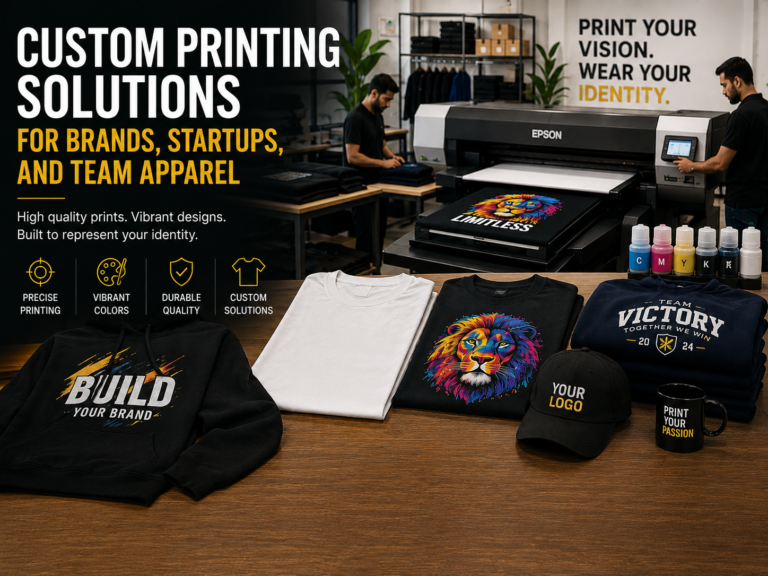
Custom Printing Solutions for Brands, Startups, and Team Apparel

If you run a startup, manage a sports team, or run a growing brand, custom apparel printing will help you stand out. Custom printing solutions will help you create custom printed products that look professional and represent your brand.

Custom printed apparel includes t-shirts, hoodies, jackets, bags, and more! The right partner will help you print custom apparel that will be unique and professional-like, even if you are a small startup with small orders.

Why Custom Printing Matters

Custom printed apparel will represent your startup and create consistency among your team. They will be high quality and promote your brand.

Some of the benefits include:

  • a polished look for your team or brand
  • long lasting prints that withstand the test of time
  • the ability to print a variety of looks
  • quick turnaround for orders of any size

Working with an experienced manufacturer offering custom printing services ensures your apparel looks great and maintains high quality.


Printing Methods That Make a Difference

Different printing methods apply to different types of apparel needs. Here’s what skilled manufacturers provide:

  • Screen Printing: Works best for solid colors and bulk orders.
  • Heat Transfer: Works best for small orders and difficult images.
  • Sublimation Printing: Works best for light fabrics that need all-over prints.
  • Embroidery: Works best for jackets, hats, and polos that need an upscale look.

Combining the right method with sampling and pattern making services ensures your design turns out exactly as expected.


Solutions for Startups and Small Brands

Startups are most often concerned with printing costs and minimum order quantities. Luckily, printing partners now provide the following:

  • The ability to test new designs with small-run orders.
  • Hands-on control of the printing costs.
  • The ability to design products for different customers and/or create different designs for various teams.
  • The ability to increase orders to keep pace with the growth of the company.

Manufacturers offering low MOQ clothing manufacturing make it easier for small brands and teams to create professional-quality apparel without a large upfront investment.


Branding Through Custom Prints

It is a misconception that printing clothing is just placing a logo on the apparel. It is actually a branding opportunity that, when done with proper placement and colors and designs, can make your apparel well known and professional.

Professional custom labeling and branding services can enhance your printed apparel with:

  • labels that have your brand printed on them,
  • custom created tags and packaging,
  • logos that are printed or created through an embossing process, and
  • size and care labels.

Providing this level of branding to printed products will make customers trust the product even more.


Scaling Your Printing Process

As your brand expands, you may require higher quantities or more intricate designs. A manufacturer experienced in contract clothing manufacturing can help you scale efficiently.

  • Faster production times
  • Quality bulk orders
  • More printing options
  • A strong partnership

Final Thoughts

If you want your brand, team, or startup to stand out, custom printed apparel is a must. Your business will leave an impression with custom apparel infused with brand presence.

A professional manufacturer will ensure you have consistent and quality apparel, whether you are printing your first tote or printing your fiftieth.

FAQs

Can startups get small orders with custom printing?

Yes. Low MOQ manufacturers have allowed startups to develop professional prints without the cost of bulk orders.

What printing methods are available for team apparel?

Thermal, sublimation, and screen printing are a few printing methods available.

How does custom printing improve branding?

The way products look on the shelf or in the hands of customers can truly make a difference to your custom prints, names, and packaging.

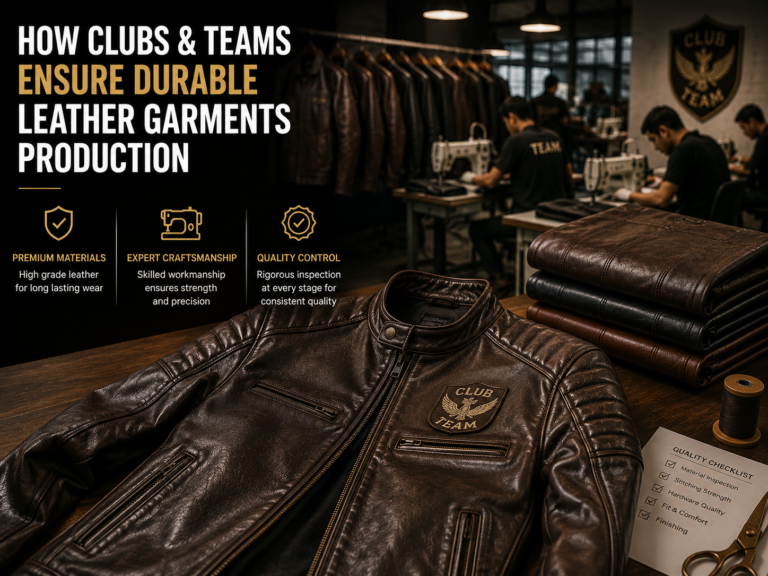
How Clubs &Teams Ensure Durable Leather Garments Production

Especially for track and field clubs, or intense competitions like motorcycling, esports, or football, leather gear and clothing are worth the investment. Leather material can outlast most stitching, whether synthetic or not. Leather must withstand abrasions, stretching, and bodily fluids for multiple seasons. How do clubs or teams acquire durable leather garments without errors in production?

The answer starts with strict sampling, correct leather grades, and reinforced stitching. Let me walk you through the exact process we recommend to teams and clubs.

Start with the Right Leather Grade and Thickness

Not all leather works for team gear. For jackets, vests, or pants that players wear weekly, you need full-grain or top-grain leather. Avoid genuine leather blends – they crack under stress.

Check our Fabric Sourcing & Development page to see how we help clubs select the right materials – including leather alternatives and performance backings.

Evaluate a small batch immediately after sourcing. Cut sample swatches and subject them to rig stretching. Sliced grain or scabbing? Reject that batch.

Reinforced Stitching and High-Tensile Thread

Typically, polyester thread snaps when stitching leather. You need bonded nylon or Kevlar-reinforced thread (T70 or T90 weight). Also, specify a longer stitch length – 4 to 5 stitches per inch. Tearing will occur if there are short stitches.

For high-motion joints such as shoulders and elbows, do the following:

  • Use double-needle chainstitch
  • Back-tack (reverse stitch) at every stress point, advancing at least 1 inch
  • Use leather reinfocement patches in elbow and knee zones

We handle these exact details under Cut and Sew Manufacturing Capability. Our team adjusts stitch type, thread weight, and reinforcement zones specifically for team leather orders.

Use a “Wear-Test” Sample Round for Every Team Order

Clubs perform wear-test sample rounds prior to garment mass production. Three to five members of the team must wear samples during full practices or wear them continuously for two weeks. Afterward, look for the following:

  • Spaces forming between stitches (gapping)
  • Snags in stitching caused by the zipper
  • Leather stretching out of shape
  • Snaps (also known as press studs) or other fasteners becoming dislodged or moving through the garment

Latex, leather, or zippers should all be reinforced. After the wear-test, most durability complaints (80%) should be expected to have been addressed.

Control Production Humidity and Dyeing

Leather takes up moisture unevenly. If the humidity in your factory varies a lot in the year, the final garments will shrink or warp. The best leather workshops have a relative humidity of 45%–55% during cutting and sewing.

In the same way, if you must dye leather after stitching (which we don’t advise for teams), use ** drum-dyeing** with fatliquor to keep the leather soft and flexible. Avoid spray dyes – they crack quickly.

We provide controlled Washing & Dyeing Services for fabric and selected leather trims. Although we specialize in Eco Jersey fabrics, we can suggest leather-dyeing partners if the leather meets your durability requirements.

Final QC Checklist for Clubs & Teams

Before accepting a bulk delivery, implement this four-point checklist:

Check PointWhat to Verify
Tensile strengthPull on the seam with a 10 lb weight. It should neither stretch nor tear.
Hardware adhesionRivets should stay intact after 20 tugs.
Color rub testRub a dry cloth on the fabric 10 times. There should be no dye transfer.
Zipper slideThe zipper should slide smoothly open and closed for 50 cycles.

Apply these criteria to our QC Standards as we employ the same standards for evaluating performance garments.

Professional Support for Durable Leather Production

If you’re managing a club/team and want durable leather garments for production without guesswork, we can help. Unlike many DIY options available, we can provide assistance from selection and sampling to managing the complete cut and sew process for production scale. We’d like to hear from you, whether you’re still testing your very first leather sample, or ready to proceed with the pilot run for your team. Get a Quote Now to start planning your production timeline, or Contact Us Now for personalized advice on sizing, grading, and leather durability standards.

FAQs

Can you produce 100% leather jackets for a motorcycle club?

We specialize in cut-and-sew jersey and performance fabrics. For projects involving leather, we can connect you with manufacturers to complete your production while we manage your textile garments. Explore our manufacturing solutions.

What is the minimum order quantity for team leather garments?

The minimum order quantity for specialty leather cut-and-sew is typically 50 to 100 garments. Please check our Low MOQ Clothing Manufacturer page; we use the same approach for leather as for all our partners.

How do i add team logos without compromising the leather?

Avoid sewing logos directly onto thin leather, as this can damage it. Heat-transfer labels or fabric patches (sewn separately and then attached) are better options. See our Custom Labeling & Branding Services for details.

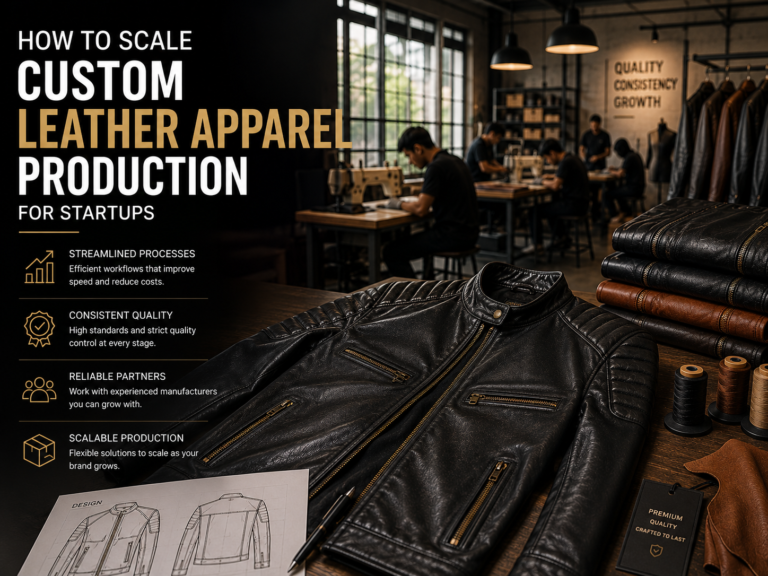
How to Scale Custom Leather Apparel Production for Startups

Brands within the leather apparel market are growing, and so is the demand for durable, customizable, and high-quality products from fashion brands, startups, sportswear companies, and streetwear. When it comes to custom leather apparel, clients expect more than good designs. Businesses aiming to grow need reliable, flexible, and cost-efficient manufacturing and long-term quality control.

Manufacturing partners take the stress out of production for startups and empower large scale brands to produce higher quantities while retaining quality. Production is at the core of every leather apparel business and makes the most out of the custom leather apparel offering available to the market.

Importance of Scalable Leather Apparel Manufacturing

When demand increases, brands tend to face challenges with production timelines, material sourcing, consistency, and customization. Thus, it becomes necessary to choose a manufacturer with advanced capabilities.

A scalable production setup allows businesses to:

  • Increase production volume smoothly
  • Maintain consistent product quality
  • Reduce manufacturing delays
  • Support custom branding requirements
  • Handle seasonal demand changes efficiently

Cheap and efficient manufacturing mostly exists for startups with lower inventory and budgets.

Businesses that work with experienced partners offering production capabilities can manage growth more efficiently while maintaining premium craftsmanship standards.

Precision in Leather Cutting and Stitching

The creation of leather garments involves measurement, cutting, and stitching precision. Leather is not like an ordinary fabric. It requires finesse and specialized tools.

Professional manufacturers offering leather cutting and stitching services help brands produce durable and visually appealing garments with accurate finishing.

Proper leather production entails:

  • Accurate panel cutting
  • Strengthened seam stitching
  • Finished edges
  • Uniform panel sizes
  • Long lasting stitching

Veteran production teams eliminate excess material waste, which is cost-effective for new brands in their initial production stage.

Flexible Manufacturing Solutions for Startups

Providing leather apparel is often perceived as requiring large production runs, yet there are modern manufacturing methods that now allow for flexible order quantities.

Working with a low MOQ clothing manufacturer allows startups to test products before committing to large inventory investments.

Some of the benefits of low MOQ production include:

  • Reduced initial stock purchase
  • Leaner testing with quicker time to market
  • Less stock on hand leading to minimal waste
  • Enhanced flexibility for design changes

Additionally, startups can combine low MOQ production with sampling and pattern making services to refine products before full-scale manufacturing.

Custom Branding Creates Long-Term Value

Branding becomes evermore important as businesses grow. Customers are often drawn to the presentation of the product, and the finest leather apparel is often associated with premium branding.

Manufacturers offering custom labeling and branding services help brands create professional products that stand out in competitive markets.

Custom branding services are inclusive of:

  • Woven labels
  • Private labels
  • Hang tags
  • Custom packaging
  • Embossed logos
  • Size labels

Experts on branding agree that effective branding increases customer loyalty and brings a higher perceived value to your products.


Fabric and Material Sourcing for Leather Apparel

Material sourcing impacts quality, durability, and customer satisfaction of products. For scalability of production of leather apparel, a well-established sourcing system is a must.

Experienced manufacturers offering fabric sourcing and development can help businesses choose suitable leather types, linings, trims, and accessories based on budget and product goals.

At a minimum, a sourcing expert will help clients with:

  • Material consistency
  • Improved lead times
  • Sustainable sourcing
  • Consistent low-cost sourcing
  • Strategic sourcing partnerships

As a company grows, robust sourcing systems solidify a competitive edge.


Why Tech Packs Improve Production Accuracy

When sensitive technical documentation is not provided, production scaling is a recipe for disaster in the form of style mismatches and product defects. This is the primary consideration for creating a robust, professional, accurate tech pack.

Using tech pack development services helps manufacturers understand every detail of your product before production begins.

The contents of a comprehensive tech pack may include:

  • Measurements
  • Stitching instructions
  • Material specifications
  • Color references
  • Logo placements
  • Construction details

Tech packs enable brands to decrease errors and enhance consistency of large orders.


Sustainable Leather Apparel Manufacturing

Sustainability is shaping customer buying behavior, and many brands now demonstrate ethical production and responsible sourcing practices.

Brand reputation and commitment to sustainable apparel production are enhanced by partnering with a hypothetical specialized sustainable apparel manufacturer.

Sustainable manufacturing strategies may include:

  • Minimizing material waste
  • Optimizing production schedules
  • Reducing harm to the environment through the use of packaging
  • Adopting sourcing methods that abide by regulations
  • Ensuring longevity in garments

Lastly, sustainable practices tend to boost the bottom line in the long run.


Scaling from Startup to Large-Scale Production

Businesses need to adapt to larger production systems. The best manufacturers have the competitive flexibility to offer both small batches and large-scale production.

Working with experienced contract clothing manufacturers allows businesses to scale gradually without constantly changing suppliers.

This leads to:

  • Improved relationships
  • Increased efficiency
  • Improved consistency and quality
  • Improved and predictable delivery
  • Better relationships for improved collaboration

The ability to scale manufacturable products offers businesses an advantage in keeping up with the changing marketplace.

Final Thoughts

The scale of production in custom leather apparel is a function of the integration of the proper design and the proper systems for the manufacture leather itself. Sustainable production begins with leather craft, and ends with systems that scale production without sacrificing quality.

The partnership of flexible manufacturers improves the initial sale and repeat purchases by ensuring improved products on the market.

The best means to ensure sustainable growth is the partnership of reliable manufacturers, whether the customers are first time or frequent buyers contact us now.

FAQs

What is the benefit of low MOQ leather apparel manufacturing?

Producing low MOQ allows new brands to test different apparel styles with a lower risk of higher inventory costs.

Why are tech packs important in leather apparel production?

Tech packs offer precise instructions including types of materials, sizes, stitching, and placement of the brands. This helps manufacturers get the production 100% accurately.

Can startups scale leather apparel production gradually?

Yes. Startups can begin orders at a smaller scale, and adjust order quantities to meet the balance of supply and demand as the business continues to grow.

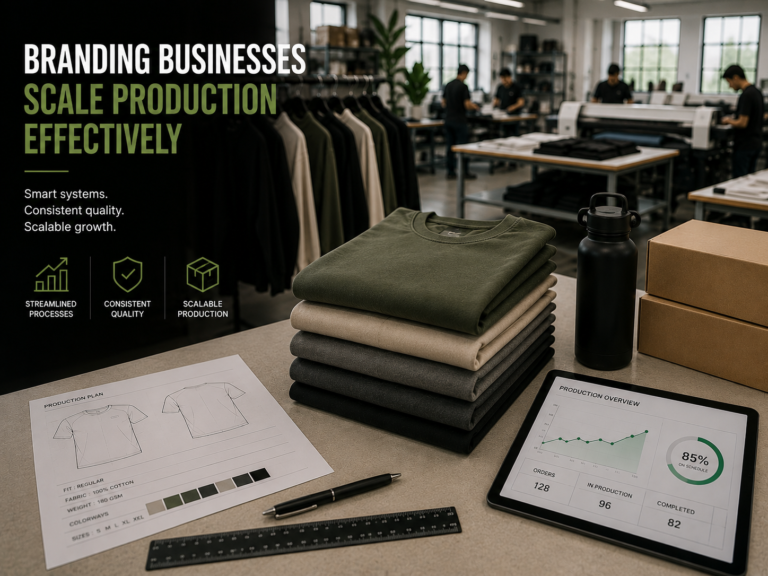
Branding Businesses Scale Production Effectively

In today’s competitive market, businesses need apparel that truly represents their brand. From sports teams to startups, custom-branded clothing helps companies make a strong impression. But achieving consistent branding across large orders requires careful planning, production expertise, and scalable processes. At Eco Jersey, we guide brands through this journey with precision and efficiency.

Understanding the Importance of Custom Branding

Custom branding is more than just adding a logo. It’s about creating recognizable identity, quality perception, and customer loyalty. Businesses rely on apparel as a medium to:

  • Showcase their brand image consistently.
  • Boost marketing visibility through wearable products.
  • Strengthen team identity and morale.
  • Offer customers or employees a premium brand experience.

When scaling, businesses face challenges such as maintaining quality, consistent color matching, and proper placement of logos or labels. Our team at Eco Jersey helps tackle these hurdles with our custom labeling and branding services

Planning for Scalable Apparel Branding

The first step in scaling branded apparel is creating a clear tech pack. This document details every aspect of the garment—from fabric choice to logo placement, stitching, and sizing. Accurate tech packs ensure that your brand vision translates seamlessly across small and large production runs.

Our tech packs development service helps brands define every detail, reducing errors and speeding up production.

Choosing the Right Printing and Embroidery Techniques

Scaling branding requires reliable printing and embroidery methods. Depending on the garment type and design complexity, businesses can choose from:

  • Sublimation Printing: Ideal for sportswear and performance fabrics. Learn more about our sublimation printing capabilities.
  • Screen Printing: Works best for bold, solid designs on casual wear.
  • Embroidery: Adds a premium, textured look, perfect for corporate apparel. Our embroidery branding services ensure precision for even large orders.

By selecting the right technique, businesses maintain durability and visual consistency across hundreds or thousands of pieces.

Fabric and Material Considerations

The choice of fabric affects both branding and production efficiency. High-quality fabrics not only look and feel premium but also hold prints and embroidery better. Our fabric sourcing and development services ensure brands get materials that enhance logo vibrancy and maintain comfort.

Moreover, consistent fabric quality allows seamless scaling, so your brand identity stays intact even in large orders.

Efficient Cut-and-Sew Production

Scaling branding is also about efficient garment construction. Our cut-and-sew manufacturing capability ensures each piece is cut precisely and stitched to specification, minimizing errors and maintaining consistent branding placement.

By combining automated and skilled manual processes, businesses can achieve faster turnaround without sacrificing quality.

Quality Control at Every Stage

Consistency is crucial when producing branded apparel at scale. Our garment finishing and packaging services include inspection, packaging, and final labeling to ensure every item meets brand standards.

Conclusion

Integrating custom branding on apparel at scale doesn’t have to be complicated. By planning carefully, choosing the right techniques, and partnering with a reliable manufacturer like Eco Jersey, businesses can achieve high-quality, consistent branded apparel—no matter the order size.

FAQs

What types of apparel can be custom branded?

From sportswear and workwear to fashion apparel, nearly any clothing type can carry your brand identity effectively.

Can I scale branding for small and large orders?

Absolutely. Eco Jersey specializes in scalable solutions for both bulk orders and low MOQ requirements.

How do I ensure color consistency across apparel?

Using tech packs with high-resolution logos, approved Pantone colors, and quality fabrics ensures consistent colors for all items.

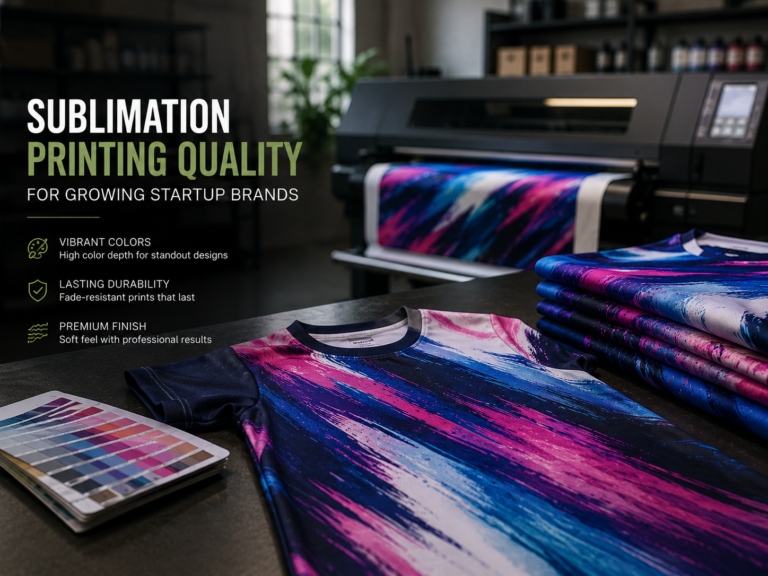
Sublimation Printing Quality for Growing Startup Brands

Sublimation printing has become one of the most popular printing methods in modern apparel manufacturing. Many startup clothing brands choose this technique because it creates vibrant colors, sharp designs, and long-lasting prints without making the fabric feel heavy.

However, maintaining strong sublimation printing quality is not always easy for new brands. Many startups struggle with faded colors, blurry graphics, uneven printing, or inconsistent production results. In most cases, these problems happen because of poor fabric quality, incorrect machine settings, or lack of production experience.

That is why successful clothing startups focus heavily on print quality from the beginning. Many brands also work with professional Sublimation Printing Services to achieve cleaner designs, better color accuracy, and more reliable production results.

Why Sublimation Printing Quality Matters

Print quality has a direct impact on how customers view a clothing brand. If the print looks faded, unclear, or poorly aligned, customers may quickly lose confidence in the product.

For startup brands, first impressions are extremely important. Clean printing, sharp details, and vibrant colors help garments look more premium and professional. High-quality printing also improves customer satisfaction and helps brands build a stronger reputation in the market.

As production grows, maintaining consistent print quality becomes even more important because customers expect every product to match the same standard.

How Startups Improve Sublimation Printing Quality

Choosing the Right Fabric

Fabric selection is one of the most important parts of Sublimation Printing Quality. Polyester fabrics usually deliver the best results because they absorb sublimation ink more effectively and maintain vibrant colors for a longer time.

Poor-quality fabrics can cause dull colors, uneven prints, and weak durability. That is why many startups focus on professional Fabric Sourcing & Development before starting production.

When brands use high-quality fabric, the final print usually looks sharper, cleaner, and more professional.

Using High-Resolution Artwork

Good design quality is just as important as good printing equipment. If the artwork resolution is low, the final print may appear blurry or pixelated after heat transfer.

Startups improve print clarity by using high-resolution graphics and properly prepared design files before production begins. This helps maintain sharp details and cleaner edges on every garment.

Professional artwork preparation also reduces printing errors during large production runs.

Maintaining Proper Heat and Pressure

Sublimation Printing Quality depends heavily on controlled heat and pressure settings. Even a small change in temperature or timing can affect the final result.

If the heat is too low, colors may look faded. If pressure is uneven, the design may transfer incorrectly onto the fabric.

For this reason, experienced manufacturers carefully monitor every step of the process to maintain consistent printing quality across all garments. Brands using advanced Production Capabilities are usually able to achieve more stable and reliable printing results.

Why Color Accuracy Is Important

Color consistency is extremely important in apparel manufacturing. Customers expect the same colors every time they purchase a product, especially when buying from growing fashion brands.

Startups improve color accuracy by testing print samples before production and carefully adjusting color profiles. This process helps brands maintain a more professional and recognizable identity in the market. Accurate color control also helps reduce production waste and prevents costly printing mistakes.

Quality Control in Sublimation Printing

Quality control plays a major role in maintaining sublimation printing quality. Without proper inspections, small defects can easily affect the final product appearance.

Manufacturers usually inspect garments for print clarity, color consistency, alignment, and overall fabric condition before shipment. Brands following organized QC Standards Resources systems are often able to maintain more reliable quality across large production batches.

The Role of Skilled Production Teams

Modern machines are important, but experienced production teams still play a major role in printing quality. Skilled technicians monitor machines, adjust settings, and solve technical issues before they affect production.

Manufacturers working with structured Manufacturing Process systems usually achieve smoother workflows and more stable production results. For startup brands, working with experienced production partners can make a huge difference in overall product quality and long-term business growth.

Sustainable Sublimation Printing Practices

Many startups are also focusing on sustainability as they grow. Sublimation printing is already considered more eco-friendly than many traditional printing methods because it creates less water waste and cleaner color transfer.

Some manufacturers further improve sustainability by using energy-efficient equipment, recycled fabrics, and low-impact production methods. These sustainable practices help brands reduce environmental impact while still maintaining premium print quality.

Conclusion

Sublimation printing quality plays an important role in helping startup clothing brands build customer trust and create professional products. Every step, from fabric selection to machine control and quality inspections, affects the final result.

Startups that invest in quality materials, skilled production teams, and controlled printing systems are more likely to achieve vibrant colors, cleaner designs, and consistent production quality. As competition continues to grow in the apparel industry, strong sublimation printing quality will remain essential for building a successful clothing brand.

FAQs

What is sublimation printing?

Sublimation printing is a process that transfers designs into fabric using heat and special ink.

Why is sublimation printing popular for clothing startups?

It creates vibrant colors, detailed designs, and long-lasting prints without affecting fabric comfort.

Which fabric works best for sublimation printing?

Polyester fabrics usually provide the best sublimation printing results.

How do startups improve sublimation printing quality?

They improve quality through better fabrics, controlled machine settings, and strong quality inspections.

Is sublimation printing environmentally friendly?

Yes, sublimation printing creates less water waste compared to many traditional printing methods.

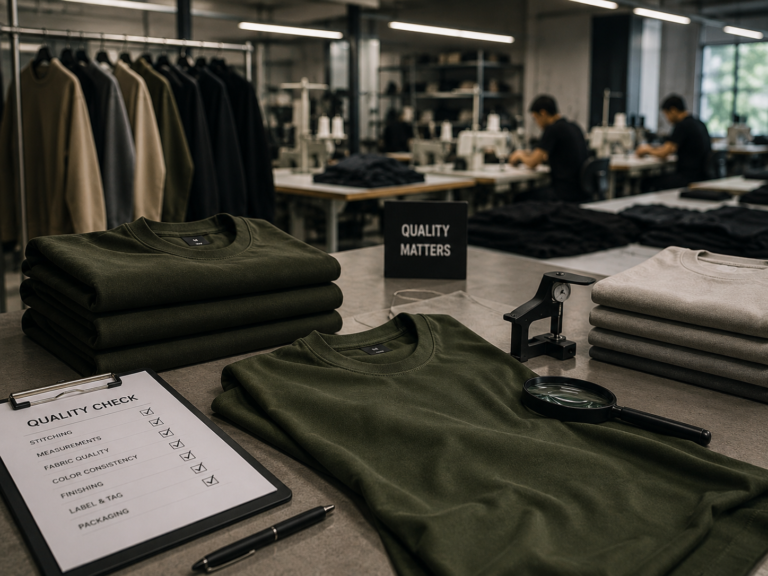
Apparel Quality Assurance Techniques for Clubs & Brands

Regardless of the industry, ensuring consistent quality in apparel is necessary. Be it jerseys for a sports team or merchandise for a brand, or even industrial apparel manufactured in bulk, apparel quality assurance is the key to ensuring satisfaction for your customers and credibility for your brand. We have broken down quality assurance techniques into easy steps, and we hope you will find them as effective and efficient as we have.

Define Clear Quality Standards

The first step to apparel quality assurance is to define the standards to be expected. Standards act as a reference point for each piece of clothing. For example:

  • Fabric Quality: Define acceptable types, weight, and texture of fabric.
  • Stitching & Construction: Define acceptable standards concerning stitching and seam performance.
  • Size Accuracy: Verify the measurements in the clothing correspond with your sizing charts.

For clubs and private labels, you can refer to Size Chart Generator to standardize sizing and reduce errors during production.

Inspect Raw Materials Before Production

Before sewing begins, inspecting raw materials is crucial. Quality issues often start at the fabric stage.

  • Fabric Inspection: Check for color consistency, shrinkage, defects, or irregular textures.
  • Accessories & Trims: Buttons, zippers, and labels should meet your quality standards.

Leverage services like Fabric Sourcing & Development to source high-quality materials and prevent production delays.

Implement a Standardized Production Process

A structured production process ensures consistent quality. Steps include:

  • Tech Packs Development: Clearly define patterns, measurements, and materials in Tech Packs.
  • Cut & Sew Manufacturing: Monitor cutting and stitching for precision.
  • Printing & Embroidery: Use controlled printing and embroidery techniques to maintain uniform branding.

For clubs and brands, you can also explore Custom Printing and Embroidery Branding services to ensure professional finishes.

Conduct In-Process Quality Checks

Quality assurance isn’t just at the end—it must happen throughout production.

  • Seam Inspections: Check for loose threads or uneven stitches.
  • Size Verification: Confirm garments match the approved samples.
  • Color Consistency: Ensure prints, dyes, and fabric colors remain consistent.

Using in-line checks reduces waste and prevents batch-wide defects. You can create a custom in-process checklist using our QC Standards Resource.

Perform Final Quality Inspection

Before shipping or delivery, conduct a thorough final quality inspection. Focus on:

  • Visual Appearance: Check for defects like stains, misprints, or holes.
  • Fit & Comfort: Test garment fit against size charts.
  • Labeling & Packaging: Confirm labels, tags, and packaging meet branding guidelines.

For private labels, consider Custom Labeling & Branding Services to create a professional presentation.

Test Performance & Durability

For sports apparel or industrial garments, performance testing is essential.

  • Washing & Dye Testing: Ensure colorfastness and shrinkage control using Washing & Dyeing Services.
  • Stress & Wear Tests: Check seams, zippers, and stretchability under real-world conditions.
  • Leather & Specialty Materials: If using leather, consult Leather Cutting & Stitching Services for durability assurance.

Maintain Documentation & Feedback Loops

To conclude, we recommend recording all quality inspections and creating feedback loops for ongoing improvement in production.

  • Batch Reports: Record inspections results for each production batch.
  • Supplier Feedback: Provide evaluative results to fabric and accessory suppliers.
  • Customer Feedback: Document returns and complaints for similar issues.

Implementation of this structured format enables clubs, industries and private labels to maintain high production standards, reduce losses, and gain customer loyalty. Build customer trust.

Ready to Improve Your Apparel Quality Assurance?

If you want to ensure flawless apparel production, our team can guide you from tech pack development to final inspections. Explore our Manufacturing Solutions to streamline your production and guarantee consistent quality across all your Apparel Quality Assurance lines.

Conclusion

A quality assurance framework for managing Apparel Quality Assurance is vital for clubs, industries, and private labels. This process begins with clearly defined quality benchmarks, including inspections for acceptance of raw materials and in-process and final inspections. Consistent, high-quality garments result from modern production with custom labels and performance testing. From an appreciation of quality assurance, brands enjoy enhanced market reputation and reduced complaints. Finally, the described measures guarantee the highest quality Apparel Quality Assurance regardless of production volumes.

FAQs

Why is in-process quality control important?

It identifies issues early, preventing large-scale defects and reducing production waste.

an I use the same quality standards for all types of apparel?

No, sportswear, casual wear, and industrial garments have different requirements.

How can private labels ensure consistent branding?

Use custom labeling, embroidery, and printing services to maintain a professional and uniform appearance.

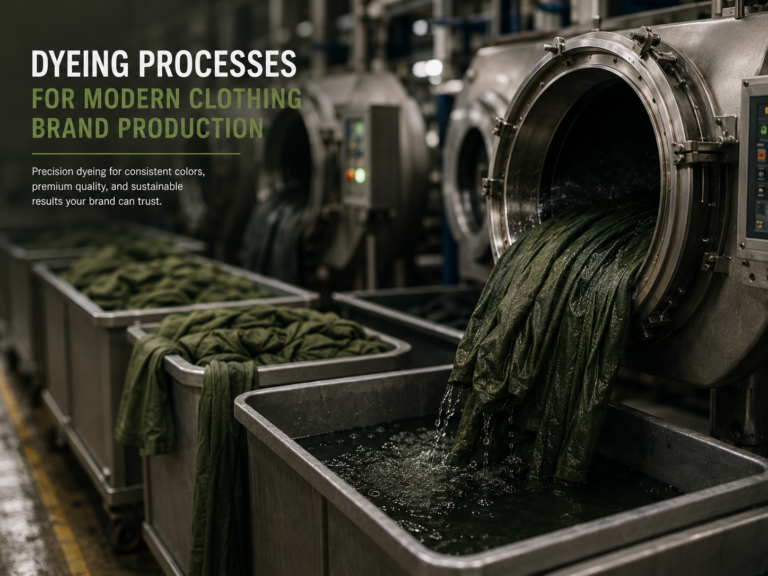
Dyeing Processes for Modern Clothing Brand Production

Color is one of the first things customers notice in clothing. It gives garments their identity and helps brands create a strong visual style. However, achieving the same color quality across large production runs is not as easy as it looks.

Modern dyeing processes help clothing brands maintain consistent shades, better fabric quality, and long-lasting color performance. These processes are carefully controlled to ensure every garment looks professional and feels premium. Today, many fashion brands work with experienced Washing & Dyeing Services to achieve stable and reliable dyeing processes results during large-scale production.

Why Dyeing Processes Matter in Apparel Manufacturing

Dyeing processes is much more than simply adding color to fabric. It directly affects the final appearance, softness, durability, and overall quality of the garment.

When clothing brands produce garments in large quantities, maintaining color consistency becomes extremely important. Customers expect every piece to match perfectly, and even small shade differences can affect how people view the brand. Well-managed dyeing processes help brands create garments that look clean, professional, and consistent. They also reduce production problems and improve customer satisfaction over time.

Modern Dyeing Processes Used by Clothing Brands

Reactive Dyeing for Long-Lasting Color

Reactive dyeing is one of the most commonly used methods in modern apparel manufacturing. It creates strong color bonding with the fabric, which helps garments maintain their appearance even after repeated washing.

This method is especially popular for cotton fabrics because it produces rich colors while keeping the fabric soft and comfortable. Many brands with advanced Production Capabilities prefer reactive dyeing because it delivers stable and consistent results across large production batches.

Pigment Dyeing for a Fashion Look

Pigment dyeing is widely used when brands want garments to have a washed, faded, or vintage appearance. Instead of deeply coloring the fibers, this process applies color to the surface of the fabric.

As a result, garments develop a stylish worn look that many fashion brands prefer for modern collections. Pigment dyeing also gives garments a softer and more relaxed feel, which makes it popular in casual and streetwear fashion.

Garment Dyeing for More Flexibility

Garment dyeing happens after the clothing piece has already been stitched together. This method allows brands to experiment with colors more easily and create smaller production runs without changing the entire fabric production process.

It also creates a softer finish and gives garments a more natural appearance. Many fashion brands use garment dyeing when they want unique color tones and a premium casual look in their collections.

How Clothing Brands Maintain Color Consistency

Fabric Quality and Preparation

Good dyeing always starts with good fabric. If the fabric quality is inconsistent, the final color result will also vary from batch to batch.

That is why many manufacturers focus heavily on professional Fabric Sourcing & Development before production begins. High-quality fabric preparation helps brands achieve smoother dye absorption, balanced color distribution, and more reliable production results.

Controlled Dyeing Conditions

Modern dyeing processes require careful control at every stage. Even small changes in temperature, chemical levels, or processing time can affect the final garment color.

Manufacturers closely monitor every step to make sure all garments receive the same treatment during production. Brands that follow organized Manufacturing Process systems are usually able to maintain more consistent dyeing quality across large-scale production.

Skilled Technical Teams

Experienced production teams play an important role in maintaining color accuracy. Skilled technicians monitor dye formulas, inspect color results, and adjust machine settings whenever necessary. Their expertise helps brands avoid shade variations and maintain stable production quality even when manufacturing large quantities of garments.

Sustainable Dyeing Solutions in Modern Fashion

Sustainability is becoming more important across the fashion industry. Because of this, many clothing brands are now using eco-friendly dyeing methods that reduce water consumption and lower chemical waste. Modern sustainable solutions include low-impact dyes, water recycling systems, and energy-efficient production technologies.

These improvements help brands reduce environmental impact while still maintaining strong fabric quality and reliable color performance. Many manufacturers also follow professional QC Standards Resources to ensure consistency throughout sustainable production processes.

Quality Control in Dyeing Production

Quality control is one of the most important parts of garment dyeing. Without proper inspections, even small color differences can affect the final product quality.

Manufacturers inspect garments throughout production to make sure color, softness, durability, and overall appearance remain consistent. Common inspections include color matching, wash testing, shrinkage checks, and fabric evaluations. These quality checks help brands maintain customer trust and deliver more reliable products.

Conclusion

Modern dyeing processes help clothing brands create garments with consistent color, better fabric quality, and professional finishing. From reactive dyeing to garment dyeing methods, every process requires careful control and experienced handling.

Brands that invest in advanced dyeing systems, skilled teams, and strong quality control can produce garments that look more premium and perform better in the market. As fashion manufacturing continues to evolve, modern dyeing techniques will remain essential for achieving consistent and reliable production results.

FAQs

What are modern dyeing processes?

Modern dyeing processes are advanced methods used to add durable and consistent color to garments and fabrics.

Why is color consistency important in clothing production?

Color consistency helps brands maintain product quality and customer trust across every production batch.

What is reactive dyeing used for?

Reactive dyeing is mainly used for cotton fabrics because it creates strong and long-lasting color results.

What is garment dyeing?

Garment dyeing is a process where finished garments are dyed after stitching and assembly.

Are sustainable dyeing methods effective?

Yes, sustainable dyeing methods reduce environmental impact while still maintaining strong color quality and fabric performance.

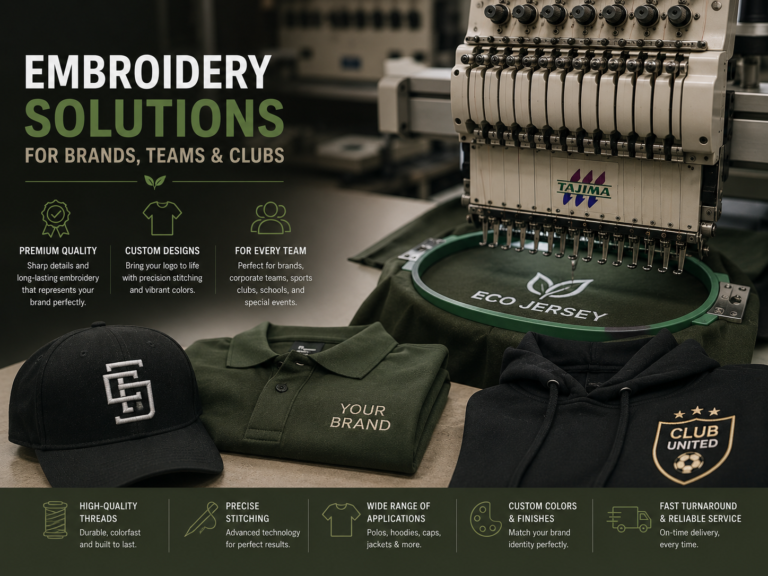
Embroidery Solutions for Brands, Teams & Clubs

Eco Jersey knows that outstanding embroidery really makes a brand/team/club stand out. We understand that precision and creativity combined with durability are what make embroidery remarkable. At Eco Jersey we are able to help you outfit your sports team, your staff, and your community club with embroidery that truly shows your identity. Our in-house facilities and stitch embroidery ensure we are reflected accurately for you, your staff, your club, and your clientele.

Why Embroidery Matters for Your Brand

Embroidery isn’t just decoration—it’s a statement of professionalism. Custom embroidery:

  • Enhances brand recognition with logos and icons
  • Creates a premium feel for uniforms, merchandise, or club apparel
  • Ensures long-lasting wear, even after multiple washes

At Eco Jersey, we leverage advanced embroidery technology to achieve intricate details, bold colors, and consistent results. This is perfect for custom labeling and branding services that demand precision.

Our Capabilities for Teams & Clubs

From local clubs to professional sports teams, we specialize in delivering consistent quality across bulk orders. Our embroidery solutions include:

  • Detailed logo embroidery for shirts, jackets, and hats
  • Numbering and personalization for sports jerseys
  • Multi-material embroidery for mixed fabrics, including performance wear

With our performance garment construction expertise, your embroidered apparel maintains comfort, stretch, and durability—ideal for active teams and uniforms.

Seamless Integration with Your Apparel

We make embedding embroidery into your production process effortless:

  • Design Review: We ensure your logo, text, or emblem is optimized for stitching.
  • Sample Production: You receive a sample for approval before bulk runs.
  • In-House Production: All embroidery is handled under one roof, guaranteeing consistency.
  • Quality Control: Each piece undergoes detailed inspection following our QC standards.

By combining tech pack development and embroidery expertise, we streamline production for brands and clubs.

Personalization and Custom Options

Every team or brand has its unique identity. Our embroidery solutions allow:

  • Custom thread colors matching your brand palette
  • Font and monogram options for personalization
  • Placement flexibility for logos, numbers, or slogans

Whether it’s a club crest on a blazer or a bold logo on training kits, our team ensures precision and attention to detail.

Why Choose Our Embroidery Solutions

Partnering with us ensures your embroidery projects receive:

  • In-house precision — all production is under one roof for consistent quality
  • Experienced craftsmanship — skilled team handling complex designs flawlessly
  • End-to-end support — from initial concept to finished garment delivery
  • Sustainable practices — responsible manufacturing without compromising quality

With our approach, your brand, team, or club apparel will not only look professional but also stand the test of time.

Get Started with Your Custom Embroidery

If you want your brand, team, or club to stand out with professional embroidery, we’re here to make it happen.

Ready to enhance your apparel with custom embroidery? Get a Quote Now or Contact Our Experts to discuss your project and see how our capabilities can elevate your uniforms and merchandise.

Conclusion

Professional embroidery is more than decoration; it’s an investment in your brand’s identity and the pride of your team or club. At Eco Jersey, our embroidery solutions for brands, teams, and clubs combine precision, personalization, and durability, ensuring every stitch reflects your unique identity. Whether for sports uniforms, corporate apparel, or club merchandise, our expertise delivers quality and consistency at every stage.

FAQs

Can you handle bulk orders for sports teams or clubs?

Yes! Our in-house facilities are fully equipped to manage large-scale embroidery orders with consistent quality.

Do you offer custom thread colors and fonts?

Absolutely. We provide a wide range of thread colors, fonts, and placement options to match your brand identity.

How long does it take to complete an embroidery project?

Lead times depend on order size and complexity, but our in-house production ensures faster turnaround compared to outsourced solutions.

Can I get a sample before bulk production?

Yes. We provide sample embroidery for approval to ensure your design meets your expectations before full production.