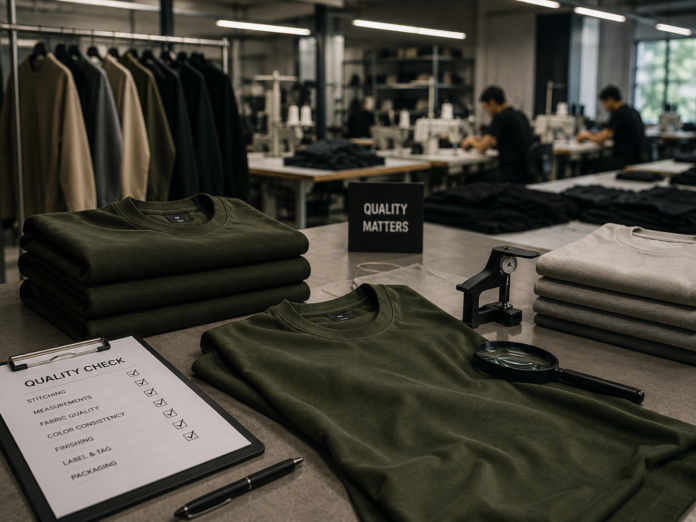
Regardless of the industry, ensuring consistent quality in apparel is necessary. Be it jerseys for a sports team or merchandise for a brand, or even industrial apparel manufactured in bulk, apparel quality assurance is the key to ensuring satisfaction for your customers and credibility for your brand. We have broken down quality assurance techniques into easy steps, and we hope you will find them as effective and efficient as we have.
Define Clear Quality Standards
The first step to apparel quality assurance is to define the standards to be expected. Standards act as a reference point for each piece of clothing. For example:
- Fabric Quality: Define acceptable types, weight, and texture of fabric.
- Stitching & Construction: Define acceptable standards concerning stitching and seam performance.
- Size Accuracy: Verify the measurements in the clothing correspond with your sizing charts.
For clubs and private labels, you can refer to Size Chart Generator to standardize sizing and reduce errors during production.
Inspect Raw Materials Before Production
Before sewing begins, inspecting raw materials is crucial. Quality issues often start at the fabric stage.
- Fabric Inspection: Check for color consistency, shrinkage, defects, or irregular textures.
- Accessories & Trims: Buttons, zippers, and labels should meet your quality standards.
Leverage services like Fabric Sourcing & Development to source high-quality materials and prevent production delays.
Implement a Standardized Production Process
A structured production process ensures consistent quality. Steps include:
- Tech Packs Development: Clearly define patterns, measurements, and materials in Tech Packs.
- Cut & Sew Manufacturing: Monitor cutting and stitching for precision.
- Printing & Embroidery: Use controlled printing and embroidery techniques to maintain uniform branding.
For clubs and brands, you can also explore Custom Printing and Embroidery Branding services to ensure professional finishes.
Conduct In-Process Quality Checks
Quality assurance isn’t just at the end—it must happen throughout production.
- Seam Inspections: Check for loose threads or uneven stitches.
- Size Verification: Confirm garments match the approved samples.
- Color Consistency: Ensure prints, dyes, and fabric colors remain consistent.
Using in-line checks reduces waste and prevents batch-wide defects. You can create a custom in-process checklist using our QC Standards Resource.
Perform Final Quality Inspection
Before shipping or delivery, conduct a thorough final quality inspection. Focus on:
- Visual Appearance: Check for defects like stains, misprints, or holes.
- Fit & Comfort: Test garment fit against size charts.
- Labeling & Packaging: Confirm labels, tags, and packaging meet branding guidelines.
For private labels, consider Custom Labeling & Branding Services to create a professional presentation.
Test Performance & Durability
For sports apparel or industrial garments, performance testing is essential.
- Washing & Dye Testing: Ensure colorfastness and shrinkage control using Washing & Dyeing Services.
- Stress & Wear Tests: Check seams, zippers, and stretchability under real-world conditions.
- Leather & Specialty Materials: If using leather, consult Leather Cutting & Stitching Services for durability assurance.
Maintain Documentation & Feedback Loops
To conclude, we recommend recording all quality inspections and creating feedback loops for ongoing improvement in production.
- Batch Reports: Record inspections results for each production batch.
- Supplier Feedback: Provide evaluative results to fabric and accessory suppliers.
- Customer Feedback: Document returns and complaints for similar issues.
Implementation of this structured format enables clubs, industries and private labels to maintain high production standards, reduce losses, and gain customer loyalty. Build customer trust.
Ready to Improve Your Apparel Quality Assurance?
If you want to ensure flawless apparel production, our team can guide you from tech pack development to final inspections. Explore our Manufacturing Solutions to streamline your production and guarantee consistent quality across all your Apparel Quality Assurance lines.
Conclusion
A quality assurance framework for managing Apparel Quality Assurance is vital for clubs, industries, and private labels. This process begins with clearly defined quality benchmarks, including inspections for acceptance of raw materials and in-process and final inspections. Consistent, high-quality garments result from modern production with custom labels and performance testing. From an appreciation of quality assurance, brands enjoy enhanced market reputation and reduced complaints. Finally, the described measures guarantee the highest quality Apparel Quality Assurance regardless of production volumes.
FAQs
Why is in-process quality control important?
It identifies issues early, preventing large-scale defects and reducing production waste.
an I use the same quality standards for all types of apparel?
No, sportswear, casual wear, and industrial garments have different requirements.
How can private labels ensure consistent branding?
Use custom labeling, embroidery, and printing services to maintain a professional and uniform appearance.