Your face deserves protection from the elements when you’re in the wilderness hunting or playing tactical games. A good camouflage balaclava will conceal your face, and will also keep you warm. However, you shouldn’t think all balaclavas will do the same job. The Best Materials Used in Camouflage Balaclavas will make the balaclava comfortable for hours. Pick the wrong material and overheating or freezing will result. Educating yourself regarding the different types of fabrics available is a smart thing. You should check this outdoor apparel manufacturer for great outdoor materials.
Soft but Not for Heavy Sweating
Cotton is the fabric that soaks up everyone’s favorite childhood moisture, sweat. It is also the fabric that sticks to you and traps freezing air while balancing your face to a sub-zero temperature. As such, it doesn’t qualify for any of the Best Materials Used in Camouflage Balaclavas for face protection while doing more strenuous activities like running or climbing. However, dry weather face protection while lightly walking is perfectly fine with cotton. For better options, look at hiking clothing manufacturers who use advanced fabrics.
Lightweight and Quick to Dry
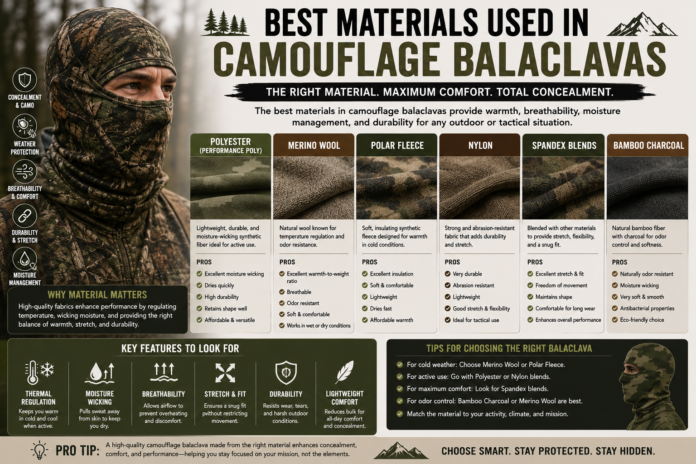
Polyester is a fabric that is man-made. It is made in factories and doesn’t hold water like cotton, which means it won’t make the balaclava swampy and will instead be dry in a flash. Polyester is extremely lightweight and can be worn under a helmet. Along with it’s toughness, it is no surprise that many soldiers and hunters like polyester. Balaclavas that qualify for the Best Materials Used in Camouflage Balaclavas will most definitely use a polyester blend. You can find polyester in many camping apparel items because it works well outdoors. Plus, polyester holds dye very well, so your camouflage pattern stays sharp.
Strong and Wind-Resistant
Nylon is a synthetic fabric and is even tougher than polyester. It is also better at blocking the wind. Wind can sting your face when you are out in the open or on a mountain. Nylon can stop that wind. It is also one of the fastest drying fabric materials. It can be one of the Best Materials Used in Camouflage Balaclavas on windy days. Because nylon fabric is not very stretchy, a lot of brands combine it with spandex. For tough outdoor wear, see what ski wear manufacturers use in their products.
Warm Even When Wet
Merino wool is from sheep but don’t compare it to a wool sweater that your grandpa wears that is itchy. Merino wool is very soft, gets you warm even when it is wet, and doesn’t allow odor generating bacteria to thrive. This means that you can wear a merino wool balaclava for days on end without it smelling bad or needing to be washed which can be great for extended hunting trips which is why merino wool is one of the Best Materials Used in Camouflage Balaclavas for cold and wet weather. You can find similar smart fabrics in outdoor jackets as well.
Spandex (Elastane): For a Perfect Fit
Spandex is a very stretchy and flexible fabric and also can’t be used for an entire balaclava. However, when a bit of spandex is blended with polyester or nylon, that balaclava fabric acts like a second skin and moves along the head. This is crucial when a person is in the middle of aiming with a gun or running which is why many of the Best Materials Used in Camouflage Balaclavas contain anywhere from 5% to 15% of spandex. For more stretchy and comfortable gear, check out waterproof clothing options that also use spandex blends.
Soft and Insulating
Made from polyester, fleece keeps air and warmth trapped within its fibers. This makes it the perfect material for fleeced balaclavas and the like. Fleece is also incredibly lightweight. The combination of being lightweight and warm makes fleece balaclavas easy to wear for long periods of time. While fleece is a good material for insulation, it is not very good for blocking the winds. This is another reason fleece balaclavas, or fleece anything for that matter, are worn under windproof shells. Look at hunting apparel to see how fleece is used in different gear.
Summary of the Best Materials
Here is a quick list to help you remember which materials are best for different situations:
- Cotton – Only for dry, light use.
- Polyester – Best for sweat and fast drying.
- Nylon – Best for wind and strength.
- Merino wool – Best for cold, wet, and no smell.
- Spandex – Best for stretch and fit.
- Fleece – Best for soft warmth without wind.
So depending on your needs, the Best Materials Used in Camouflage Balaclavas can be different. For rain and snow, you need waterproof layers like rainwear. But for your face, choose a breathable, quick-dry fabric.
How to Care for Your Camouflage Balaclava
To make your balaclava last long, you must wash it the right way. Most man-made fabrics like polyester and nylon should be washed in cold water. Do not use softeners because they ruin the wicking ability. For wool, use special wool soap. Hang dry your balaclava. Do not put it in a hot dryer. This will keep the Best Materials Used in Camouflage Balaclavas working well for years. For more tips on caring for outdoor gear, visit waterproof jackets manufacturer pages for detailed guides.
Conclusion
The Comfort and Functionality of Camouflage Balaclavas on The Market relies on Their Materials. Polyester, fleece, microfiber, cotton mixes, etc. lead to Warmth and Breathability. It is necessary to keep Comfortable for Long Activities such as Hunting, Hiking, Camping, and Other Tactical Outdoor Activities. Modern Balaclavas are made for concealment and flexibility. Quality Balaclavas give protection from the Elements, while maintaining Visibility and Movement.
FAQs
What is the most breathable material for a camouflage balaclava?
Polyester and nylon blends with spandex are the most breathable. They let sweat vapor escape while keeping wind out.
Can I wear a camouflage balaclava in summer?
Yes, choose a very thin polyester or cotton-poly blend. Look for “lightweight” or “summer weight” labels.
Is merino wool itchy?
No, high-quality merino wool is very soft and not itchy. It is one of the Best Materials Used in Camouflage Balaclavas for sensitive skin.