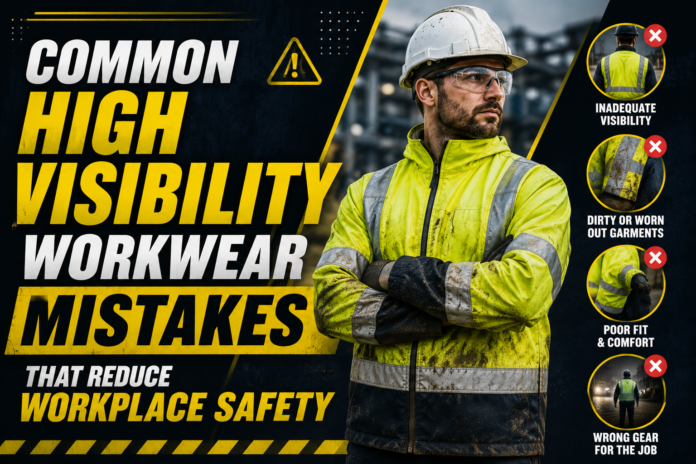
When safety clothing is worn, maintained, or selected incorrectly, it can lead to workplace accidents. Hi-vis clothing helps workers to be seen in busy environments. However, it is only effective when it matches the work, the lighting, the weather and the movement requirements.
It is not sufficient to wear a bright vest or jacket. The worker also needs the correct fit, a clean fabric, reflective taping, durable stitching and appropriate layering. Browse the collection for safety clothing that is suitable for industrial, warehouse, logistic, construction and transport teams.
What are common high visibility workwear mistakes?
These mistakes can make high-visibility clothing less effective under real working conditions. These mistakes include selecting the wrong color, ignoring the reflective tape, purchasing poor-quality clothing, using damaged clothes, and giving each worker the same item, without considering job requirements.
Hi-vis clothing should be worn to make workers visible around vehicles, forklifts and machines, as well as in roadwork zones and other outdoor areas. The garment may appear to be safety clothing, but it will not provide comfort or visibility if it does not fit properly.
Choose Bright Color Only
The most common mistake in choosing high visibility clothing is to choose it solely because it’s bright. Safety apparel must not only be bright, but also have reflective details and reflective materials, as well as a proper fit, comfort, durability, correct use, and durability.
It may be that a bright vest is sufficient in areas with high light levels, but may not work in other situations, such as low-light zones, night shifts or rainy weather. Instead of focusing on the color, buyers should look at the entire garment design.
Ignoring reflective tape
Reflective tape can help workers remain visible when the light hits their garment. It is important to use this near headlights and warehouse lights. Also, it’s helpful for loading areas and nightwork. It is possible that a worker would be less visible in dark conditions if they did not have reflective tape.
Hi-visibility workwear collection includes garments with reflective details and bright fabrics. The tape should be placed to support visibility on the front, side, shoulder, and arm.
The Wrong Safety Vest
Not all vests are suitable for all jobs. It may be sufficient for indoor visitors or for short-term use in the office, but not for rough industrial work, outdoor loading, roadwork, cold weather or heavy duty industrial tasks.
Custom safety vests help with visibility, branding and role identification. Different vest colors and printed labels can be used to distinguish visitors, supervisors forklift operators safety staff and general workers.
The wrong size and poor fit
Clothing made of hi-visibility material must be fitted correctly. A vest that is too loose can catch on machinery or move during work. A jacket that is too tight can restrict the arm movement of the worker and cause discomfort.
A good fit allows workers to bend, walk, drive, scan and load without restriction. Layering safety clothing is also recommended, particularly for cold storage, outdoor yards and loading docks.
Wearing dirty or faded garments
The visibility of a hi-vis garment that is dirty or faded can be reduced. Bright colors can become less visible due to dust, mud and oil, as well as repeated washing. The reflective tape will also lose its strength if it becomes cracked, peels off, or is covered in grime.
Regularly inspecting hi-vis clothing is important for workers. If the garment is no longer bright or reflective it should be cleaned or repaired, if possible, or replaced. A clean site will have a better image and be more visible.
Ignoring weather conditions
Weather conditions can quickly change comfort and visibility. Workers can be harder to see in low light, rain, fog, winds, clouds and fog. Wearing a standard vest while working outdoors in the rain can make workers feel uncomfortable and leave them less protected.
Rainwear can be used by loading crews, delivery teams, transport workers, and outdoor crews who work in wet weather. Rainwear that is designed to keep workers dry and allow them to move freely should also be able support visibility.
Not using hi-vis jackets when needed
Some jobs require more protection than a vest. Some jobs require more coverage than a vest.
A high-visibility jacket will help workers to remain visible and cover their bodies. The jacket must allow for arm movement, be able to close securely and remain comfortable when bending, reaching and lifting.
Choose Weak Safety Jackets
Safety jackets that appear protective, but are not durable can be a mistake. Poor stitching, weak zippers, thin fabric and reflective tape of low quality can all reduce the value of a garment. The jackets used in harsh environments should be designed to withstand daily use and repeated movement.
Safety Jackets are ideal for workers in warehouses, construction sites, and industrial sites. It is important to have strong seams, a secure closure, pockets that are practical, and durable material.
Poor Layering Planning
Layering errors can reduce visibility and comfort. Wearing a dark jacket on top of a bright vest can hide the hi-vis garment. Workers in cold or wet areas can cover reflective clothing by wearing non-visible outerwear.
When warmth, durability, and storage are required, a jacket is a great choice to support layers of uniforms. It is best to layer uniforms so that the reflective or visible garment is on the outside.
Everyone wearing the same garment
Not all workers have the same need for visibility. A warehouse picker might need a vest that is lightweight. Rainwear may be needed by a loading dock worker. For quick identification, a supervisor might need to wear a different shade. A road crew worker might need a more reflective material.
Safety gaps can be created by planning uniforms based on a single size. The garment must be appropriate for the role of the worker, work zone, lighting conditions, weather and movement. Workwear that is based on roles helps groups stay organized and identify themselves.
Ignoring hand protection
While visibility is important, it’s not the only safety concern that should be considered when planning workwear. Workers handle a variety of materials and objects, including pallets, tools rough materials, machinery and wet surfaces. Handling problems can be exacerbated by poor grip.
Safety Gloves help workers to handle goods better and protect their hands. Gloves must be appropriate for the job and not restrict hand movement or control.
Poor Washing and Care
The wrong washing of hi-vis clothing can reduce its life. The fabric, reflective tapes, zippers and seams can be damaged by harsh cleaning, high temperatures and careless drying. This can cause the garment to become less visible over time and less professional.
After washing, workers should inspect the garments and follow the instructions on the label. Companies should create simple rules to replace damaged, faded or stained hi-vis clothing.
Replace damaged workwear
It is not advisable to use damaged hi-vis clothing on a daily basis. The performance of clothing can be affected by a variety of factors, including ripped fabric, broken zippers, worn-out colors, flaking reflective tape and missing closures. Replace any garments that are no longer visible.
When companies save money by storing old high visibility workwear for too long, they often make a common mistake. Poor visibility can actually create more serious safety and image issues.
Checklist of Common Mistakes in High Visibility Workwear
Check this list of common high visibility workwear mistakes before selecting or reviewing safety clothing:
- Choose hi-vis clothing based on color.
- Placement and condition of reflective tape should be checked.
- Wear safety vests to increase visibility.
- Wear jackets when working in cold weather or outdoors.
- Wear rainwear when working in wet conditions.
- Make sure that the garment fits properly.
- Keep your hi-vis clothing bright and clean.
- Avoid hiding hi-vis clothing under dark layers.
- Wear the right clothes for your role.
- Replace worn-out, damaged or faded safety clothing.
How to avoid Hi-Vis workwear errors
Check the actual working environment. Consider the lighting, vehicle movements, weather, worker movement, shift timing and job role. Choose garments that are appropriate for each individual instead of purchasing one item.
Test garments before ordering in bulk to avoid common high visibility workwear mistakes. Test the garments to ensure comfort, fit, movement and pocket placement. Real feedback helps businesses choose better safety clothing.
Conclusion
Only when the clothing is selected and maintained correctly can it improve worker visibility. The effectiveness of the garment is affected by many factors, including its bright color, reflective tapes, fit, weather protection and durability.
When companies fail to consider the real conditions of the job, choose low-quality clothing, or continue to use damaged garments, they can decrease safety. Choose hi-vis clothing based on the role, lighting conditions, movement and daily needs.
FAQs
Why do high-visibility workwear garments lose their effectiveness?
They can lose their effectiveness if the fabric fades, the reflective tape cracks, the garments become dirty, or if the wrong item for the job is used.
Is bright colour enough to make a workplace visible?
Reflective tape is important in low-light areas, at night and for areas with a lot of vehicles.
When should high-visibility clothing be replaced?
Replace it if the reflective tape is damaged, faded, stained, torn or faded.