When working outdoors, bad weather can make a difficult job even harder. Rain, wind, and cold can affect comfort and safety. Therefore, choosing the right protective clothing is important for outdoor workers.But what is waterproof workwear, and why is it important?
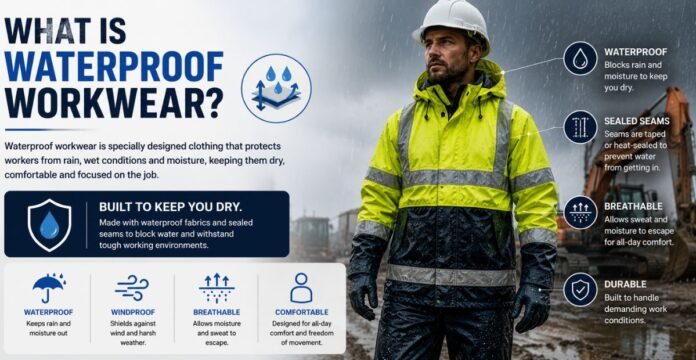
Waterproof workwear is protective clothing designed to help keep workers dry during wet and rainy conditions. It can include waterproof jackets, trousers, pants, coveralls, and other protective garments. These clothes help reduce exposure to rain while allowing workers to continue their tasks.In addition, modern waterproof workwear can provide comfort, visibility, durability, and protection. As a result, it is widely used in construction, transport, utilities, logistics, manufacturing, and outdoor industries.
What Is Waterproof Workwear?
Waterproof workwear is clothing made to protect workers from rain and wet weather. Unlike ordinary clothing, it uses water-resistant or waterproof materials and construction methods.For example, waterproof jackets may use protective outer fabrics. They may also include sealed seams, adjustable cuffs, storm flaps, and protective hoods. These features help prevent water from reaching the clothing underneath.Similarly, waterproof workwear pants can protect the lower body from rain and wet surfaces. Therefore, workers can stay more comfortable during long outdoor shifts.If you want to explore different options, you can view Eco Jersey’s waterproof workwear collection.
Why Is Waterproof Workwear Important?
Working in wet weather can create several challenges. Wet clothing can become uncomfortable quickly. Moreover, cold and windy conditions can make outdoor work more difficult.Waterproof workwear helps solve these problems in several ways.
Protection From Rain
The main purpose of waterproof workwear is to help keep rain away from the body. Therefore, workers can remain drier while working outdoors.This protection is especially useful for construction workers, road crews, delivery teams, and outdoor maintenance staff.
Better Comfort
Wet clothing can restrict movement and reduce comfort. However, suitable waterproof workwear can help workers stay comfortable throughout their shifts.Many modern garments also focus on breathability. As a result, they can help manage moisture from both rain and physical activity.
Improved Workplace Safety
Wet conditions can make outdoor work more challenging. Therefore, suitable protective clothing can support safer working conditions.High-visibility waterproof clothing can be especially useful in areas with vehicles, machinery, and low visibility.
Protection From Wind
Rain is not the only weather problem. Strong wind can also make outdoor work uncomfortable.For this reason, many waterproof garments are designed to provide some protection from wind. They can create an additional layer between the worker and harsh weather.
Care and Maintenance of Waterproof Workwear
Proper care can help waterproof workwear last longer and maintain its protective performance. First, always follow the manufacturer’s washing instructions. Using the wrong detergent or washing method can damage waterproof coatings.Next, clean waterproof garments regularly. Dirt and oils can reduce fabric performance over time. However, avoid harsh chemicals unless the manufacturer recommends them.After washing, allow the workwear to dry completely before storing it. In addition, keep it in a clean and dry place away from direct heat.Finally, inspect your waterproof workwear regularly. Check seams, zippers, cuffs, and fabric for signs of damage.
What Are the Main Types of Waterproof Workwear?
Waterproof workwear comes in several forms. Each type serves a different purpose.
Waterproof Work Jackets
Waterproof work jackets are among the most common forms of wet-weather workwear. They protect the upper body from rain and wind.Depending on the design, a work jacket may include a hood, pockets, adjustable cuffs, and a front closure. Some designs also combine waterproof protection with high visibility.For example, a high-visibility waterproof jacket can provide weather protection while helping workers remain more visible in busy work areas.
Waterproof Workwear Pants
Waterproof pants protect the legs from rain, splashes, and wet working environments.They are useful for workers who spend long periods outside. Furthermore, they can be worn over other work trousers when additional protection is needed.Waterproof pants may also include practical features such as cargo pockets, adjustable waists, and durable fabrics.
Waterproof Workwear Jackets
Some workers need more than a basic rain jacket. In that case, a durable waterproof workwear jacket can offer a stronger option for demanding work environments.These jackets are suitable for workers who need weather protection without giving up mobility.
Waterproof Coveralls
Waterproof coveralls provide broader body coverage. Therefore, they can be useful in jobs where workers face rain, dirt, and other outdoor conditions.They can also reduce the need to wear several separate protective garments.
What Materials Are Used in Waterproof Workwear?
The material plays an important role in waterproof clothing performance.Common materials and fabric technologies include coated polyester, coated nylon, polyurethane coatings, and laminated fabrics.Each material can offer different levels of waterproofing, breathability, flexibility, and durability.However, the fabric alone is not enough. Construction quality also matters.For instance, poorly protected seams can allow water to enter. Therefore, waterproof workwear may use sealed or reinforced seams for better protection.
Waterproof vs. Water-Resistant Workwear
Waterproof and water-resistant are not always the same.Water-resistant clothing can repel light rain or moisture for a limited time. However, it may not provide enough protection during heavy or prolonged rain.Waterproof workwear is designed for stronger protection against water.Therefore, workers should consider the conditions they face before choosing clothing.If the job involves regular heavy rain, fully waterproof garments may be the better choice. On the other hand, water-resistant clothing may work well for occasional light exposure.
Best Uses of Waterproof Workwear
Waterproof workwear is useful for many outdoor jobs and industries. It helps protect workers from rain, moisture, and changing weather conditions.
Construction Work
Construction workers often work outdoors in unpredictable weather. Therefore, waterproof jackets and pants can help keep them dry and comfortable during rainy days.
Road and Utility Work
Road crews and utility workers may spend long hours outside. Waterproof workwear can provide protection from rain while allowing workers to continue their tasks.
Delivery and Transport
Delivery drivers and transport workers can also benefit from waterproof clothing. In addition, high-visibility waterproof garments can improve visibility around vehicles and busy roads.
Agriculture and Landscaping
Farmers, gardeners, and landscapers often work outside in wet conditions. Waterproof pants and jackets can help protect them from rain and damp environments.
Maintenance and Outdoor Services
Maintenance teams may need to work outdoors throughout the year. Therefore, waterproof workwear can provide useful protection during inspections, repairs, and other outdoor tasks.
Events and Outdoor Operations
Outdoor event staff can also use waterproof workwear when working in rainy weather. Lightweight designs can provide protection without limiting movement.
Overall, waterproof workwear is best suited to jobs where workers regularly face rain, moisture, or changing outdoor conditions.
What Features Should You Look For?
Choosing waterproof workwear requires more than checking the word “waterproof.” Several other features can affect performance.
Waterproof Construction
First, check the garment’s waterproof design. Sealed seams and protective closures can help reduce water entry.
Breathability
Next, consider breathability. Workers can become warm during physical activity. Therefore, breathable materials can help improve comfort.
Durability
Workwear needs to handle regular use. For this reason, strong fabrics and reinforced areas can be valuable.
Visibility
Visibility is another important feature for many outdoor jobs. High-visibility colors and reflective details can help workers remain noticeable.
Comfortable Fit
A good fit allows workers to move freely. Therefore, waterproof clothing should not feel too tight or overly heavy.
Practical Pockets
Pockets can make workwear more useful. Workers can keep small tools and essential items close at hand.
Adjustable Features
Adjustable cuffs, hoods, waistbands, and hems can improve fit. In addition, they can help prevent rain from entering around openings.
Who Needs Waterproof Workwear?
Waterproof workwear is useful for many industries.For example, construction workers may work outside throughout the year. Road and utility crews can also face rain during long shifts.Likewise, delivery workers, warehouse teams, agricultural workers, landscapers, and maintenance crews may need protection from wet weather.The exact requirements depend on the job. Therefore, businesses should choose workwear based on working conditions and safety needs.
Waterproof Workwear for Construction
Construction sites can expose workers to changing weather. Rain can affect comfort and make outdoor tasks more difficult.Therefore, waterproof jackets and pants can be valuable additions to construction workwear.Workers may also need high-visibility clothing. This is especially important around vehicles, equipment, and active work zones.A complete workwear catalog can help businesses compare different workwear options for different job requirements.
Waterproof Workwear for Outdoor Jobs
Outdoor workers often have limited control over weather conditions. Therefore, they need clothing that can adapt to changing conditions.Waterproof workwear can help workers stay dry during rain. At the same time, breathable and flexible designs can support movement during physical tasks.For longer outdoor shifts, layering can also be useful. A waterproof outer layer can be combined with suitable base and mid layers.
How to Choose the Right Waterproof Workwear
Choosing the right workwear starts with understanding the job.First, consider the weather conditions. Does the worker face light rain or heavy rainfall?Next, consider the type of work. Workers who move frequently may need lightweight and flexible garments.
Then, consider visibility requirements. Jobs near roads or machinery may require high-visibility clothing.Also, check durability. Workwear used every day should be able to handle repeated wear.Finally, consider comfort. Workers are more likely to use protective clothing correctly when it fits well and feels comfortable.
Waterproof Workwear Pants: What Should You Consider?
Waterproof pants are an important part of complete wet-weather protection.When choosing them, look for durable materials and a practical fit. Adjustable waistbands can improve comfort. In addition, ankle adjustments can help keep water away from the lower legs.For workers who carry equipment, useful pockets can also improve convenience.You can explore waterproof workwear pants for a dedicated option designed for wet-weather work environments.
How Should Waterproof Workwear Be Maintained?
Proper care can help extend the useful life of waterproof clothing.First, follow the manufacturer’s washing instructions. Harsh washing methods may affect coatings or protective finishes.Next, allow garments to dry properly after use. Storing wet clothing for long periods can cause unpleasant odors and damage.Also, inspect seams, zippers, cuffs, and other areas regularly. If damage appears, repair or replace the garment when necessary.Finally, avoid using cleaning products that are not suitable for technical fabrics.
Benefits of Waterproof Workwear for Businesses
Waterproof workwear can benefit both workers and employers.First, it helps workers remain protected during wet weather. Consequently, employees can work more comfortably in changing conditions.Second, durable workwear can support longer garment life. This may help businesses manage replacement costs.Third, branded or coordinated workwear can create a professional appearance. Moreover, high-visibility designs can support workplace visibility.Therefore, choosing suitable waterproof workwear can be a practical investment for outdoor teams.
Conclusion
So, what is waterproof workwear? It is protective clothing designed to keep workers dry and comfortable in rainy and wet conditions. From waterproof jackets and pants to high-visibility workwear, these garments provide useful protection for outdoor jobs.Moreover, choosing the right waterproof workwear can improve comfort, mobility, and workplace safety. Therefore, workers and businesses should consider factors such as waterproofing, breathability, durability, visibility, and fit before making a choice.
With suitable waterproof workwear, outdoor professionals can stay prepared for changing weather while continuing their work with greater confidence and comfort.
FAQs
What is waterproof workwear?
Waterproof workwear is protective clothing designed to keep workers dry during rain and wet conditions. It can include waterproof jackets, pants, trousers, coveralls, and other protective garments.
Why is waterproof workwear important?
Waterproof workwear helps protect workers from rain, wind, and wet conditions. Moreover, it can improve comfort and allow workers to continue outdoor tasks in challenging weather.
What is the difference between waterproof and water-resistant workwear?
Waterproof workwear provides stronger protection against water. In contrast, water-resistant clothing can handle light moisture or short periods of rain. Therefore, waterproof clothing is generally better for heavy or prolonged rainfall.
Who needs waterproof workwear?
Construction workers, road crews, delivery workers, utility teams, agricultural workers, landscapers, and maintenance staff may need waterproof workwear. In addition, anyone working outdoors in wet conditions can benefit from it.
What types of waterproof workwear are available?
Common types include waterproof jackets, waterproof pants, waterproof trousers, coveralls, and high-visibility waterproof clothing. Each type provides protection for different work environments.