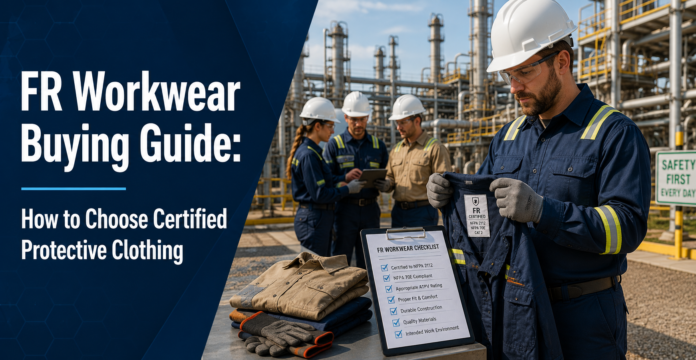
Choosing flame-resistant clothing is not the same as buying normal work clothes. Regular shirts, pants, and jackets are made for comfort, style, or daily use. FR workwear is made for a much more serious purpose. It helps reduce burn injury when workers face hazards like flash fire, electric arc, sparks, heat, or flame exposure. This FR workwear buying guide explains the simple things buyers should check before ordering certified protective clothing. It covers fabric, fit, labels, standards, stitching, comfort, durability, and care. The goal is not to make FR clothing complicated. The goal is to help you choose workwear that protects the worker and still feels practical during long shifts. A good FR workwear buying guide should always start with the workplace risk because the best garment depends on the job, not only on the product name.
What Certified FR Workwear Really Means
Certified FR workwear means the garment has been made and tested for a specific safety need. It should not keep burning easily after the flame source is removed, and it should help reduce injury during short thermal exposure. However, FR clothing is not fireproof. It cannot make a worker safe in every fire situation. It is only one part of a complete safety system that may also include gloves, helmets, face shields, boots, and proper training. This FR workwear buying guide is important because many buyers look only at price, color, or style. That can be risky. The first question should be simple: what hazard does the worker face? If the answer is flame, heat, sparks, or arc flash, then normal clothing is not enough. A proper FR workwear buying guide helps buyers look for tested protection, correct garment coverage, and clear product labeling before placing an order.
FR Workwear Buying Guide
A useful FR workwear buying guide should help you match clothing with the job site. Workers in oil and gas, electrical work, welding support, utilities, construction, and industrial maintenance may need different FR garments. Some jobs need a full coverall. Some need FR shirts and pants. Some need an FR jacket for outdoor work. Some need lighter garments for hot weather. For a wider product view, buyers can first check the main workwear collection and then narrow the choice according to hazard level, season, and garment type. This paragraph is important because certified clothing should never be selected only by appearance. A worker may look professional in a uniform, but the uniform must also match the safety risk. This FR workwear buying guide makes the buying process easier by connecting the workplace need with the right protective clothing category.
Check the Safety Standard Before the Style
The safety standard matters more than the design. A clean-looking FR shirt is not useful if it does not meet the needed protection level for the workplace. Buyers should ask which standard applies to the job. For example, some garments are made for flash fire risk, some for arc flash risk, and some for heat and flame exposure. The product label, test report, or supplier information should clearly show the relevant standard. This FR workwear buying guide recommends checking certification details before checking color, pockets, branding, or custom design. If the clothing is for general industrial heat and flame protection, buyers can review the FR workwear category and compare garments by use, coverage, and fabric. A clear standard gives confidence because it shows the garment was not only described as protective but was made for a tested safety purpose. Never accept vague claims like “safe fabric” without proof.
Choose the Right FR Fabric
Fabric is the heart of FR workwear. Some FR fabrics are made with fibers that are naturally flame resistant. Some fabrics are treated to become flame resistant. Both can be useful, but buyers must know what they are getting. The fabric should feel strong, but it should also allow movement. Heavy fabric can give a durable feel, but it may feel hot in summer. Light fabric can feel comfortable, but it still needs to meet the required safety performance. This FR workwear buying guide suggests asking about fabric weight, fiber content, shrinkage, washing performance, and whether the FR protection stays reliable after repeated laundering. Cheap fabric may look fine at first, but it can lose shape, fade fast, shrink badly, or feel rough after washing. A good fabric should balance protection, comfort, and daily use. Workers are more likely to wear FR clothing correctly when it feels wearable during the full shift.
Select the Correct Garment Type
The right garment type depends on how much body coverage the worker needs. FR shirts are good for upper-body protection when paired with proper FR pants. FR pants protect the legs and should not be replaced with normal trousers in a hazard area. FR jackets help in colder weather and outdoor work, but they should not create a loose or unsafe fit around machinery. FR coveralls give fuller body coverage and are often useful where sparks, heat, or flash fire hazards may affect both upper and lower body. This FR workwear buying guide suggests choosing the garment type after reviewing the worker’s task, weather, movement, and exposure risk. For fuller coverage, buyers may compare flame-resistant coveralls with separate shirts and pants to decide which setup is easier for the team. The best option is the one that workers can wear correctly and consistently.
Fit, Comfort, and Movement Matter
FR workwear should fit properly because poor fit can reduce comfort and create new problems. Clothing that is too tight can restrict movement, pull at the seams, and feel uncomfortable during bending, lifting, or climbing. Clothing that is too loose can catch on tools, machines, or rough surfaces. The best fit gives enough room for movement without hanging badly from the body. This FR workwear buying guide recommends checking shoulder movement, sleeve length, waist comfort, crotch depth, knee movement, and jacket length before bulk ordering. Workers may also need space for base layers in cold weather, but layering should still be safe and suitable for the hazard. Comfort is not a luxury in FR clothing. If the clothing feels too hot, stiff, or awkward, workers may wear it incorrectly or avoid it when supervision is low. A safer garment is one that protects well and can be worn all day.
Quick Buying Checklist for FR Workwear
A simple checklist can stop many buying mistakes before they happen. Use this FR workwear buying guide as a quick review before confirming an order.
- Check the workplace hazard before choosing the garment.
- Confirm the correct safety standard or certification.
- Ask for fabric details, weight, and FR performance.
- Choose the garment type according to body coverage.
- Check sizing, movement, and comfort before bulk production.
- Review stitching, buttons, zippers, labels, and trims.
- Make sure branding does not affect safety.
- Ask how the garment should be washed and maintained.
- Inspect samples before approving a full order.
- Replace damaged FR clothing when protection may be reduced.
Construction Details That Improve Safety
Good FR workwear is not only about fabric. Construction also matters. Seams should be strong because industrial clothing faces bending, pulling, washing, and rough job site use. Thread, buttons, zippers, reflective tape, labels, and other trims should be suitable for the garment’s safety purpose. Weak stitching can open under stress. Poor zippers can fail during work. Bad pocket placement can make tools uncomfortable or unsafe. This FR workwear buying guide recommends checking bar tacks on stress points, secure closures, neat seams, strong pocket edges, and clean finishing. If reflective tape is added, it should suit the work environment and not reduce comfort. If logos are added, they should be placed carefully and made with suitable materials. Protective clothing should not be treated like fashion clothing only. Every design choice should support safety, movement, and long service life. A neat garment is good, but a strong and compliant garment is better.
Care, Washing, and Replacement Rules
FR clothing must be cared for properly. Wrong washing can damage the garment, reduce comfort, or affect performance depending on the fabric and finish. Workers should follow the care label and company instructions. FR garments should be washed regularly because dirt, oil, grease, and flammable substances can create extra risk. They should not be repaired with random fabric or thread unless the repair materials are suitable for FR use. This FR workwear buying guide also suggests checking garments after every wash cycle or work shift. Look for holes, open seams, heavy fading, broken closures, chemical stains, and worn areas. If the garment is damaged, it should be removed from service until it is inspected or replaced. Buying certified FR workwear is only the first step. Keeping it clean, complete, and in good condition is also part of worker safety.
Common Mistakes Buyers Should Avoid
Many buyers make simple mistakes when ordering FR clothing. The first mistake is buying normal cotton workwear and assuming it is the same as FR clothing. Cotton may not melt like some synthetic fabrics, but that does not automatically make it certified FR protection. The second mistake is choosing the cheapest garment without checking the test information. The third mistake is selecting one garment for every worker even when job roles are different. The fourth mistake is adding non-FR embroidery, patches, labels, or trims without asking if they are suitable. This FR workwear buying guide also warns against ignoring climate. Heavy FR clothing in hot weather may cause discomfort, while thin clothing in cold weather may need safe layering. Another common mistake is using damaged garments for too long. Protective clothing should be treated as safety equipment, not only as a uniform. If it no longer protects properly, it should be replaced.
Conclusion
A smart FR workwear buying guide always comes back to one main point: choose protective clothing according to the real workplace hazard. Do not buy FR shirts, pants, jackets, or coveralls only because they look strong. Check the safety standard, fabric type, garment coverage, fit, stitching, trims, care rules, and replacement plan. The best FR workwear protects the worker, supports movement, feels comfortable enough for daily use, and stays reliable after proper washing. If you are buying for a team, order samples first, test the fit, review the labels, and ask clear questions before bulk production. This FR workwear buying guide can help buyers avoid weak products, wrong garments, and unsafe shortcuts. In the end, certified protective clothing is not just another work uniform. It is a serious part of worker safety, and it should be chosen with care.
FAQs
What is FR workwear?
FR workwear means flame-resistant work clothing. It is made to reduce burn injury when workers face flame, heat, sparks, or short thermal exposure.
Is FR workwear fireproof?
No, FR workwear is not fireproof. It helps reduce injury, but it cannot protect workers from every fire or heat situation.
How do I choose certified FR clothing?
Start with the workplace hazard, then check the safety standard, fabric, fit, garment coverage, stitching, and care instructions.
When should FR workwear be replaced?
FR workwear should be replaced when it has holes, open seams, heavy damage, broken closures, chemical contamination, or unclear protection quality.