
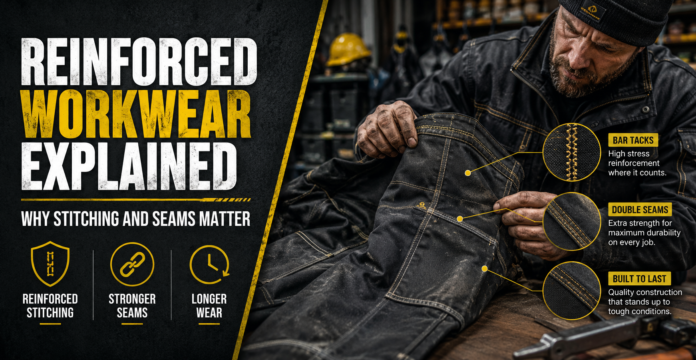
Workwear is made for people who move, bend, lift, climb, kneel, carry tools, and work in rough places. Because of this, the strength of the garment matters as much as the fabric itself. A thick fabric can still fail if the stitching is weak. A good jacket can still tear if the seams are poorly made. This is where reinforced workwear becomes important. Reinforced workwear is designed with stronger stitching, stronger seam placement, and extra support in high-stress areas. These areas often include shoulders, elbows, knees, pockets, crotch seams, side seams, cuffs, and hems. When workers use clothing every day, small weak points can turn into big problems. A pocket can rip. A knee can wear through. A side seam can open while the worker is moving. Better construction helps prevent these problems before they happen. Reinforced workwear is not only about toughness. It is also about safety, comfort, longer use, and better value over time. If the seams hold well, the worker can focus on the job instead of fixing damaged clothing.
Reinforced Workwear: What It Really Means
Reinforced workwear means clothing that has extra strength in the areas that face the most pressure. This strength can come from double stitching, triple stitching, bar tacks, stronger thread, stronger panels, taped seams, gussets, rivets, or extra fabric layers. The purpose is simple: the garment should not fail easily during real work. Normal clothing is often made for light use, but reinforced workwear is made for daily stress. For example, a worker may kneel many times in one shift, so the knee area needs more support. A worker may carry tools in pockets, so those pockets need strong corners and firm stitching. A worker may reach overhead, so the shoulder and underarm seams must handle stretching and pulling. Reinforced workwear is useful in construction, logistics, utilities, oil and gas, agriculture, maintenance, warehousing, and field service jobs. It helps clothing last longer because it protects the weak points first. Good reinforcement should not feel stiff or uncomfortable. It should support movement while still giving strength where workers need it most.
Why Seams Fail First in Work Clothing
Seams often fail before the main fabric because seams carry movement pressure. Every time a worker bends, reaches, twists, climbs, or squats, the seam line takes stress. If the seam is weak, uneven, or too close to the fabric edge, it may open faster. This is why reinforced workear pays close attention to seam design. A strong seam joins fabric pieces in a way that can handle pulling. A weak seam may look fine at first, but after washing and daily use, the thread may break or the fabric may fray. Buyers who are planning general uniforms can review a broad workwear collection to understand how different job clothing categories need different seam strength. In reinforced workwear, the seam should match the purpose of the garment. A light office uniform does not need the same seam strength as a utility jacket or heavy-duty work pant. Good seams make the garment feel stable, clean, and dependable. Poor seams make even good fabric perform badly.
The Role of Stitching in Garment Strength
Stitching is the line of thread that holds the garment together, and it has a major effect on durability. In reinforced workwear, stitching should be even, secure, and suitable for the fabric weight. If the thread is too weak, it can snap. If the stitch length is too loose, the seam may open. If the stitching is too tight, it can damage the fabric or reduce flexibility. Double stitching is often used where extra strength is needed. Triple stitching may be used in heavy-duty workwear because it adds more holding power. Bar tack stitching is also important because it strengthens small stress points like pocket corners, belt loops, zipper ends, and side openings. Reinforced workwear needs stitching that supports both strength and movement. A worker should be able to bend or stretch without feeling the seam pull too hard. Strong stitching also improves the look of the garment because clean seams make clothing appear more professional. When stitching is neat and secure, the garment feels better, lasts longer, and performs better during tough work.
High-Stress Areas That Need Reinforcement
The best reinforced workwear focuses on the parts of clothing that receive the most wear. Knees are a major stress area because workers often kneel on rough floors, soil, concrete, metal surfaces, or job-site ground. Elbows also need support for workers who lean, crawl, repair, or handle equipment. Shoulder seams matter because workers lift, carry, and reach throughout the day. Pocket corners need bar tacks because tools, phones, keys, and small parts can pull down on the pocket. The crotch seam is another important area because bending, climbing, and squatting create strong pulling pressure there. Cuffs and hems also need secure finishing because they rub against boots, gloves, tools, and surfaces. Reinforced workwear protects these areas by adding stronger stitching, extra fabric, or better seam placement. This does not mean every part of the garment must be heavy. A smart garment adds strength only where it is needed. That keeps the clothing comfortable while still helping it survive daily work.
Why Reinforced Seams Matter in Heavy Industries
Heavy industries need clothing that can deal with rubbing, pulling, dirt, weather, tools, and long shifts. In jobs like oil and gas, repair work, transport, and field maintenance, weak seams can become a serious problem. A torn seam may expose skin, reduce protection, or make the worker uncomfortable. This is why reinforced workwear is very useful for demanding environments. For example, buyers looking at clothing for rough outdoor and industrial work can compare options in oil and gas workwear when planning garments for tougher job conditions. Reinforced workwear helps workers because it is built to survive repeated use, not just occasional wear. Strong seams are especially important in jackets, coveralls, cargo pants, overalls, and utility shirts. These garments often carry more stress than simple casual clothing. The worker may climb a ladder, enter a tight area, lift heavy items, or move through dirty ground. In these situations, the garment must stay secure and practical. Strong seam construction helps reduce early damage and supports safer movement during demanding work.
Reinforcement Is Not Only for Heavy Fabric
Many people think reinforced workwear must always be thick, heavy, and stiff, but that is not true. Reinforcement is about smart construction, not just fabric weight. A lightweight work shirt can still have reinforced seams. A breathable pant can still have strong knee panels. A waterproof jacket can still have protected seam areas. In fact, some modern workwear needs both strength and comfort because workers may spend long hours in changing weather. Waterproof garments are a good example because seam quality affects how the garment performs in wet conditions, and buyers can explore waterproof workwear when comparing protection for rain, outdoor tasks, or wet job sites. In reinforced workwear, the reinforcement should match the job. A hot-weather worker may need lighter fabric with strong stitching. A cold-weather worker may need heavier layers with stronger panels. A rainwear worker may need sealed or protected seams. Good workwear does not add weight without reason. It adds strength where the job creates real pressure.
One-Paragraph Buyer Checklist for Stronger Workwear
When choosing reinforced workwear, use this simple checklist before buying:
- Check if the garment has double or triple stitching in stress areas.
- Look for bar tacks on pocket corners and belt loops.
- Make sure knees, elbows, and shoulders have added support when needed.
- Check that the seams are straight, clean, and not loose.
- Choose fabric weight according to the job, not only the season.
- Make sure the garment allows bending, reaching, and climbing.
- Avoid weak pocket construction if workers carry tools.
- Check that cuffs, hems, and closures are strongly finished.
- Test sample garments before placing a large order.
- Wash the sample to see if seams twist, shrink, or weaken.
- Choose reinforced workwear that feels durable but still comfortable.
Comfort Still Matters in Reinforced Clothing
Strong clothing is useful only when workers can wear it easily. If reinforced workwear is too stiff, too tight, or too heavy, workers may avoid wearing it properly. They may roll up sleeves, leave jackets open, or choose non-work clothing instead. That can create safety and performance problems. Good reinforcement should support the worker without fighting the body. For example, gussets can help with movement under the arms or around the crotch area. Articulated knees can help workers bend without pulling the fabric too hard. Stretch panels can improve comfort when used correctly. A relaxed but controlled fit can help workers move better without excess fabric getting in the way. Reinforced workwear should also feel balanced. If only one area is too thick, the garment may feel awkward. If the seams are rough, the worker may feel rubbing during long shifts. The best design gives strength, comfort, and a clean fit together. When workers feel comfortable, they are more likely to wear the garment correctly every day.
How Reinforced Workwear Saves Money Over Time
Cheap workwear may look like a good deal at first, but it can become expensive if it fails quickly. A shirt that tears after a few washes costs more in the long run because it needs fast replacement. A pant with weak pocket stitching may not survive tool use. A jacket with weak seams may lose shape or open during work. Reinforced workwear can save money because it is designed to last longer under pressure. Longer garment life means fewer replacements, fewer complaints, and better uniform consistency across the team. It also helps protect brand image because workers look more professional when their clothing stays neat and secure. Another benefit of reinforced workwear is reduced downtime. If a worker’s clothing tears during a shift, the worker may need to stop, change, repair, or report the issue. Good construction reduces these small problems. For businesses buying uniforms in bulk, durability is not a small detail. It directly affects cost, comfort, worker confidence, and daily performance. Strong stitching is a simple detail that can protect the full investment.
Conclusion
Reinforced workwear is important because real jobs place real pressure on clothing. Fabric matters, but stitching and seams decide how well the garment stays together during daily use. Strong seams help protect knees, elbows, shoulders, pockets, cuffs, and other high-stress areas. Better stitching also helps workers move with more confidence because the clothing feels secure. The best reinforced workwear is not always the heaviest option. It is the garment that gives the right strength in the right places while still staying comfortable enough for long shifts. Buyers should look closely at seam quality, stitch type, pocket support, fit, washing performance, and stress-point reinforcement before ordering. A garment that looks good but has weak construction may fail too soon. A garment with smart reinforcement can last longer, feel better, and support safer work. In the end, reinforced workwear is better because stitching and seams are not small details; they are the hidden structure that keeps work clothing strong.
FAQs
What is reinforced workwear?
Reinforced workwear is work clothing made with stronger stitching, seams, panels, or support in high-stress areas.
Why do seams matter in workwear?
Seams hold the garment together, so weak seams can tear even when the fabric is strong.
Is reinforced workwear always heavy?
No, reinforced workwear does not always need to be heavy.
Where should workwear be reinforced?
Workwear should be reinforced at knees, elbows, shoulders, pockets, cuffs, hems, and crotch seams.


