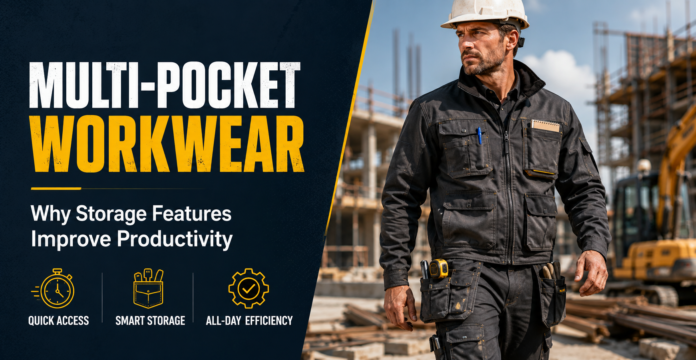
Multi-pocket workwear helps workers carry small tools, safety items, phones, pens, tapes, gloves, and job notes without wasting time walking back and forth. On a busy job site, even a small delay can break focus and slow the whole task. When workers have the right pocket layout, they can keep the items they use most close to the body. This makes work feel smoother, cleaner, and more controlled. Multi-pocket workwear is useful because it supports real movement, not just appearance. A worker may climb, kneel, measure, write, fix, lift, or inspect many times in one shift. If every small item has a clear place, the worker can move with less stress. This is why multi-pocket workwear is common in construction, warehouse, maintenance, electrical, plumbing, farming, road work, and repair jobs. The best design is not about adding many pockets everywhere. It is about placing the right pockets in the right areas so workers can reach items quickly and safely.
Multi-Pocket Workwear
Multi-pocket workwear is work clothing designed with several useful storage areas for tools, accessories, and daily job items. These pockets may include chest pockets, thigh pockets, cargo pockets, ruler pockets, phone pockets, zipped pockets, pen slots, ID pockets, knee-pad pockets, or hidden secure pockets. The main purpose of multi-pocket workwear is to reduce wasted motion and keep important items easy to reach. For general teams, Eco Jersey’s workwear collection can help buyers understand how work clothing can be planned for different job roles and daily use. Good multi-pocket workwear should never feel bulky or messy. It should support the worker’s body while walking, bending, sitting, climbing, or kneeling. Pocket size, pocket depth, closure type, fabric strength, and placement all matter. A pocket that is too shallow may drop tools. A pocket that is too tight may slow access. A pocket placed in the wrong area may disturb movement. That is why smart pocket design is a real productivity feature.
How Storage Features Save Time
Time is lost when workers search for small items again and again. A tape measure may be left in a toolbox. A marker may fall into a bag. A phone may be placed on a machine. A small part may disappear during movement. Multi-pocket workwear helps solve these daily problems by keeping essential items organized on the worker’s body. This makes the worker faster without rushing. When storage is planned well, the worker knows where each item belongs. The pen goes in one slot, the phone goes in one secure pocket, and small tools go in stronger cargo areas. This simple system reduces confusion during work. Multi-pocket workwear also helps teams stay focused because workers do not need to stop every few minutes to find basic items. Better storage can also reduce small mistakes. When the right tool is close, the worker can finish the task in the correct order. That is why multi-pocket workwear supports both speed and accuracy.
Better Pocket Placement Means Better Movement
Pocket placement is just as important as pocket count. A garment can have many pockets and still feel uncomfortable if those pockets sit in the wrong places. Multi-pocket workwear should allow natural movement during bending, stretching, lifting, and walking. For example, thigh pockets are useful because workers can reach them while standing or kneeling. Chest pockets are good for pens, notes, and small items. Zipped pockets are useful for phones, cards, or keys. Side pockets can work well for items used many times in a shift. However, heavy tools should not pull the fabric down or hit the legs while walking. Good multi-pocket workwear keeps weight balanced across the body. It also avoids sharp corners, weak stitching, and pocket flaps that catch on equipment. In high-visibility roles, pocket layout must also keep reflective areas clear, and Eco Jersey’s hi-vis workwear range shows how visibility and workwear function can be planned together. The best pocket design supports motion instead of fighting it.
Why Secure Closures Improve Productivity
A pocket is only useful if it keeps items safe. Open pockets are easy to use, but they may not protect items during climbing, crawling, riding, or bending. Multi-pocket workwear can use flaps, zippers, snaps, hook-and-loop closures, or hidden compartments to keep important items in place. Secure closures are especially helpful for phones, cards, IDs, keys, measuring tools, and small parts. When workers trust their pockets, they move with more confidence. They do not need to keep checking whether something has fallen out. This improves productivity because the worker’s attention stays on the job. Multi-pocket workwear with secure pockets can also reduce damage to personal items. A phone pocket with enough depth and closure is better than a loose side pocket. A zipped pocket can protect keys from falling into work areas. A flap pocket can keep dust and debris away from small items. The right closure should match the task. Fast-access pockets are good for frequently used items, while secure pockets are better for valuable or safety-related items.
Fabric Strength and Stitching Make Pockets Last
Pockets face more stress than many other parts of a work garment. Workers pull items in and out many times a day. Heavy tools press against pocket corners. Sharp items can rub the fabric. Dust, sweat, washing, and outdoor conditions can weaken weak materials. That is why multi-pocket workwear needs strong fabric and careful stitching. Reinforced pocket corners, bar tacks, double stitching, and strong seams help pockets last longer. A pocket that tears after a few weeks creates frustration and reduces the value of the garment. Strong pockets also help protect tools from falling. Multi-pocket workwear should be tested for real use, not only checked on a hanger. Buyers should think about what workers carry every day. A warehouse worker may need light storage. A technician may need pen slots and secure phone storage. A construction worker may need stronger thigh and cargo pockets. A fabric that works for office uniforms may not be strong enough for rough outdoor work. Durability keeps the garment useful for longer.
One Simple Multi-Pocket Workwear Checklist
Use this quick checklist when choosing multi-pocket workwear for a team:
- Choose pockets based on real tools, not only style.
- Keep phone pockets deep, safe, and easy to reach.
- Use zipped pockets for keys, cards, and valuable items.
- Place cargo pockets where they do not block bending.
- Choose reinforced stitching for heavy-use pockets.
- Avoid oversized pockets that swing or sag while walking.
- Check that pocket flaps do not catch on equipment.
- Keep reflective tape visible on safety garments.
- Test samples while standing, kneeling, and climbing.
- Make sure workers can empty pockets before washing.
- Choose fabric that supports both comfort and strength.
- Keep the pocket layout simple enough for daily use.
Matching Pocket Design to Different Industries
Different jobs need different storage features. A road worker may need hi-vis clothing with safe pockets and clear reflective areas. A mechanic may need strong thigh pockets, ruler pockets, and small tool storage. A delivery worker may need phone storage, pen slots, and document pockets. A warehouse worker may need lightweight pockets that do not catch on shelves. Multi-pocket workwear becomes more useful when it matches the worker’s daily routine. For mixed teams, Eco Jersey’s industry-specific workwear category is a relevant place to plan clothing by job type instead of choosing one design for everyone. Multi-pocket workwear for oil and gas, construction, utilities, and outdoor crews may need stronger fabric and more secure closures. Corporate teams may need cleaner pocket designs that look neat while still helping workers carry small items. The goal is not to make every garment the same. The goal is to give each worker enough storage without making the clothing heavy, unsafe, or uncomfortable.
Common Mistakes When Buying Pocketed Workwear
One common mistake is thinking more pockets always mean better workwear. Too many pockets can make clothing heavy, confusing, and uncomfortable. Another mistake is choosing pockets that look good in photos but do not work well during real tasks. Multi-pocket workwear should be tested with the actual tools and items workers use every day. Buyers should also avoid weak pocket fabric, poor stitching, and shallow pocket bags. A pocket that cannot hold normal job items is not useful. Another problem is placing pockets where they block kneeling, sitting, or climbing. Some garments also have phone pockets that are too small for modern phones. Multi-pocket workwear should be planned around worker feedback because workers know which items they reach for most often. It is also important to avoid unsafe storage habits. Heavy or sharp tools should not be carried in weak pockets. Valuable items should not be placed in open pockets during active work. Good buying decisions come from comfort, safety, storage, and durability working together.
Comfort Keeps Workers Using the Pockets Properly
Even the smartest pocket system will fail if the garment is not comfortable. Workers may stop using pockets if they feel too tight, too low, too loose, or too bulky. Multi-pocket workwear should feel balanced when pockets are full and when they are empty. The waistband, shoulders, thighs, and knees should not feel pulled by pocket weight. Breathable fabric can help workers stay comfortable in warm conditions. Stretch panels may help movement, but they must still support pocket strength. Multi-pocket workwear should also allow workers to sit in vehicles, climb ladders, and bend at the knees without pressure points. Comfort matters because workers wear these garments for long hours. If pocket placement causes rubbing or pressure, workers may ignore useful storage and go back to toolboxes, bags, or unsafe shortcuts. The right garment helps workers build a simple routine. They put items in the same place each day, reach them faster, and work with fewer small interruptions. Comfort turns storage features into daily productivity.
Conclusion
Multi-pocket workwear improves productivity because it helps workers stay organized, move faster, and keep important items close during the job. The best garments are not overloaded with random pockets. They use smart pocket placement, strong stitching, secure closures, and comfortable fabric. Multi-pocket workwear is useful for many industries because workers often need phones, pens, tapes, IDs, gloves, notes, and small tools throughout the day. When these items have a proper place, workers lose less time and stay more focused. Buyers should choose multi-pocket workwear by studying the real job, the work environment, and the items workers carry most often. They should also test samples before bulk orders so the final clothing feels practical, safe, and easy to wear. A good pocket system does not only store tools. It supports better habits, cleaner movement, and smoother work. In the end, multi-pocket workwear is better because it saves small amounts of time again and again, and those small savings can improve the whole working day.
FAQs
What is multi-pocket workwear?
Multi-pocket workwear is job clothing made with several useful pockets for tools, phones, pens, IDs, notes, and small work items. It helps workers stay organized and work faster.
Why does multi-pocket workwear improve productivity?
Multi-pocket workwear improves productivity by reducing time spent searching for tools and small items. Workers can keep important items close and focus more on the task.
Is more pocket storage always better?
No, more pockets are not always better. The best multi-pocket workwear has the right pockets in the right places, without making the garment heavy or uncomfortable.
Which industries use multi-pocket workwear?
Multi-pocket workwear is useful for construction, maintenance, utilities, warehousing, road work, oil and gas, delivery teams, farming, and general industrial jobs.