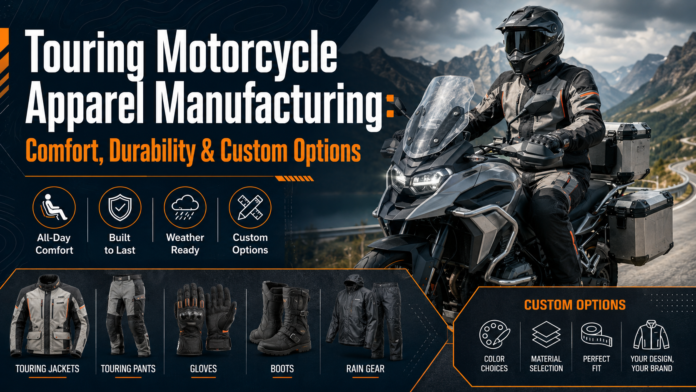
Long-distance touring puts a sustained and cumulative demand on clothing that is rarely seen in shorter riding formats. The same jacket that is comfortable on a commute for an hour may be uncomfortable over a 12-hour day of touring, and the seams which hold up through weekends may start to unravel halfway through a multiweek continental trip. Touring motorcycle apparel manufacturing requires a different design philosophy from racing and urban riding categories. This is because comfort over a long period of time, durability in all weather conditions, and adaptability to changing conditions are the most important performance criteria.
Why the Touring Motorcycle Apparel Industry Needs a Long-Term Perspective
The touring category of riders spends more hours riding in their gear. This means that small discomforts, which are not noticeable on shorter rides, can become a major problem over the course of a whole day. Touring routes often cross multiple climate zones in a single day. This means that garments must be able to adapt from the cold mountain passes of early morning to the warm valley roads at midday without requiring a wardrobe change. A touring garment that prioritizes protection over ventilation can become a heat trap in warm conditions. Similarly, a garment that sacrifices breathability for weather sealing will leave riders wet and cold when the conditions worsen.
The Core Materials in Touring Motorcycle Apparel Manufacturing
The material selection for touring motorcycle apparel must address all of the following: abrasion resistance and weather protection. Comfort over long periods, weight management, and comfort.
High-Tenacity textile outer shells
Most quality touring garments are made from high-tenacity polyester and nylon fabrics. They provide abrasion-resistant fabric that is lighter and more versatile than leather. Cordura nylon fabrics in the mid-range denier count balance durability and weight reduction. This is important during long tours where even slight weight differences can contribute to fatigue. textile motorcycle coats made from high-tenacity fabric can accommodate waterproof membranes and removable liners as well as ventilation systems.
Waterproof Breathable Membranes
The need for weather protection is a requirement of touring motorcycle clothing, as long-distance riders can’t predict or avoid all rain events on multi-day trips. Quality touring garments laminate waterproof membranes with breathable linings between the outer shells and the inner linings, which prevents water from entering while allowing the moisture vapor to escape. Fully taped seam construction also ensures that waterproofing is applied to all stitch points across the garment. This is important because partially taped edges can allow water infiltration when it rains heavily for a long time. motorcycle rainwear is often used to inform weather protection standards in touring motorcycle apparel.
Comfort-Focused Lining Material
The lining fabric selection is as important as the outer shell in terms of overall comfort for touring riders because they wear their jackets and trousers for long periods. In addition, padding at pressure points and contact areas on the seat will prevent discomfort during extended riding sessions. motorcycle base layer specifically designed for touring can be used in conjunction with garment linings, to regulate moisture and temperature under variable conditions. The manufacturing of touring motorcycle apparel must take into account how the garment’s inner fabric interacts with the base layer system, rather than treating it as an afterthought.
Insulation that is removable and adaptable
Insulation systems must adapt to the changing conditions of touring, rather than committing a garment to a specific thermal profile. Touring riders can customize their garments to suit the conditions of each day, such as morning cold or afternoon warmth. They do not need to carry multiple jacket systems. Insulation materials in removable liners should also compress when removed to allow for easy storage, as touring riders are limited by luggage space and must pack all their clothing and equipment into a small volume. Insulation design for touring motorcycle apparel must be carefully considered in terms of both thermal performance as well as packability.
CE-Rated Protective Armor
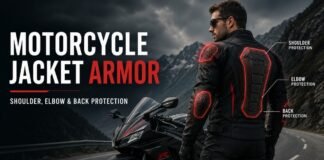
The inclusion of protective armor on the shoulders, elbows and knees as well as the back is a safety requirement for all serious touring motorcycle clothing manufacturers, irrespective of whether comfort or weather protection are a priority. CE Level 1 armor is suitable for most touring applications. CE Level 2 armor offers enhanced protection to riders who are exposed to higher-risk riding conditions. Back protector integration is also important in touring garments, as long-distance cyclists prefer integrated back protection to the separate back protectors that are used in racing categories. principles for protective riding gear are directly applicable to the armor specifications and pocket placement in touring motorcycle clothing manufacturing.
The Construction Features of Quality Touring Clothing
Specific construction details, beyond material selection determine the comfort and protection of a touring garment over extended riding periods.
Ergonomic long-Ride Pattern Design
The design of touring jackets and pants must take into account the seated riding position, which is maintained by tourers for many hours. This position is not the dynamic crouching position as emphasized in racing patterns. The back panel must be long enough to accommodate a seated forward lean, without exposing the lower back. Sleeve length should also maintain wrist coverage when in riding position, without bunching up. The development of long-ride, ergonomic patterns is one of the most critical and undervalued aspects in touring motorcycle apparel.
Ventilation System Engineering
Touring riders can regulate their temperature in a wide range of conditions with effective ventilation systems. They simply open or close airflow channels according to the weather. Airflow is created by the combination of underarm ventilation zippers, chest vents and back exhaust panels when riding at high speeds. When weather protection is priority, secure zip closures close these vents. To maintain airflow efficiency and protect integrity, ventilation placement should also avoid armor pockets and structural seams. In order to achieve the best possible ventilation in motorcycle clothing, it is important that you plan your design carefully.
Reinforced Stress Point Construction
Over the course of a garment’s lifetime, long-distance tours can cause wear and tear on garment stress points due to vibration, weather exposure, and movement. Double stitching on armor pockets, zippers, collars and cuffs will add durability to the garments that will pay dividends over multiple seasons of touring, not just one ride. Abrasion patches on high-contact zones like the underside of cuffs, elbows and shoulder rub zones can extend the life expectancy of outer shells.
Touring Motorcycle Apparel Manufacturers Offer Customized Options
Custom-made touring motorcycle apparel allows brands to create products that are tailored to specific riders’ preferences, brand identities, and market positioning objectives.
- Custom colorways: Sublimation and embroidery allows brands to differentiate their touring ranges from generic wholesale options by applying distinctive color schemes, reflective branding elements, and logos.
- Modular Pocket Systems: Customized pocket placement and volume specifications allows brands to design luggage compatible touring garments that have integrated document pockets, hydration ports, and device charging port tailored to touring riders’ needs.
- Fit systems that can be adjusted: Customized waist belts, sleeves length extenders and collar fit systems enable riders to customize garment fit for different layering configurations.
- Configurations of removable liner: Brands are able to specify liner attachment system, insulation weights and packable storage options that differentiate their products from competitors who offer standard liner designs.
- Reflective Safety Integration: Customized reflective panel placements, piping patterns and logo applications enable brands to meet visibility requirements while incorporating reflective features as design elements rather than afterthoughts.
Brands can develop custom options in collaboration with an experienced manufacturer to create touring motorcycle clothing that is more performance-oriented than repackaging generic materials and colors.
Matching manufacturing capabilities to your touring product range
The range of touring motorcycle apparel is much broader than most brands realize. It includes garments that meet the needs of the entire riding rider. Motorbike Jackets are the core of most touring collections, while Custom motorbike pants as well as Motorcycle riding jeans provide lower body protection for riders with different preferences and styles.
motorcycle vests are a great option for touring riders that want to stay warm without wearing a full jacket in milder weather. motorcycle riding sweatshirts are suited for touring riders looking for hoodies with softer aesthetics when they stop at overnight stops. Motorbike Gloves are an important accessory for touring brands, as hand comfort and weather protection becomes critical during long riding sessions. Exploring the full Motorcycle apparel range can help brands build a comprehensive touring line. It helps them identify gaps in the category and the manufacturing capabilities of their partners across the entire touring apparel ecosystem.
Partner with a trusted manufacturer for touring motorcycle apparel
To develop touring motorcycle clothing that truly serves long-distance, demanding riders in a variety of conditions and environments requires a manufacturer who understands the technical construction requirements as well as the experiential demands which define this category. If your brand is expanding its motorcycle range or entering the touring apparel segment for the first-time, selecting a manufacturer who has proven expertise in manufacturing touring motorcycle apparel will help you create products that are sure to earn riders’ loyalty over multiple touring seasons.
We are a manufacturer of custom motorcycle apparel. As such, we work with brands to develop apparel that balances comfort over long periods, durability in all weather conditions, CE-rated safety, and a distinctive brand identity. Contact our team to learn more about material specifications, production standards, custom options and timelines that are suited for your touring apparel brand.
Final Thoughts
The manufacturing of touring motorcycle apparel requires a long-term perspective. This influences every decision made during the product development phase, including material selection, construction and design. To produce garments that will serve riders reliably over thousands of kilometers, high-tenacity outer shells, waterproof membranes with breathable linings and modular insulation systems must be integrated seamlessly. Partnering with a manufacturer that understands these requirements and offers meaningful custom options along with quality construction can help brands develop touring motorcycle clothing that will earn a place in the most competitive segment of the motorcycle wear market.
FAQs
What sets touring motorcycle clothing apart from other categories of riding?
The focus of touring apparel is on comfort over long periods, adaptability to all weather conditions, and modular layering, rather than the protection-focused priorities or urban style emphasis found in other motorcycle clothing categories.
What is the most common fabric used for touring motorcycle jackets?
Outer shells of touring motorcycle jackets are made from Cordura nylon or ripstop blends. These materials provide abrasion-resistant outer shells, while also accommodating waterproof membranes and removable liners.
What is the importance of ventilation in touring bike apparel?
Touring apparel must have ventilation because riding in warm weather can make waterproof jackets unbearably hot. Riders can manage their temperature in a variety of conditions with the help of effective ventilation systems that include chest, underarm and back vents.