Home Blog Page 11

Best Fabrics Used in Modern Ski Wear Manufacturing

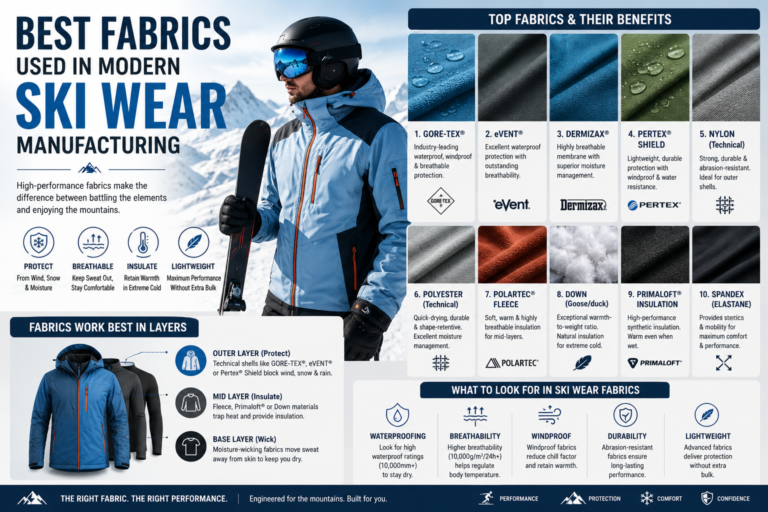
Fabric choice defines everything in ski wear. The difference between a comfortable, high-performing day on the mountain and a miserable, cold, wet experience often comes down entirely to the materials your clothing is made from. Understanding the best fabrics used in ski wear manufacturing helps brands build collections that genuinely perform — and helps skiers make informed decisions about the gear they depend on in demanding mountain environments.

Here’s a complete breakdown of the fabrics driving modern ski wear performance.

Gore-Tex — The Gold Standard in Ski Outerwear

Gore-Tex remains the most trusted waterproof breathable membrane in ski apparel manufacturing. Its expanded polytetrafluoroethylene (ePTFE) membrane contains billions of microscopic pores — each too small for liquid water to penetrate but large enough to allow moisture vapor to escape. The result is complete waterproofing combined with genuine breathability that keeps skiers dry from both external snow and internal perspiration simultaneously.

Gore-Tex Pro suits the most demanding skiing applications — delivering maximum durability and breathability for aggressive backcountry and high-intensity resort skiing. Gore-Tex Paclite suits lighter, more packable ski touring applications where weight efficiency matters alongside weather protection performance.

A professional ski wear manufacturer who works with genuine Gore-Tex fabrics delivers verified performance credentials that marketing claims alone cannot provide — because Gore-Tex licensing requires manufacturers to meet specific production quality standards before using the certification.

Nylon — Durable, Lightweight Shell Fabric

Nylon is the most widely used face fabric in ski outerwear construction. Its excellent abrasion resistance, lightweight properties, and strong tensile strength make it the ideal carrier fabric for waterproof membrane laminates in ski jackets and pants.

High-tenacity nylon — often woven in ripstop or twill constructions — resists the mechanical stresses that skiing imposes on outerwear constantly. Chair lifts, ski edges, rocky terrain, and repeated falls all subject ski apparel to abrasion forces that lower-quality face fabrics fail against quickly. Quality nylon face fabrics maintain their structural integrity and DWR treatment adhesion across multiple seasons of demanding use.

Hardshell jackets built with premium nylon face fabrics combined with quality membrane laminates deliver the complete weather protection package that serious mountain skiing demands across varied and unpredictable conditions.

Polyester — Versatile Performance Across Layers

Polyester serves multiple roles across the ski wear layering system — appearing in base layers, mid-layers, and outer shell constructions depending on fabric treatment and weight. Its moisture-wicking properties, quick-drying performance, and consistent dimensional stability make it one of the most commercially important fabrics in technical ski apparel manufacturing.

Recycled polyester — produced from post-consumer PET plastic waste — delivers identical performance to virgin polyester while significantly reducing environmental impact. Sustainability-conscious ski apparel brands increasingly specify recycled polyester across their collections — responding to growing consumer demand for environmentally responsible outdoor clothing without compromising the technical performance their customers depend on.

Waterproof jackets and softshell jackets both use polyester constructions extensively — in face fabrics, membrane carriers, lining systems, and insulation batting — making it one of the most versatile and commercially essential fabrics across the entire ski wear manufacturing spectrum.

Merino Wool — Premium Base Layer Performance

Merino wool is the finest natural fiber available for ski base layer applications. Its natural crimp structure traps warm air for insulation while simultaneously managing moisture through absorption into the fiber core — preventing the wet, clammy sensation that synthetic base layers sometimes create against the skin during high-intensity skiing activity.

The natural protein structure of merino wool actively resists bacterial growth — preventing odor development across multi-day ski trips where base layer washing opportunities may be limited. Fine merino fibers — typically 17 to 19 microns — feel genuinely soft against skin without the itching associated with coarser wool grades, making them comfortable for all-day contact wear during extended skiing sessions.

Base layer clothing built from premium merino wool delivers natural temperature regulation that synthetic alternatives struggle to replicate — making it the preferred choice for performance-focused skiers who prioritize comfort and natural fiber credentials alongside technical performance.

Polartec Fleece — Engineered Warmth for Mid-Layers

Polartec fleece represents the most advanced polyester fleece technology available for ski mid-layer applications. Different Polartec series serve specific performance requirements — Polartec Classic for reliable everyday warmth, Polartec Thermal Pro for maximum warmth-to-weight efficiency, and Polartec Power Stretch for high-mobility applications where stretch performance matters alongside insulation.

The open fiber structure of quality fleece fabrics allows moisture vapor to pass through freely — preventing mid-layer moisture accumulation that undermines the effectiveness of base layer moisture management systems in cold mountain conditions.

Outdoor fleece garments built with Polartec or equivalent premium fleece fabrics provide the reliable warmth retention that ski layering systems depend on — performing consistently across the temperature fluctuations that characterize full mountain skiing days from cold morning lifts to warm afternoon sun exposure.

PrimaLoft and Down — Insulation Fabrics for Extreme Cold

Insulation fabrics sit between outer shell and base layers — providing the thermal retention that keeps skiers warm in genuinely cold mountain conditions. Two materials dominate premium ski insulation applications.

Down insulation — particularly 700 fill power and above — delivers unmatched warmth-to-weight ratio for dry mountain conditions. Hydrophobic down treatments — where individual feathers are coated to repel moisture — have significantly improved down’s performance in wet conditions that previously undermined its effectiveness relative to synthetic alternatives.

PrimaLoft synthetic insulation maintains warmth performance when wet — making it the more reliable choice for ski applications where internal moisture from perspiration or external moisture penetration can compromise insulation loft and thermal performance. Puffer jackets built with PrimaLoft Gold or equivalent premium synthetic insulation deliver consistent warmth performance across the varied moisture conditions that demanding skiing environments regularly create.

Spandex and Elastane Blends — Mobility Without Compromise

Spandex and elastane fiber additions transform rigid technical fabrics into performance materials that move freely with the body during aggressive skiing. Even small percentages — 5% to 15% elastane content — dramatically improve freedom of movement across the articulated joint areas where ski apparel faces the greatest mobility demands.

Four-way stretch fabrics incorporating elastane allow simultaneous stretch in both warp and weft directions — accommodating the multi-directional movement patterns that skiing imposes constantly across hips, knees, and shoulders. These stretch properties are particularly critical for ski pants where lower body mobility determines skiing technique quality and safety across varied terrain.

DWR Treatments — The Surface Protection Layer

Durable Water Repellent treatments aren’t technically fabrics — but they define how every ski apparel fabric performs against external moisture. DWR coatings cause water to bead and roll off outer fabric surfaces rather than soaking into face fabric and reducing breathability performance by blocking membrane pores.

Modern fluorocarbon-free DWR treatments maintain water repellency performance without the environmental concerns of traditional C8 fluorocarbon chemistries — responding to both regulatory requirements and consumer demand for more environmentally responsible technical performance treatments across the best fabrics used in ski wear manufacturing.

Regular DWR refresh — through tumble drying or specialist re-treatment products — maintains water repellency performance across the working life of the garment rather than allowing progressive performance degradation through repeated use and washing.

Building a Premium Ski Wear Collection

The best fabrics used in ski wear manufacturing work together as an integrated system — each layer’s fabric choice complementing the others to deliver complete performance across warmth, moisture management, weather protection, and mobility. Brands building ski wear collections benefit enormously from working with a manufacturer who sources verified performance fabrics with genuine technical credentials.

Outdoor apparel brands expanding their ranges alongside outdoor jackets and waterproof clothing find that consistent fabric quality standards across their entire range build stronger brand reputation than technically excellent ski wear sitting alongside mediocre everyday outdoor products.

Conclusion

Understanding the best fabrics used in ski wear — Gore-Tex membranes, nylon shells, polyester systems, merino wool base layers, Polartec fleece, PrimaLoft insulation, elastane blends, and DWR treatments — gives brands the technical foundation to build ski collections that genuinely perform on the mountain. Every fabric decision communicates something about your brand’s commitment to quality. Choose verified performance materials, partner with experienced ski wear manufacturers, and build products that serious skiers recognize as genuinely worthy of the mountains they wear them on.

FAQs

Is Gore-Tex worth the premium price in ski wear?

Yes. Gore-Tex delivers verified waterproof breathable performance backed by rigorous manufacturer quality standards — the performance consistency and brand trust it provides genuinely justifies its premium position in serious ski apparel collections.

What base layer fabric performs best for high-intensity skiing?

Merino wool suits skiers prioritizing natural temperature regulation and odor resistance. Fine-gauge synthetic base layers suit skiers prioritizing maximum moisture wicking speed and quick-drying performance during very high-intensity activity.

Can ski wear collections be produced under a private label with premium fabrics?

Yes. Professional ski wear manufacturers offer complete private label production with access to premium membrane technologies, certified performance fabrics, and quality hardware — giving outdoor brands full control over their ski apparel identity.

How often should DWR treatments be refreshed on ski wear?

DWR performance should be checked before each ski season and refreshed when water no longer beads visibly on the outer fabric surface — typically every 10 to 15 washes depending on washing conditions and usage intensity.
Best Fleece Fabrics for Outdoor Apparel

Fleece fabric plays a central role in outdoor clothing because it delivers warmth, breathability, and comfort in a lightweight package. When selecting the Best Fleece Fabrics for Outdoor Apparel, you create jackets, base layers, and mid-layers that perform reliably in cold and unpredictable conditions. As a result, outdoor brands and manufacturers rely on fleece to develop gear that keeps wearers comfortable during hiking, camping, skiing, and other cold-weather activities. This guide explores the Best Fleece Fabrics for Outdoor Apparel, explains how different fleece types compare, and helps you choose the right option for your next outdoor apparel project.

Fleece Fabric is Important for Outdoor Apparel

Outdoor clothing must be able to handle moisture, temperature fluctuations, and constant motion. Fleece is the perfect solution for these conditions because it keeps warm air near your body and allows sweat to evaporate rapidly. The result is that the wearer stays warm without feeling wet or overheated. Fleece dries quicker than cotton or wool, making it a good choice for multi-day excursions where access to laundry is limited. As a result, fleece is now used for almost every outdoor category, including jackets, vests and base layers.

Fleece Fabrics Used for Outdoor Apparel

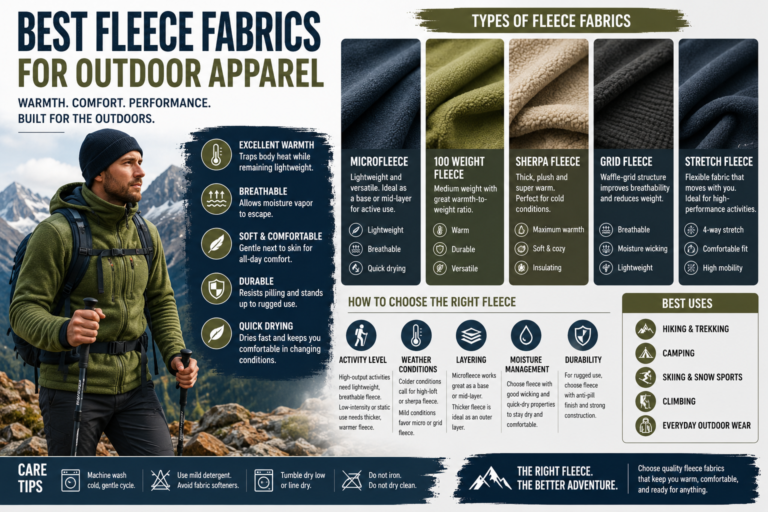
There are several different fleece fabrics available, each of which is suitable for a specific climate and activity. These options will help you choose the right fleece fabric for your outdoor clothing based on weight, warmth and intended use.

Microfleece

Microfleece is a soft, thin material that can be used as a lightweight base layer. It breathes well, so athletes and hikers wear it for high-intensity activities. Its low bulk also allows it to be worn comfortably under jackets and shells.

Midweight Fleece

Midweight fleece is a great choice for pullovers and jackets because it balances warmth with breathability. Midweight fleece is popular with hikers, cyclists and campers because it allows for airflow while active movement. This fabric is used by many outdoor clothing brands to create their collections for cold weather.

Sherpa and Heavyweight Fleece

Heavyweight fleece is ideal for cold climates. Sherpa, for example, has a plush texture which mimics the appearance of sheepskin. It is therefore ideal as a jacket liner or standalone layer in low-activity environments. This fabric is bulky, but it provides exceptional warmth in cold temperatures.

Polartec Fleece

Polartec fleece is a premium choice because it was designed to meet specific performance requirements. Polartec fabrics are designed for specific performance needs. For example, some Polartec versions prioritize breathability during high-intensity sports, while others emphasize wind resistance in alpine environments. Polartec fabrics are used by many premium outdoor brands to differentiate their gear.

Recycled and eco-friendly fleece

Recycled fleece is often made of post-consumer bottles and offers the same warmth, durability, and environmental impact as polyester fleece. Recycled fleece is now a popular choice among manufacturers because it helps them achieve sustainability goals while maintaining performance. Eco-conscious brands are increasingly choosing this fabric for jackets and vests.

Wind-Resistant Fleece

Standard fleece breathes very well, but cannot effectively block wind on its own. This problem is solved by wind-resistant fleeces that incorporate a tightly woven fabric on the face or a laminated layer. This fabric is ideal for skiing, hiking along ridgelines, or other windy conditions.

How to choose the best fleece fabrics for outdoor apparel

The right fleece for you depends on the climate and your layering strategy, as well as how active you are. Consider the following factors before making a choice:

  • Activity intensity Choose lightweight fleece for cold, low-activity environments and heavyweight fleece in other cases.
  • Conditions of climate: Choose wind-resistant fleece in exposed and breezy areas, or standard fleece in milder and sheltered locations.
  • Layering requirements: Combine an ultra-thin base layer with a midweight jacket to create a flexible and adaptable heat.
  • Sustainable goals: Choose recycled fleece for your eco-friendly manufacturing if it is important to you or your customers.
  • Durability requirements Choose heavyweight or bonded fleece for gear which will be subjected to repeated abrasions and rough handling.

You can choose fleece fabrics that are suitable for outdoor clothing based on these factors.

Fleece Applications Across Outdoor Apparel Categories

The fabric is versatile and can be used for many different outdoor clothing categories. Each application will benefit from a different weight or finish. hiking apparel uses midweight fleece that is breathable to provide comfort on long treks. Camping apparel also benefits from heavyweight, insulating fleece.

When you are manufacturing outdoor coats fleece linings can add insulation without adding excessive weight. Softshell Jackets combine a fleece back with a wind resistant outer layer to provide added protection. For activities that require layering flexibility, clothing is made of microfleece. It provides comfort to the skin and helps manage moisture.

Brands that manufacture skiwear often choose Polartec or wind resistant fleece to withstand harsh conditions in the mountains. In contrast, outdoor garments such as pullovers or vests allow brands to showcase fleece as an independent product, rather than just as a lining.

Care for Fleece Apparel

The right care will extend the life of your fleece garments, and maintain their insulation properties. Avoid fabric softeners and wash fleece with cold water and a mild detergent. They can clog fibers and reduce loft. Air-drying, or using a low heat setting to dry the fabric, will prevent shrinkage and keep its soft texture. If you consistently follow these steps, your fleece clothing will retain its warmth and look for many years.

Partner with a trusted manufacturer for your outdoor apparel

Working with a manufacturing partner who has experience in the field will make it easier to choose fleece fabrics. A reliable manufacturer can help you find the best fleece fabric for your tactical clothinghunting gear or waterproof apparel. They will also ensure that you get consistent quality and efficiently scale up production.

We help brands create fleece-based outdoor clothing that meets performance, comfort and sustainability standards. Contact our team for more information on fabric options, customization and production timelines. We can transform your ideas into durable outdoor apparel that is ready for the market.

Final Thoughts

The right fleece fabric for outdoor clothing depends on the activity, climate and design goals. Microfleece is ideal for active layering. Midweight fleece suits everyday cold weather needs. Heavyweight Polartec or heavyweight fleece tackles extreme conditions. Recycled and wind-resistant fabrics are designed to address environmental concerns and weather protection. Understanding these differences will help you select fabrics that are warm, comfortable, and dry for outdoor use. The right choice of fleece will enhance both the performance of your product and your customer’s satisfaction.

FAQs

What is the best fabric to use for outdoor clothing in cold weather?

In extremely cold temperatures, Sherpa or heavyweight fleece is the best choice because they trap more warm air. If you need to protect yourself from wind, wind-resistant versions of fleece or Polartec are better.

What is the difference between fleece and wool as an outdoor clothing material?

The lightweight nature of fleece makes it ideal for outdoor activities. Wool is often better at resisting odors, but many brands use both fabrics as part of layering systems.

Can fleece fabric be used to make waterproof outdoor clothing?

Fleece is not waterproof by itself, but it’s often laminated with a windproof or waterproof membrane. The combination of the two allows manufacturers to create jackets that are warm and resistant to wind, moisture and rain.

What is the best fleece for layering?

Microfleece is best used as a baselayer because it’s thin and breathable. Midweight fleece works well as a middle layer. These fabrics work together to create a system that can adapt to the changing temperatures of the day.

10 Features Every Premium Ski Wear Collection Should Have

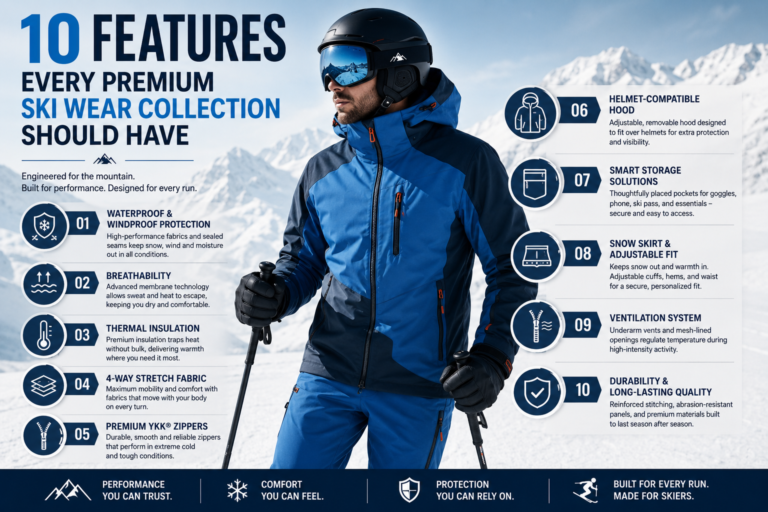
Skiing is unforgiving on poorly designed clothing. Wind, snow, extreme cold, high physical intensity, and rapid weather changes all happen simultaneously — and ski apparel that doesn’t perform across all these demands fails its wearer at exactly the wrong moment. Understanding the 10 features ski wear collections must deliver helps brands build products that serious skiers trust, recommend, and return to buy season after season. Here’s what genuinely premium ski wear looks like.

Waterproof and Breathable Outer Shell

The outer shell is the first and most critical line of defence in any ski wear collection. It must block snow and moisture penetration completely while simultaneously allowing body heat and sweat vapor to escape — preventing the internal dampness that destroys comfort and performance across a full day on the mountain.

Waterproof ratings of 20,000mm and above suit serious skiing conditions. Breathability ratings of 20,000 g/m²/24h ensure adequate moisture vapor transmission during high-intensity runs. A professional ski wear manufacturer uses membrane technologies that deliver both waterproofing and breathability at the performance levels serious skiers demand — not just the minimum acceptable ratings that budget alternatives scrape past.

Fully Sealed Seams

Waterproof fabric means nothing if seams allow moisture penetration. Premium ski wear uses fully taped or welded seams across every panel junction — preventing water and snow from entering through the needle holes that standard stitching creates in fabric.

Critical seam areas — shoulders, hood attachment points, pocket openings, and leg inseams — require particular attention. Any unsealed seam in these high-exposure areas becomes a moisture entry point that undermines the entire garment’s weather protection performance during sustained snow or rain exposure.

Insulation System for Extreme Cold

Effective insulation retains body heat without adding excessive bulk that restricts movement on the slopes. Premium ski collections address insulation through either high-fill-power down or advanced synthetic alternatives — each with distinct performance advantages depending on conditions.

Down insulation delivers exceptional warmth-to-weight ratio for dry mountain conditions. Synthetic insulation maintains warmth when wet — critical for highly active skiers whose body heat generates internal moisture that can dampen insulation layers. Puffer jackets designed specifically for ski applications use strategic insulation placement — heavier fill in core zones and lighter fill across high-mobility areas — maintaining warmth where it matters without restricting shoulder and arm movement.

Articulated and Stretch Construction

Skiing demands explosive movement — crouching, reaching, turning, and recovering across varied terrain and snow conditions. Ski apparel that restricts these movements forces skiers to fight their clothing rather than focus on technique and enjoyment.

Premium ski wear uses articulated pattern construction — pre-shaped knees, gusseted crotches, and stretch panels at critical joint areas — allowing natural athletic movement without fabric pulling or binding. Four-way stretch fabrics in high-mobility zones deliver unrestricted performance that rigid constructions simply cannot match for serious skiers.

Helmet-Compatible Hood

A ski jacket without a proper helmet-compatible hood is incomplete for serious mountain use. Premium hoods adjust to fit over ski helmets without restricting peripheral vision or creating uncomfortable pressure points. Wire-brim peaks maintain hood shape against wind without collapsing across the face during high-speed descents.

Adjustable volume, cinch, and hem controls allow precise hood fitting across different helmet sizes and head shapes — ensuring complete face and neck coverage exactly when mountain conditions demand it most.

Snow Gaiter System

Snow gaiters prevent the most frustrating skiing experience — snow entering through the waist or ankle openings during falls, deep powder runs, or high-speed descents. Internal powder skirts at jacket waists seal against ski pants. Internal ankle gaiters in ski pants seal around boot tops — creating a complete barrier that keeps snow outside the clothing system regardless of conditions.

Premium gaiters use stretch fabrics with silicon grip strips that maintain seal position through active movement without restricting comfort or requiring constant readjustment throughout the skiing day.

Strategic Ventilation Systems

Physical skiing intensity generates significant body heat — and overheating creates exactly the moisture management problems effective insulation aims to prevent. Premium ski wear addresses this through strategic ventilation systems that allow rapid heat dumping when activity intensity demands it.

Underarm zip vents — sometimes called pit zips — open directly at the body’s highest heat generation points, releasing accumulated warmth efficiently without removing the entire jacket. Chest vents and back vents provide additional airflow options for different skiing styles and intensity levels. These systems transform static insulation garments into adaptable temperature management tools that skilled skiers actively control throughout their mountain day.

Lift Pass and Equipment Pockets

Practical pocket design separates genuinely skier-focused apparel from generic outdoor clothing adapted for snow environments. Premium 10 features ski wear collections include arm pockets sized specifically for lift passes — with RFID-transparent windows that allow pass scanning without removing the card. Goggle pockets with soft internal lining prevent lens scratching during storage. Internal security pockets protect phones and valuables at body temperature — preventing battery failure in extreme cold.

Hardshell jackets designed for skiing integrate these practical storage solutions without adding bulk that compromises the clean, aerodynamic silhouette performance skiers prefer.

Integrated Base Layer Compatibility

Premium ski collections don’t design individual garments in isolation — they design complete systems. Jacket cut and collar construction must accommodate base layer and mid-layer necklines cleanly. Pant waistbands must sit correctly over base layer bottoms without bunching or creating pressure points during extended wear.

A quality base layer clothing system works with ski outerwear rather than against it — managing moisture at the skin level so the insulation and shell layers above can focus on their specific performance roles without becoming compromised by accumulated internal moisture throughout the skiing day.

Durable, High-Quality Hardware Throughout

Zippers, buckles, and adjusters in ski apparel face brutal conditions — extreme cold, ice contamination, repeated operation with gloved hands, and constant mechanical stress across hundreds of skiing days. Premium ski wear uses YKK Aquaguard or equivalent waterproof zip systems throughout — including main zippers, pocket entries, and ventilation systems.

All hardware operates smoothly with gloved hands — a non-negotiable requirement that budget alternatives frequently fail at exactly the moments when skiers most need reliable, fast access to pockets and ventilation systems. Robust construction across every hardware component ensures the garment performs consistently across multiple seasons rather than failing during the first demanding trip.

Brands building complete outdoor apparel ranges alongside outdoor jackets and waterproof jackets benefit from the same hardware quality standards applied consistently — because customers who trust your ski wear extend that trust to every other outdoor product your brand produces.

Conclusion

The 10 features ski wear collections must deliver — waterproof breathable shells, sealed seams, effective insulation, articulated construction, helmet-compatible hoods, snow gaiters, ventilation systems, practical pockets, base layer compatibility, and quality hardware — work together as a complete performance system rather than independent features. Premium ski apparel brands that engineer all ten features with genuine expertise build products that serious skiers recognize, respect, and depend on across every demanding day they spend on the mountain.

FAQs

What waterproof rating is sufficient for serious ski wear?

A minimum waterproof rating of 20,000mm suits serious skiing conditions — providing reliable protection across sustained snow, sleet, and wet mountain weather that lower-rated alternatives cannot handle effectively.

Is down or synthetic insulation better for ski jackets?

Both serve different needs. Down delivers superior warmth-to-weight for dry conditions. Synthetic maintains performance when wet — making it more reliable for highly active skiers who generate significant internal moisture during intense runs.

Can premium ski wear collections be produced under a private label?

Yes. Professional ski wear manufacturers offer complete private label production including custom fabrics, membrane technologies, colors, hardware, labels, and packaging — giving outdoor brands full creative and commercial control.

How important are sealed seams in premium ski apparel?

Critically important. Unsealed seams are the primary moisture entry point in ski garments — making fully taped or welded seams across all panel junctions a non-negotiable construction requirement for genuinely waterproof ski apparel.

Best Materials for Comfortable and Durable Camping Apparel

What you wear camping matters more than most people realize until something goes wrong. A fabric that soaks up rain, holds sweat against your skin, or tears on the first bramble patch turns an enjoyable outdoor experience into a genuinely miserable one. Choosing the best materials for camping apparel protects comfort, safety, and performance across every condition the outdoors throws at you. For brands building camping clothing collections, understanding these materials is the foundation everything else builds on.

Merino Wool — Nature’s Most Versatile Camping Fabric

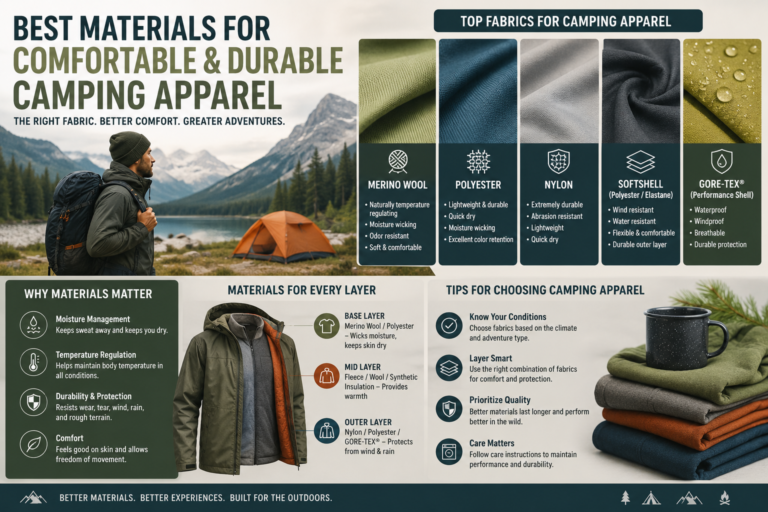
Merino wool is arguably the single most valuable fabric in camping apparel. It regulates body temperature naturally — keeping wearers warm when cold and cool when warm — through a remarkable fiber structure that manages moisture and heat simultaneously. Merino also resists odor naturally, meaning campers can wear merino base layers and tees across multiple days without the unpleasant smell that synthetic fabrics develop quickly.

The softness of fine merino wool makes it genuinely comfortable against skin for extended wear — eliminating the itchiness associated with traditional wool that deterred generations of outdoor enthusiasts from choosing natural fiber options.

Merino works brilliantly for base layer clothing — the foundation of any effective camping layering system — providing temperature regulation and moisture management directly against the skin where these properties deliver maximum performance benefit.

Ripstop Nylon — Tough, Light, and Reliable

Ripstop nylon is a camping apparel essential for outer layers and bottoms that face direct environmental contact. Its reinforced grid weave pattern prevents tears from spreading — maintaining garment integrity when fabric catches on branches, rocks, or rough terrain surfaces. Despite its impressive durability, ripstop nylon remains remarkably lightweight — a critical consideration for campers managing pack weight across multi-day trips.

Ripstop nylon also dries extremely quickly after rain or stream crossings — preventing the prolonged dampness that undermines comfort and body temperature regulation in outdoor environments. It suits outdoor cargo pants and shell layers particularly well — providing the durability and weather resistance these high-contact garments demand.

Polyester Fleece — Essential Warmth Layer

Polyester fleece provides the insulating mid-layer that camping layering systems depend on for warmth retention across cold evenings and early mornings. It traps warm air within its fiber structure, dries rapidly when wet, and maintains insulating performance even in damp conditions — unlike down insulation that loses effectiveness when moisture penetrates.

Fleece weight determines warmth level — lightweight 100-weight fleece suits active hiking and mild temperatures, mid-weight 200-weight suits cool evenings and moderate cold, and heavyweight 300-weight provides serious insulation for genuinely cold camping environments.

A quality outdoor fleece manufacturer produces fleece garments with anti-pilling treatments, flatlock seams for comfort under pack straps, and zip systems that layer cleanly under shell jackets without bunching or restricting movement.

Gore-Tex and Waterproof Membranes — Weather Protection That Works

No camping apparel discussion is complete without addressing waterproof breathable membranes. Gore-Tex and equivalent membrane technologies bond to outer fabric layers — creating a barrier that prevents external water penetration while allowing internal moisture vapor to escape. The result is a jacket that keeps rain out without trapping sweat inside — solving the fundamental comfort challenge that non-breathable waterproof materials failed to address for decades.

Waterproof jackets built with quality waterproof breathable membranes represent one of the most important investments any camper makes — because proper weather protection directly impacts safety as well as comfort when conditions deteriorate unexpectedly in remote environments.

Softshell Fabric — Versatile All-Condition Performance

Softshell fabrics combine stretch, breathability, and moderate weather resistance in a single fabric construction — making them ideal for active camping activities where full waterproof shell protection is unnecessary but wind and light rain resistance genuinely help.

Softshell garments move freely with the body, regulate temperature effectively during moderate activity, and feel significantly more comfortable against the skin than rigid hardshell alternatives. Softshell jackets suit the active portion of camping days — hiking between sites, gathering firewood, and exploring terrain — when breathability matters more than maximum weather protection.

Cotton Blends — Campsite Comfort Done Right

Pure cotton performs poorly in demanding outdoor conditions — it absorbs moisture heavily and dries slowly, creating cold, heavy clothing that undermines comfort and body temperature regulation. However, cotton-polyester blends bring cotton’s softness and breathability together with polyester’s moisture management and quick-drying properties — creating genuinely comfortable fabrics for campsite casual wear and outdoor tees used during lower-intensity camping activities.

Cotton blends work well for relaxed campsite clothing — worn around the fire, during camp cooking, and for comfortable sleeping — where the intense performance demands of active hiking don’t apply and comfort takes priority over technical performance.

Down and Synthetic Insulation — Warmth Without Bulk

Insulated camping garments use either natural down or synthetic fill to trap warm air and retain body heat in cold conditions. Natural down delivers exceptional warmth-to-weight ratio — making it the premium choice for packable camping jackets and vests where weight efficiency matters enormously. Synthetic insulation maintains warmth even when wet — making it the more reliable choice for damp camping environments where down’s superior performance advantage disappears when moisture penetrates.

Puffer jackets and outdoor vests built with quality insulation provide the essential warmth layer that camping layering systems need for genuinely cold conditions — whether that’s alpine camping, winter campouts, or simply cold mountain evenings that surprise under-prepared campers.

Building a Complete Camping Apparel Collection

The best materials for camping apparel work together across a layering system — not in isolation. Base layers manage moisture. Mid-layers retain warmth. Shell layers protect against weather. Each material serves its specific role within that system — and brands building camping apparel collections need to cover all three layers to truly serve their outdoor customer completely.

Working with a professional outdoor apparel manufacturer who understands material performance across the full layering system — and who sources fabrics with verified performance credentials rather than untested alternatives — ensures your camping collection delivers the genuine outdoor performance your customers depend on across every adventure they take it on.

Conclusion

The best materials for camping apparel — merino wool, ripstop nylon, polyester fleece, waterproof membranes, softshell fabrics, cotton blends, and quality insulation — each serve specific performance roles that together create a complete, reliable camping wardrobe. Understanding what each material delivers and where it performs best gives brands the knowledge to build camping collections that genuinely work in the wild. Choose materials thoughtfully, partner with experienced outdoor apparel manufacturers, and build products that campers trust on every trip they take.

FAQs

What is the single most important material feature in camping apparel?

Moisture management is most critical — fabrics that keep campers dry from both sweat and rain directly impact comfort, body temperature regulation, and safety across all camping conditions.

Is merino wool worth the higher price for camping apparel?

Absolutely. Merino’s natural temperature regulation, odor resistance, and multi-day wearability deliver genuine value for campers — reducing the clothing volume needed for extended trips while maintaining superior comfort throughout.

Can camping apparel collections be produced under a private label?

Yes. Professional outdoor apparel manufacturers offer full private label production with custom fabrics, performance treatments, colors, labels, and packaging — giving brands complete control over their camping product identity.

What is the best layering system for camping in variable conditions?

A merino wool base layer for moisture management, polyester fleece mid-layer for warmth, and a waterproof breathable shell outer layer covers the vast majority of variable camping conditions effectively and reliably.

How to Choose the Right Fleece Jacket or Pullover

Many shoppers find it difficult to select the perfect fleece jacket because there are so many styles, fabrics, and performance features available. Understanding How to Choose the Right Fleece Jacket helps you avoid common mistakes, such as selecting a fabric that is too thin for cold weather or too bulky for layering. Whether you need a lightweight fleece pullover for hiking or a warm fleece jacket for everyday outdoor use, knowing How to Choose the Right Fleece Jacket ensures better comfort, performance, and durability. This guide explains the key factors to consider so you can confidently choose a fleece jacket that matches your climate, activity level, and outdoor needs.

The Right Fleece Jacket is Important

The fleece jacket is a versatile piece of clothing for the outdoors. Fleece jackets can be worn as a standalone layer on milder days, layered under shells during colder weather, or even as loungewear at the end of a day spent outdoors. The right fleece jacket will adapt to the changing weather conditions without adding bulk. A wrong choice could leave you feeling too hot during exercise or too cold when you stop. Understanding how to select the right fleece jacket will directly impact your comfort and performance when outdoors.

How to Choose the Right Fleece Jacket: Key Factors

How well a fleece coat performs under real-world conditions is determined by several factors. You can choose the right jacket for your personal preferences, activity level and climate by evaluating them.

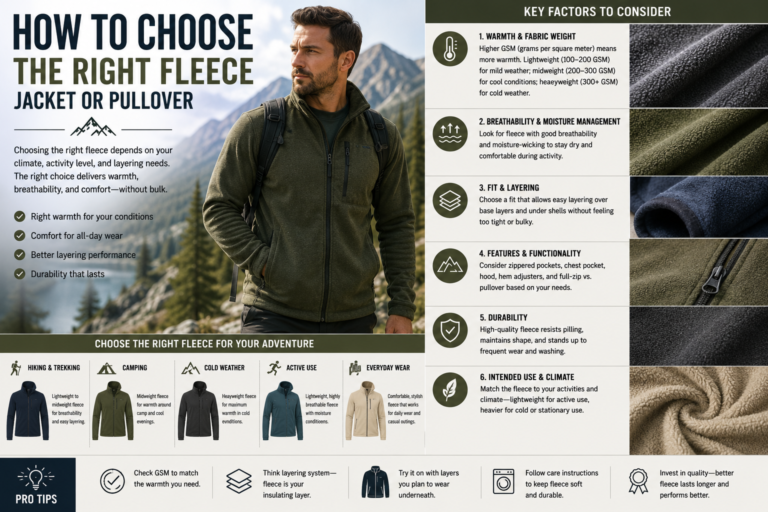
Weight of Fabric and Insulation

Fleece is available in different weights to suit different temperatures. Midweight fleece is a good balance between warmth and airflow, which is ideal for everyday wear. Heavyweight fleece provides maximum insulation in extremely cold temperatures, but it is bulkier. The right fleece jacket is chosen by matching the fabric weight with your usual activity level.

Fit and layering compatibility

The right-fitting fleece jacket will allow you to move freely while layering comfortably underneath a shell. A jacket that is too tight will reduce warmth and restrict circulation. A looser fit will trap less heat, and look bulky underneath outerwear. Try on jackets while wearing your base and outer layer to ensure that they are comfortable.

Wind and Water Resistance

Standard fleece is breathable, but provides minimal protection from wind and moisture. Many jackets have wind-resistant panels and water-repellent finishes to improve performance during variable weather. These features make jackets more versatile, and are especially useful for campers and hikers who have to deal with unpredictable weather.

Durability and Construction

The durability of a jacket is determined by the quality of its stitching, strong zippers and reinforced seams. The price of a jacket often reflects the quality and durability, but inspecting it directly will give you a better idea. Jackets made of bonded or laminated fleece are more durable and suitable for outdoor use.

The Sustainability of the Economy

Several brands offer fleece jackets that are made of recycled polyester. This reduces the environmental impact, without compromising warmth or durability. If sustainability is important to you, check the fabric composition of your jacket before buying. This will help align your purchase with your values.

What is the difference between a fleece jacket and a pullover?

What is the difference between a fleece jacket and a pullover

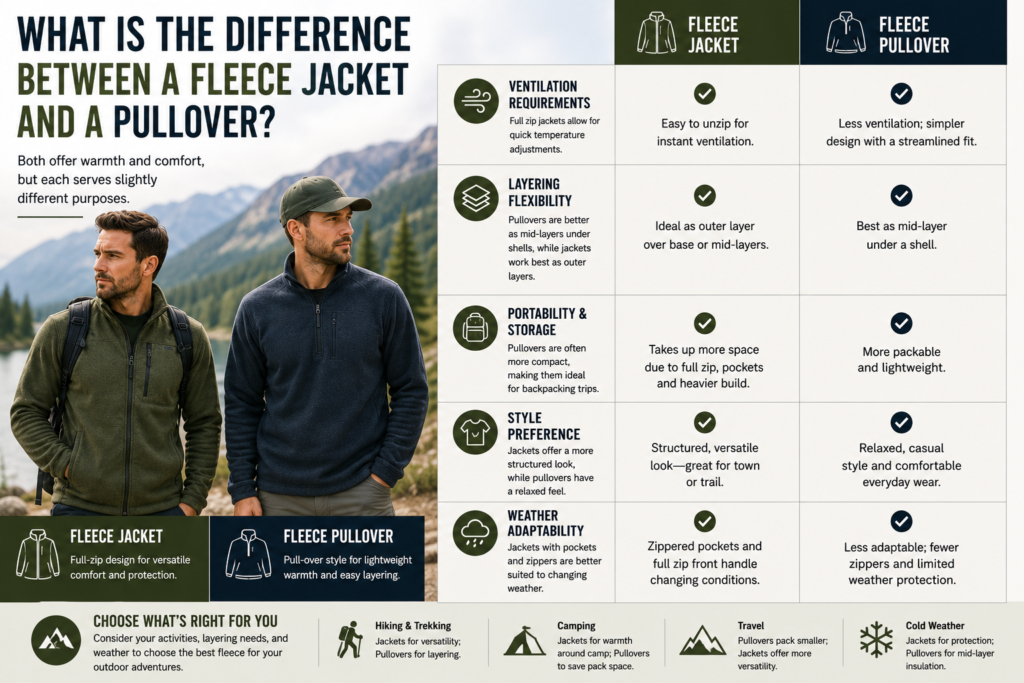
The two are similar in terms of warmth and comfort but have slightly different uses. When deciding which to choose, consider the following factors:

  • Ventilation requirements: Full zip jackets allow for quick temperature adjustments while pullovers are simple and offer a streamlined, streamlined fit.
  • Layering Flexibility: Pullovers are better as mid-layers under shells, while jackets work best as outer layers.
  • Portability and storage: Pullovers are often smaller than other garments, making them ideal for backpacking trips.
  • Style preference Jackets offer a structured look while pullovers have a relaxed and casual feel.
  • Weather adaptability. Jackets that have pockets and zippers are better suited to changing weather conditions than pullovers.

You can weigh these factors to decide if a pullover or jacket is better suited for your outdoor activities.

Matching Fleece jackets with Outdoor Activities

Matching the fleece jacket to your outdoor activity will improve both comfort and performance. hiking apparel pairs midweight fleece with breathable base layer for long treks. camping clothing also benefits from fleece jackets to provide warmth on cool evenings.

skiwear often incorporates windproof fleece jackets under insulated shells. outdoor jackets combine durable outer fabrics with fleece linings for versatility year-round. base layers in microfleece are ideal for lightweight layering. They can be paired with a midweight jacket made of fleece.

outdoor fleece vests are also popular with those who want to keep their arms free. They provide warmth and comfort while allowing for easy movement. The outdoor garments with fleece allow brands to emphasize fleece performance rather than using it as a hidden lining.

Care for Your Fleece Jacket

The right care will keep your fleece jackets in good condition for many years. Avoid fabric softeners and wash fleece with cold water and a mild detergent. They reduce the loft and breathability of the jacket. Air-drying, or using low heat to dry the jacket, will also prevent shrinkage and maintain its shape. Follow these steps to ensure that your fleece jacket maintains its softness and warmth over time.

Invest in a trusted manufacturer for custom fleece jackets

When developing a custom clothing line, it is important to understand how to select the best fleece jacket. Working with an experienced manufacturer will ensure consistent quality and reliable production deadlines.

We are a custom apparel producer that helps brands create and produce fleece pullovers and jackets that meet performance and fit standards. Contact our team to learn more about fabric options, customizations, and production schedules. We can help you bring your fleece clothing designs to life.

Conclusion

The right fleece jacket depends on the fabric weight, features, and fit of your jacket, as well as your activity and climate. Lightweight fleece jackets are ideal for layering and active wear, while midweight jackets can handle the cold of everyday life. Heavyweight or wind resistant fleece is best suited to harsh weather conditions. The final decision is also influenced by factors such as durability, sustainability and whether you choose a jacket or a pullover. You can choose a pullover or fleece jacket that will keep you warm and comfortable in the cold.

FAQs

How can I determine the weight of my fleece jacket?

Choose the right fabric weight for your level of activity. Heavyweight fleece is best for extreme cold, while lightweight fleece is ideal for active pursuits.

What should I be looking for when choosing a fleece jacket?

You want a jacket that is comfortable to wear under a shell, but allows you to move freely. Test the fit of the jacket with your base layers.

What is warmer, fleece pullovers or fleece jackets?

Pullovers are warmer than jackets because they don’t have a zipper on the front, which helps reduce drafts. Jackets provide better ventilation, but the best choice will depend on your climate and activity.

Can fleece jackets withstand wind and rain?

Standard fleece is not effective at blocking wind or rain. Many jackets have wind-resistant panels and water-repellent finishes to improve performance when mixed weather is present.

Types of Outdoor Vests for Different Activities

Decorated with the right types of outdoor vests, you can create one of the more tactically flexible wardrobes. Outdoor vests strike the perfect compromise between the full insulation and protection of jackets and the full range of movement and breathability of other garments. They insulate the core and protect against the elements while leaving the arms completely free. Outdoor vests come in a broad range of styles and types — from technical workwear vests to softshell vests to lightweight packable down vests — each designed for a specific activity, performance requirement, and temperature.


Why You Need Outdoor Vests For Every Outdoor Range

Many brands believe that types of outdoor vests are a secondary category, as they are considering jackets and base layers first. However, outdoor vests get great sales every season. Outdoor vests get great sales for every activity. outdoor vests get great sales every season. They solve a critical layering issue that no other garment solves.

Core Advantage Of The Vest

Vest construction creates two simultaneous advantages: bulk insulation and bulk weather protection. Vest construction concentrates insulation and protection at the core, where the body’s core retains the most heat. Vest construction also leaves the arms completely free. The bulk that vest construction leaves behind can also restrict and overheat during prolonged physical activities.

Consequently, outdoor vests are great for a large range of temperatures, and physical activities, as well as a great substitute for a full jacket. They are great during rest and low-output activities without the overheating that occurs during high-output activities. They are a great layering tool for outdoor and everyday use.

Where Vests Fit in the Outdoor Layering System

Vests can occupy up to two different positions in the layering system depending on their construction. Insulating vests can be either down vests or synthetic filled vests. Down vests can be considered mid-layers if they are worn beneath a shell jacket or can be considered a stand-alone outer-layer if the temperatures are mild. Shell vests and softshell vests can be considered lightweight outer vests that provide wind and weather protection. They can be worn over a base layer or a mid-layer fleece. Depending on what position a vest type occupies helps brands in designing a cohesive outdoor range and helps buyers select the right equipment for their needs.

Types of Outdoor Vests and Their Specific Uses

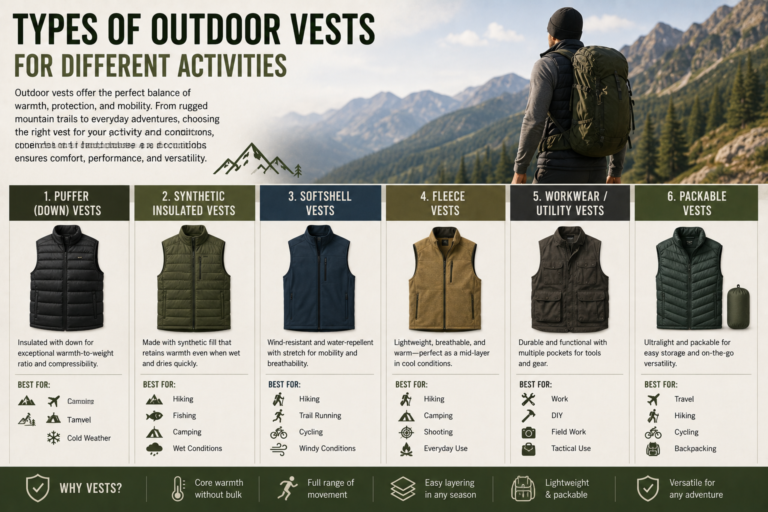
Down Insulated Vests

The most packable down vests are the lightest of all vests. They incorporate the natural insulating properties of down filled with duck or goose down. The clusters of down create an insulating layer that can trap air and can retain down heat across a large area with substantially less weight in comparison to other fabrics.

Additionally, down vests can be packed into their own pockets or small stuff sacks, adding to their versatility for a multitude of activities. For instance, down vests benefit trail running, hiking, cycling, and alpinism by adding warmth during rest breaks or drops in temperature while adding minimal weight to your pack during the rest of the activity.

Unfortunately, insulation down vests cannot maintain their insulation property once they get wet. This is because the clusters of down cannot trap air and lose their structure. Because of this, down vests are only useful in dry, cold settings. For cold, wet, down vests are not ideal, and a synthetic alternative would be recommended. Our outdoor vest manufacturing team offers the opportunity to create down vests with differing shell fabrics and insulation fill.

Synthetic Insulated Vests

Synthetic vests replace the insulation of a down vest with a polyester fill and maintain insulation when wet, unlike down. Because of this, synthetic vests are ideal for use in down vests are not ideal for use in wet environments.

Also, at the same insulation level, synthetic insulated vests cost less than their insulated vests with down insulation. Synthetic vests can therefore offer a better price-to-performance ratio for companies that require price-sensitive, technically performing vests for a wider range of outdoor markets. Synthetic fill insulation that has been recycled from post-consumer plastics and waste can also provide brands story of sustainability with greater insulation performance and remains comparable to virgin synthetic insulation. Recycled insulation fills are easy to obtain.

Synthetic insulated vests are a great option for brands that design outdoor apparel for camping that provides insulation and versatility for both dry and wet environments throughout. These vests can be used in all camping environments and seasons.

Softshell Vests

In softshell vests, a sleeveless construction of a softshell jacket utilizes composite stretch fabrics. Like their full sleeved counterparts, softshell vests become wind resistant, light water resistant, and breathable. The fabrics and construction stretch and maximize freedom for the arms.

Softshell vests provide protection from the wind and warm the core, and along with their light weight, provide protection for the arms along with freedom of movement. Softshell vests then are the best option for wind protection while fully warming the core during the following recommended activities: cool weather, wind protected, comfort, and freedom of movement trail running, wind protected skiing and riding, and climbing.

Our softshell vests along with our softshell jackets for layering solutions are best used during the protection phase of outdoor activities requiring truly freedom of movement, trade, and construction. For customers during the wind and weather protection layer, our vest trade softshell jackets make a great layering solution. These are especially great for ski touring, climbing, and outdoor activities.

Protecting from overheating during the trade phase of outdoor activities is especially great for ski touring and climbing. Our team of softshell jackets along with our softshell vests trade construction solutions make a great layering solution.

Fleece Vests

Fleece vests are sleeveless jackets that insulate the body while allowing the arms to breathe and move. A common use is to layer fleece vests between an outer shell and a base layer to insulate the core without limiting the arms.

Fleece vests appeal to brands that market both outdoor and lifestyle products because they are appropriate for both settings. Their insulation and breathability help make fleece vests appealing products for brands that are new to outdoor apparel.

Fleece vests naturally integrate with brands’ existing product offerings. When combined with a fleece jacket and base layer, they help provide customers with a complete, outdoor layered system. Contact our team to help with your fleece vest needs.

Waterproof Shell Vests

Waterproof shell vests protect the core the way waterproof jackets protect the full body. Waterproof shell vests are sleeveless and use a bulkless construction that allows jackets to be made lightweight. Waterproof shell vests use a waterproof membrane with a DWR coating and seam sealing.

Waterproof shell vests are excellent for activities where the arms get warm enough for light rain protection (without fully enclosed sleeves), like cycling and running. They also make good rain protection for the outdoors because they can be packed easily into a day pack. They sit in the day pack and are pulled out when rain protection is needed on the trail.

Waterproof shell vests are available with fully taped seams and advanced waterproof membranes because waterproof shell vests are part of our waterproof clothing manufacturing service. Reach out to us and we can manufacture a shell waterproof vest for your outdoor clothing line.

Hiking Vests

Hiking vests combine insulation and weather protection to help the outdoor adventurer on a long day hike. They have plenty of pockets to store all of the essentials. They also have plenty of fittings and adjustments to help seal in body warmth when the weather gets colder. Hiking vests also help solve the problem of bulky pack along the hike because they are designed to fit under a pack along a base layer and help hiking adventurers move along freely.

Of the various offerings that outdoor brands have, a hiking vest is an important addition to an outdoor brand’s offerings because a hiking vest serves a large segment of outdoor clothing customers.

Our hiking clothing manufacturing team designs vests as part of full hiking apparel lines, allowing us to achieve fabric and feature synergy as well as strategic merchandise positioning for all hiking apparel. Contact us to begin developing your hiking vests.

Hunting and Tactical Vests

Hunting and tactical vests are sleeveless, high mobility, and designed for demanding field use. These vests achieve a balance of weather protection, equipment carrying capacity, and a low visual signature.

Hunting vests will usually have different pocket designs tailored to certain field sports and may have game bags or shell loops. They come in different camouflage patterns to fit different hunting environments. Hunting vests may come in fabrics that will resist wear, weather, and also be quiet.

Our hunting apparel manufacturing team offers hunting vests as part of total hunting apparel lines which include camouflage pattern development, hunting fabrics, and field sport pocket technology. Contact us to begin developing your hunting vests.


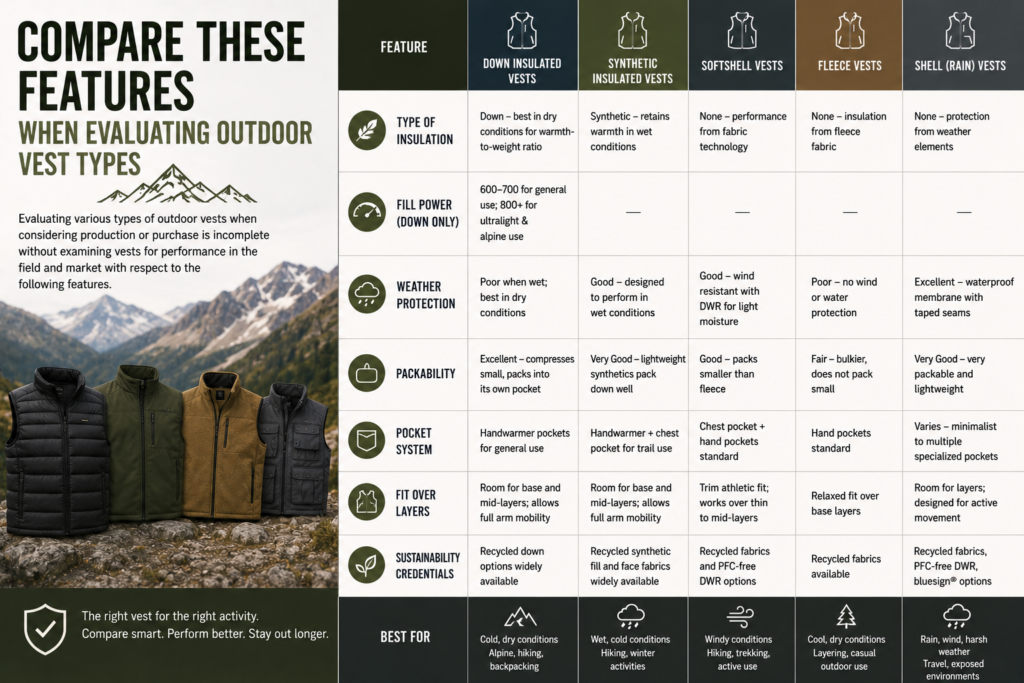
Compare these Features when Evaluating Outdoor Vest Types

Outdoor vest comparison guide

Evaluating various types of outdoor vests when considering production or purchase is incomplete without examining vests for performance in the field and market with respect to the following features:

  • Type of Insulation — down is best in the dry for warmth-to-weight ratio, wet conditions require synthetic insulation, softshell and shell vests have no insulation
  • Fill Power — for down vests, higher fill power means better warmth-per-gram efficiency; general use vests may have 600 to 700 fill with 800+ for ultralight and alpine use
  • Weather Protection — for full protection, vests have a waterproof membrane with taped seams; a DWR softshell protects from wind and light moisture, fleece vests offer insulation with no weather protection
  • Packability — vests with insulation that is either down or lightweight synthetic can be made to pack into their pocket and thus carried easily along a trail
  • Pocket System — handwarmer pockets are for general use, trail use requires a vest with a chest pocket, specialty pockets are for hunting and vests of a tactical nature
  • Fit over Layers — vests should comfortably accommodate base and mid-layer clothing with freedom of movement for the arms and no compression of the shoulder zone
  • Sustainability Credentials — there is no performance compromise for the use of recycled down, synthetic fill, and face fabrics in most styles of vests

Considerations for Your Brand’s Outdoor Vest Selection

Outdoor vests are an excellent category to add to an outdoor apparel collection because of the variety available and the ability to meet a range of customer needs throughout the year across a variety of activities.

Additionally, vests generally have a higher price-to-production-cost ratio, making them more profitable compared to other items in an outdoor apparel collection. This allows companies to expand their collection by adding vests in addition to jackets.

The addition of vests and other complementary apparel products, such as waterproof jackets for complete protection against the elements and outdoor jackets for complete outerwear, completes an outdoor layering system for customers and provides products for all the different outdoor conditions and activities during the different outdoor seasons.

Would you like to add vests to your outdoor apparel collection? Reach out to our team! We provide outdoor apparel brands with everything they need to start their collections from the initial ideas, fabrics, and Tech Packs to the bulk production, quality control, and delivery.

Conclusion

Brands have many options when it comes to types of outdoor vests from ultralight, packable down vests for alpine and trail activities to tactical vests for field sports. Knowing the difference between the outdoor vests helps brands create targeted outdoor apparel collections and helps buyers select the vests for the specific activities and conditions they plan to face.

Having a good idea of the outdoor vests in the market and how they can be used is important for buyers looking to purchase a vest for their outdoor activities, and brands commercializing an outdoor vest collection.

For those interested in starting an outdoor vest line, our outdoor vest manufacturing page is a great first stop. You can look through all manufacturing options and reach out to our team to kickstart your production!


FAQs

What is the most versatile type of outdoor vest?

For the most versatility, a midweight synthetic insulated vest is ideal. It provides warmth in the in the insulated vest wet and packs down fairly small. It is also great for any outdoor activity from hiking and camping to skiing, as well as everyday use.

When should I choose a down vest over a synthetic insulated vest?

Down vests are great for weight and packability, but should only be used if the weather will be dry. In a wet environment, a synthetic insulated vest is the better choice. Synthetic insulation will keep its warmth in wet conditions, while down vests will collapse and lose insulation.

Can outdoor vests be used as standalone outer layers?

Of course! Heavyweight fleece vests, waterproof shell vests, and softshell vests can all be used as standalone outer layers. Insulated vests can also serve this purpose in dry, mild weather, but would need a shell to be used in more severe weather.

What fill power should I look for in a down outdoor vest?

For typical outdoor use, look for 600 to 700 fill power. This is a great balance for warmth, weight, and the price. For more alpine use and ultralight applications, 800 fill power and above will be a better option, but will also come at a higher price for the warmth to weight ratio.

Best Fabrics Used in Outdoor Vests

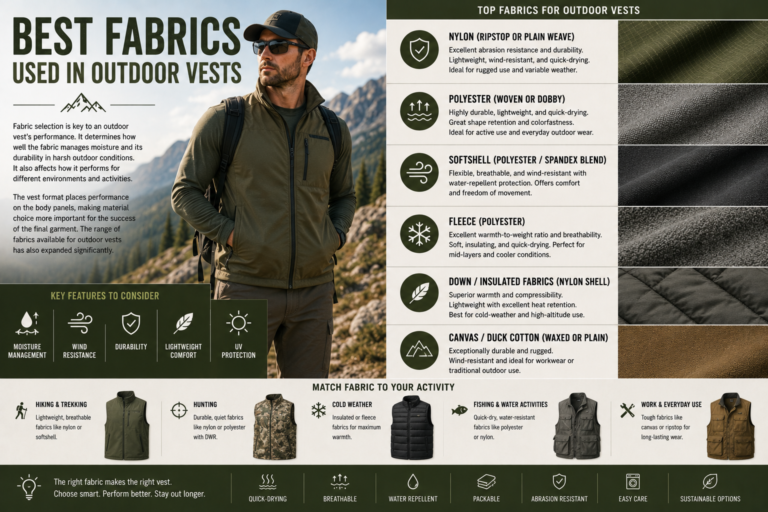
Fabric selection is key to an outdoor vest’s performance. It determines how well the fabric manages moisture and its durability in harsh outdoor conditions. It also affects how it performs for different environments and activities. It is important for brands developing outdoor apparel or buyers making informed purchases to understand the best fabrics used in outdoor vests. The vest format is different from full jackets, where the lining and sleeve options complicate the fabric selection. Instead, the vest format places the performance on the body panels. This makes the material choice more important for the success of the final garment. The range of fabrics available for outdoor vests has also expanded significantly.

Fabric Choice Determines Outdoor Vest Performance

It is important to know the specific performance requirements that vests have before you start looking at fabric options. Vests have no sleeves. The body panel fabrics are responsible for all the insulation, weather protection and moisture management that would be distributed across the jacket’s body, sleeves and hood.

Core Performance Requirements For Outdoor Vest Fabrics

Fabrics for outdoor vests must have several different performance characteristics depending on their type and intended usage. Insulating vests need fill materials that are high in warmth to weight, have a good loft retention and perform well both in wet and dry weather. Softshell and shell vests need face fabrics that are wind-resistant, water repellent, and have enough breathability to be used outdoors. All vests must have outer fabrics that are abrasion-resistant to resist pack contact, outdoor surface wear, and repeated outdoor usage without premature degradation.

The importance of sustainability is also reflected in the fabric selection. Recycled content, certified responsibly, and less chemical processing are all important commercial differentiators. Contact our outdoor garment manufacturing today to begin the conversation.

Best fabrics used in outdoor vests by category

Knowing which fabrics perform best across vest types and applications can help brands make better sourcing decisions. It also helps buyers to understand the quality of the materials behind the products that they purchase.

Down Fill – The Standard Insulation for Lightweight Vests

The down fill, sourced from ducks or geese, remains the standard insulation material for lightweight outdoor vests. No synthetic substitute can match its warmth to weight ratio with equivalent fill power. Natural down clusters are a three-dimensional structure that traps air, creating insulating barriers and retaining core body heat.

Fill power is another way to measure down fill. It’s a rating which indicates how many cubic inches an ounce of feathers will occupy when they are allowed to loft. A higher fill power is a sign of better insulation. The 600 fill power is suitable for outdoor general use and comes at a reasonable price. For serious outdoor and Alpine applications, 700 to 800 Fill Power delivers superior warmth-to weight performance. The highest fill power is 900 and above — this is used in ultralight expedition jackets, where every gram counts.

When wet, however, down fill is no longer insulating. Moisture causes the clusters of feathers to collapse. This eliminates the loft created by the trapped air. Down fill is best suited to dry, cold environments or activities that are unlikely to experience sustained precipitation. Synthetic fill is the best choice for brands creating vests that will be used in wet environments. Contact our outdoor garment manufacturing team today to discuss fill options for your vest.

Synthetic Fill – Reliable Insulation for Wet Environments

Synthetic fabrics, which are typically polyester continuous filament or short-stack fibre constructions, replicate the insulation properties of down and maintain warmth even when they get wet. Synthetic fill, unlike down, retains its loft after moisture exposure. This makes it a better choice than down for outdoor environments that are consistently damp.

In recent years, synthetic fills, such as PrimaLoft, Thinsulate and Coreloft, have become more efficient, delivering heat-to-weight values that are comparable to quality, even at thinner thicknesses. PrimaLoft has been a standard synthetic insulation for outdoor clothing. It is available in different variants that are optimised to meet specific performance goals, such as active breathability and packability.

Also, recycled synthetic fills – made from post-consumer bottles and textiles – are widely available. They perform as well as virgin alternatives. Recycled synthetic fill is a great option for brands creating camping clothing collections that require performance in both wet and dry weather conditions.

Ripstop Nylon Shell Fabrics

The fabric used to make the outer shell of an insulated jacket determines its durability and packability. It also affects how well it resists wind and light rain. Ripstop nylon is widely used in the construction of premium outdoor vests. The distinctive ripstop pattern – woven into nylon at regular intervals – prevents small tears spreading across the fabric. This improves tear resistance without adding significant weight.

Ripstop nylon is also resistant to water and accepts DWR treatment well, which causes rain to run off and bead on the surface. It dries rapidly after being exposed to wet conditions. The light weight of ripstop nylon makes it an ideal fabric for vests that need to be compacted into a small stuff bag or integrated pocket.

Also, ripstop is available in different weights that are suitable for different vest applications – from ultralight 10 denier constructions for lightweight performance vests up to heavier 30 denier constructions and beyond for everyday outdoor constructions. Our outdoor Jackets Manufacturing team has extensive experience with ripstop in multiple weights. Contact us to discuss your vest shell fabric options.

Softshell composite fabrics

Softshell composite fabrics – typically a stretch woven exterior bonded to a jersey or fleece inner – deliver wind resistance, breathability and stretch all in one fabric layer. They are ideal for active outdoor vests where weather protection is just as important as freedom of movement.

Softshell vests are made of composite fabrics and they suit high output activities well. For example, ski touring, trail-running in cool weather, and technical climbing. The body produces significant heat when moving and a vest that is breathable and stretchable will outperform an insulated vest which would cause overheating.

The vest , and jacket made of the same composite fabric creates a cohesive layering. The vest serves as an active layer while the jacket provides additional weather protection if conditions worsen. Contact our team to create a softshell outerwear collection that includes vests and jackets.

Fleece fabrics for vest construction

The use of fleece fabrics, which are brushed polyester constructions with a GSM between 200 and 350, is common in mid-layer applications for outdoor vests. This is where warmth, breathability and moisture management are primary requirements, without the need to pack the garment, as down or synthetic fillings are more suitable.

Moreover, fleece vests can be used as both outerwear for casual wear and in outdoor layering systems. Fleece vests are a great option for brands looking to create a range that bridges the outdoor and casual market. They combine warmth, breathability and a clean aesthetic.

Outdoor fleece Vests are a great match for matching fleece jackets, base layers and other outerwear. This creates a coordinated range that drives higher average order values. Contact us today to learn more about fleece vest options for your lifestyle or outdoor brand.

Shell Vests with Breathable Membranes that are Waterproof

Waterproof shell vests are made with the same waterproof membrane technology that is used in full waterproof jackets. They block external liquid water and allow internal moisture vapours to escape, but they have no sleeves. This provides core weather protection while being lighter.

Waterproof shell vests with fully-taped seams provide genuine waterproof performance, rather than simply water resistance. They are therefore suitable for prolonged rain exposure when cycling, trail running and other outdoor activities, where arm protection from rain is not as important as core dryness.

Contact us to learn more about our waterproof clothing production capabilities. We can produce waterproof membrane vests with fully taped edges and technical face fabrics.

Recycled and sustainable fabric options

The options for brands to choose from have significantly improved. The Responsible Down Standard certified recycled down, nylon and polyester shell fabric, and recycled synthetic fibers made from waste plastic waste are all comparable to virgin fabrics while reducing production’s environmental impact.

Bluesign-certified fabric also provides independent verification of the production process meeting responsible environmental, safety, and health standards throughout the entire supply chain. This gives brands a credible, verifiable sustainability message to communicate to outdoor consumers who are becoming more conscious. Brands developing collection of hiking apparel alongside outdoor vests will benefit from using certified sustainable fabrics in both product types.

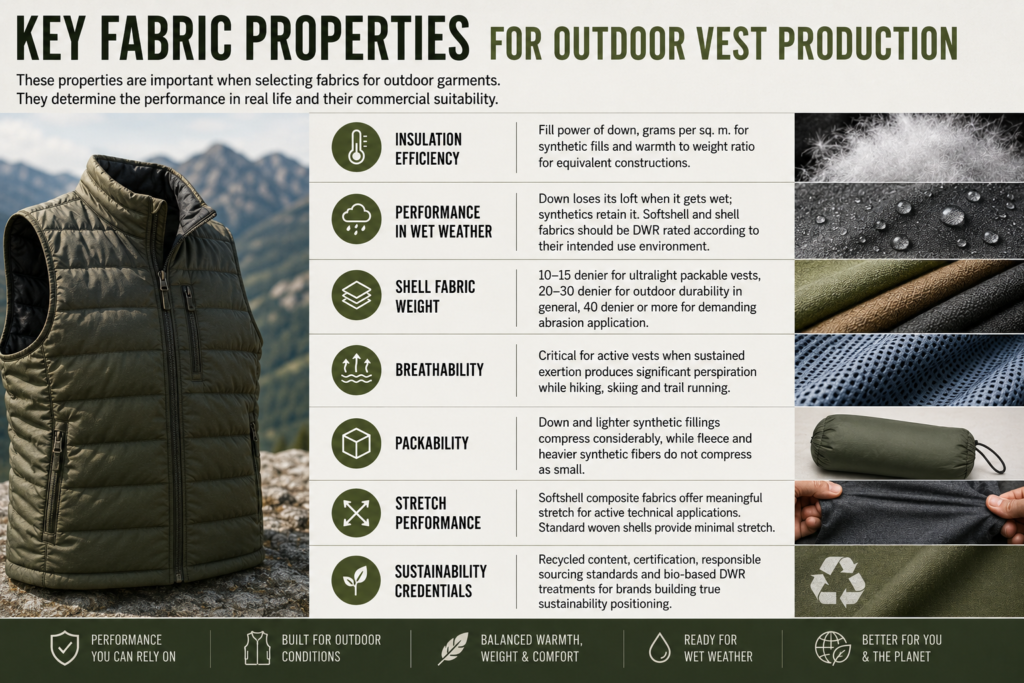
Key Fabric Properties for Outdoor Vest Production

Fabric properties for outdoor vests

These properties are important when selecting fabrics for outdoor garments. They determine the performance in real life and their commercial suitability.

  • Insulation efficiency – fill power of down, grams per sq. m. for synthetic fills and warmth to weight ratio for equivalent constructions
  • Performance in wet weather — Down loses its loft when it gets wet; synthetics retain it. Softshell and shell fabrics should be DWR rated according to their intended use environment.
  • Shell Fabric Weight — 10-15 denier for ultralight packable Vests, 20-30 denier for outdoor durability in general, 40 denier or more for demanding abrasion application
  • Breathability – critical for active vests when sustained exertion produces significant perspiration while hiking, skiing and trail running
  • Packability — Down and lighter synthetic fillings compress considerably, while fleece and heavier synthetic fibers do not compress as small.
  • Stretch performance — Softshell composite fabrics offer meaningful stretch for active technical applications. Standard woven shells provide minimal stretch
  • Sustainability credentials — recycled Content Certification responsible sourcing Standards and bio-based DWR Treatments for brands building true sustainability positioning

Choose the right fabrics for your outdoor vest range

Fabric selection is a key component of the development of an outdoor vest. However, translating this choice into a vest that meets all specifications requires both manufacturing expertise and material knowledge. A product that is made with the right fabric but constructed incorrectly will disappoint, regardless of its technical merits. A vest with the right fabric, baffling specified correctly, fill weight appropriate, shell fabric compatible, and well-designed elements will deliver on all performance claims and build lasting customer confidence.

In addition, using the same face fabric family across the entire range, including outdoor coats and waterproof jackets, simplifies the sourcing process, improves the visual coherence and reduces the complexity of quality control across the production process.

Are you ready to start developing your outdoor vest collection from the very beginning with the best fabrics? Contact our technical manufacturing department today. We support outdoor brands from the initial fabric selection, tech pack preparation to bulk production quality assurance and on-time deliveries.

Conclusion

Outdoor vest fabrics are available in a wide range of technical and commercially viable options. They can be anything from waterproof membranes with breathable properties for technical shells, to recycled and sustainable materials for all vest types. The foundation for building a successful outdoor vest line is understanding which fabric offers the best combination of warmth and weather protection with breathability and sustainability.

Making the right fabric choice at the beginning of the process, whether you’re sourcing fabrics for a new vest production run or creating your first outdoor vest line, is the most important step towards a product that your customers will recommend and trust.

Explore the range of outdoor garment manufacturing options to get started today.

FAQs

What is the best insulation for a lightweight packable outdoor vest?

High fill power down — 700 to 800 fill power and above — delivers the best warmth-to-weight ratio for lightweight packable outdoor vests in dry conditions. For wet environments, premium synthetic fills like PrimaLoft Gold maintain warmth when wet and are the more appropriate choice.

What shell fabric is best for an outdoor vest?

Ripstop nylon is the most widely used shell fabric for insulated outdoor vests — delivering good tear resistance, light weight, and effective DWR treatment compatibility. Heavier denier ripstop suits durability-focused constructions, lighter denier suits ultralight packable applications.

What is the difference between down and synthetic fill in outdoor vests?

Down delivers superior warmth-to-weight ratio in dry conditions but loses insulating properties when wet. Synthetic fill maintains warmth when wet but is heavier and less packable than equivalent down constructions.

Are recycled fabrics suitable for technical outdoor vest production?

Yes — recycled nylon and polyester shell fabrics, recycled down, and recycled synthetic fills now perform comparably to virgin alternatives — making them viable choices for technically demanding outdoor vest production without compromising performance.

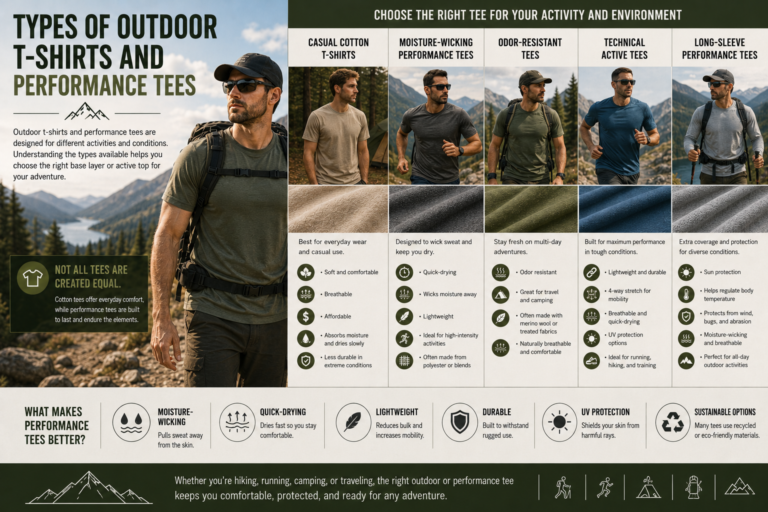
Types of Outdoor T-Shirts and Performance Tees

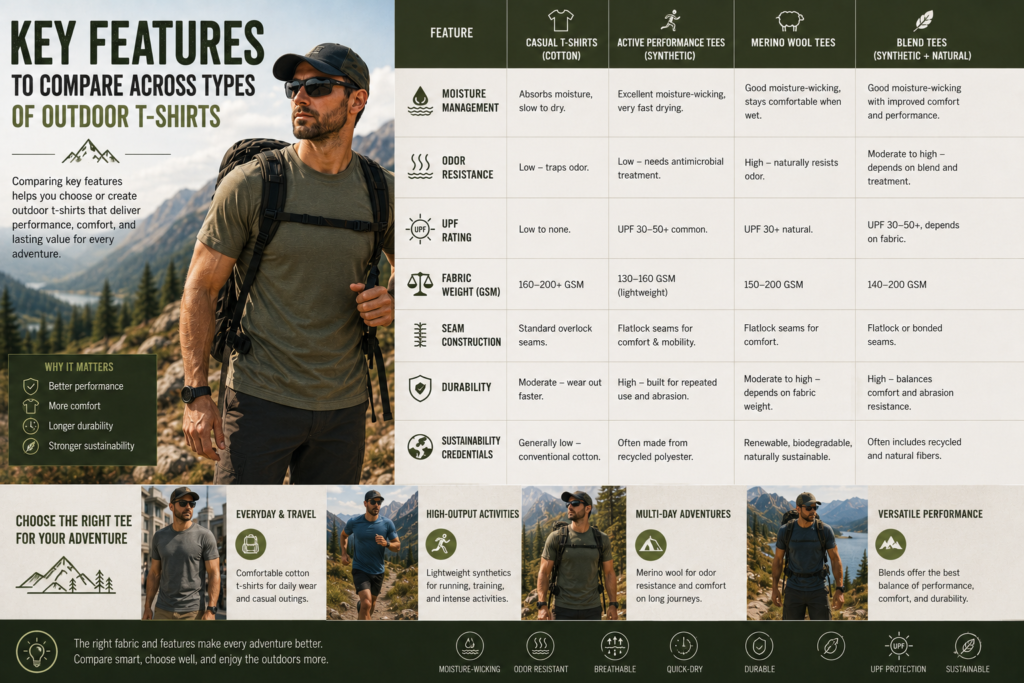
Outdoor t-shirts and performance tees are often combination t-shirts and tees that many outdoor and performance brands center their range around. For brands building outdoor collections, and for buyers looking for the right base layer or active top for the right activity, it’s worthwhile to understand the different types of outdoor t-shirts available. Casual t-shirts that are made of cotton are made for comfort and t-shirts designed for outdoor performance are made to be built to last and endure the elements and the environment. Performance t-shirts are made to last and endure the elements and the environment.

Outdoor T-Shirts vs Everyday T-Shirts

When it comes to activities that involve spending extended time outdoors, many people underestimate the differences that specialized outdoor performance t-shirts and everyday t-shirts bring. It begins with performance outdoor t-shirts; the next step is understanding the various types of outdoor performance t-shirts available.

The Issue with Cotton in Outdoor Performance Tees

Everyday cotton t-shirts are comfortable, and are ideal for everyday use, but during activities that require extended periods outdoors, they’re problematic. Everyday cotton t-shirts trap moisture. During outdoor activities, they get wet, become cold, and stay against your skin. In variable weather, and in t-shirts that trap moisture against your skin, heat loss can be substantial, and the risk of hypothermia can become a very real concern.

Moisture management is the first thing an outdoor t-shirt must do. It must pull the sweat away and dry it before it sticks to the body. Every outdoor t-shirt has a different fabric technology and construction method to meet this requirement.

What Makes a T-Shirt Genuinely Suitable for Outdoor Use

A t-shirt truly suitable for outdoor use must have a combination of several different properties. These include moisture-wicking and quick-drying, breathability, durability, and odor management. The incorporation of UPF sun protection is becoming essential as outdoor t-shirts are used for more extended outdoor activities in the sun.

There is a great variety of outdoor t-shirts in the marketplace. Each T-shirt has been designed with a different technology for different activities, environments, and performance needs. This variety gives an opportunity to brands to build product ranges with differentiated outdoor use outside of the competition.

Merino Wool Outdoor T-Shirts

No other outdoor t-shirts compare to the performance of merino wool. Merino wool makes backing t-shirts to support multi-day trips without the ability to wash a preferred choice. Merino wool outdoor t-shirts support the best t-shirt performance after a few days without a wash because merino wool is naturally wicking, soft, and resists odor.

Merino wool supports the best t-shirt performance while helping the body lose and conserve heat during strenuous and light activities. This quality of merino wool makes the outdoor t-shirt ideal for various activities that can involve a t-shirt’s performance being exposed to the elements.

Merino wool’s quality comes at a price. Merino wool is less abrasion resistant than synthetic t-shirts. The end users will find holes at the t-shirt’s edges, underarms, and areas that have the most contact with the backpack. Our merino wool t-shirts feature various weights and constructions at our outdoor tees manufacturing team. Please reach out to us for assistance with your merino t-shirts.

Synthetic Moisture-Wicking T-Shirts

In the outdoor t-shirt market, the leading type of moisture managing t shirts are synthetic t shirts made of manufactured fiber (often polyester or polyester with other blends) moisture managing fabrics). Synthetic moisture managing t shirts use capillary action of the fibers to transport sweat away from the skin, distribute the moisture over a larger area of the fabric, and allow evaporation of the moisture to take place. This process keeps the user dry during prolonged periods of intense activity.

Synthetic moisture managing t shirts dry faster than their merino wool counterparts. Their moisture managing capabilities are highly required for activities that are more intense than the average, like trail running or skiing. For activities that are intense and continuous, the ability to dry is more important than the ability to manage odor over several days.

Synthetic moisture managing t shirts are also more durable and more resistant to abrasion than t shirts made of merino wool. This superiority in fabric integrity is especially important when the t shirt will be in contact with rough or abrasive surfaces. If your brand is developing high performance t shirts for high-intensity outdoor activities, contact our outdoor tees manufacturing team today.

Merino-Synthetic Blend T-Shirts

Merino-synthetic blend outdoor t-shirts offer a combination of the natural odor-resistance and temperature-regulation of merino wool (along with the performance fading of wool) with the robustness and quick-dry of synthetic fibers (with the performance fading of synthetics). This results in a better performance blend. These t-shirts are typically constructed from a merino-polyester or merino-nylon blend with a ratio of 80/20 to 60/40. They are a great option to pure merino t-shirts and offer a significant improvement to the merino t-shirt’s fading of odor and feeling.

Merino-synthetic blend tees also occupy a good market segment in the outdoor t-shirt market. They provide a great performance balance with a cost that is lower than a pure merino t-shirt. In addition to the great performance balance, merino-synthetic blend tees allow for the completion of a variety of outdoor activities. These blend tees can be used for t-shirt activities that are completed over the course of days (without the t-shirt being cleaned) and that can also be used for t-shirt activities that are completed outdoors to test the limit of the t-shirt.

Our hiking clothing manufacturing team develops merino-synthetic blend tees along with a full range of hiking clothing to ensure that all apparel used on the hiking trails is consistent in both fabric and price placement in the market. Please feel free to contact us to begin the development process.

UPF Sun Protection T-shirts

These t-shirts are specially designed to protect people from UV radiation. UPF stands for Ultraviolet Protection Factor. This is rated to see how much UV radiation a fabric allows to come through to the skin. For example, fabrics rated at UPF 30 would be considered good, while UPF 50 ratings indicate that a fabric would block more than 98% of UV radiation.

Sun protection t-shirts are essential for outdoor activities that take place at higher altitudes. UV radiation is more intense at higher elevations than at lower altitudes. Springtime ski activities, hiking, and t-shirt activities that take place in water and in the desert all expose people to UV radiation in ranges that protection is inadequate from a regular t-shirt.

Long sleeve t-shirts that are rated for UPF protection cover the arms and are especially effective at providing protection from the sun. Sunscreen must be reapplied consistently, but t-shirts are a more effective and convenient form of protection. For companies that are creating camping apparel, t-shirts that are rated for UPF protection are an excellent opportunity for a functional design in a competitive space.

Trail Running Performance T-shirts

These t-shirts are at the highest end of outdoor performance apparel design. They are for people who have very high levels of perspiration while running outdoors. These t-shirts are designed to be as lightweight and breathable as possible.

Moreover, trail running t shirts have a lightweight and breathable synthetic construction, featuring mesh panels for ventilation during high intensity efforts. These are typically designed with an athletic cut and a close fit to reduce excess fabric which may move and cause chafing on long runs.

Furthermore, flatlock seaming is a construction technique that significantly reduces chafing for long runs, and is highly desirable to serious trail runners. This type of seaming presses the seam allowances flat, and uses a flat stitch to eliminate the ridged effect of an overlock seam that moves against the skin. Our team of outdoor t shirt manufacturers uses technical mesh and flatlock construction in their trail running t shirts. Get in touch with us to discuss your requirements for trail running apparel.

Base Layer T shirts

Base layer t shirts, unlike other types of outdoor t shirts, are designed to be the innermost layer of clothing while outdoors. Base layer t shirts have the ability to control moisture and temperature to serve their purpose of transporting moisture from the skin to the outer layers of the clothing system.

Base layer tees pull in the moisture from the rest of the system. A moisture-wicking base layer tee helps the mid-layer fleece and shell work even better because a dry base layer wicking moisture retains its insulating properties.

Base layer tees come in different weights. Lightweight base layer tees are for high-output activities in cool weather, while midweight base layer tees are for moderate activities in cold weather, and heavyweight base layers are for low-output activities in extremely cold weather. Along with the right material, choosing the right weight is as important as activity level for low and high impact activities.

Recycled and Sustainable Performance types of outdoor t-shirts

The newest development types of outdoor t-shirts is the combination of t-shirts with recycled materials and sustainable materials. The latest trend in the outdoor apparel industry is outdoor t-shirts with a technical performance t-shirt with recycled materials and sustainable materials. Recycled polyester t-shirts made with post-consumer plastic bottles lessen the carbon footprint and resources while maintaining the durability, moisture-wicking, and quick-drying essentials of polyester.

Another option for premium sustainable outdoor tees is the use of post-industrial wool textile waste combined with recycled merino wool. Brands can also offer blends of organic cotton that are certified through GOTS, providing a sustainable option for natural fibers and meeting customers’ preferences for organic materials.

At EcoJersey, we combine tactical outdoor apparel manufacturing and outdoor tee production with a complete line of certified sustainable fabrics. Contact us to learn how you can add sustainable options to your outdoor t-shirt line while maintaining the performance standards your customers expect.

Key Features to Compare Across Types of Outdoor T-Shirts

Key Features to Compare Across Types of Outdoor T Shirts

When assessing the performance and marketability types of outdoor t-shirts to buy or produce, particular features are critical for each type and application:

Moisture Management – The speed that moisture is drawn away and the speed the fabric dries impacts performance for high-output activities. Rapid drying synthetics and odor management over multi-day use merino.

Odor Resistance – The natural odor resistance of merino wool is preferable to synthetics which require antimicrobial treatments that wash out over time.

UPF Rating – A rating of UPF 30 is sufficient for general outdoor use. For multi-day activities in an exposed environment, a rating of UPF 50 is preferable

Fabric Weight – Lightweight active performance t-shirts are in the 130-160 GSM range; general outdoor use t-shirts in the 160-200 GSM range; warm base t-shirts are 200 GSM and above.

Seam Construction – General use t-shirts can have standard overlock seams, while t-shirts for high-output activities and sustained motion use flatlock seams.

Durability – For high-wear and contact areas on a t-shirt, merino blended with synthetics has the greatest abrasion resistance

Sustainability Credentials – Innovative outdoor ranges use recycled polyester, blends of recycled merino with genuine organic certification, and other natural fibers.

Building an Types of Outdoor T-Shirts Range for Your Brand

Of all the apparel categories, types of outdoor t-shirts have the greatest versatility and accessibility for commercial opportunity.

A versatile outdoor tee range offered across multiple styles featuring functional differentiation can encompass merino wool tees for multi-day backcountry adventures, synthetic tees for high-output activities, and merino wool tees with UPF sun-protection for warm weather and high-altitude activities. Such a range can cater to multiple customer segments.

Moreover, the addition of outdoor tees and complementary outdoor layering systems, such as outdoor fleece and softshell jackets, can provide your customers with outdoor gear to meet their needs for every season and every outdoor customer, and can help improve the average order value.

Would you like to get your outdoor t-shirt and performance t-shirt range into production? Get in touch with our expert in types of outdoor t-shirts manufacturing. Our teams offer an outdoor t-shirt range expertise from fabric selection and design services, to bulk t-shirt production with guaranteed quality and delivery.

Conclusion

Today’s range of types of outdoor t-shirts is extensive in terms of the technology and offers a wide choice commercially, and goes from premium merino wool t-shirts that can be worn on multi-day backcountry trips, to ultra-light synthetic t-shirts that are great for trail running, to UPF sun protection t-shirts that are suitable for open and high-altitude activities. Understanding the various offerings that are available, and how they differ, gives outdoor brands the ability to create focused and commercially viable outdoor ranges for their customers. It also helps customers select the outdoor tee that is best suited for their activity, conditions, and intended multi-day use.

When designing performance tees, knowing the application and context of the various types of tees on the market is essential so you can avoid any pitfalls during the selection process.

If you’re looking to develop a collection of outdoor t-shirts, check out the full range of outdoor tees manufacturing services and get in touch with us to kickstart the process.


FAQs

What is the best fabric for types of Outdoor T-Shirts?

For high-performance, multi-day outdoor activities, merino wool is the best option since it regulates temperature and naturally resists odor. For durability and fast drying for high-intensity, single-day activities, synthetic polyester is best. For a balance of each performance profile, consider merino-synthetic blends.

Why should I avoid cotton t-shirts for outdoor activities?

During outdoor activities, especially those involving higher levels of exertion, cotton t-shirts trap moisture and humidity. This, coupled with the reduced insulation of the cotton after it absorbs moisture, can result in a dangerous hypothermia risk.

What UPF rating do I need for high-altitude outdoor activities?

For outdoor activities at high altitudes where there is extended sun exposure, a minimum UPF 50-rated t-shirt is recommended. This is because typical, everyday t-shirts would not provide adequate protection at a lower altitude for a full day outdoors.

What is flatlock seaming, and why is it important in trail running tees?

A flatlock seam stitch flattens seam allowances and completely flattens the seam, which makes the seams almost completely disappear and drastically reduces friction. This technology helps overcome one of the most difficult issues in trail running and creates a more enjoyable experience for running athletes.

Best Fabrics Used in Outdoor Tees

The best fabrics used in outdoor tees are very important as people use it as a foundational layer for warm-weather activities like camping, running, and anything under the sun. Choosing the best outdoor tee fabric helps people understand the benefits of moisture-wicking, odor resistance, and the tee’s durability during washing. This guide will examine the top tee fabrics, their strengths, and the best uses for the fabric.

Why Fabric Choice Matters for Outdoor Tees

In the outdoor environment, tees are easily exposed to sweat, the sun, and friction, and so fabric choice is very important. In a tee, a fabric that is durable and breathable will help the skin stay dry by wicking moisture. Fabric choice also helps determine dry time for washing the tee or for washing after getting caught in the rain. Selecting the best outdoor fabrics makes sure tees are ready for anything even if they just look good sitting on the shelf.

Best Fabrics Used in Outdoor Tees

To balance comfort, performance, and cost, fabric choice for outdoor tees is very important. Each fabric type is very different, and so choosing the best outdoor activity fabric is important.

Polyester

The top choice for outdoor tees, polyester, is quick drying, shape retaining, and resists wrinkles.

Also, polyester keeps moisture away from the skin. So, polyester is more comfortable for high intensity activities. Polyester holds odor more than natural fibers but more companies are adding finishes to make their products antimicrobial.

Merino Wool

Merino Wool has the advantage of not carrying odor and can help regulate body temperature. Also its soft against the skin. Most wool can be irritating and feel heavy and this can cause discomfort when in contact with the body. Merino wool is lighter and less irritating. Merino Wool can be more expensive, but it can be used in warmer and cooler climates. This can make it a good choice for longer trips.

Nylon

Nylon can be a good choice for more rugged outdoor tees. This is due to its good durability and abrasion resistance. Nylon can also help a tee keep its shape since it resists stretching and can dry quickly. Unfortunately, Nylon can also be less breathable compared to polyester. This is why it can be better to use it with other fabrics.

Bamboo Fabric

Bamboo fabric can be a better choice for a breathable and moisture-wicking fabric. It can also provide a nice soft fabric. Also, since bamboo fiber comes from a renewable resource, it can be a better choice for sustainable fabrics. It can also be a great choice for blends since it can be added to fabrics like polyester for a durable and good stretch fabric.

Cotton Blends

Cotton on its own can absorb moisture, which can be uncomfortable for the wearer during activities. Cotton on its own can also be less breathable. But, using cotton with polyester or a polyester and spandex blend can improve moisture management while remaining soft.

Cotton blends are useful for comfortable casual outdoor tees, but they don’t provide high performance moisture control.

Recycled Performance Fabrics

Although recycled polyesters and other recycled synthetic blends have a lower environmental impact, they still provide the same durability and moisture wicking as virgin polyesters. Consequently, many outdoor brands now use recycled fabrics for the tees as part of greater sustainability goals with no loss in performance.

How to Choose the Best Fabric for Outdoor Tees

How to Choose the Best Fabric for Outdoor Tees

The best fabric for outdoor tees will depend on the type of climate you’re in as well as your personal preferences. Before choosing the fabric, consider the following:

  • Moisture management: For heavy sweating activities, choose polyester, nylon, or merino wool.
  • Odor resistance: For multi-day trips, choose merino wool or fabrics treated with antimicrobials.
  • Breathability: For hot and humid conditions, choose bamboo blends or lightweight polyester.
  • Durability: For tees that will face rugged or abrasive activities, choose nylon or nylon blends.
  • Sustainability: If eco-friendly materials matter to your brand, choose either bamboo fabrics or recycled polyester.

Evaluating these factors will allow you to choose the best outdoor tees fabrics.

Outdoor Tee Fabrics Across Activities

The best outdoor fabrics will depend upon the activity that the outdoor wear is designed for. Outdoor tees tailored for the specific activity will help provide the best performance. Hiking clothing, for instance, will incorporate moisture wicking polyester or nylon blends designed for long days on the trail.

Base layer clothing” uses merino wool or microfiber polyester for comfort next to the skin in varying temperatures.

When manufacturing Camping Apparel cool, durable cotton-polyester blends offer comfort next to the skin while resist wear from outdoor activities. On the other hand, companies who manufacture Hunting Apparel blends use durable, quiet tees that blends that field perform adequate synthetic. For Tactical Outdoor Apparel tough environments require the use of abrasion-resistant fabrics.

Most companies who manufacturer Camouflage Clothing use polyester blends that wick sweat while breathing and maintain pattern integrity. For warm weather essentials, outdoor tees give companies the ability to showcase fabric performance, for example, moisture management and sustainability as selling points.

Caring for Outdoor Tees

To maintain performance over time, outdoor tees should be washed in cold water and fabric softeners should be avoided, as they are likely to coat the fibers and reduce moisture-wicking. Air drying or low heat prevents especially wool and cotton blends form shrinks. Following these steps will keep outdoor tees maintain their fit, wicking, and odor resistance.

Partner with a Trusted Manufacturer for Outdoor Tees

If your company needs help sourcing fabric that will help manufacturing outdoor tees perform, comfortable, and sustainable standards, get in touch with us. We are a custom apparel manufacturer and can help you meet your needs for light hiking tees, tough hunting tees, or sustainable everyday tees.

If you have specific plans, contact our team to evaluate the different types of fabric, customization, and production offers. We can design outdoor tees that look great and will perform to the highest level.

Conclusion

The best fabrics can vary for outdoor tees and depend on the climate, your activity level, and personal preferences.

Polyester and nylon are durable and moisture-resistant. Merino wool naturally resists odors. Bamboo blends are breathable and relatively sustainable. Cotton blends and recycled performance fabrics work well for casual clothing and conscious consumers. Knowing these details helps you select outdoor tees that are comfortable and dry for your adventures.

FAQs

What fabric works best for Outdoor tees in hotweather?

Lightweight Polyester and Bamboo blended tees work great for hot weather outdoor tees as both offer breathable fabrics that regulate body temperature, as well as, both fabrics dry quickly and will wick away moisture.

Is Merino Wool a good fabric for outdoor tees?

Yes, Merino Wool is a great option for outdoor tees being a natural way to resist odor and regulate temperature, so Merino Wool is a great option for extended trips. However, it can be a lot more expensive than the synthetic fabrics, so it comes down to your needs and budget

Are cotton tees good for outdoor activities?

Wicking and drying cotton absorbs moisture and can leave you damp during outdoor activities making cotton not the best fabric for outdoor activities. However, a blended fabric of cotton and polyester can leave the fabric soft and comfortable, while also managing moisture.

How can I avoid odor in outdoor tees?

Wool Merino aids odor, while synthetic fabrics can have moisture retention reduced with antimicrobial finishes. Quickly washing the tees after use can also help minimize odor.

How to Choose the Right Outdoor T-Shirt

It is easy to overlook the outdoor t-shirt as simple outdoor gear, but the right one can help you avoid a lot of discomfort in the great outdoors. Knowing how to choose the right outdoor t-shirt prevents you from buying t-shirts that trap your sweat, lose their shape, or become uncomfortable after even more hours of outdoor activity. This guide will help you choose shirts by defining the key characteristics that affect performance and selecting the right outdoor t-shirt for hiking, camping, traveling, and more.

Why Choosing the Right Outdoor T-Shirt Matters

The outdoor t-shirt you choose will directly affect how comfortable you are for an entire day, as it is the shirt that sits the closest to your skin for the longest. A good quality t-shirt will dry quickly after you sweat or even after it rains, and won’t smell after a few days of traveling and being active. A bad quality shirt will make you damp, itchy, and hot. Knowing how to choose the right outdoor t-shirt helps you stay focused on your activities and not your outdoor gear.

Key Factors in How to Choose the Right Outdoor T-Shirt

There are a lot of different ways that an outdoor t-shirt can perform. Knowing how to choose the right outdoor t-shirt means knowing what features to look for to match your shirt to your preferences and the activity and climate you plan to be in.

Fabric Type

The performance of a t-shirt in the great outdoors is primarily determined by its fabric type.

Polyester and nylon shirts dry fast, making them ideal for sweaty, active outings. Merino wool regulates temperature and resists odors, while bamboo and cotton blends are softer, casual outdoor options. Choosing the right outdoor t-shirt starts with pairing the right fabric type to the activity.

Fit and Mobility

When choosing the best outdoor t-shirt, look for one that has the right fit. If it’s too tight, it restricts movement and traps heat. If it’s too loose, it causes chafing due to the fabric’s constant movement. The right fit allows the full range of motion with minimal fabric bunching. The best way to find the perfect fit is to try on t-shirts while moving.

Breathability and Moisture Management

The right fabric allows ventilation for both heat and moisture. T-shirts that manage moisture are the most comfortable options for long hikes, runs, and warm-weather travel.

Durability and Construction

Outdoor apparel goes through a lot, which is why good construction is important. Flatlock seams will reduce chafing, and reinforced seams will last longer. Pay attention to the seams and fabric when t-shirt shopping to ensure long-lasting apparel for the outdoors.

Odor Resistance and Sun Protection

Most outdoor t-shirts will have some sort of antimicrobial treatment that keeps them smelling fresh even after days of wear.

Some shirts even include UPF built-in sun protection. These features are particularly advantageous to travelers and hikers as they provide added value for those who spend a lot of time in the sun.

Outdoor T-Shirt Checklist: What to Look For

Use the following list as a guide when selecting which outdoor t-shirt to purchase to ensure you’re making a good choice:

  • Moisture Wicking: Look for t-shirts made of polyester, nylon, or merino wool.
  • Breathable: Look for t-shirts that use lightweight weaves or have mesh panels for high-heat areas.
  • Fits Well: Consider t-shirts that have no extra or no excess fabric.
  • Odor Resistant: T-shirts with antimicrobial treatments are great for trips that last multiple days.
  • Sun Protection: If you spend a lot of time in the sun, consider long-sleeve t-shirts that have built-in sun protection.
  • Quality Stitching: Look for t-shirts with quality stitching as they will last longer.

Using the above list will help you decide the best t-shirt to purchase for your outdoor activities.

Matching T-Shirts to Activities

Comfort and performance are improved when the t-shirt features are matched to your outdoor plans, as different outdoor activities require different t-shirt features. Hiking apparel, for example, is typically made of lightweight, moisture-wicking t-shirts and breathable hiking pants. Camping apparel is made of t-shirts that are durable and easy to care for as they get dirty and are worn repeatedly around the camping site.

If you are looking for t-shirts to use for layering in colder conditions, consider base layer clothing, which are merino wool or microfiber polyester t-shirts that provide comfort when worn next to the skin and are layered under jackets or fleece.

T-shirts made for hunting tend to be quiet and tough since they need to stand up to the elements. Most tactical outdoor apparel also needs to be tough and stand up to the elements. Tactical outdoor apparel typically has abrasion-resistant and moisture-wicking fabrics.

Matching moisture-wicking outdoor shorts means that when you pair outdoor shorts with a shirt for warm-weather activities, you can stay comfortable. For brands that focus on shorts, matching moisture-wicking outdoor tees also means that customers can have options when it comes to choosing outdoor tees.

Outdoor T-Shirt Care

When outdoor t-shirts are cared for properly, they last longer and keep their performance features. For all performance apparel, it is important to wash them in cold water. Fabric softeners should never be used since they ruin performance features and the apparel quality. To keep the fit longer, air drying or low drying is recommended. Following these steps means keeping outdoor t-shirts perform longer and stay comfortable for outdoor adventures.

Outdoor T-Shirts from a Manufacturer You Can Trust

Outdoor performance t shirts for adventure

Knowing how to pick outdoor t-shirts is especially important when you want to develop a custom apparel line. Whether the need is custom apparel with outdoor t-shirts that are lightweight for hiking, tough for hunting, or moisture-wicking for travel, a custom t-shirt manufacturer is invaluable.

As a custom t-shirt manufacturer, we bring years of expertise to making outdoor t-shirts for the brands we partner with. When you are ready to start, contact us so we can discuss options available, how to personalize your t-shirts, and when the custom apparel will be created.

We can produce outdoor performance t-shirts that look as good as they perform.

Conclusion

With fit, fabric, and features matched with activities and climate, you will be able to select a good outdoor t-shirt.

Moisture-wicking shirts are essential for high-intensity outings, and merino wool is great for prolonged trips because it resists odors. Casual outings are great with breathable cotton blends. Long-term shirt performance also involves factors like durability, UV protection, and proper care. These factors allow you to pick the best outdoor t-shirt that keeps you comfortable.

FAQs

What fabric is best for an outdoor t-shirt?

Polyester and nylon work well for high-output activities because they wick moisture and dry quickly. However, merino wool offers better odor resistance for multi-day trips, so the best choice depends on your activity and trip length.

How should an outdoor t-shirt fit?

An outdoor t-shirt should allow full range of motion without excess fabric bunching under a pack or jacket. Trying the shirt on while moving or wearing a backpack helps confirm a comfortable, practical fit.

How often should I wash my outdoor t-shirt?

Wash outdoor t-shirts after each use, especially if they’re treated with antimicrobial finishes, to maintain odor resistance. Additionally, washing in cold water without fabric softener helps preserve the fabric’s performance properties.