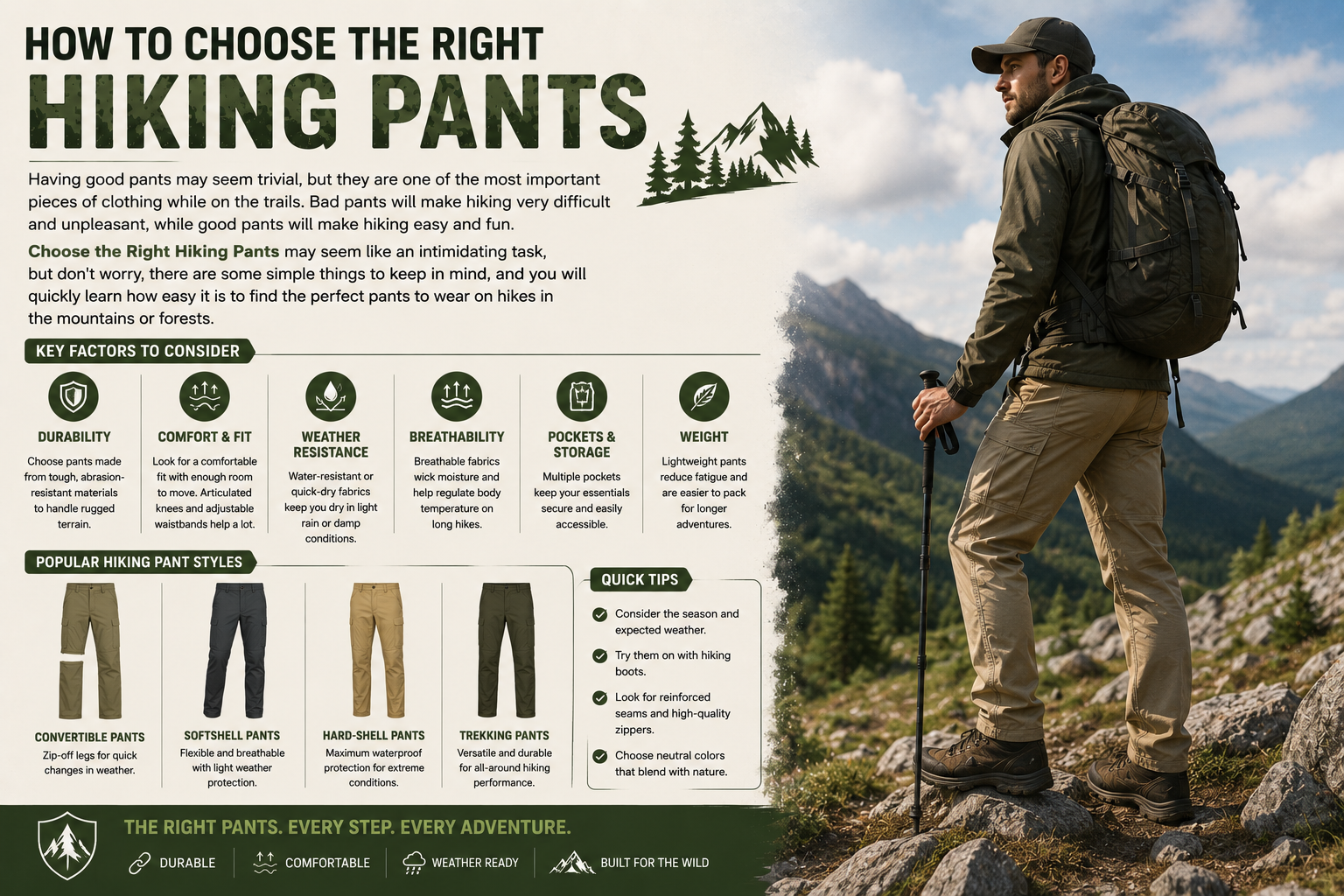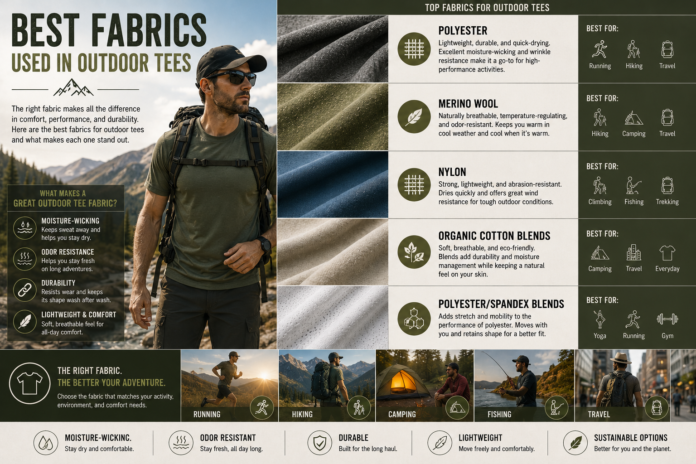
The best fabrics used in outdoor tees are very important as people use it as a foundational layer for warm-weather activities like camping, running, and anything under the sun. Choosing the best outdoor tee fabric helps people understand the benefits of moisture-wicking, odor resistance, and the tee’s durability during washing. This guide will examine the top tee fabrics, their strengths, and the best uses for the fabric.
Why Fabric Choice Matters for Outdoor Tees
In the outdoor environment, tees are easily exposed to sweat, the sun, and friction, and so fabric choice is very important. In a tee, a fabric that is durable and breathable will help the skin stay dry by wicking moisture. Fabric choice also helps determine dry time for washing the tee or for washing after getting caught in the rain. Selecting the best outdoor fabrics makes sure tees are ready for anything even if they just look good sitting on the shelf.
Best Fabrics Used in Outdoor Tees
To balance comfort, performance, and cost, fabric choice for outdoor tees is very important. Each fabric type is very different, and so choosing the best outdoor activity fabric is important.
Polyester
The top choice for outdoor tees, polyester, is quick drying, shape retaining, and resists wrinkles.
Also, polyester keeps moisture away from the skin. So, polyester is more comfortable for high intensity activities. Polyester holds odor more than natural fibers but more companies are adding finishes to make their products antimicrobial.
Merino Wool
Merino Wool has the advantage of not carrying odor and can help regulate body temperature. Also its soft against the skin. Most wool can be irritating and feel heavy and this can cause discomfort when in contact with the body. Merino wool is lighter and less irritating. Merino Wool can be more expensive, but it can be used in warmer and cooler climates. This can make it a good choice for longer trips.
Nylon
Nylon can be a good choice for more rugged outdoor tees. This is due to its good durability and abrasion resistance. Nylon can also help a tee keep its shape since it resists stretching and can dry quickly. Unfortunately, Nylon can also be less breathable compared to polyester. This is why it can be better to use it with other fabrics.
Bamboo Fabric
Bamboo fabric can be a better choice for a breathable and moisture-wicking fabric. It can also provide a nice soft fabric. Also, since bamboo fiber comes from a renewable resource, it can be a better choice for sustainable fabrics. It can also be a great choice for blends since it can be added to fabrics like polyester for a durable and good stretch fabric.
Cotton Blends
Cotton on its own can absorb moisture, which can be uncomfortable for the wearer during activities. Cotton on its own can also be less breathable. But, using cotton with polyester or a polyester and spandex blend can improve moisture management while remaining soft.
Cotton blends are useful for comfortable casual outdoor tees, but they don’t provide high performance moisture control.
Recycled Performance Fabrics
Although recycled polyesters and other recycled synthetic blends have a lower environmental impact, they still provide the same durability and moisture wicking as virgin polyesters. Consequently, many outdoor brands now use recycled fabrics for the tees as part of greater sustainability goals with no loss in performance.
How to Choose the Best Fabric for Outdoor Tees
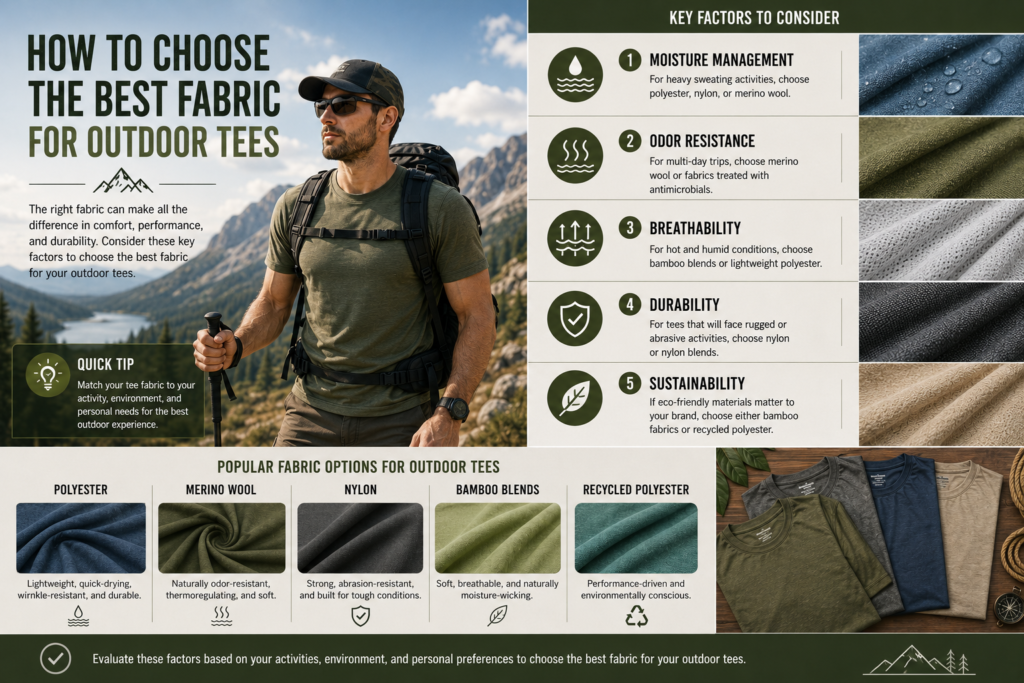
The best fabric for outdoor tees will depend on the type of climate you’re in as well as your personal preferences. Before choosing the fabric, consider the following:
- Moisture management: For heavy sweating activities, choose polyester, nylon, or merino wool.
- Odor resistance: For multi-day trips, choose merino wool or fabrics treated with antimicrobials.
- Breathability: For hot and humid conditions, choose bamboo blends or lightweight polyester.
- Durability: For tees that will face rugged or abrasive activities, choose nylon or nylon blends.
- Sustainability: If eco-friendly materials matter to your brand, choose either bamboo fabrics or recycled polyester.
Evaluating these factors will allow you to choose the best outdoor tees fabrics.
Outdoor Tee Fabrics Across Activities
The best outdoor fabrics will depend upon the activity that the outdoor wear is designed for. Outdoor tees tailored for the specific activity will help provide the best performance. Hiking clothing, for instance, will incorporate moisture wicking polyester or nylon blends designed for long days on the trail.
“Base layer clothing” uses merino wool or microfiber polyester for comfort next to the skin in varying temperatures.
When manufacturing Camping Apparel cool, durable cotton-polyester blends offer comfort next to the skin while resist wear from outdoor activities. On the other hand, companies who manufacture Hunting Apparel blends use durable, quiet tees that blends that field perform adequate synthetic. For Tactical Outdoor Apparel tough environments require the use of abrasion-resistant fabrics.
Most companies who manufacturer Camouflage Clothing use polyester blends that wick sweat while breathing and maintain pattern integrity. For warm weather essentials, outdoor tees give companies the ability to showcase fabric performance, for example, moisture management and sustainability as selling points.
Caring for Outdoor Tees
To maintain performance over time, outdoor tees should be washed in cold water and fabric softeners should be avoided, as they are likely to coat the fibers and reduce moisture-wicking. Air drying or low heat prevents especially wool and cotton blends form shrinks. Following these steps will keep outdoor tees maintain their fit, wicking, and odor resistance.
Partner with a Trusted Manufacturer for Outdoor Tees
If your company needs help sourcing fabric that will help manufacturing outdoor tees perform, comfortable, and sustainable standards, get in touch with us. We are a custom apparel manufacturer and can help you meet your needs for light hiking tees, tough hunting tees, or sustainable everyday tees.
If you have specific plans, contact our team to evaluate the different types of fabric, customization, and production offers. We can design outdoor tees that look great and will perform to the highest level.
Conclusion
The best fabrics can vary for outdoor tees and depend on the climate, your activity level, and personal preferences.
Polyester and nylon are durable and moisture-resistant. Merino wool naturally resists odors. Bamboo blends are breathable and relatively sustainable. Cotton blends and recycled performance fabrics work well for casual clothing and conscious consumers. Knowing these details helps you select outdoor tees that are comfortable and dry for your adventures.
FAQs
What fabric works best for Outdoor tees in hotweather?
Lightweight Polyester and Bamboo blended tees work great for hot weather outdoor tees as both offer breathable fabrics that regulate body temperature, as well as, both fabrics dry quickly and will wick away moisture.
Is Merino Wool a good fabric for outdoor tees?
Yes, Merino Wool is a great option for outdoor tees being a natural way to resist odor and regulate temperature, so Merino Wool is a great option for extended trips. However, it can be a lot more expensive than the synthetic fabrics, so it comes down to your needs and budget
Are cotton tees good for outdoor activities?
Wicking and drying cotton absorbs moisture and can leave you damp during outdoor activities making cotton not the best fabric for outdoor activities. However, a blended fabric of cotton and polyester can leave the fabric soft and comfortable, while also managing moisture.
How can I avoid odor in outdoor tees?
Wool Merino aids odor, while synthetic fabrics can have moisture retention reduced with antimicrobial finishes. Quickly washing the tees after use can also help minimize odor.