At a glance, a genuine leather skirt and a well-made faux leather skirt can look nearly identical, which is exactly why the Leather Skirt vs Faux Leather Skirt question comes up so often when shopping. The real differences show up over time, in how each material feels, ages, and holds up to regular wear, rather than in how they look on the rack or in a product photo.
Understanding what separates real leather from its synthetic alternatives makes it much easier to choose the right piece for your budget, values, and how often you plan to wear it. In this guide, we’ll break down how these two materials actually compare across durability, cost, and care, and help you decide which one makes more sense for your next skirt.
What Is a Genuine Leather Skirt?
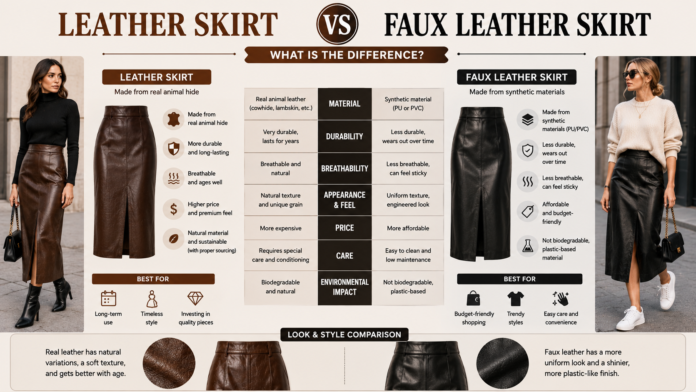
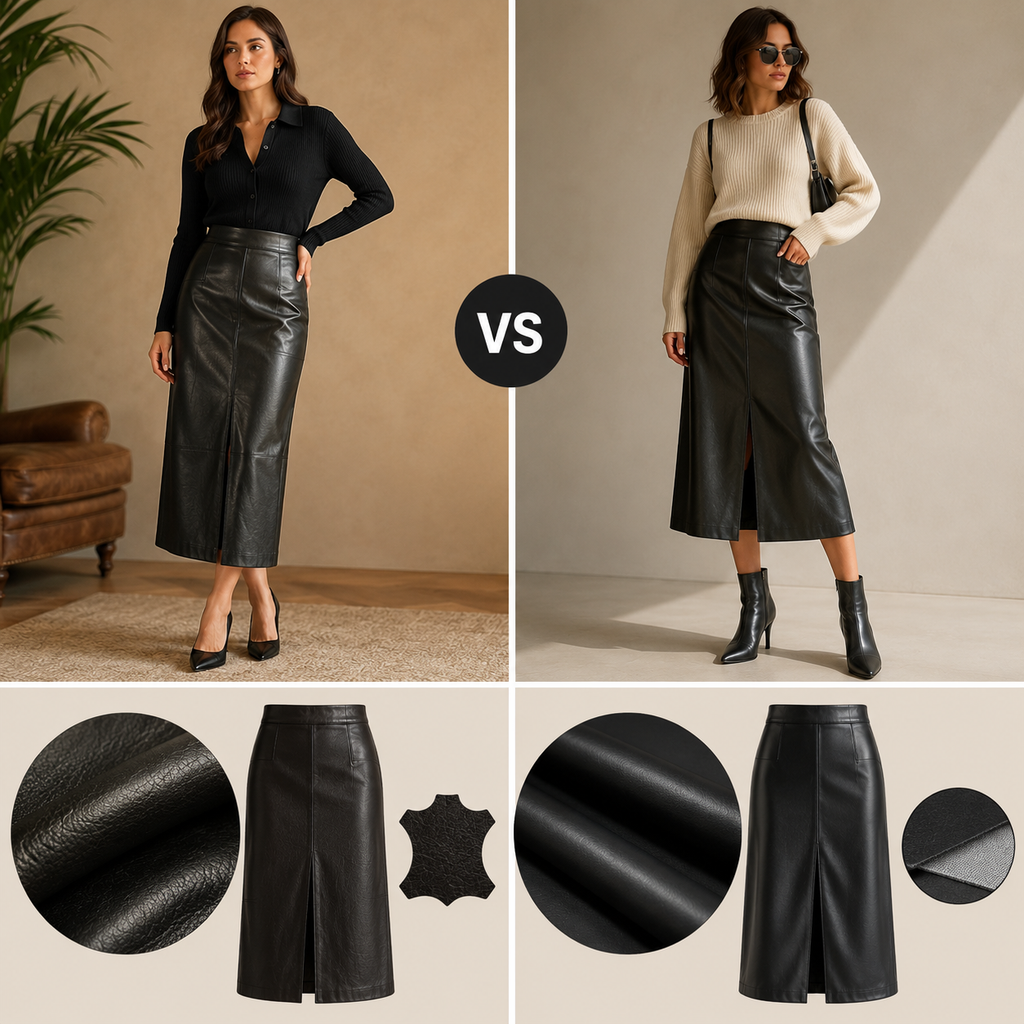
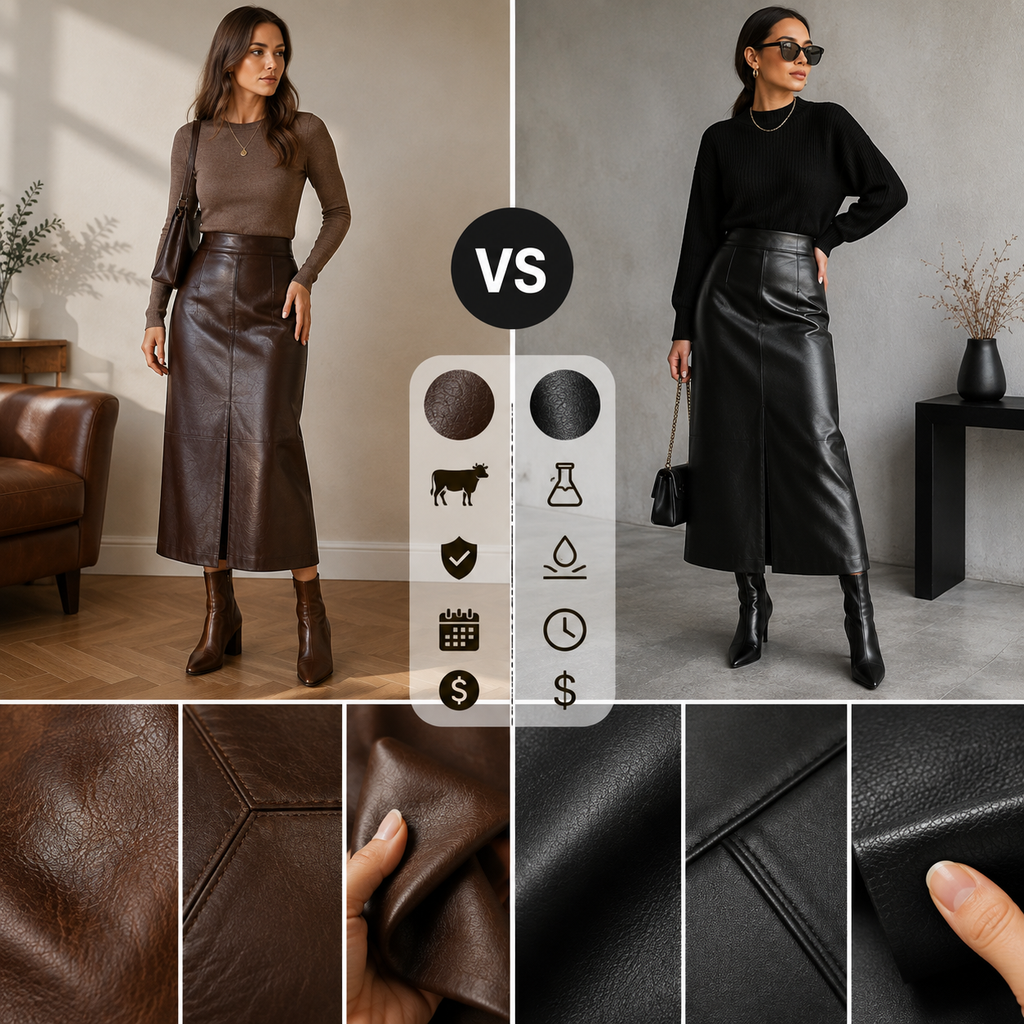
A genuine leather skirt is made from tanned animal hide, most commonly cowhide, lambskin, or goatskin. Because it’s a natural material, it has a distinctive texture, a subtle scent, and small variations across the surface that make each piece slightly unique rather than perfectly uniform, which many buyers see as part of the appeal rather than a flaw.
Real leather is also naturally breathable and molds to the body over time, developing a patina that many people specifically seek out as the garment ages. This natural aging process is one of the clearest differences in the Leather Skirt vs Faux Leather Skirt comparison, since synthetic materials simply don’t age the same way, no matter how closely they mimic leather’s initial appearance.
What Is a Faux Leather Skirt?
Faux leather, also called vegan or synthetic leather, is made by coating a fabric backing, typically polyester or cotton, with a layer of polyurethane (PU) or polyvinyl chloride (PVC). The result is a material designed to visually mimic real leather’s texture and grain without using any animal hide.
PU-based faux leather tends to be softer, more flexible, and more breathable, while PVC-based faux leather is generally more water-resistant but stiffer and less breathable. Higher-end microfiber faux leather closely resembles real leather’s texture and durability, though it typically costs more than standard PU or PVC options.
Leather Skirt vs Faux Leather Skirt: Durability Compared
Durability is usually the deciding factor in the Leather Skirt vs Faux Leather Skirt comparison. Well-made full-grain leather can last 20 years or more with proper care, since the hide’s natural fiber structure resists cracking and peeling even after extensive wear and repeated flexing.
Faux leather’s lifespan varies significantly by type and quality. Standard PU leather typically lasts around 3 to 5 years before the coating begins to crack and separate from the fabric backing, a failure mode that generally isn’t repairable once it starts. PVC faux leather tends to last somewhat longer, often 5 to 8 years, thanks to its higher resistance to moisture, though it remains stiffer and less comfortable overall, and higher-end microfiber versions can approach a decade with careful use.
Cost and Accessibility
Faux leather is almost always significantly more affordable than genuine leather, which is one of its biggest draws for budget-conscious shoppers or anyone wanting to experiment with the leather look without a major investment. Genuine leather skirts carry a higher price point that reflects the cost of raising and processing hides, along with more labor-intensive construction and a longer production timeline.
For fast-fashion pieces meant to be worn occasionally, faux leather often makes practical sense. For a piece meant to be worn regularly for years, genuine leather’s higher upfront cost is frequently offset by its significantly longer lifespan, making the true cost-per-wear closer than the sticker price alone suggests.
Feel, Breathability, and Comfort
Genuine leather is naturally breathable and becomes more comfortable over time as it molds to the body, which is part of why well-fitted leather pieces often feel better with age rather than worse. Faux leather, by contrast, doesn’t breathe as well, which can make it feel warmer or less comfortable during extended wear, particularly with PVC-based versions worn in warm weather.
Higher-quality PU and microfiber faux leathers have narrowed this gap considerably, offering a softer feel that comes closer to genuine leather, though they still don’t fully replicate the way real hide moves and ages with regular use over the years.
Ethical and Environmental Considerations
Faux leather appeals to buyers who want to avoid animal products entirely, since it’s produced without any animal hide. However, most faux leather is petroleum-based and not biodegradable, and its shorter lifespan often means more frequent replacement, which has its own environmental cost.
Genuine leather is a natural byproduct of the meat industry in most cases, and its long lifespan means fewer replacements over time, though tanning processes carry their own environmental considerations depending on the method used. Neither material is a clear-cut environmental winner, and the better choice often depends on which trade-offs matter most to the individual buyer.
Leather Skirt vs Faux Leather Skirt at a Glance
Here’s a quick summary of how the two materials compare on the qualities that matter most:
- Durability:Genuine leather: 20+ years with care; Faux leather: 3-8 years depending on type
- Cost:Genuine leather is significantly more expensive upfront
- Breathability:Genuine leather breathes better; faux leather, especially PVC, breathes less
- Aging:Genuine leather develops a natural patina; faux leather does not age the same way
- Animal-free:Faux leather contains no animal hide; genuine leather does
- Water resistance:PVC faux leather resists water well; genuine leather needs treatment for the same
Choosing the Right Material for Industrial and Professional Apparel
For heavy-duty or frequently worn apparel, genuine leather’s superior long-term durability makes it the more practical choice, which is reflected in general workwear collections that rely on real hide for daily industrial use. In demanding environments like oil and gas, where materials face constant wear, genuine leather remains the standard within oil and gas workwear setups, and PVC-based faux leather’s water resistance sometimes finds use within waterproof workwear collections where budget is a bigger concern than long-term wear.
For corporate and client-facing apparel, both materials can work depending on priorities, with faux leather offering an accessible option for corporate uniforms produced at larger scale and lower cost, while genuine leather suits programs where longevity matters more. Because different roles have different priorities, many businesses work with industry-specific work wear suppliers who can match the right material to a specific budget and use case.
The Role of Custom Manufacturing in Leather Apparel
As demand grows for well-made apparel in both genuine and faux leather, more businesses are turning to custom manufacturers who understand the trade-offs between these materials, rather than relying on generic off-the-shelf sourcing.
At ECO-JERSEY, we manufacture and supply custom apparel including leather-based workwear and accessories to businesses around the world. Whether a company needs the long-term durability of genuine leather for industrial gear or a more budget-conscious faux leather option for corporate uniforms, our team works directly with clients to produce apparel that matches their exact specifications.
Conclusion
Understanding the Leather Skirt vs Faux Leather Skirt comparison makes it much easier to choose the right piece for your budget, values, and how often you plan to wear it. Genuine leather offers unmatched durability and a natural aging process that many people specifically seek out, while faux leather offers an accessible, animal-free alternative with a shorter lifespan. Neither material is objectively better the right choice depends on what matters most to you and how the piece will realistically be worn over time.
For businesses looking to source reliable apparel whether in genuine or faux leather working with an experienced manufacturer like ECO-JERSEY ensures every piece is built with the right material for the job.
FAQs
What is the difference between a leather skirt and a faux leather skirt?
A genuine leather skirt is made from tanned animal hide, while a faux leather skirt is made from a fabric backing coated with polyurethane or PVC to mimic leather’s look and texture.
Which lasts longer, real leather or faux leather?
Real leather generally lasts significantly longer, with well-made full-grain leather lasting 20 years or more, compared to faux leather’s typical 3 to 8 year lifespan depending on the type.
Is faux leather cheaper than real leather?
Yes, faux leather is almost always significantly more affordable than genuine leather, making it a popular choice for budget-conscious shoppers or occasional-wear pieces.
Is faux leather more ethical than real leather?
Faux leather avoids animal products, which appeals to many buyers, but it’s typically petroleum-based and non-biodegradable, and its shorter lifespan can mean more frequent replacement.