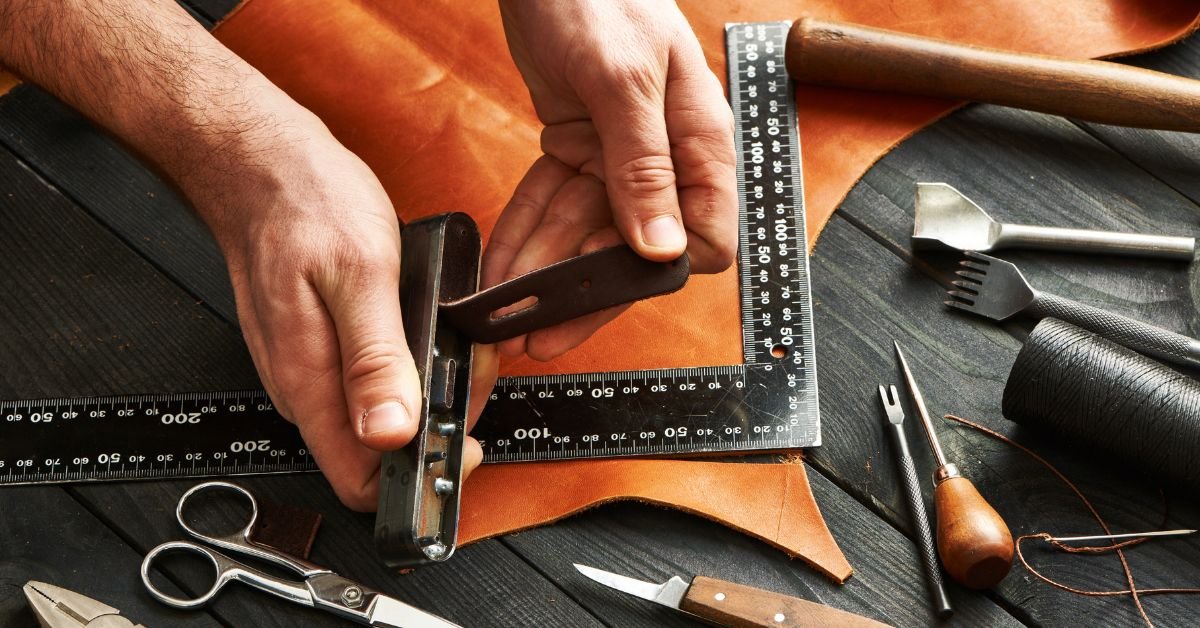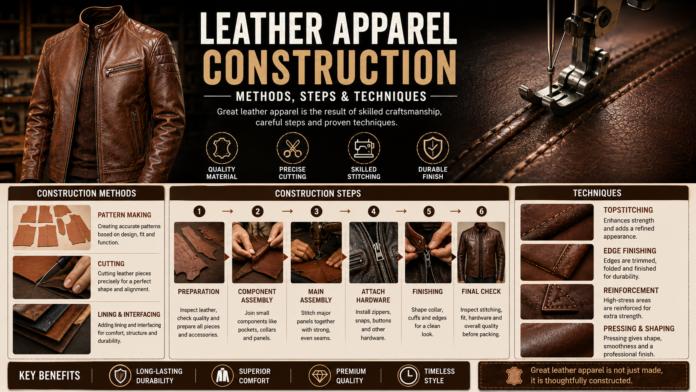
The quality of a leather garment isn’t just about the hide it’s cut from Leather Apparel Construction, the actual process of turning that hide into a finished piece, plays just as big a role in how well a garment fits, feels, and holds up over time. Two jackets made from identical leather can perform completely differently depending on how they were patterned, stitched, and finished, which is why construction quality deserves just as much attention as the material itself.
Understanding the key steps involved makes it much easier to spot the difference between a well-made garment and one that only looks good on the surface. In this guide, we’ll walk through the core stages of construction, the stitching methods used, and what separates durable, well-built leather apparel from lower-quality alternatives.
Pattern Cutting: The Foundation of Every Garment
Every leather garment starts with pattern cutting, where flat templates are used to cut individual pieces from the hide. Unlike fabric, leather is a natural material with variation across its surface, so skilled cutters have to account for thickness, grain direction, and imperfections while planning each cut to minimize waste and maximize consistency across the finished panels.
Because leather doesn’t behave like woven fabric, cutters also need to think about how each panel will stretch and move once the garment is worn. Getting this step right sets the foundation for everything that follows a poorly planned cut can lead to uneven seams, awkward fit, or wasted material further down the line, and mistakes made here are typically impossible to fully correct in later stages.
Skiving: Thinning the Edges for a Cleaner Finish
Skiving is the process of shaving down the edges or seam allowances of a leather piece to reduce bulk before folding, stitching, or joining panels together. Without skiving, seams on thicker leather would end up stiff, bulky, and uncomfortable, especially at points where multiple layers overlap, which can make a garment feel poorly made even if the underlying hide is excellent.
This step is particularly important in areas like collars, cuffs, and seams where several panels come together, since properly skived edges allow the leather to fold and sit flat rather than creating a rigid, awkward ridge. It’s a small, often invisible detail, but it has a noticeable impact on how comfortable and refined a finished garment feels, and it’s one of the first things an experienced buyer will check when evaluating construction quality.
Stitching Methods Used in Leather Apparel Construction
Stitching is where much of the durability of a leather garment is determined. Machine stitching typically uses a lockstitch, where a top thread and bobbin thread interlock in the middle of the leather. It’s fast and consistent, making it the standard for most commercial apparel production, though if the thread breaks at any point, the stitch line can potentially unravel.
Saddle stitching, done by hand, uses a single length of thread with a needle on each end, passed through the same hole from opposite directions to create a locking stitch at every puncture. This method is significantly more labor-intensive, which is why it’s typically reserved for premium goods, but it offers a key advantage: if the thread wears through at one point, the stitch stays intact rather than unraveling along the entire seam. This is also why saddle-stitched seams are generally easier to repair, since damage tends to stay localized instead of spreading.
Seam Types and Finishing
How seams are finished affects both the appearance and durability of the final garment. Raw edge seams leave the natural edge of the leather exposed, offering a clean, minimalist look that works well on thicker, higher-quality hides. Folded seams tuck the raw edge under before stitching, creating a smoother, more finished appearance that’s common in apparel meant for a polished look.
Welted seams add an extra strip of leather along the seam for reinforcement, which is often used in high-stress areas like shoulders or pockets where extra strength matters. The right seam finish depends on both the thickness of the leather being used and how much stress that particular seam will need to withstand, and mixing finishes strategically across a single garment is common in well-built apparel.
Thread and Needle Selection
Thread choice plays a bigger role in leather apparel construction than many people realize. Bonded nylon and polyester threads are the most common choices for leather apparel, valued for their resistance to UV exposure, moisture, and abrasion compared to natural fiber threads. Needle size also needs to scale with leather thickness using a needle that’s too small for a heavier hide can cause skipped stitches or premature thread wear, while an oversized needle can leave unnecessarily large, weakening holes in thinner leather.
Matching thread weight and needle size to the specific hide being used is one of the more overlooked details that separates well-constructed leather apparel from garments assembled without much technical planning.
Key Elements of Well-Built Leather Apparel
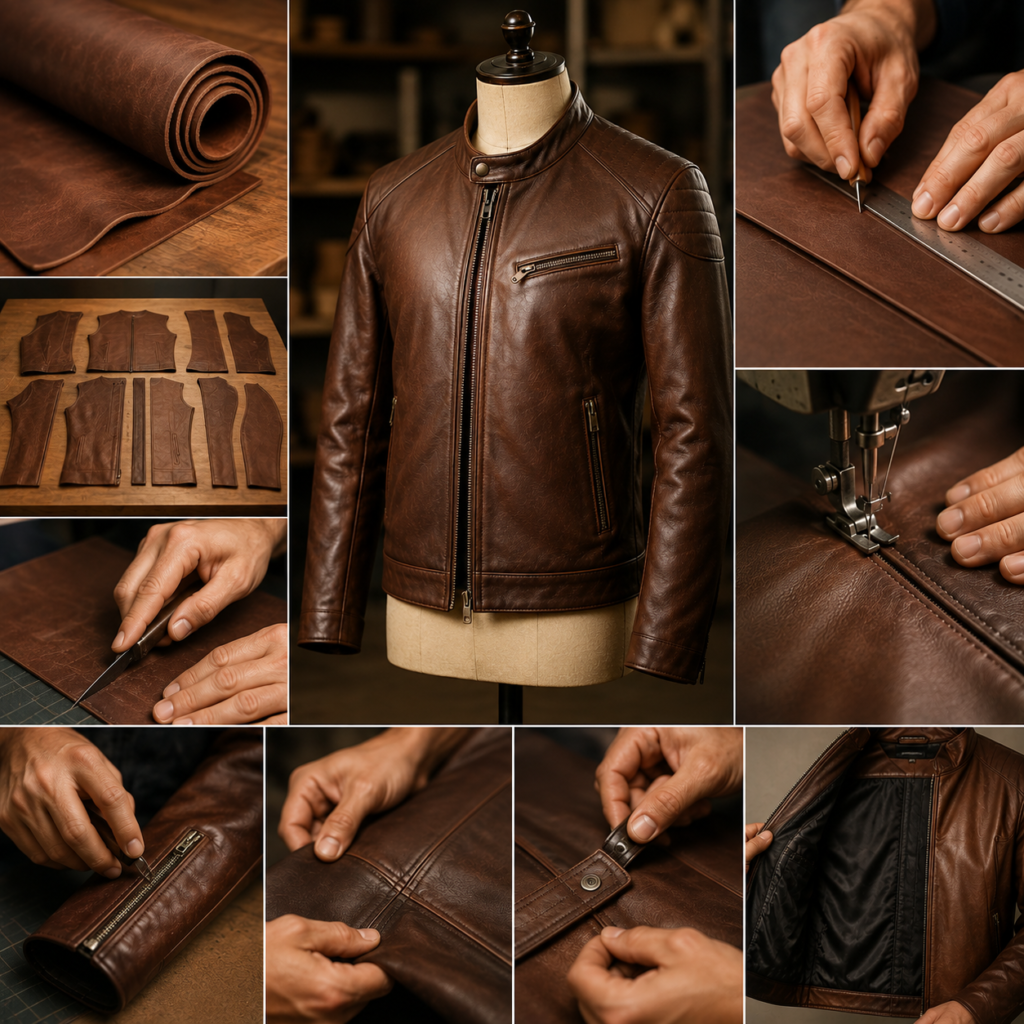
Here’s a quick summary of the construction details that consistently separate quality leather apparel from lower-quality alternatives:
- Precision pattern cutting:Consistent panels with grain direction accounted for
- Proper skiving:Clean, flat seams without unnecessary bulk
- Appropriate stitching method:Saddle stitching for premium durability, lockstitching for consistent commercial production
- Reinforced seams:Welted or double-stitched seams in high-stress areas like shoulders and pockets
- Matched thread and needle:Thread weight and needle size scaled to the leather’s thickness
- Quality hardware:Rust-resistant zippers, snaps, and buckles secured with reinforced stitching
How Construction Affects Industrial and Protective Apparel
In industrial and protective settings, construction quality has a direct impact on safety. Reinforced, well-skived seams and durable stitching are essential for gloves, aprons, and jackets across general workwear collections, since a seam failure in the field can leave a worker exposed at exactly the wrong moment.
In demanding environments like oil and gas, where leather is often layered with flame-resistant materials, precise construction becomes even more critical within oil and gas workwear setups, where seam placement can affect how well layered protective materials perform together. Proper seam sealing and stitching also matter for outdoor roles, an approach commonly reinforced in waterproof workwear collections designed to keep moisture from working its way through stitch holes.
How Construction Affects Corporate and Branded Apparel
For corporate and client-facing apparel, clean pattern cutting and finished seams matter just as much for appearance as for durability, particularly for corporate uniforms that need to look polished and consistent across an entire team.
Because different trades and roles call for different construction priorities, from reinforced industrial seams to refined corporate finishing, many businesses work with industry-specific work wear suppliers who can tailor construction methods to the specific demands of a role or brand.
The Role of Custom Manufacturing in Leather Apparel
As demand grows for well-made leather apparel, more businesses are turning to custom manufacturers who understand how pattern cutting, stitching, and seam finishing affect durability and fit, rather than relying on generic off-the-shelf construction.
At ECO-JERSEY, we manufacture and supply custom apparel including leather-based workwear and accessories to businesses around the world. Whether a company needs reinforced construction for industrial protective gear or refined finishing for corporate uniforms, our team works directly with clients to produce apparel built to their exact specifications.
Conclusion
Understanding Leather Apparel Construction makes it much easier to recognize the difference between a garment built to last and one that only looks good in photos. From precise pattern cutting to proper skiving, the right stitching method, and well-finished seams, every step in the process contributes to how a garment fits, feels, and holds up over years of use. A garment that skips or rushes any one of these steps rarely performs as well as its appearance suggests.
For businesses looking to source reliable leather apparel whether for protective workwear or branded uniforms working with an experienced manufacturer like ECO-JERSEY ensures every garment is constructed to perform, no matter the industry or environment.
FAQs
What are the main steps in leather apparel construction?
The main steps include pattern cutting, skiving the edges, stitching the panels together, and finishing the seams, each of which affects the fit, comfort, and durability of the final garment.
What is skiving in leather construction?
Skiving is the process of thinning down the edges or seam allowances of leather to reduce bulk, allowing seams to fold flat and sit comfortably rather than creating a stiff, bulky ridge.
What is the difference between saddle stitching and lockstitching?
Saddle stitching is done by hand using a single thread that locks at every puncture, making it more durable and repairable, while lockstitching is done by machine and is faster but can unravel if the thread breaks.
Why does thread type matter in leather apparel construction?
Thread type affects durability and appearance bonded nylon and polyester threads are commonly used because they resist UV exposure, moisture, and abrasion better than natural fiber threads.