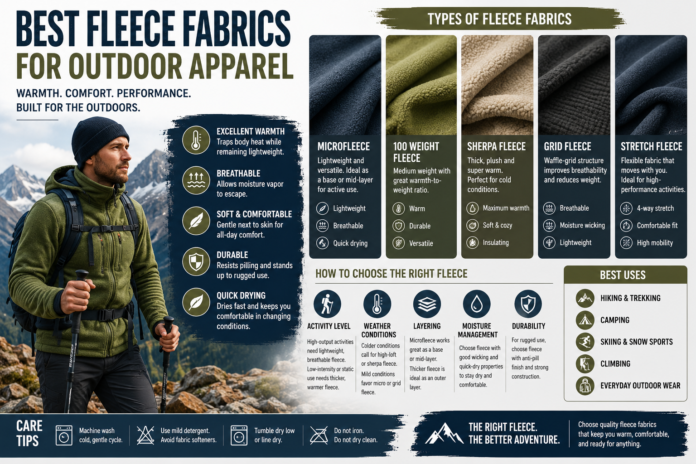
Fleece fabric plays a central role in outdoor clothing because it delivers warmth, breathability, and comfort in a lightweight package. When selecting the Best Fleece Fabrics for Outdoor Apparel, you create jackets, base layers, and mid-layers that perform reliably in cold and unpredictable conditions. As a result, outdoor brands and manufacturers rely on fleece to develop gear that keeps wearers comfortable during hiking, camping, skiing, and other cold-weather activities. This guide explores the Best Fleece Fabrics for Outdoor Apparel, explains how different fleece types compare, and helps you choose the right option for your next outdoor apparel project.
Fleece Fabric is Important for Outdoor Apparel
Outdoor clothing must be able to handle moisture, temperature fluctuations, and constant motion. Fleece is the perfect solution for these conditions because it keeps warm air near your body and allows sweat to evaporate rapidly. The result is that the wearer stays warm without feeling wet or overheated. Fleece dries quicker than cotton or wool, making it a good choice for multi-day excursions where access to laundry is limited. As a result, fleece is now used for almost every outdoor category, including jackets, vests and base layers.
Fleece Fabrics Used for Outdoor Apparel
There are several different fleece fabrics available, each of which is suitable for a specific climate and activity. These options will help you choose the right fleece fabric for your outdoor clothing based on weight, warmth and intended use.
Microfleece
Microfleece is a soft, thin material that can be used as a lightweight base layer. It breathes well, so athletes and hikers wear it for high-intensity activities. Its low bulk also allows it to be worn comfortably under jackets and shells.
Midweight Fleece
Midweight fleece is a great choice for pullovers and jackets because it balances warmth with breathability. Midweight fleece is popular with hikers, cyclists and campers because it allows for airflow while active movement. This fabric is used by many outdoor clothing brands to create their collections for cold weather.
Sherpa and Heavyweight Fleece
Heavyweight fleece is ideal for cold climates. Sherpa, for example, has a plush texture which mimics the appearance of sheepskin. It is therefore ideal as a jacket liner or standalone layer in low-activity environments. This fabric is bulky, but it provides exceptional warmth in cold temperatures.
Polartec Fleece
Polartec fleece is a premium choice because it was designed to meet specific performance requirements. Polartec fabrics are designed for specific performance needs. For example, some Polartec versions prioritize breathability during high-intensity sports, while others emphasize wind resistance in alpine environments. Polartec fabrics are used by many premium outdoor brands to differentiate their gear.
Recycled and eco-friendly fleece
Recycled fleece is often made of post-consumer bottles and offers the same warmth, durability, and environmental impact as polyester fleece. Recycled fleece is now a popular choice among manufacturers because it helps them achieve sustainability goals while maintaining performance. Eco-conscious brands are increasingly choosing this fabric for jackets and vests.
Wind-Resistant Fleece
Standard fleece breathes very well, but cannot effectively block wind on its own. This problem is solved by wind-resistant fleeces that incorporate a tightly woven fabric on the face or a laminated layer. This fabric is ideal for skiing, hiking along ridgelines, or other windy conditions.
How to choose the best fleece fabrics for outdoor apparel
The right fleece for you depends on the climate and your layering strategy, as well as how active you are. Consider the following factors before making a choice:
- Activity intensity Choose lightweight fleece for cold, low-activity environments and heavyweight fleece in other cases.
- Conditions of climate: Choose wind-resistant fleece in exposed and breezy areas, or standard fleece in milder and sheltered locations.
- Layering requirements: Combine an ultra-thin base layer with a midweight jacket to create a flexible and adaptable heat.
- Sustainable goals: Choose recycled fleece for your eco-friendly manufacturing if it is important to you or your customers.
- Durability requirements Choose heavyweight or bonded fleece for gear which will be subjected to repeated abrasions and rough handling.
You can choose fleece fabrics that are suitable for outdoor clothing based on these factors.
Fleece Applications Across Outdoor Apparel Categories
The fabric is versatile and can be used for many different outdoor clothing categories. Each application will benefit from a different weight or finish. hiking apparel uses midweight fleece that is breathable to provide comfort on long treks. Camping apparel also benefits from heavyweight, insulating fleece.
When you are manufacturing outdoor coats fleece linings can add insulation without adding excessive weight. Softshell Jackets combine a fleece back with a wind resistant outer layer to provide added protection. For activities that require layering flexibility, clothing is made of microfleece. It provides comfort to the skin and helps manage moisture.
Brands that manufacture skiwear often choose Polartec or wind resistant fleece to withstand harsh conditions in the mountains. In contrast, outdoor garments such as pullovers or vests allow brands to showcase fleece as an independent product, rather than just as a lining.
Care for Fleece Apparel
The right care will extend the life of your fleece garments, and maintain their insulation properties. Avoid fabric softeners and wash fleece with cold water and a mild detergent. They can clog fibers and reduce loft. Air-drying, or using a low heat setting to dry the fabric, will prevent shrinkage and keep its soft texture. If you consistently follow these steps, your fleece clothing will retain its warmth and look for many years.
Partner with a trusted manufacturer for your outdoor apparel
Working with a manufacturing partner who has experience in the field will make it easier to choose fleece fabrics. A reliable manufacturer can help you find the best fleece fabric for your tactical clothing, hunting gear or waterproof apparel. They will also ensure that you get consistent quality and efficiently scale up production.
We help brands create fleece-based outdoor clothing that meets performance, comfort and sustainability standards. Contact our team for more information on fabric options, customization and production timelines. We can transform your ideas into durable outdoor apparel that is ready for the market.
Final Thoughts
The right fleece fabric for outdoor clothing depends on the activity, climate and design goals. Microfleece is ideal for active layering. Midweight fleece suits everyday cold weather needs. Heavyweight Polartec or heavyweight fleece tackles extreme conditions. Recycled and wind-resistant fabrics are designed to address environmental concerns and weather protection. Understanding these differences will help you select fabrics that are warm, comfortable, and dry for outdoor use. The right choice of fleece will enhance both the performance of your product and your customer’s satisfaction.
FAQs
What is the best fabric to use for outdoor clothing in cold weather?
In extremely cold temperatures, Sherpa or heavyweight fleece is the best choice because they trap more warm air. If you need to protect yourself from wind, wind-resistant versions of fleece or Polartec are better.
What is the difference between fleece and wool as an outdoor clothing material?
The lightweight nature of fleece makes it ideal for outdoor activities. Wool is often better at resisting odors, but many brands use both fabrics as part of layering systems.
Can fleece fabric be used to make waterproof outdoor clothing?
Fleece is not waterproof by itself, but it’s often laminated with a windproof or waterproof membrane. The combination of the two allows manufacturers to create jackets that are warm and resistant to wind, moisture and rain.
What is the best fleece for layering?
Microfleece is best used as a baselayer because it’s thin and breathable. Midweight fleece works well as a middle layer. These fabrics work together to create a system that can adapt to the changing temperatures of the day.