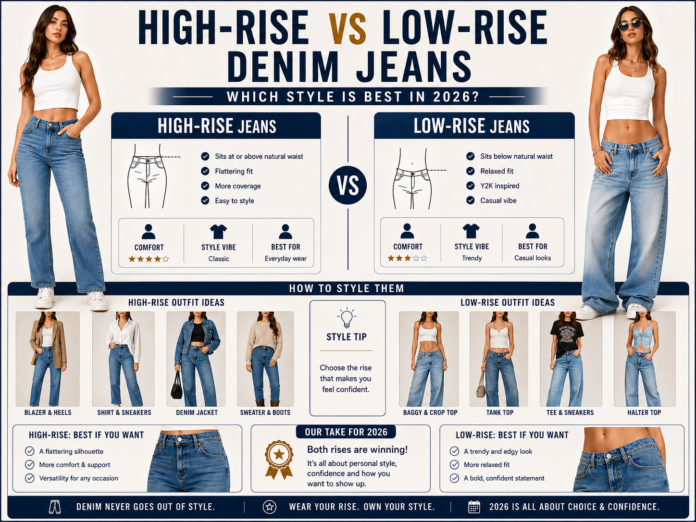
The waistline is one of denim’s most important styling elements. It alters the silhouette, changes the appeal of the jeans, and sends a clear message about where the brand stands in the market.
The debate around High-Rise vs Low-Rise Denim Jeans has remained a constant topic in fashion. For years, high-rise jeans dominated the market, while low-rise styles have recently made a controversial comeback. In 2026, both styles continue to sell strongly — but they serve very different fashion purposes and target different customer preferences.
This guide explains where each waistline is in the market today and which one would be best for your brand.
What is high-rise denim?
High-rise denim is worn at or above your natural waistline — usually two to four inches below the hip bone. This creates the illusion of long legs, defines the waist, and offers more coverage in the middle than lower waistlines.
Since the beginning of 2010, high-rise has been a popular style. It has a broad appeal — it suits all body types and ages, and can be worn in casual, smart-casual, and semi-formal settings.
High-rise is the most popular choice for brands that target women’s wear. It is more popular than low-rise in most retail outlets.
What is low-rise denim?
Low-rise jeans sit significantly below your natural waist, often just below or at the hip bone. This was the most popular waistline in the early 2000s, before the high-rise style took over. It has made a comeback due to Y2K fashion nostalgia.
Low-rise is more of a trend statement than it is a staple. This style is popular with younger, fashion-forward demographics – particularly in streetwear or contemporary fashion contexts – but it has a limited appeal at mainstream retailers.
Low-rise jeans can be an attractive and viable option for brands that are targeting youth markets or streetwear denim. Brands targeting a wider demographic will be more at risk.
What the market is saying about 2026
In 2026, high-rise buildings will continue to dominate sales volume. It is the most popular waistline in womenswear.
Low-rise performs well in certain segments, namely fashion-forward collections and brands influenced by Y2K, as well as youth streetwear. Brands that know their customers well enough to make a commitment to this option are a good choice. But it is not the best choice for brands that don’t have a clear positioning.
As a compromise, the mid-rise, which is positioned between the extremes and sits one to two inches below the hip bone, has gained in popularity as a product. It provides more coverage and comfort than low-rise, while still feeling less structured than full-rise.
A denim pants manufacturer with experience in all three waistline options will be able to guide you based on the specific market and customer that you are targeting.
What waistline works best with each silhouette?
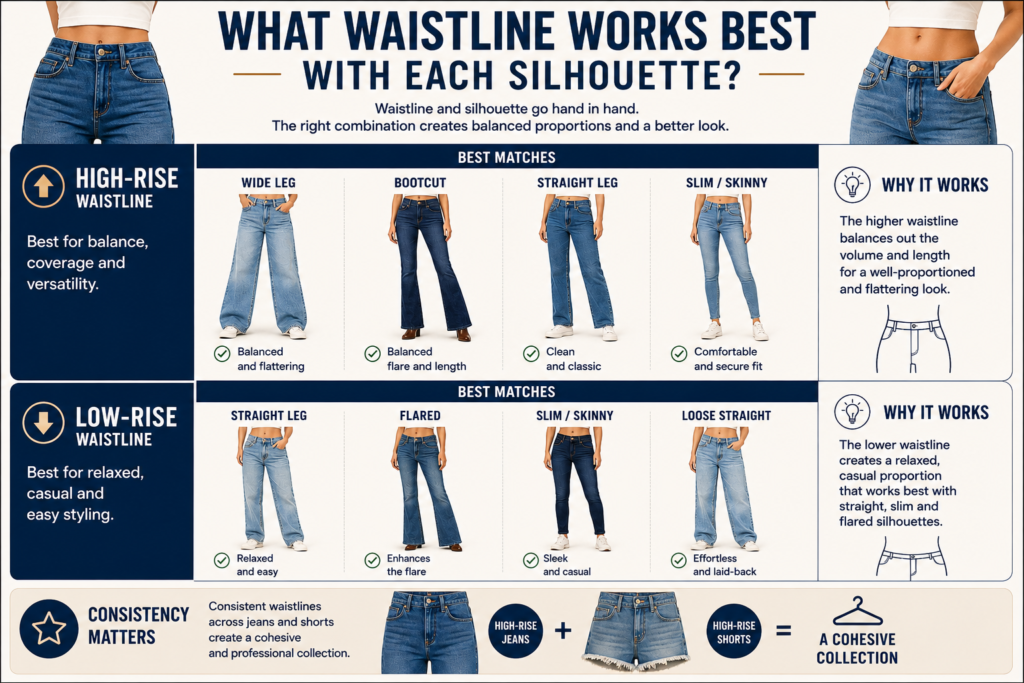
Waistline, silhouette, and interaction are directly related. Certain combinations are always good. Some combinations are too large and can ruin the whole garment.
The high-rise is best suited to wide leg, bootcut, or straight leg silhouettes. This is because the higher waistline balances out the volume and length and gives the overall look a balanced proportion. The higher rise also works in slim styles, where it provides coverage and comfort.
Low-rise is best suited to straight leg, flared, and slim silhouettes. The lower waistline gives the garment a relaxed, casual look. Low-rise works better with straight leg, slim and flared silhouettes — the lower waistline creates a casual, relaxed proportion.
Consistency in waistlines is important for brands that produce denim jeans along with jeans. High-rise shorts that match high-rise jeans will create a cohesive collection.
The Manufacturing Considerations of Each Waistline
High-rise and Low-rise Jeans require different patterns from a production perspective. This is especially true for the rise measurement, waistband construction, and back yoke.
The total fabric consumption is affected by the length of the front and back rise. This also affects the fit in the seat. High-rise jeans are technically challenging because it is difficult to strike the right balance between a flattering, high waist and a comfortable fit in the seat.
When choosing low-rise patterns, pay attention to the way that the waistband fits and remains in place. Fit failures, such as low-rise jeans that gape or slip at the back, are a cause for returns and bad reviews.
Private-label denim manufacturers that have established high-rise or low-rise patterns within their range can help brands get a better-fitting denim product, especially if they are entering the category for the very first time.
What should you choose for your brand?
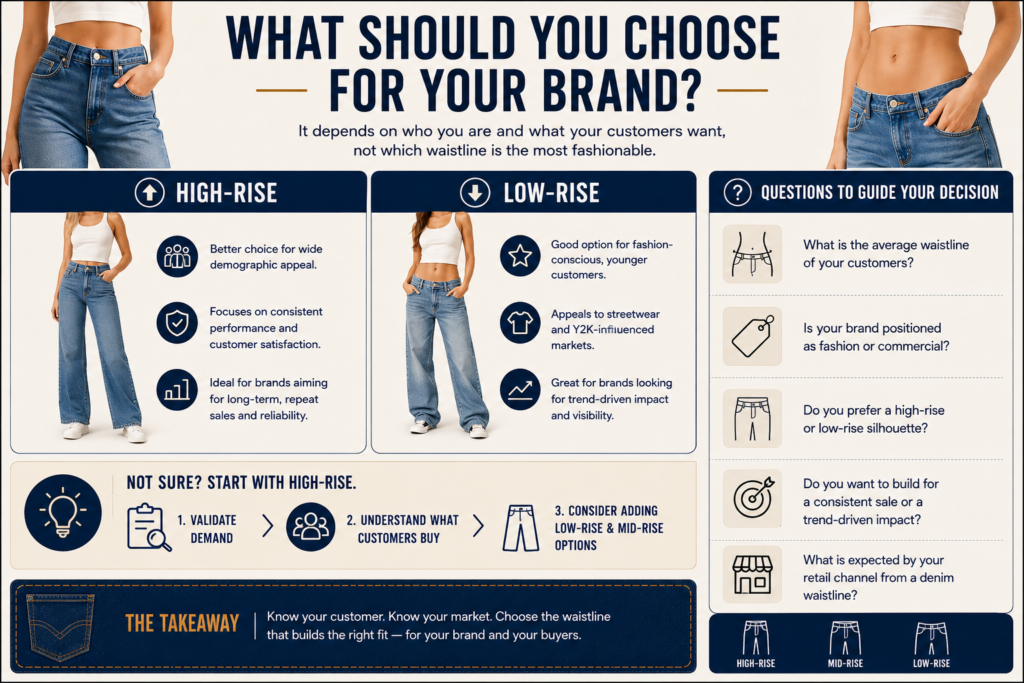
It depends on who you are and what your customers want, not which waistline is the most fashionable.
High-rise is a better choice if your brand targets a wide demographic and focuses on consistent performance. Low-rise is a good option if your brand targets fashion-conscious, younger customers who are interested in streetwear and markets influenced by Y2K.
If you are unsure, start with high-rise. Validate demand. Once you know what your customers actually purchase, consider adding low-rise and mid-rise options.
These are the questions that will guide you in your decision-making:
- What is the average waistline of your customers?
- Is your brand positioned as fashion or commercial?
- Do you prefer a high-rise or low-rise silhouette?
- Do you want to build for a consistent sale or a trend-driven impact?
- What is expected by your retail channel from a denim waistline
Conclusion
The debate around High-Rise vs Low-Rise Denim Jeans is ultimately about brand positioning, not trend-chasing. In 2026, high-rise jeans continue to dominate across most markets, while low-rise styles remain a strong option for brands targeting specific fashion demographics.
Understanding High-Rise vs Low-Rise Denim Jeans helps brands align their denim collections with customer preferences. Know your audience, choose the waistline that fits their style, and build your collection around that decision.
Explore the options for denim clothing manufacturing and find the best partner to help you develop your brand.
FAQs
Does high-rise denim remain dominant on most markets in 2026?
In 2026, high-rise denim remains the market leader in all major markets. Low-rise denim is gaining popularity in the fashion-forward, youth-oriented segments. However, it has a limited appeal to mainstream consumers.
What does mid-rise mean?
It is a denim that sits in between high-rise and low-rise — usually one to two inches below the hip bone. It is a compromise between casual style and coverage.
What waistline is best for wide-leg jeans?
A high-rise waistline balances out the volume and creates an overall well-proportioned silhouette.
Does the waistline have an impact on how jeans fit in the seat?
Yes, it does. For high-rise patterns, it is important to find the right balance between seat fit and waist height. Low-rise patterns require attention to the way the waistband fits and remains in place while wearing.