
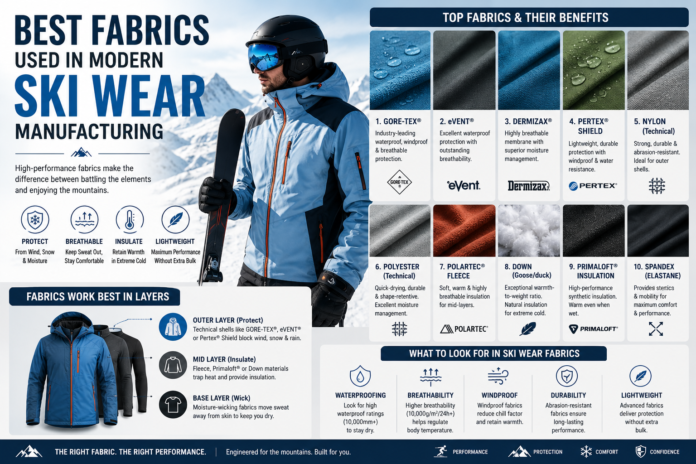
Fabric choice defines everything in ski wear. The difference between a comfortable, high-performing day on the mountain and a miserable, cold, wet experience often comes down entirely to the materials your clothing is made from. Understanding the best fabrics used in ski wear manufacturing helps brands build collections that genuinely perform — and helps skiers make informed decisions about the gear they depend on in demanding mountain environments.
Here’s a complete breakdown of the fabrics driving modern ski wear performance.
Gore-Tex — The Gold Standard in Ski Outerwear
Gore-Tex remains the most trusted waterproof breathable membrane in ski apparel manufacturing. Its expanded polytetrafluoroethylene (ePTFE) membrane contains billions of microscopic pores — each too small for liquid water to penetrate but large enough to allow moisture vapor to escape. The result is complete waterproofing combined with genuine breathability that keeps skiers dry from both external snow and internal perspiration simultaneously.
Gore-Tex Pro suits the most demanding skiing applications — delivering maximum durability and breathability for aggressive backcountry and high-intensity resort skiing. Gore-Tex Paclite suits lighter, more packable ski touring applications where weight efficiency matters alongside weather protection performance.
A professional ski wear manufacturer who works with genuine Gore-Tex fabrics delivers verified performance credentials that marketing claims alone cannot provide — because Gore-Tex licensing requires manufacturers to meet specific production quality standards before using the certification.
Nylon — Durable, Lightweight Shell Fabric
Nylon is the most widely used face fabric in ski outerwear construction. Its excellent abrasion resistance, lightweight properties, and strong tensile strength make it the ideal carrier fabric for waterproof membrane laminates in ski jackets and pants.
High-tenacity nylon — often woven in ripstop or twill constructions — resists the mechanical stresses that skiing imposes on outerwear constantly. Chair lifts, ski edges, rocky terrain, and repeated falls all subject ski apparel to abrasion forces that lower-quality face fabrics fail against quickly. Quality nylon face fabrics maintain their structural integrity and DWR treatment adhesion across multiple seasons of demanding use.
Hardshell jackets built with premium nylon face fabrics combined with quality membrane laminates deliver the complete weather protection package that serious mountain skiing demands across varied and unpredictable conditions.
Polyester — Versatile Performance Across Layers
Polyester serves multiple roles across the ski wear layering system — appearing in base layers, mid-layers, and outer shell constructions depending on fabric treatment and weight. Its moisture-wicking properties, quick-drying performance, and consistent dimensional stability make it one of the most commercially important fabrics in technical ski apparel manufacturing.
Recycled polyester — produced from post-consumer PET plastic waste — delivers identical performance to virgin polyester while significantly reducing environmental impact. Sustainability-conscious ski apparel brands increasingly specify recycled polyester across their collections — responding to growing consumer demand for environmentally responsible outdoor clothing without compromising the technical performance their customers depend on.
Waterproof jackets and softshell jackets both use polyester constructions extensively — in face fabrics, membrane carriers, lining systems, and insulation batting — making it one of the most versatile and commercially essential fabrics across the entire ski wear manufacturing spectrum.
Merino Wool — Premium Base Layer Performance
Merino wool is the finest natural fiber available for ski base layer applications. Its natural crimp structure traps warm air for insulation while simultaneously managing moisture through absorption into the fiber core — preventing the wet, clammy sensation that synthetic base layers sometimes create against the skin during high-intensity skiing activity.
The natural protein structure of merino wool actively resists bacterial growth — preventing odor development across multi-day ski trips where base layer washing opportunities may be limited. Fine merino fibers — typically 17 to 19 microns — feel genuinely soft against skin without the itching associated with coarser wool grades, making them comfortable for all-day contact wear during extended skiing sessions.
Base layer clothing built from premium merino wool delivers natural temperature regulation that synthetic alternatives struggle to replicate — making it the preferred choice for performance-focused skiers who prioritize comfort and natural fiber credentials alongside technical performance.
Polartec Fleece — Engineered Warmth for Mid-Layers
Polartec fleece represents the most advanced polyester fleece technology available for ski mid-layer applications. Different Polartec series serve specific performance requirements — Polartec Classic for reliable everyday warmth, Polartec Thermal Pro for maximum warmth-to-weight efficiency, and Polartec Power Stretch for high-mobility applications where stretch performance matters alongside insulation.
The open fiber structure of quality fleece fabrics allows moisture vapor to pass through freely — preventing mid-layer moisture accumulation that undermines the effectiveness of base layer moisture management systems in cold mountain conditions.
Outdoor fleece garments built with Polartec or equivalent premium fleece fabrics provide the reliable warmth retention that ski layering systems depend on — performing consistently across the temperature fluctuations that characterize full mountain skiing days from cold morning lifts to warm afternoon sun exposure.
PrimaLoft and Down — Insulation Fabrics for Extreme Cold
Insulation fabrics sit between outer shell and base layers — providing the thermal retention that keeps skiers warm in genuinely cold mountain conditions. Two materials dominate premium ski insulation applications.
Down insulation — particularly 700 fill power and above — delivers unmatched warmth-to-weight ratio for dry mountain conditions. Hydrophobic down treatments — where individual feathers are coated to repel moisture — have significantly improved down’s performance in wet conditions that previously undermined its effectiveness relative to synthetic alternatives.
PrimaLoft synthetic insulation maintains warmth performance when wet — making it the more reliable choice for ski applications where internal moisture from perspiration or external moisture penetration can compromise insulation loft and thermal performance. Puffer jackets built with PrimaLoft Gold or equivalent premium synthetic insulation deliver consistent warmth performance across the varied moisture conditions that demanding skiing environments regularly create.
Spandex and Elastane Blends — Mobility Without Compromise
Spandex and elastane fiber additions transform rigid technical fabrics into performance materials that move freely with the body during aggressive skiing. Even small percentages — 5% to 15% elastane content — dramatically improve freedom of movement across the articulated joint areas where ski apparel faces the greatest mobility demands.
Four-way stretch fabrics incorporating elastane allow simultaneous stretch in both warp and weft directions — accommodating the multi-directional movement patterns that skiing imposes constantly across hips, knees, and shoulders. These stretch properties are particularly critical for ski pants where lower body mobility determines skiing technique quality and safety across varied terrain.
DWR Treatments — The Surface Protection Layer
Durable Water Repellent treatments aren’t technically fabrics — but they define how every ski apparel fabric performs against external moisture. DWR coatings cause water to bead and roll off outer fabric surfaces rather than soaking into face fabric and reducing breathability performance by blocking membrane pores.
Modern fluorocarbon-free DWR treatments maintain water repellency performance without the environmental concerns of traditional C8 fluorocarbon chemistries — responding to both regulatory requirements and consumer demand for more environmentally responsible technical performance treatments across the best fabrics used in ski wear manufacturing.
Regular DWR refresh — through tumble drying or specialist re-treatment products — maintains water repellency performance across the working life of the garment rather than allowing progressive performance degradation through repeated use and washing.
Building a Premium Ski Wear Collection
The best fabrics used in ski wear manufacturing work together as an integrated system — each layer’s fabric choice complementing the others to deliver complete performance across warmth, moisture management, weather protection, and mobility. Brands building ski wear collections benefit enormously from working with a manufacturer who sources verified performance fabrics with genuine technical credentials.
Outdoor apparel brands expanding their ranges alongside outdoor jackets and waterproof clothing find that consistent fabric quality standards across their entire range build stronger brand reputation than technically excellent ski wear sitting alongside mediocre everyday outdoor products.
Conclusion
Understanding the best fabrics used in ski wear — Gore-Tex membranes, nylon shells, polyester systems, merino wool base layers, Polartec fleece, PrimaLoft insulation, elastane blends, and DWR treatments — gives brands the technical foundation to build ski collections that genuinely perform on the mountain. Every fabric decision communicates something about your brand’s commitment to quality. Choose verified performance materials, partner with experienced ski wear manufacturers, and build products that serious skiers recognize as genuinely worthy of the mountains they wear them on.
FAQs
Is Gore-Tex worth the premium price in ski wear?
Yes. Gore-Tex delivers verified waterproof breathable performance backed by rigorous manufacturer quality standards — the performance consistency and brand trust it provides genuinely justifies its premium position in serious ski apparel collections.
What base layer fabric performs best for high-intensity skiing?
Merino wool suits skiers prioritizing natural temperature regulation and odor resistance. Fine-gauge synthetic base layers suit skiers prioritizing maximum moisture wicking speed and quick-drying performance during very high-intensity activity.
Can ski wear collections be produced under a private label with premium fabrics?
Yes. Professional ski wear manufacturers offer complete private label production with access to premium membrane technologies, certified performance fabrics, and quality hardware — giving outdoor brands full control over their ski apparel identity.
How often should DWR treatments be refreshed on ski wear?
DWR performance should be checked before each ski season and refreshed when water no longer beads visibly on the outer fabric surface — typically every 10 to 15 washes depending on washing conditions and usage intensity.



