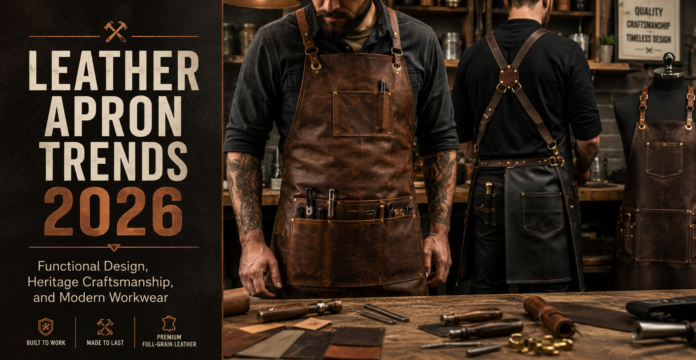
Leather aprons have always been linked with hard work, skilled hands, and long-lasting protection. In 2026, however, they are becoming much more than simple protective clothing. Workers, craftspeople, chefs, barbers, woodworkers, welders, artists, and workshop owners are looking for aprons that protect the body while also feeling comfortable and looking professional. Leather apron trends 2026 show a clear move toward lighter designs, better strap systems, useful pockets, natural leather finishes, and shapes made for specific jobs.
Another reason for this change is that buyers now think more carefully about how workwear performs during a full working day. A beautiful apron is not enough if it feels heavy after two hours or makes tools difficult to reach. Modern leather apron trends 2026 combine traditional leather-making skills with practical details such as adjustable straps, reinforced tool areas, divided pockets, comfortable waist systems, and durable stitching. The result is workwear that keeps the strong heritage look of leather while making everyday work easier.
Leather Apron Trends 2026: Function Comes Before Decoration
One of the strongest leather apron trends 2026 is the move toward functional design. In the past, some leather aprons were made mainly around appearance, with thick leather and simple straps. Today, buyers expect the design to match the actual job. A chef may need a lighter apron with easy-access pockets, while a metalworker may want greater body coverage and stronger leather. Barbers, craftsmen, florists, and woodworkers can also need very different pocket positions and apron lengths.
This focus on function can be seen across modern leather apron collections, where full-length, waist-length, bib, and work-focused styles can serve different users. Instead of creating one apron and expecting it to work everywhere, manufacturers are developing designs around real tasks. This makes leather apron trends 2026 more practical because every strap, pocket, panel, and fastening can have a clear purpose rather than being added only for decoration.
Heritage Craftsmanship Is Returning in a Modern Form
Traditional craftsmanship is another major part of leather apron trends 2026. Buyers continue to value the natural character of genuine leather, visible grain patterns, strong stitching, metal hardware, and carefully finished edges. These small details give an apron a handmade feeling and help it stand apart from mass-produced synthetic workwear. Heritage styling is especially popular among barbers, coffee shops, workshops, restaurants, and craft businesses that want their staff clothing to support a strong visual identity.
The difference in 2026 is that heritage style is being combined with more practical construction. For example, a traditional-looking bib leather apron can provide broad chest and body coverage while still using modern adjustable straps and carefully positioned pockets. This mix of old and new is important because buyers do not want to choose between appearance and comfort. They increasingly expect traditional leather character together with features that make the apron easier to wear throughout the working day.
Full-Grain Leather Supports the Natural Workwear Look
Material choice plays a large role in leather apron trends 2026, and full-grain leather continues to attract attention. Full-grain leather keeps much of the natural grain surface instead of removing it through heavy correction. Because of this, the leather can show small marks, grain variations, and natural texture. These details are often considered part of the material’s character rather than defects. As the apron is used, its surface may also develop a richer appearance.
For businesses that want a strong heritage image, full-grain leather aprons fit naturally into this direction. However, thickness still needs to match the intended job. A very heavy apron may provide useful protection in some workshops but become uncomfortable in a café or salon. Therefore, leather apron trends 2026 are not simply about choosing the thickest leather. The better approach is choosing the right leather weight, softness, surface finish, and construction for the work being performed.
Lighter and More Comfortable Designs Are Growing
Comfort has become one of the most important leather apron trends 2026 because many people wear an apron for several hours at a time. Traditional heavy aprons can place pressure on the neck and shoulders, especially when tools are stored in large front pockets. Modern apron designs increasingly spread the load across the shoulders, back, and waist so one area of the body does not carry all the weight. Softer leather and better pattern cutting can also help the apron move naturally with the wearer.
Cross-back straps are particularly useful because they can move pressure away from the neck. Wider shoulder straps can also feel more stable than thin straps. Some apron designs reduce material around areas where maximum protection is not needed, helping lower the total weight. These improvements show why leather apron trends 2026 are strongly connected with worker comfort. A durable apron should not only survive difficult work; it should also allow the wearer to bend, reach, walk, sit, and work without constantly adjusting the garment.
Practical Pockets Are Becoming More Specialized
Pocket design has changed significantly as leather aprons become more job-specific. A single large front pocket may still be useful for some workers, but many modern users want separate spaces for tools, phones, pencils, notebooks, scissors, brushes, measuring equipment, or small accessories. The location of each pocket also matters. If a pocket is too low, the wearer may need to bend to reach it. If it is too high, large tools may become uncomfortable when the person moves.
Leather apron trends 2026 therefore favor organized storage rather than simply adding more pockets. Manufacturers are thinking about which tools are used most often, which objects need secure storage, and which items should remain easy to remove with one hand. Reinforcement around high-stress pocket openings can also increase durability. At the same time, designers must avoid making an apron too bulky. The best modern work apron balances storage with movement, keeping essential tools close without turning the front of the garment into a heavy tool bag.
Key Features Shaping Leather Aprons in 2026
The most noticeable leather apron trends 2026 can be understood through several practical design details that are appearing across modern workwear:
- Adjustable cross-back straps help spread weight across the shoulders.
- Reinforced stitching improves strength around pockets and straps.
- Divided utility pockets keep commonly used tools organized.
- Metal hardware gives the apron a durable and traditional appearance.
- Medium-weight leather improves comfort during longer working hours.
- Full-grain surfaces provide natural texture and individual character.
- Detachable tool holders allow workers to change the apron setup.
- Smooth inner surfaces help reduce rubbing against clothing.
- Longer bib designs provide more front-body coverage.
- Waist aprons offer greater movement for lighter jobs.
- Neutral brown, tan, and black colors remain easy to match with uniforms.
- Simple branding areas make aprons useful for restaurants and workshops.
These features explain why leather apron trends 2026 are more focused on real use than unnecessary decoration. The strongest designs are usually those where every detail has a reason to exist. An extra strap should improve fit, a pocket should improve organization, and a reinforced area should support durability. When design decisions follow real working needs, the apron becomes easier to use and more valuable over time.
Natural Colors and Simple Finishes Remain Popular
Color trends in leather workwear usually change more slowly than ordinary fashion because an apron needs to look suitable for work. Black, dark brown, tan, chestnut, and other natural leather shades remain important in leather apron trends 2026. These colors are practical because they work with many uniforms and interior styles. Dark shades can also hide some everyday marks, while brown leather often develops a more visible aged character as it is handled and worn.
Surface finishes are also becoming simpler. Instead of extremely shiny coatings, many buyers prefer matte or slightly waxed surfaces that allow some natural leather texture to remain visible. This helps the apron maintain an authentic workshop or heritage look. Very decorative finishes may work in fashion-led environments, but professional buyers often prefer an apron that looks better through use rather than one that must remain perfectly clean. Natural aging can become part of the apron’s visual identity when the leather is properly cared for.
Workwear Branding Is Becoming Cleaner and More Subtle
Business branding has an important place within leather apron trends 2026, especially for restaurants, cafés, barbershops, craft studios, retailers, and hospitality businesses. An apron is one of the most visible parts of a worker’s uniform, so it can help create a consistent professional image. However, modern branding is becoming more subtle. Large printed logos can sometimes compete with the natural appearance of leather, while a smaller embossed, debossed, engraved, or stitched mark can look more refined.
Placement also matters. A small chest logo, leather patch, or discreet mark near a pocket can identify the business without making the apron feel like an advertising board. Buyers are also choosing apron colors that match furniture, packaging, signage, or staff uniforms. This approach shows that leather apron trends 2026 connect practical workwear with brand presentation. The apron still needs to protect and perform first, but its material, color, hardware, and logo treatment can help strengthen the overall look of a business.
Job-Specific Aprons Are Replacing One-Style-Fits-All Designs
Another important change is the growth of aprons designed around particular industries. A woodworker may need strong pockets for pencils, measuring tools, and smaller hand tools. A barber may prefer a cleaner and lighter design because heavy protective coverage is unnecessary. Restaurant workers may focus on stain resistance, appearance, and freedom of movement. Welders and some workshop workers can need broader coverage and a stronger material because their working environment creates different risks.
This move toward specialization is making leather apron trends 2026 more useful for professional buyers. It also encourages manufacturers to ask better questions before production begins. What does the worker carry? How many hours is the apron worn? Is the person usually standing or sitting? How much body coverage is needed? Does the apron need a bib or only waist protection? Answering these questions helps determine leather thickness, strap layout, pocket size, apron length, hardware, and reinforcement points before the final design is made.
Durability Is Being Balanced With Easier Daily Care
Leather has a reputation for durability, but long life also depends on construction and care. Leather apron trends 2026 put more attention on making aprons easier to maintain. Work aprons are exposed to dust, oils, food, wood particles, metal debris, moisture, and many other substances. Because leather cannot normally be washed like a basic fabric apron, owners need practical cleaning routines that protect the material without damaging its surface or drying it out.
Regular light cleaning is usually better than allowing dirt to build up for months. Users should follow the care instructions provided for the specific leather type and finish because different treatments can react differently to moisture and cleaners. Storage is also important. Folding heavy leather sharply for long periods may leave unwanted creases, while keeping it in an extremely damp area can create additional problems. Better care supports one of the core ideas behind leather apron trends 2026: buying workwear that can develop character rather than becoming disposable after a short period.
Conclusion: Traditional Character Meets Better Workwear Design
Leather apron trends 2026 show that the future of leather workwear is not about changing everything that made leather aprons popular. Instead, manufacturers are keeping traditional craftsmanship, natural leather character, strong construction, and timeless colors while improving comfort, fit, storage, and job-specific performance.The best aprons in 2026 will be those that feel natural during real work. Buyers should focus on suitable leather weight, useful pocket placement, comfortable straps, strong stitching, and a design made for the intended job. In this way, leather apron trends 2026 bring heritage craftsmanship and modern workwear together in a simple, practical form.
FAQs
What are the main leather apron trends for 2026?
Leather apron trends 2026 focus on functional pockets, adjustable cross-back straps, comfortable leather weights, heritage finishes, strong hardware, subtle branding, and job-specific designs.
Are full-grain leather aprons popular in 2026?
Yes. Full-grain leather remains popular because it keeps its natural grain and can develop more character with use. The correct thickness should still be selected according to the job and required comfort.
Are bib aprons or waist aprons better?
It depends on the work. Bib aprons provide more chest and body coverage, while waist aprons allow greater upper-body movement and can work well for jobs where full protection is not required.
What should buyers look for when choosing a leather apron?
Buyers should check leather type, thickness, apron weight, strap design, pocket position, stitching quality, hardware, body coverage, care requirements, and whether the design suits the worker’s actual tasks.