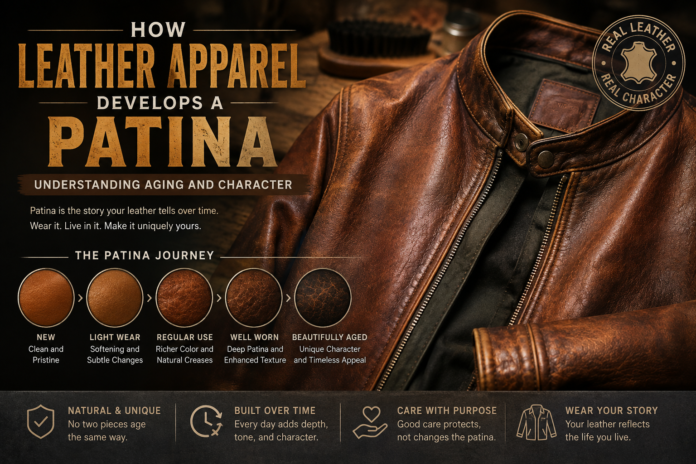
Leather is one of the few clothing materials that can become more interesting as it gets older. Instead of always looking worn out, good leather often develops deeper colors, soft shine, small marks, and natural changes that tell the story of how it has been used. This gradual transformation is called a patina. Understanding How Leather Apparel Develops a Patina can help you appreciate why an older leather jacket, coat, skirt, or pair of pants may look more attractive than it did when it was new.
Patina does not appear overnight. It develops slowly through regular wear, movement, sunlight, moisture, natural skin oils, friction, and proper care. Every leather item ages differently because every person wears and stores leather differently. That is why two jackets made from the same type of hide may look very different after several years. Learning How Leather Apparel Develops a Patina also helps buyers understand the difference between attractive natural aging and actual leather damage.
How Leather Apparel Develops a Patina Over Time
To understand How Leather Apparel Develops a Patina, think about leather as a natural material rather than a perfectly uniform synthetic surface. Genuine leather comes from animal hide, and its surface contains pores, grain patterns, small variations, and natural markings. During tanning and finishing, manufacturers protect and color the leather, but the material still reacts to the world around it. Every bend, touch, and movement can slowly change its appearance.
As leather is worn, areas that receive frequent contact usually begin changing first. Elbows, shoulders, cuffs, pockets, collars, knees, and waist areas may become smoother or slightly darker. Some parts may develop a soft shine while other areas remain more matte. Quality leather apparel often becomes more individual with regular use because these natural changes build gradually rather than appearing as one even layer across the entire garment.
What Patina Actually Means on Leather
Patina is the visual character that develops on the surface of leather through aging and use. It can include richer color, darkened areas, smoother surfaces, mild fading, soft creases, and small marks. These changes are different from serious cracking, peeling, or surface breakdown. Healthy patina normally makes the leather look lived-in and personal while the material itself remains strong and usable.
When people discuss How Leather Apparel Develops a Patina, they are usually talking about a combination of color change and surface change. A brown leather jacket may slowly develop darker brown areas around the cuffs and collar. Tan leather may gain warmer golden tones. Black leather may become slightly softer in color around folds and pressure points. These changes give the garment depth because the surface no longer looks completely flat or factory-new.
Why Natural Oils Change the Leather Surface
One of the biggest reasons leather develops character is contact with natural oils from the body. Hands, wrists, necks, and other exposed areas transfer tiny amounts of oil to leather during regular wear. These oils can slowly darken the surface, especially on unfinished or lightly finished leather. Areas that are touched more often usually show stronger changes than areas that receive little contact.
This process is important when understanding How Leather Apparel Develops a Patina because oil is rarely spread evenly across a garment. The collar may change faster than the back, while cuffs may develop character before the sleeves. On frequently worn leather jackets, these differences can create a natural vintage appearance. However, too much grease or uncontrolled oil can stain leather, so owners should avoid deliberately covering garments with household oils in an attempt to create faster patina.
How Friction and Movement Create Character
Leather clothing constantly moves with the body. Sleeves bend at the elbows, jackets fold around the waist, pants bend around the knees, and bags rub against clothing or other surfaces. Repeated movement gently changes the leather grain. Over time, some areas become softer and smoother while folds become more visible. These changes are a normal part of How Leather Apparel Develops a Patina.
Friction also affects color. The outer finish may gradually become lighter in certain places, while other areas can darken because of oils and handling. High-contact points such as pocket openings, belt areas, jacket cuffs, and bag handles often develop visible character first. The goal is not to keep leather looking untouched forever. Instead, good care allows it to age naturally without letting normal wear turn into serious damage.
How Sunlight Affects Leather Patina
Sunlight can change leather color because the surface reacts to ultraviolet light over time. Some brown and natural-colored leathers become warmer or slightly darker, while strongly dyed leather may fade in areas that receive repeated sun exposure. This is another reason How Leather Apparel Develops a Patina differs from one owner to another. Someone who often wears a jacket outdoors may see faster color changes than someone who mainly wears it indoors.
However, more sunlight does not always mean better patina. Strong and continuous sunlight can dry the leather and weaken its finish. A little natural exposure during everyday use is normal, but leaving leather clothing beside a sunny window for weeks is different. Attractive aging should happen gradually. Trying to force the process with strong sunlight may produce uneven fading, dryness, or permanent discoloration rather than the balanced character people normally want.
How Moisture and Weather Influence Aging
Leather can handle small amounts of normal environmental moisture, but repeated exposure to rain and humidity can change both its texture and color. Water droplets sometimes leave temporary dark areas, especially on absorbent leather. After drying, the surface may look slightly different from before. Over many years, normal weather exposure can become part of the garment’s overall patina.
Understanding How Leather Apparel Develops a Patina also means knowing where natural aging ends and poor maintenance begins. Leather should not stay soaked for long periods. If clothing becomes wet, it should normally be allowed to dry naturally at room temperature instead of being placed directly beside heaters or other strong heat sources. Gentle drying helps preserve flexibility and reduces the risk of shrinking, hardening, or cracking.
Different Leather Types Develop Different Patinas
Not every leather develops the same amount of patina. Full-grain leather usually shows natural grain and tends to develop strong character because its outer surface has not been heavily corrected. Top-grain leather can also age attractively, although the final appearance depends on how much sanding and finishing it received. Heavily coated leather usually changes more slowly because the protective surface separates the natural hide from everyday contact.
Leather type is especially important when learning How Leather Apparel Develops a Patina because finishing methods can completely change the aging process. A soft vegetable-tanned leather may darken and change quickly, while heavily pigmented leather may stay closer to its original appearance for years. The same principle applies to accessories such as leather bags, where handles, corners, and regularly touched areas often show the most noticeable aging.
Signs of Healthy Leather Patina
A good patina usually appears slowly and does not destroy the structure of the material. Owners should watch the overall condition of their clothing instead of judging every mark as either good or bad. Small changes can add personality, but major surface failure usually means the leather needs attention.
- Darker high-contact areas: Cuffs, collars, pockets, knees, and handles may gradually become deeper in color.
- Soft natural creases: Gentle wrinkles normally develop where leather bends during regular movement.
- A mild surface shine: Frequently touched areas can become smoother and slightly more polished.
- Small color variations: Natural leather may develop lighter and darker tones instead of remaining completely even.
- Greater softness: Well-maintained leather often becomes more flexible and comfortable with regular use.
- Minor marks: Small scratches and rub marks can blend into the overall surface and add character.
- No deep cracking: Healthy patina should not involve major splits, peeling surfaces, or severe dryness.
These signs explain How Leather Apparel Develops a Patina without confusing attractive aging with neglect. Patina should make leather look experienced and individual while the material remains strong enough for normal use.
Patina Versus Damage: Know the Difference
One of the most important lessons about How Leather Apparel Develops a Patina is that not every visible change should be celebrated. A soft crease is normal, but a deep crack may show that leather has become too dry. Gentle fading can add character, but large patches of peeling finish may indicate surface failure. A few scratches can become part of the garment’s story, while mold, strong odors, or permanent water damage require proper attention.
Healthy leather should normally remain flexible when gently moved. If it feels stiff, extremely dry, sticky, or brittle, the issue may be more than simple aging. Owners should also watch seams and stitching because even beautiful leather cannot compensate for damaged construction. Good leather care is therefore about balance. You want the garment to gain character without allowing dirt, excessive moisture, heat, or dryness to shorten its useful life.
Can You Make Leather Develop Patina Faster?
People sometimes try to speed up patina by using oils, sunlight, water, rubbing, or other treatments. This can create quick color changes, but forced aging may also produce stains or weak areas. The safest way to understand How Leather Apparel Develops a Patina is to remember that genuine patina comes mainly from normal use over time. Wearing the garment regularly gives different parts of the leather natural exposure to movement, touch, air, and light.
Artificially distressing expensive leather can be difficult to reverse. Applying too much oil may permanently darken the material, while strong sunlight can fade it unevenly. Aggressive rubbing can damage protective finishes. If you want a garment with a mature appearance, regular wear is usually better than trying to make several years of aging happen in a few days. Natural patina develops slowly, which is exactly what gives it depth and authenticity.
How Proper Care Helps Create Better Patina
Good maintenance does not stop patina. Instead, it can help leather age without becoming damaged. Remove loose dust with a soft cloth and deal with stains carefully before they become deeply absorbed. Leather cleaners should be suitable for the exact leather type because suede, nubuck, aniline leather, pigmented leather, and coated leather do not always react to products in the same way.
Conditioning can help when leather becomes dry, but more conditioner is not always better. Over-conditioning can make some leather overly soft or much darker. Storage also matters when learning How Leather Apparel Develops a Patina. Keep leather clothing in a cool, ventilated place, use a suitable hanger for jackets or coats, avoid plastic storage for long periods, and give damp leather enough time to dry before putting it away.
Conclusion
How Leather Apparel Develops a Patina comes down to time, wear, movement, natural oils, light, friction, and responsible care. Good patina gives leather deeper color, softer texture, gentle creases, and a unique appearance that reflects how the item has been used. It should develop naturally rather than being forced. When leather is cleaned, stored, and cared for properly, normal aging can become one of its most attractive features instead of something that needs to be hidden.
FAQs
What causes patina on leather apparel?
Leather patina develops through regular wear, natural body oils, sunlight, friction, movement, moisture, and age. These factors slowly change the leather’s color and surface texture.
How long does leather take to develop a patina?
There is no fixed period. Some natural and lightly finished leathers can begin showing changes within months, while heavily finished leather may take several years to develop noticeable character.
Does every type of leather develop patina?
Most genuine leather changes with age, but the amount of visible patina varies. Full-grain, aniline, and vegetable-tanned leathers normally show stronger changes than heavily coated or corrected leather.
Is leather patina a sign of damage?
No. Healthy patina includes natural darkening, soft creases, slight fading, and a smoother surface. Deep cracks, peeling, mold, severe stiffness, or major discoloration are signs of damage rather than desirable patina.