
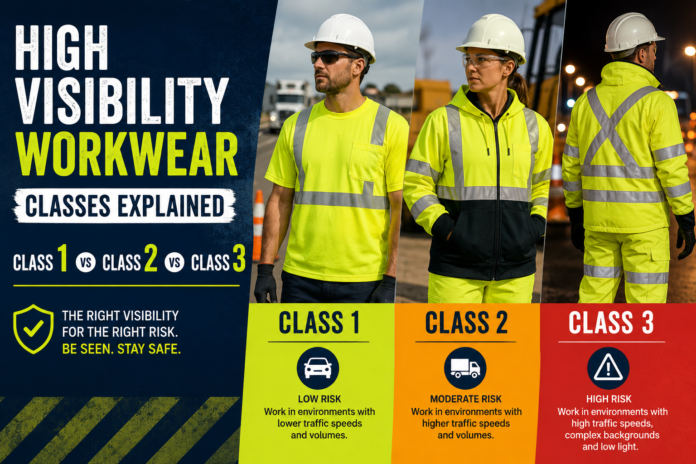
High visibility workwear is safety clothing made to help workers stay seen in places where vehicles, machines, weather, dust, or low light can create danger. It usually uses bright background fabric, such as yellow, orange, or lime, along with reflective tape that shines when light hits it. The main goal is simple: make the worker easier to notice before an accident happens. High visibility workwear classes explain how much visible material and reflective design a garment has. Class 1 gives the lowest level of visibility, Class 2 gives a medium level, and Class 3 gives the highest level. This does not mean every worker needs the highest class all the time. The right choice depends on the work area, traffic speed, weather, light, and how close the worker is to moving equipment.
High Visibility Workwear Classes: The Simple Meaning
High visibility workwear classes are like safety levels for hi-vis clothing. They help buyers, safety managers, and workers choose the right garment for the right job instead of guessing. A simple vest may be enough in a low-risk warehouse area, but it may not be enough for roadside repair, airport work, night work, or highway construction. When people shop for general workwear, they often look at comfort, pockets, stitching, and fabric strength. With hi-vis clothing, visibility level matters just as much. Class 1 is used where traffic and danger are lower. Class 2 is used where workers need more body coverage and stronger visibility. Class 3 is used where the risk is high and the worker must be seen from longer distances. This simple class system makes safety planning easier.
Class 1 High Visibility Workwear
Class 1 is the lowest level in high visibility workwear classes, but it still has a useful place. It is normally chosen for lower-risk areas where workers are separated from fast-moving traffic and heavy equipment. A Class 1 garment may be a simple safety vest or a lightweight hi-vis item used in controlled spaces. It can work for parking attendants, warehouse helpers, event staff, delivery teams, or workers in areas where vehicles move slowly. The key point is that Class 1 should not be used where the danger is serious. If traffic is fast, lighting is poor, or equipment moves close to the worker, Class 1 may not give enough warning to drivers or operators. Class 1 is best when the worker needs basic visibility, not maximum protection.
Class 2 High Visibility Workwear
Class 2 gives more visibility than Class 1 because it has more bright background material and more reflective coverage. In many workplaces, Class 2 is the most common choice because it balances safety, comfort, and daily use. It is often used for road crews, construction teams, utility workers, surveyors, airport ground staff, security teams, and outdoor workers who need to be seen from different angles. A Class 2 vest or jacket gives better body shape recognition, which means drivers and machine operators can notice the worker more quickly. Buyers looking for safer options can check hi-vis workwear when they need garments for active job sites. In high visibility workwear classes, Class 2 is usually the practical middle choice for moderate-risk work.
Class 3 High Visibility Workwear
Class 3 is the highest level in high visibility workwear classes. It is designed for high-risk areas where workers need the strongest visibility. This class is common for highway work, road construction, emergency response, railway work, night shifts, poor weather, and areas where vehicles or equipment move fast. Class 3 garments often cover more of the body, including the torso and sometimes sleeves or full-length designs. This helps show the worker’s full shape, not just a small bright area. A Class 3 jacket is easier to notice in rain, fog, early morning, evening, and dark work zones. The main benefit is reaction time. When a driver sees a worker earlier, there is more time to slow down, stop, or change direction safely.
Class 1 vs Class 2 vs Class 3
The easiest way to understand high visibility workwear classes is to compare risk level. Class 1 is for low-risk areas. Class 2 is for medium-risk areas. Class 3 is for high-risk areas. Class 1 usually gives basic visibility, Class 2 gives stronger visibility, and Class 3 gives the most body coverage and the best visibility. A worker in a warehouse yard may only need Class 1 if vehicles are slow and the area is controlled. A road worker near traffic may need Class 2 because drivers must notice them from a better distance. A worker on a highway, in bad weather, or at night may need Class 3 because the danger is much higher. Choosing the class is not about buying the most expensive item. It is about matching the clothing to the real job risk.
Why Reflective Tape and Bright Fabric Matter
Bright fabric helps during the day, while reflective tape helps when headlights or work lights shine on the garment. Both parts are important because work does not always happen in perfect daylight. A worker may begin in the morning, continue through sunset, or work during rain and fog. Bright yellow or orange fabric creates contrast against the background, while reflective strips return light toward the source. This makes the worker easier to see from a distance. In high visibility workwear classes, higher classes usually use more visible material and better body placement. Placement matters because reflective tape on the chest, waist, shoulders, arms, or legs can help show movement. When a driver sees human movement clearly, they can understand the risk faster.
How to Choose the Right Class for the Job
Choosing the right class starts with the worksite, not the product photo. Ask where the worker will stand, how close traffic or machinery will be, how fast vehicles move, and whether the worker will be outside, inside, in daylight, or in poor weather. A simple safety vest can work for low-risk tasks, but a jacket or full-body item may be better for outdoor work. For example, a high visibility jacket can give more coverage than a small vest and may be more useful in cold or windy conditions. High visibility workwear classes should also match the season. In summer, lightweight breathable fabric matters. In winter, insulated or waterproof hi-vis clothing may be safer because workers are more likely to keep it on.
Quick Selection Guide
Use this simple guide when comparing high visibility workwear classes for real jobs:
- Choose Class 1 for low-risk areas with slow vehicles and controlled movement.
- Choose Class 2 for construction sites, roadside tasks, delivery yards, and general outdoor work.
- Choose Class 3 for highways, night work, emergency tasks, railway work, and poor weather.
- Choose brighter colors when the background is dark, dirty, or busy.
- Choose reflective tape when workers may be seen by headlights or site lights.
- Choose weather-ready garments when rain, wind, or cold can affect comfort.
- Choose the correct size because loose or covered reflective tape reduces visibility.
- Replace damaged garments when fading, dirt, or broken tape lowers safety.
Common Mistakes When Buying Hi-Vis Workwear
One common mistake is thinking all hi-vis clothing is the same. A bright vest and a Class 3 jacket are not equal. Another mistake is choosing only by price. Cheap garments may look fine at first, but poor stitching, weak tape, and fading fabric can reduce safety quickly. Some buyers also ignore the job environment. A worker near fast traffic needs more than basic brightness. Weather is another big issue. If rain makes a worker remove a vest or jacket, the garment is not helping. Dirty clothing can also lower visibility because mud, oil, and dust cover the reflective parts. High visibility workwear classes should be checked before buying, and the garment should also fit the worker’s daily movement, tools, and climate.
Comfort, Fit, and Real Work Use
Safety clothing only works when people actually wear it. That is why comfort and fit are very important. A garment that is too tight can restrict movement, while one that is too loose can catch on tools or machinery. Workers may also cover reflective tape with tool belts, backpacks, harnesses, or outer layers, which can reduce visibility. Good hi-vis workwear should allow bending, lifting, walking, reaching, and long hours of movement. Breathable fabric helps in hot weather, while rainproof or insulated fabric helps outdoors. High visibility workwear classes explain visibility level, but comfort decides whether the worker keeps the garment on all day. The best choice is safe, practical, and easy to wear during real tasks.
Conclusion
High visibility workwear classes help workers and businesses choose safety clothing with the right level of visibility. Class 1 is for lower-risk areas, Class 2 is for moderate-risk jobs, and Class 3 is for high-risk work where maximum visibility is needed. The best class depends on traffic, light, weather, machinery, and the worker’s distance from danger. A warehouse helper, roadside worker, and highway crew member do not face the same risk, so they should not always wear the same level of hi-vis clothing. Good safety clothing should also fit well, stay comfortable, and remain visible after repeated use. In the end, the right hi-vis class is the one that matches the real job and helps people stay seen before danger gets close.
FAQs
What are high visibility workwear classes?
High visibility workwear classes are safety levels that show how visible a garment is. Class 1 gives basic visibility, Class 2 gives stronger visibility, and Class 3 gives the highest visibility for high-risk jobs.
Is Class 3 better than Class 2?
Class 3 gives more visibility than Class 2, but it is not always needed. Class 2 can be enough for many moderate-risk jobs, while Class 3 is better for highways, night work, and poor weather.
Can I use a Class 1 vest for road work?
A Class 1 vest is usually not the best choice for road work because road jobs often have moving traffic and higher risk. Class 2 or Class 3 is usually safer, depending on the work area.
Which high visibility class is best for construction?
For many construction jobs, Class 2 is a common choice. However, Class 3 may be better for road construction, night work, bad weather, or areas with fast-moving vehicles and heavy equipment.


