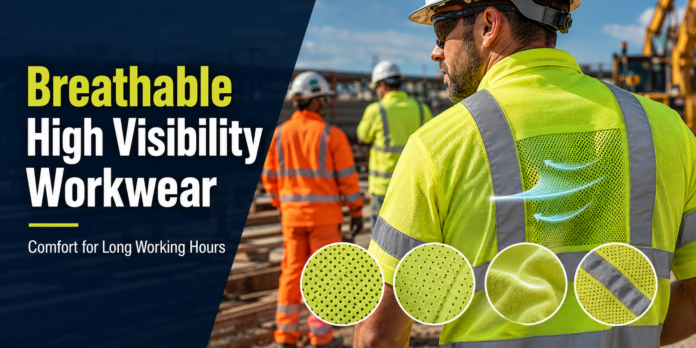
Breathable high visibility workwear is safety clothing designed to help workers stay seen while also reducing heat, sweat, and discomfort during long working hours. It is commonly used by construction workers, road crews, warehouse teams, delivery staff, utility workers, factory employees, and outdoor labor teams who need both visibility and comfort. The main purpose is simple: workers should be easy to notice in low light, traffic areas, busy job sites, and bad weather, but they should also feel comfortable enough to move, bend, lift, and work without feeling trapped in heavy clothing. Breathable high visibility workwear is better than basic safety clothing when the job involves heat, movement, long shifts, or physical effort. A worker who feels cooler and drier can focus better, move more naturally, and stay productive for longer. This makes breathable high visibility workwear useful not only for safety rules but also for real daily comfort on the job.
What Is Breathable High Visibility Workwear?
Breathable high visibility workwear means hi-vis clothing made with bright safety colors, reflective details, and fabrics that allow heat and moisture to escape. The bright colors, such as fluorescent yellow, orange, or lime, help workers stand out during daylight. Reflective tape helps them remain visible at night, near vehicles, or in low-light conditions. The breathable part comes from fabric structure, mesh panels, moisture-wicking materials, ventilation zones, lighter linings, and flexible garment design. Many workers choose breathable high visibility workwear because regular heavy jackets, vests, and trousers can become uncomfortable after a few hours. When sweat stays trapped inside clothing, the body feels hotter, the skin can feel sticky, and movement becomes harder. Breathable workwear reduces this problem by helping air pass through the garment or by moving moisture away from the body. For teams buying general work clothing, a reliable workwear collection can make it easier to choose products that match both safety and comfort needs in one place.
Breathable High Visibility Workwear for Long Working Hours
Breathable high visibility workwear is especially important when workers spend many hours outdoors, near roads, inside warehouses, or on active job sites. A short task may not make clothing comfort feel important, but an eight-hour or twelve-hour shift changes everything. Heavy clothing can cause sweating, rubbing, tired shoulders, and restricted movement. Over time, discomfort can distract workers from their tasks. A breathable design helps reduce heat stress by allowing better airflow around the body. It also helps stop the clothing from feeling wet and heavy after long use. Workers who move tools, carry materials, climb ladders, drive vehicles, or walk across large sites need clothing that supports movement without pulling tightly around the arms, back, knees, or waist. Breathable high visibility workwear gives a safer balance because it keeps the worker visible while also supporting daily performance. This is why it is not just a safety item; it is part of a better working system.
Why Breathability Matters on Hot and Busy Job Sites
Breathability matters because the body naturally produces heat and sweat during physical work. If clothing blocks airflow, that heat stays close to the body and makes the worker feel tired more quickly. On hot days, this can become a serious comfort and safety issue. Even in cooler weather, active workers can sweat under thick outer layers. When sweat cools too fast after activity stops, the worker may feel cold and uncomfortable. Breathable high visibility workwear helps control this by letting extra heat escape during movement. It can also reduce the sticky feeling that comes from wearing non-breathable materials for many hours. For outdoor teams, breathable clothing is useful in road work, construction, landscaping, transport, and utility repair. For indoor teams, it helps in warehouses, loading areas, workshops, and factories where workers may not face direct sun but still deal with heat from movement and equipment. This makes breathable high visibility workwear a smart option across many working conditions.
How Hi-Vis Colors and Reflective Details Improve Safety
The safety value of breathable high visibility workwear comes from two main features: fluorescent color and reflective material. Fluorescent colors help workers stand out during the day because they look brighter than normal clothing colors. Reflective tape works by bouncing light back toward the source, such as vehicle headlights, site lights, or torches. This helps drivers and equipment operators notice workers sooner. Breathable high visibility workwear should not lose visibility just because it is lighter or more comfortable. The garment still needs strong color placement and clear reflective zones around the body. Jackets, vests, trousers, and coveralls are often designed with reflective strips across the chest, shoulders, arms, legs, or back so the worker can be seen from different directions. A good hi-vis workwear range can help buyers compare options made for different job roles, weather needs, and visibility levels. Comfort should never replace visibility; the best design gives both together.
Fabric Features That Make Hi-Vis Clothing More Breathable
The fabric used in breathable high visibility workwear has a big effect on how comfortable the clothing feels during long shifts. Lightweight polyester is common because it dries quickly and holds bright safety colors well. Mesh fabrics are useful for vests because they allow more airflow. Moisture-wicking materials help pull sweat away from the skin so the worker feels drier. Some jackets use breathable membranes that reduce rain entry while still allowing some vapor to escape. Vent panels under the arms, across the back, or inside the lining can also improve airflow. Soft inner fabric can reduce rubbing, especially around the neck and arms. Stretch panels may help workers bend and reach without feeling restricted. Breathable high visibility workwear should also be strong enough for daily use, because job sites can be rough. The best fabric is not only light; it must also resist tearing, hold color, keep reflective tape secure, and stay comfortable after repeated washing.
Best Garment Types for Different Work Conditions
Different jobs need different types of breathable high visibility workwear because each worksite has its own risks, weather, and movement needs. A safety vest is often the easiest choice for warm weather or indoor work because it is light and quick to wear over normal clothing. A hi-vis T-shirt or polo can be better for hot conditions because it gives visibility without adding an extra layer. A breathable jacket is useful when workers need wind or light rain protection. Rainwear is important when the job continues during wet weather, but it should still include ventilation where possible so workers do not overheat. Trousers or coveralls may be needed when visibility is required from head to toe. Gloves, jackets, and layered workwear can support workers who handle tools, materials, or outdoor duties. For teams needing outerwear, a high visibility jacket can be useful when the job requires both upper-body visibility and weather protection during long working hours.
Key Features to Look for Before Buying
When buying breathable high visibility workwear, the best choice depends on the job environment, shift length, weather, and worker movement. A product may look bright, but it also needs practical comfort features for real work. Buyers should check the garment carefully instead of choosing only by color or price. Breathable high visibility workwear should support safety, comfort, and durability at the same time. Important points include:
- Choose lightweight fabric for hot or active work.
- Look for mesh panels or vents for better airflow.
- Pick moisture-wicking fabric to reduce sweat buildup.
- Check reflective tape placement from front, back, and sides.
- Choose the right fit so workers can bend and stretch easily.
- Use breathable rain layers when wet weather is common.
- Select durable stitching for rough job sites.
- Make sure the garment can handle repeated washing.
This simple checklist helps companies choose breathable high visibility workwear that workers are more likely to wear properly every day.
Fit and Movement: Why Size Matters More Than People Think
Fit is one of the most important parts of breathable high visibility workwear because even a good fabric can feel uncomfortable if the size is wrong. Clothing that is too tight can restrict arm movement, shoulder rotation, bending, and lifting. Clothing that is too loose can catch on tools, machinery, or site materials. The right fit gives enough space for movement without looking baggy or unsafe. Workers who wear layers underneath should choose outer garments with enough room for those layers. Sleeve length, body length, shoulder width, and waist comfort all matter during long shifts. Breathable high visibility workwear should also allow natural body movement when workers climb, kneel, carry, drive, or reach overhead. A good fit helps the breathable fabric work better because air can move properly through the garment. It also reduces rubbing around the neck, underarms, and waist. For companies, correct sizing can improve worker satisfaction and reduce complaints about uniforms.
Common Mistakes When Choosing Hi-Vis Workwear
A common mistake is choosing breathable high visibility workwear only because it looks bright in photos. Bright color is important, but it is not the full story. Some garments are visible but too heavy for hot conditions. Some are lightweight but not durable enough for daily site use. Some rainwear keeps water out but traps too much heat inside. Another mistake is using one type of garment for every worker, even when job roles are different. A road worker, warehouse picker, machine operator, and outdoor maintenance worker may need different clothing features. Companies also sometimes ignore washing care, which can reduce fabric performance and reflective quality over time. Breathable high visibility workwear should be selected based on real work conditions, not just general safety needs. Buyers should think about heat, rain, movement, shift length, job hazards, and how often the clothing will be worn. The right choice saves money because workers use it longer and wear it more consistently.
Conclusion
The best breathable high visibility workwear is the one that matches the worker’s environment, movement, and shift length while keeping visibility strong. For hot indoor or outdoor work, lightweight hi-vis shirts and mesh vests can be the most comfortable. For road crews, construction teams, and outdoor workers, breathable jackets, rain layers, and reflective trousers may be better. For long working hours, comfort should never be treated as a small detail because uncomfortable clothing can reduce focus and make workers less willing to wear safety gear correctly. Breathable high visibility workwear is better when it offers airflow, moisture control, smart fit, strong reflective placement, and durable stitching. Companies should choose clothing that helps workers stay visible, dry, cool, and free to move. In the end, breathable high visibility workwear is not only about meeting safety needs; it is about helping people work better, safer, and more comfortably every day.
FAQs
What is breathable high visibility workwear?
Breathable high visibility workwear is safety clothing made with bright colors, reflective details, and fabrics that allow heat and moisture to escape. It helps workers stay visible while feeling cooler and more comfortable during long working hours.
Is breathable high visibility workwear good for summer?
Yes, breathable high visibility workwear is a good choice for summer because it can reduce heat buildup and sweat discomfort. Lightweight fabrics, mesh panels, and moisture-wicking materials are especially useful in hot weather.
Can hi-vis rainwear also be breathable?
Yes, some hi-vis rainwear is designed with breathable membranes, vents, or lighter linings. It helps protect workers from rain while reducing the trapped heat that often happens with basic waterproof clothing.
Which workers need breathable high visibility workwear most?
Road workers, construction crews, warehouse teams, delivery drivers, utility workers, and outdoor maintenance staff often need breathable high visibility workwear because they work long hours in active or risky environments.