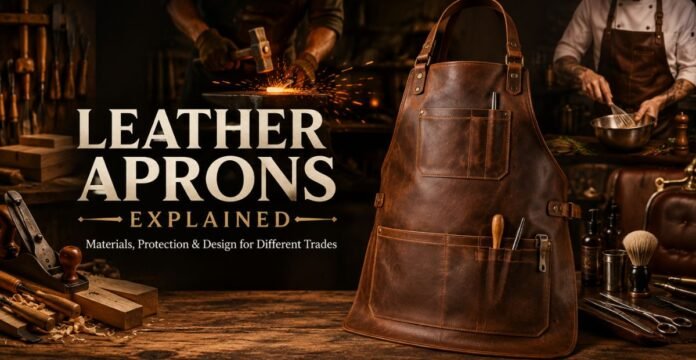
Leather aprons are made of leather as a protective layer when exposed to situations with heat, sparks, sharp instruments, dirt, oil, and rough surfaces. Leather aprons act as a barrier between the worker and the task. Leather aprons are used in many occupations such as woodworking, welding, blacksmithing, barbershops, and baristas, as well as, in the crafting, mechanical, and kitchen industries. Leather aprons offer the benefit of staining and stiff surface protection against typical fabrics.
Why Leather Aprons Are Used for Work
Leather aprons are popular because leather combines protection with long service life. The material can resist everyday rubbing, small sparks, workshop dirt, and contact with rough surfaces better than many lightweight fabrics. A worker who regularly handles tools may also benefit from pockets that keep small items close at hand. Buyers comparing different leather aprons should therefore check coverage, pocket position, strap design, leather weight, and intended application instead of choosing only by color. Leather aprons are not identical, and an apron made for a café may be much lighter than leather aprons made for welding or metalworking.
Leather Aprons Materials and Leather Quality
Leather aprons can be produced from full-grain, top-grain, split, suede, or other processed leather depending on the required price, feel, and protection level. Full-grain leather keeps more of the natural hide surface and is generally selected when durability and natural character are important. A full-grain leather apron can be useful for buyers who want strong leather with visible grain and the ability to develop a natural patina. Split leather is often used for heavier workshop leather aprons because it can provide useful heat and abrasion protection at a different cost level. The best choice depends on the trade, because leather aprons for fashion-focused hospitality work do not need exactly the same material as industrial leather aprons.
How Thickness Changes Protection and Comfort
As with most things, leather thickness greatly influences feeling and protection. Thicker leather is more protective, while offering less freedom of movement and weighing a lot more. This tends to indicate a heavier, bulky apron is best suited for a trade that involves rough surfaces and hot metal, sparks, and/or heavy and dangerous tools. Barbers, baristas, florists, and artists, for example, where the trade involves less risk and more movement, would appreciate a thinner, lighter leather apron. More thickness does not guarantee an apron is better.
Bib, Waist, and Coverage Designs
The shape of leather aprons determines which areas of the body receive protection. A bib apron covers the chest, stomach, and upper legs, making it useful for workshops, welding, cooking, woodworking, and other tasks where debris can reach the upper body. For example, a bib leather apron provides more upper-body coverage than a waist-only style while still allowing the worker to move their arms freely. Waist leather aprons mainly protect the lower torso and upper legs and can be more suitable for servers, bartenders, craftsmen, and workers who need easy access to tools. Buyers should choose leather aprons by actual exposure area rather than style alone.
Key Features to Check Before Buying
- Leather type: Choose leather aprons made from leather suitable for the level of heat, abrasion, dirt, and daily wear involved.
- Coverage: Check whether chest, waist, thighs, or knees need protection before selecting the apron length.
- Thickness: Heavier leather aprons usually offer more physical protection but can also feel warmer and heavier.
- Straps: Cross-back straps can spread weight across the shoulders better than some simple neck-strap systems.
- Pockets: Select pockets according to the tools actually carried instead of choosing the largest number of pockets.
- Hardware: Rivets, buckles, D-rings, and clips should be strong enough for repeated workshop use.
- Stitching: Reinforced stitching is important around pockets, straps, edges, and other high-stress areas.
- Fit: Leather aprons should provide useful coverage without limiting bending, reaching, walking, or sitting.
Leather Aprons for Welding and Metalworking
Leather welding aprons serve a greater purpose than decorative or hospitality leather aprons. Welding, metalwork, and fabrication sparks, metal particles and shavings, grinding particles, and other elements when working with metal can quickly destroy regular clothing. A leather welding apron should have construction suitable for the trade and cover the front and leg areas of the worker. Thick, strong leather stitching, and a low number of large, simple pockets will help keepission from getting inside the apron. As a trade apron, leather apron help protect the front of the body from outdoor elements, but its protection does not stop at the apron.
Leather Aprons for Woodworking and Craft Trades
To find the right balance for protection, storage and movement, leather apron for woodworking and related crafts cover the clothes from the workshop dirt, glue, stains, and sawdust from contact with tools and other light workplace elements. Leather apron can have plenty of well placed pockets with accessory slots and tool holders for easy access to frequently used small tools. Too many tools in apron pockets can make leather aprons heavy and not as wearable. Adding a strap that goes over the shoulders can help distribute the weight.
Leather Aprons for Kitchens, Baristas, and Hospitality
Leather aprons look professional and durably provide what customers see. They provide more comfort, stain protection, appearance, and storage than heat resistance and are more commonly used by chefs, baristas, and bartenders. The apron design also should allow for easy movement between workstations and faster service as thin apron designs tend to do. Hospitality leather apron should also focus on adjustable straps because one design could be needed to fit many sizes. Leather should not be treated like a washable kitchen cloth.
Choosing Color, Straps, Pockets, and Hardware
The performance of leather apron depends on the design. The clear professional appearance of black leather helps conceal some workshop marks, and brown leather will show the natural grain and changes in color and patina. Poorly designed straps can cause neck or shoulder pain. There are many designs that incorporate neck straps, cross-back straps, waist belts, buckles, clips or adjustable hardware to closing systems. Pocket size should be based on the equipment. Reinforced pockets for leather apron are needed to carry large tools.
Care and Long-Term Performance
Proper care helps leather apron stay flexible and usable for longer. Dust and dry debris should be brushed away regularly, while small spills should be wiped before they soak deeply into the leather. Leather apron should not normally be placed in a washing machine unless the manufacturer specifically states that the material is washable. Strong detergents and long periods of soaking can remove oils and leave leather hard or damaged. When leather apron become wet, they should usually be allowed to dry naturally away from strong direct heat. Suitable leather conditioners may help maintain flexibility, although care products should always match the leather finish. Regularly inspect straps, rivets, stitching, pockets, and buckles for wear.
Conclusion
Leather aprons are protective clothing for a variety of professions from woodworking and welding to culinary and workshop use. The best leather aprons are the ones that fit your budget and the risks you face at work. Full-grain leather is a great choice. It can help save money in the long run and provide character to your leather apron. There are many great leather constructions that can help give leather aprons a specific performance at a certain price. When comparing leather constructions and aprons, you must look at the leather, the thickness of the leather, the coverage of the apron (waist vs. bib), the straps, hardware, stitching and of course the care instructions.
FAQs
What are leather aprons used for?
Leather aprons are used to protect the front of the body and clothing from sparks, dirt, sawdust, grease, stains, rough materials, and light tool contact. Common users include welders, woodworkers, blacksmiths, craftsmen, baristas, chefs, and workshop workers.
Which leather is best for leather aprons?
Full-grain leather is a strong choice when durability, natural grain, and long-term use are priorities. Split and other leather types can also work well depending on the trade, required protection, apron weight, and budget.
Are leather aprons good for welding?
Yes. Heavy-duty leather aprons can provide useful protection against welding sparks, grinding debris, and hot particles. However, an apron should be used together with the other protective equipment required for the welding task.