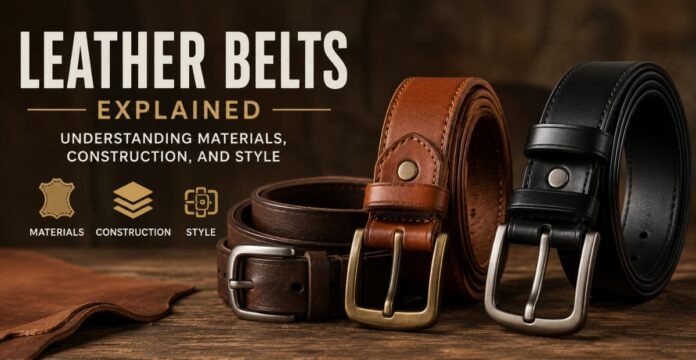
Even though leather belt might look simple, there is a lot more to them. The type of leather, how it is tanned and finished, the edge, the stitching, hardware, and the method of construction all affect the belt’s appearance and how long it will last. Good quality leather belts are extremely versatile and work well with casual and dress clothes, work clothes, and everything else. Knowing the different aspects of basic construction of belts helps you understand the differences between available belts and how they are constructed.
What Are Leather Belts?
Leather belts are accessories made mainly from natural leather and designed to fit around the waist. They are commonly used to hold trousers in position, improve the appearance of an outfit, or support tools and work accessories. The broad category of leather belts includes many designs, from narrow fashion belts to thick work belts. Although two leather belt may look similar at first, their material quality and internal construction can be very different. The leather source, tanning method, thickness, buckle, stitching, and finishing process all influence the final product. This is why understanding construction is useful when comparing leather belt for fashion, daily wear, or professional use.
Leather Belts and the Materials Used to Make Them
The most common hide used in making belts is cowhide. While there are many reasons for this, strength, flexibility, affordability, and durability are the most important. The quality of a hide of any material depends on the part of the hide as well as the processing it endures. Full-grain leather, for example, retains more of the original hide than other leathers. Corrected leather is processed by sanding and coating. Leather is graded based on which part of the hide it is made from. Split hides usually endure extra processing.
Why Full-Grain Leather Is Popular for Belts
Full-grain leather is widely valued because the strongest natural surface of the hide remains largely intact. A properly made full-grain leather belt can develop natural character as it ages rather than simply looking worn out. Small grain differences, marks, and variations may remain visible because the surface has not been heavily corrected. These details are normal characteristics of genuine hides. Full-grain leather belts are often chosen when durability and natural appearance are important. However, the leather grade alone does not guarantee a good belt. Thickness, cutting accuracy, buckle quality, edge finishing, and stitching still have a major effect on overall performance.
How Leather Belt Construction Affects Quality
The construction of a leather belt can be fairly complex based on functionality, but even the simplest design requires more than just one piece of leather. Even the simplest of leather belts needs to be made of at least two layers, the outer leather layer and the lining or reinforcing layer. The edges of leather belts can be finished in many different ways, some use a burnished edge, some paint the edge, and some even fold or stitch the edge. Properly constructed leather belts should be able to withstand the stress of opening and closing many times without fraying the leather that surrounds the holes.
Important Features to Check in Leather Belts
When comparing leather belts, it helps to inspect each important part separately instead of judging the product only by its color or surface finish.
- Leather type: Check whether the belt uses full-grain, top-grain, corrected, split, or another leather construction.
- Thickness: The leather should have enough body for the intended use without becoming unnecessarily stiff.
- Buckle: Check the buckle material, finish, attachment, shape, and overall strength.
- Stitching: Stitches should appear straight, balanced, and secure where stitching is part of the construction.
- Edges: Look for smooth, properly finished edges without rough fibers or uneven coating.
- Belt holes: Holes should be clean, evenly spaced, and properly positioned.
- Width: Belt width should match the intended trousers, workwear, or fashion use.
- Finish: Surface color and coating should look consistent while still matching the intended leather character.
- Flexibility: Good leather belts should bend naturally without feeling weak or excessively rigid.
- Sizing: The length and hole positions should provide a comfortable and practical fitting range.
Leather Belts for Men and Everyday Styling
Men’s leather belts are commonly designed around practical everyday use, although their appearance can range from formal to rugged. A simple leather belt for men may use a clean buckle, moderate width, and smooth finish for trousers or office clothing. Casual leather belts can be wider and may include heavier buckles, visible stitching, textured surfaces, or distressed finishes. Brown leather often works naturally with denim and earthy colors, while black leather is commonly paired with darker trousers and formal clothing. The best style depends on the outfit, but balanced proportions matter. Very thick leather belts can look heavy with formal trousers, while extremely narrow belts may feel out of place with rugged clothing.
Work and Tool Leather Belts
Certain leather belts are not for formal wear. These functional styles need to carry a lot of weight comfortably and often come in thicker leathers or have reinforced stitching and strong hardware. Additional layers and attachment points for tool pouches add to their tool belt functionality. Work leather belts should also distribute weight to reduce discomfort during long durations of work. Although a fashion belt may contain the same leather as a tool belt, their construction will be much different.
Women’s Leather Belts and Fashion Design
There are many combinations of widths, shapes, finishes, and types of buckles for women’s leather belts. Some styles are designed to hold waistbands, but other designs are used for creating belts for dresses, coats, and oversized tops. From a design perspective, narrow leather belts can create a light and airy feel while wide belts can ground an outfit. Leather belts can be an excellent design element. Decorative buckles, leather belts in unconventional colors with leather embossing, textured finishes, and shaped leather belt straps, give designers more license to be creative.
How Thickness, Edges, and Buckles Change Leather Belts
The way leather provides the structure of a belt and the way it is finished directly impacts the look and feel of the whole piece. When it comes to leather thickness, thinner walls are easier to carry and work for more dress-y styles, while beefier leathers are sturdier. Edge finishes add or detract from the overall look too. Thin and unfinished edges look rough, even if you have a nice-looking belt. The style and strength of the hardware is important when considering the overall look of the belt. If you are going for more formal, polished look, then a small, polished buckle is your answer.
Choosing Leather Belts for Different Uses
Knowing what you are going to use it for will dictate what sort of leather belt you will want. Generally speaking, formal belts need a bit more control when it comes to surface, thickness, edges, and the buckle. A belt can still be casual, and even work, while using more visible grains and a greater focus on strength with high quality leather. The main focus and care for a work belt is more utilitarian and strength centered with an emphasis on hardware. Fashion belts are more geared towards width, color, and decorative elements. The strength is more centered on the thickness too.
Conclusion
Leather belts incorporate material, construction, function and style all in one relatively simple accessory. When it comes to leather, full-grain and higher grades give the belt added character and strength. However, they also significantly inflate the price. Leather belts all possess individual construction components such as thickness, stitching and finishing, edge finishing, hole punching/placing, lining, and buckle quality that can all provide a distinguishing factor relative to the leather. Depending on the end-use, different construction characteristics are required for various leather belt designs (formal, casual, fashion, work, etc…).
FAQs
What leather is best for leather belts?
Full-grain cowhide is a popular choice for durable leather belts because it keeps the natural grain surface of the hide. However, the best material depends on the intended style, flexibility, thickness, and price range.
How can you identify good-quality leather belts?
Check the leather type, thickness, edges, stitching, buckle attachment, belt holes, flexibility, and overall finishing. These details provide a better indication of quality than appearance alone.
Are thick leather belts always better?
No. Thick leather belts can work well for casual or heavy-duty use, but thinner constructions may be more comfortable and suitable for formal or fashion styles.