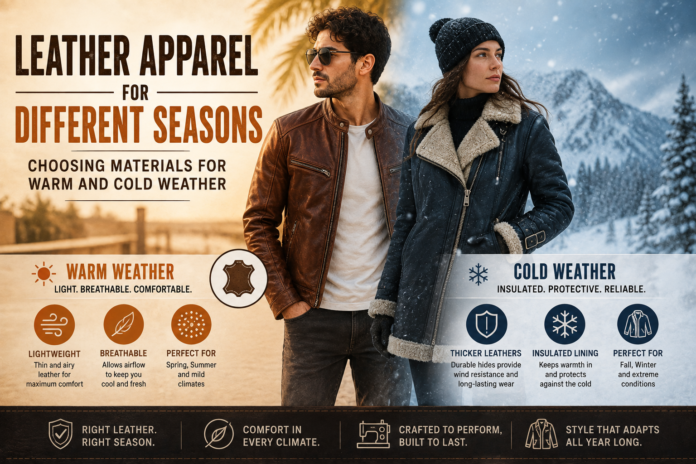
Leather can work in more than one season when the material, thickness, lining, and garment design match the weather. Heavy leather with warm lining can protect the body during cold winter days, while lighter and softer leather can feel more comfortable during spring or cool summer evenings. This is why choosing leather only by its appearance is not enough. A thick winter coat may feel uncomfortable in mild weather, while a very thin leather jacket may not provide enough warmth when temperatures fall. Good leather apparel for different seasons should balance comfort, protection, airflow, flexibility, and insulation.
The type of leather also matters because lambskin, goatskin, cowhide, and other hides have different weights and textures. People should also think about where they will wear the garment. A person walking around a city may have different needs from someone riding a motorcycle, working outdoors, or attending an evening event. Understanding seasonal conditions before buying helps you choose leather clothing that remains practical instead of sitting unused in the wardrobe.
Leather Apparel for Different Seasons: Start With Leather Weight and Construction
The easiest way to choose leather apparel for different seasons is to look at the weight and construction of the garment before focusing on color or style. Lightweight leather is usually softer, thinner, and easier to move in, which makes it useful during spring, mild autumn weather, and cooler summer evenings. Medium-weight leather offers more protection from wind and can often be worn across several months of the year. Heavy leather is thicker and usually better for winter or demanding outdoor use because it can block more cold air. However, thickness is only one part of the decision.
A garment with a thick quilted lining will feel much warmer than an unlined garment made from similar leather. Ventilation panels, perforated leather, open collars, loose cuffs, and breathable inner fabrics can also change how warm a garment feels. Buyers looking through a broad range of leather apparel should therefore compare the leather type, garment weight, lining, fit, and intended season together. A flexible seasonal wardrobe usually works better when it includes lighter pieces for mild weather and properly insulated pieces for winter rather than trying to use one heavy garment all year.
Spring Leather Should Be Light, Flexible, and Easy to Layer
Spring weather often changes during the same day. Mornings may feel cold, afternoons can become warm, and rain or wind may appear without much warning. For this reason, spring leather apparel for different seasons should normally focus on flexibility instead of maximum insulation. Lightweight lambskin, goatskin, or softer cowhide can work well because these materials allow easier movement and usually feel less bulky than thick winter leather. A lightly lined jacket can be worn over a T-shirt, shirt, thin sweater, or hoodie depending on the temperature. This gives the wearer more control than a heavily insulated coat. Short leather jackets are especially useful because they are easy to remove when the weather warms up.
Neutral colors such as black, brown, tan, and dark grey can also be paired with many spring outfits. Women may choose leather skirts or lightweight pants when conditions are dry, while men and women can both use simple jackets as an outer layer. The key is not to wear leather that traps too much body heat. Spring clothing should protect against wind while still allowing enough comfort when temperatures rise. Choosing breathable lining materials can make a noticeable difference, especially for people who walk, commute, or spend long periods moving between indoor and outdoor environments.
Summer Leather Works Best When Thickness and Heat Are Controlled
Leather is not normally the first material people think about for very hot summer afternoons, but lighter leather garments can still be useful in the right conditions. The best summer leather apparel for different seasons uses thinner hides, limited lining, loose construction, or perforated sections that allow more airflow. Lambskin is often suitable for fashion garments because it can be soft and light. Thin goatskin can also provide good flexibility without feeling as heavy as thick cowhide. Summer leather is usually more comfortable during evenings, indoor events, windy coastal conditions, or cooler climates rather than direct midday heat.
Clothing should not fit so tightly that air cannot move around the body. Light inner fabrics can help reduce the sticky feeling that sometimes develops when leather touches sweaty skin. Leather skirts, selected lightweight jackets, fashion pants, and small accessories may therefore make more sense than full heavy coats during warm months. Buyers should also remember that dark leather can become very hot when left under strong sunlight. A stylish garment is not useful if the wearer becomes uncomfortable after a few minutes. During hot weather, the best approach is to choose leather selectively and combine it with breathable cotton, linen, or moisture-managing base layers rather than relying on leather for the entire outfit.
Autumn Is One of the Best Seasons for Everyday Leather Clothing
Autumn is often ideal for leather because the weather is usually cool enough to make a leather outer layer comfortable without requiring the heavy insulation used in winter. Medium-weight leather apparel for different seasons works especially well during this period. A classic leather jacket can block cool wind while still allowing a shirt, T-shirt, knit top, or thin sweater underneath. As temperatures fall later in the season, the same jacket can be combined with thicker layers. People who want a practical autumn wardrobe may consider well-fitted leather jackets because jackets are easier to layer than many longer or more fitted garments.
Cowhide and goatskin are common choices when durability matters, while softer lambskin may suit people who prefer a smoother fashion look. Autumn is also a good time for leather pants, skirts, gloves, belts, and bags because these items can add texture to an outfit without creating too much heat. Rain is an important concern, however. Leather should not be treated like a fully waterproof rain garment unless it has been specifically designed and finished for that purpose. Light moisture may be manageable with suitable leather care, but repeated soaking can affect the finish, shape, and softness. Checking the forecast and using a proper rain shell during heavy rain can help leather clothing last longer.
Winter Leather Needs Insulation, Wind Protection, and Enough Room for Layers
Cold weather creates very different requirements from spring or autumn. Winter leather apparel for different seasons should be selected according to insulation, wind resistance, garment length, and the amount of room available for layering. Thick cowhide can provide a strong outer barrier against wind, but leather by itself does not always provide enough warmth in very low temperatures. The lining becomes extremely important. Quilted polyester, fleece, wool blends, faux fur, and other insulating materials can help hold warm air close to the body. Longer garments can also protect more of the torso and upper legs.
People who spend a lot of time outside may find insulated leather coats more useful than short fashion jackets during severe cold. The fit should be comfortable enough for a sweater or thermal layer underneath without becoming tight around the shoulders and arms. Closures also matter. Strong zippers, storm flaps, high collars, adjustable cuffs, and covered neck areas can reduce cold air entering the garment. Gloves can protect exposed hands, while leather pants may reduce wind chill on the legs. Winter buyers should therefore examine the whole garment rather than judging warmth only from leather thickness. A well-designed medium-heavy garment with effective insulation may feel warmer than a very thick leather shell with a poor lining.
Different Leather Types Perform Differently Across the Seasons
The leather type strongly affects how a garment feels during different times of the year. Cowhide is known for strength and is commonly used where durability and abrasion resistance are important. Its heavier versions can suit autumn, winter, work clothing, and motorcycle garments, although thinner cowhide can also be used for general fashion. Goatskin usually offers a useful balance of strength, flexibility, and moderate weight, so it can work across spring and autumn and in some winter garments when insulation is added. Lambskin is softer and generally associated with lightweight fashion clothing. It often feels more comfortable for spring jackets, skirts, pants, and indoor or evening use because it drapes well and does not normally feel as stiff as heavy cowhide.
Suede has a soft surface but requires more care around moisture and dirt, so weather conditions should be considered before wearing it. Full-grain leather is valued for retaining more of the natural grain, while corrected and finished leathers may have coatings that create a more uniform appearance. When comparing leather apparel for different seasons, there is no single leather type that is automatically best for every climate. Thickness, tanning, finish, lining, garment construction, and personal comfort all matter alongside the animal hide used.
Choose the Garment Style According to Weather and Daily Use
Garment style can be just as important as the leather itself. Short jackets are practical in spring and autumn because they are easy to wear over light layers and can be removed when temperatures rise. Long coats provide more body coverage during winter but may feel too warm during mild weather. Leather pants can block wind and create a structured appearance, yet thick versions may become uncomfortable during hot conditions. Skirts can provide a lighter option for fashion use, especially when paired with suitable seasonal layers. Aprons are different because their main purpose may be workplace protection rather than warmth.
Leather gloves can be useful in autumn and winter, while belts and bags can normally be used throughout the year because they do not cover large areas of the body. Good leather apparel for different seasons therefore starts with the question, “What will I use this item for?” A motorcycle rider may value abrasion protection and wind blocking. A restaurant worker using a leather apron may focus on durability and coverage. Someone buying a jacket for evenings may care more about light weight and style. Selecting clothing according to real use makes it easier to find a garment that feels comfortable instead of buying something mainly because the leather looks attractive.
Lining, Ventilation, and Layering Can Change How Leather Feels
Two leather garments made from similar hides can feel completely different if their inner construction is different. Lining helps separate the skin from the leather and can improve comfort, but the type of lining changes seasonal performance. A lightweight polyester, viscose, cotton blend, or mesh lining may work better for mild conditions because it adds little insulation. Fleece, quilted filling, and other thicker linings can make a garment suitable for colder temperatures. Removable liners are especially useful in leather apparel for different seasons because they allow one garment to handle a wider temperature range.
Ventilation is equally important in warm weather. Perforated leather, mesh sections, zipped vents, and open areas around the collar can allow heat to escape. Layering provides another simple way to adjust comfort. Instead of buying an extremely heavy jacket, some people prefer a medium-weight leather shell over a thermal shirt, sweater, or fleece during cold days. The inner layers can then be removed when temperatures become milder. This system works best when the leather garment has enough room for layering without becoming oversized when worn alone. Very tight leather may look fitted, but it can restrict both movement and the amount of clothing that can be worn underneath.
Simple Points for Choosing Seasonal Leather Apparel
When buying leather apparel for different seasons, use a few simple checks before making the final choice:
- Choose lightweight leather for mild spring days and cool summer evenings.
- Choose medium-weight leather for autumn and changing temperatures.
- Choose insulated and wind-resistant leather for winter conditions.
- Check the lining instead of judging warmth only by leather thickness.
- Look for ventilation when the garment may be worn in warmer weather.
- Leave enough room for winter sweaters or thermal base layers.
- Avoid very heavy leather if most of your climate is warm.
- Consider longer coats when you need more winter body coverage.
- Use leather gloves and other accessories to protect exposed areas in cold weather.
- Check whether the leather finish can handle occasional light moisture.
- Keep heavy leather away from long periods of strong summer sunlight.
- Select softer leather when flexibility and everyday comfort are priorities.
- Choose stronger hides when durability and outdoor protection matter more.
- Consider removable insulation if you want one garment for several seasons.
- Follow the maker’s cleaning and conditioning instructions to protect the leather.
Caring for Leather When Seasons and Weather Conditions Change
Seasonal changes can expose leather to heat, cold, sweat, rain, dust, and indoor heating, so care habits should change with the conditions. During summer, leather should be stored in a cool and ventilated place instead of inside a hot car or under direct sunlight. Excessive heat can dry the material and may affect its finish. After wearing leather in warm weather, allow the garment to air naturally before storing it because body moisture can remain inside the lining. During rainy spring and autumn days, let damp leather dry slowly at room temperature. Strong heaters and hair dryers should usually be avoided because rapid drying can make leather stiff or dry. Winter creates another problem because indoor heating can reduce moisture in leather over time.
A suitable leather conditioner may help maintain flexibility, although products should always be tested on a small hidden area first. Bags, belts, gloves, and garments may require slightly different products depending on the finish. Proper storage also matters for leather apparel for different seasons. Jackets and coats should be placed on supportive hangers rather than folded for long periods. Breathable garment covers are generally better than sealed plastic bags because leather benefits from airflow.
Conclusion
The best way to choose leather apparel for different seasons is to match the garment to the temperature, wind, activity level, and amount of layering you expect to use. Lightweight and softly constructed leather can work well in spring and on cooler summer evenings, while medium-weight jackets are especially practical during autumn. Winter usually requires thicker materials, warm lining, stronger closures, and enough space for insulating layers underneath.
FAQs
Can Leather Apparel Be Worn in Summer?
Yes. Lightweight leather can be worn during cooler summer evenings, indoor events, or mild climates. Thin leather, perforated panels, light lining, and loose construction make summer leather more comfortable. Heavy insulated jackets are normally unsuitable for very hot weather.
What Type of Leather Is Best for Winter?
Thicker cowhide and other durable leathers can work well for winter when combined with proper insulation. The lining, garment length, collar design, cuffs, and room for layering are often more important for warmth than leather type alone.
Is Lambskin Better for Warm Weather?
Lambskin is often softer and lighter than heavy cowhide, which can make it suitable for spring and cooler summer conditions. However, the final comfort level still depends on leather thickness, lining, fit, and ventilation.
How Can One Leather Jacket Work in Several Seasons?
Choose a medium-weight jacket with enough room for layering. Wear it over a light shirt during mild weather and add a sweater or thermal layer during colder days. A removable liner or ventilation system can make the jacket even more flexible.