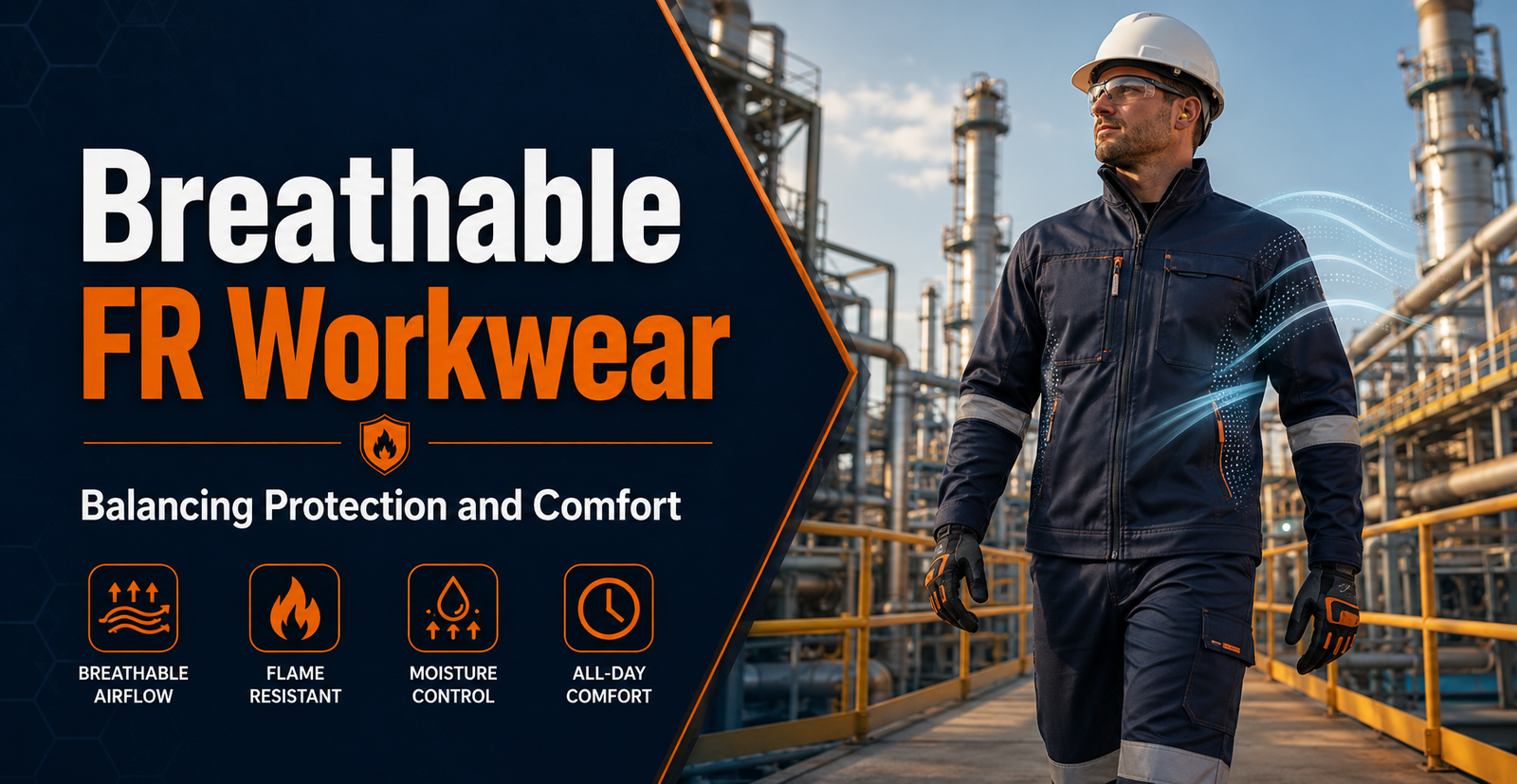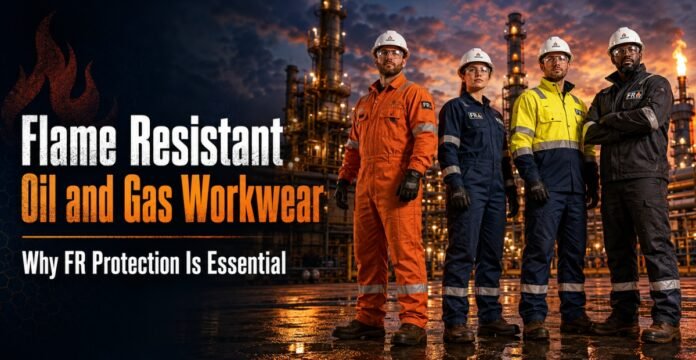
Oil and gas workers may face heat, sparks, flames, hot surfaces, and sudden fire hazards during a normal shift. A small mistake, equipment failure, or gas leak can quickly create a serious emergency. Flame resistant oil and gas workwear gives the worker an important layer of protection when these dangers appear. It is made to reduce the chance that clothing will catch fire and keep burning. The potential for hazards such as heat, sparks, flames, hot surfaces, and fire are encountered daily by oil and gas workers during the course of their normal work activities. Minor errors or failure of equipment or a gas leak can create an emergency.
Why Flame Resistant Oil and Gas Workwear Is Essential
Regular clothing can burn, melt, or stay on fire after it touches a flame. This can make an accident much worse because the clothing itself may continue harming the worker. Flame resistant oil and gas workwear is designed to resist ignition and limit flame spread. It may also stop burning after the source of heat or flame is removed.Employers should provide safe flame resistant oil and gas worker workwear as necessary workplace safety equipment, not as normal clothing. They do not take the place of safe practices, safe tools, gas checks, and safe emergency practices, but they do give an extra safe layer of protection.
Protection During Flash Fire Events
A flash fire is a fast-moving fire that can happen when flammable gas, vapor, or liquid is released and then ignited. The fire may last only a few seconds, but the heat can cause severe burns. Flame resistant oil and gas workwear helps reduce direct flame contact with the skin during this short and dangerous event. Full-body garments are especially useful because they cover more of the worker. Many companies choose oil and gas safety coveralls when they need one-piece protection for the torso, arms, and legs during demanding work. The right flame resistant oil and gas workwear can make those few seconds less harmful.
Better Coverage, Fit, and Layering
Oil and gas workers bend, climb, kneel, lift tools, and work around pipes, tanks, engines, and heavy machines. Flame resistant oil and gas workwear should cover the body properly without becoming too loose or too tight. A jacket that rides up or pants that slide down may leave skin exposed. Well-fitted oil and gas safety jackets can support upper-body coverage while allowing workers to move their shoulders and arms. Safe base layers, gloves, helmets, and boots should also work without leaving open gaps. When every part fits correctly, flame resistant oil and gas workwear provides more dependable protection throughout the shift.
Reducing Secondary Burn Injuries
One of the main dangers of normal work clothing is that it may continue burning after the first contact with fire. Some synthetic materials may also melt and stick to the skin. Flame resistant oil and gas workwear is made to reduce these secondary injuries. The material, seams, closures, and garment design should work together to control burning and keep the fabric from making the accident worse. Workers still need to leave the danger area quickly, but flame resistant oil and gas workwear can help protect them during that escape. Choosing complete garments, including suitable oil and gas safety pants, helps keep the lower body covered during active work.
Important Features to Check
- The fabric should be suitable for the heat and fire hazards found at the job site.
- The garment should cover the arms, legs, and body without leaving large open areas.
- Closures should stay secure while allowing the worker to remove the clothing when needed.
- Seams should be strong enough for climbing, bending, lifting, and repeated movement.
- Reflective details can improve visibility where vehicles and machines are moving.
- Pockets should be useful without creating loose parts that can catch on equipment.
- The fit should allow safe movement without being too tight, too loose, or uncomfortable.
- Labels and care instructions should remain clear so the garment is washed correctly.
Comfort Helps Workers Stay Protected
Safety clothing has a higher level of protection against fire and accidents when it is comfortable. Heavy, stiff, or poorly fitted workwear may cause the sleeves to be rolled up, closures to be left open, or layers to be removed. These actions can affect the protection level. The Catering and Animal Oil and Gas Workwear has to enable the range of movement of the body, the movement of a slight amount of air, and to allow the safe wearing of the underwear of the body. The fabric of the workwear has to be suitable for the various weather conditions and the various working conditions.
Visibility Around Heavy Equipment
Many of the Oil and Gas work sites contain trucks, cranes, loaders, pipes, platforms, and other moving types of machinery. The workers do a large amount of work at different times of the day, in different types of weather, and in areas that do not have enough light. In order to protect the workers, the Oil and Gas Workwear has to be made out of material that is resistant to fire.
The Oil and Gas Workwear has to be made out of material that is resistant to fire. The Oil and Gas Workwear has to be made out of material that is resistant to fire. the Oil and Gas Workwear has to be made out of material that is resistant to fire.
Care Keeps FR Clothing Working Properly
Flame resistant oil and gas workwear can lose its usefulness. Because oil and gas jobs also have different levels of risk. The same goes for a worker who is located near a drilling area versus a driver, mechanic, inspector, or warehouse worker. It is the duty of the employer to evaluate the actual tasks before purchasing. Flame resistant oil and gas workwear has safety features that must match the site rules and the level of exposure. When selecting workwear, fabric performance and Construction quality should be checked along with the size range, comfort, and how much care is required.
Choosing Workwear for the Real Hazard
Not every oil and gas job has the same risk. A worker near a drilling area may face different dangers from a driver, mechanic, inspector, or warehouse worker. Employers should study the actual tasks, heat sources, chemicals, weather, visibility, and movement needs before choosing flame resistant oil and gas workwear. The garment should match the site rules and the level of exposure. Buyers should also check fabric performance, construction quality, size range, comfort, and care needs. Selecting flame resistant oil and gas workwear only by price can lead to poor fit, short garment life, or weak protection. Safety needs must guide the final choice.
Conclusion
Flame resistant oil and gas workwear utilizes the proper technology to consider that some oil and gas sites can expose workers to sudden exposure to heat, fire, sparks, and/or flammable materials. The proper clothing can minimize burning, reduce flaming, provide a protective barrier, and help the worker escape the hazard area. However, flame resistant oil and gas workwear works best when it fits properly, stays closed, is well cared for, and best matches the real hazard. Employers should combine flame resistant oil and gas workwear with training, safe work methods, inspections, and emergency planning.
FAQs
What is flame resistant oil and gas workwear?
Flame resistant oil and gas workwear is protective clothing made to resist ignition, limit flame spread, and reduce burn injuries. It is used where workers may face fire, sparks, heat, or flammable materials.
Does FR workwear make a worker fireproof?
No. FR clothing does not make anyone fireproof. It adds protection by reducing burning and flame spread, but workers must still follow safe work rules and leave a dangerous area quickly.
How should FR oil and gas clothing fit?
It should cover the body without being too tight or too loose. The worker should be able to bend, climb, reach, and use other safety equipment without exposed gaps.