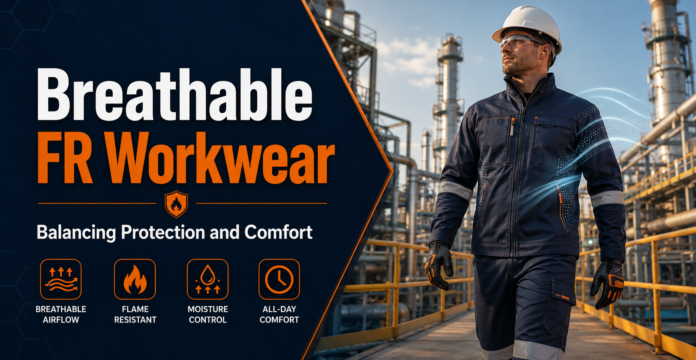
Breathable FR workwear is designed to protect workers from flame, heat, sparks, and flash fire risks while still helping the body stay cooler during long shifts. In many industrial jobs, workers do not just need strong clothing; they also need clothing they can wear for many hours without feeling trapped, sweaty, or tired. If FR clothing is too heavy, stiff, or hot, workers may open zippers, roll sleeves, or remove layers, which can reduce safety. That is why breathable FR workwear matters so much. It helps create a better balance between protection and comfort. A worker in oil and gas, welding, electrical, construction, or manufacturing work needs flame-resistant fabric that does not easily ignite, but the same worker also needs airflow, moisture control, and easy movement. Good FR clothing should feel protective without feeling like a burden. Breathable FR workwear supports safer habits because comfortable workers are more likely to wear their protective clothing correctly.
What Is Breathable FR Workwear?
Breathable FR workwear means flame-resistant clothing made with fabrics and garment designs that allow heat, sweat, and body moisture to move away from the skin more easily. The word “breathable” does not mean the clothing is thin, weak, or unsafe. It means the fabric structure, fiber blend, garment fit, and finishing are designed to manage comfort while still meeting the purpose of flame protection. Breathable FR workwear may include shirts, pants, jackets, coveralls, and other protective garments used in high-risk workplaces. Some fabrics are naturally flame resistant, while others are treated to resist ignition. The best option depends on the job risk, climate, work activity, and required safety standards. Breathability is especially important in hot weather, indoor factories, outdoor sites, and long shifts where sweat buildup can make workers uncomfortable. When breathable FR workwear is chosen correctly, it helps workers stay protected, focused, and less exhausted throughout the day.
Why Heat Stress Is a Real Workplace Problem
Heat stress happens when the body cannot cool itself properly, and heavy clothing can make this problem worse. Workers wearing protective clothing may already face heat from machines, sunlight, flames, engines, hot surfaces, or physical labor. If their FR garments hold too much heat, they can feel tired faster and may lose focus. This can lead to mistakes, slower movement, and unsafe decisions. Breathable FR workwear helps reduce this risk by allowing better air movement and moisture release. Companies choosing protective clothing should look beyond basic fabric strength and also study comfort features across the full workwear range, because safer workwear should support real working conditions, not just look good on paper. A garment that protects against fire but causes severe discomfort can still create risk if workers avoid wearing it correctly. Breathable FR workwear gives safety teams a better chance to protect workers while also supporting daily performance.
How FR Fabric Protects the Worker
FR fabric is made to resist ignition, slow flame spread, and reduce burn injury risk when exposed to flame or heat for a short time. This does not mean the clothing is fireproof, and it does not make a worker safe in every fire situation. Instead, FR clothing gives the worker more protection than normal fabric because it is designed not to continue burning easily after the flame source is removed. Breathable FR workwear must keep this protective purpose first. Comfort should never replace safety. A lightweight fabric is only useful if it still meets the required protection level for the job. Some FR garments are made from inherent fibers, meaning the flame resistance is part of the fiber itself. Others are made from treated fabrics, where a chemical process gives the material flame-resistant properties. Both types can work well when made correctly. The main point is simple: breathable FR workwear should help the worker feel more comfortable without reducing the flame-resistant performance needed for the workplace.
Why Fabric Weight Makes a Big Difference
Fabric weight is one of the biggest factors in comfort. A heavier FR fabric can feel stronger and may give better durability, but it can also feel hotter during long shifts. A lighter FR fabric may feel cooler and easier to move in, but it must still be strong enough for the job. Breathable FR workwear often uses a balanced fabric weight that gives protection without unnecessary heaviness. For example, FR shirts are often worn close to the body, so they should feel soft, flexible, and breathable while still offering flame-resistant performance. Workers who need daily upper-body protection may benefit from properly designed flame-resistant shirts because shirts are one of the most common base garments in FR clothing systems. The right fabric weight also depends on the weather and job type. A hot outdoor site may need lighter breathable FR workwear, while colder or harsher environments may need layered protection. The goal is not always the lightest garment; the goal is the best protection-to-comfort balance.
Fit and Movement Matter More Than Many Buyers Think
Fit plays a major role in how breathable FR workwear performs. If the garment is too tight, it can trap sweat, limit airflow, and make movement difficult. If it is too loose, it may catch on tools, machinery, or sharp surfaces. A proper fit gives the worker space to move while keeping the clothing secure and professional. Breathable FR workwear should allow bending, lifting, reaching, walking, and climbing without pulling hard on the body. Good pattern design matters here. Features like gussets, action backs, adjustable cuffs, elastic panels, and shaped knees can make a big difference in comfort. Workers should not feel like they are fighting their clothing all day. The best FR garments are designed around real work movements, not just flat measurements. Breathable FR workwear works better when the garment supports natural movement, because less restriction means less fatigue. A comfortable fit also helps workers keep sleeves down, zippers closed, and protective layers properly worn.
Moisture Control Helps Workers Stay Comfortable
Sweat is one of the main reasons workers feel uncomfortable in protective clothing. When sweat stays trapped against the skin, it can cause irritation, bad odor, chafing, and a heavy wet feeling. Breathable FR workwear helps by allowing moisture vapor to move away from the body more easily. Some FR fabrics also use moisture-wicking designs that pull sweat away from the skin and spread it across the fabric surface so it can dry faster. This is useful for workers who move a lot, work outside, or stay in warm areas for many hours. However, every moisture-control feature must be safe for FR use. Normal sportswear fabrics are not always suitable for flame-risk jobs because they may melt, drip, or burn quickly. Breathable FR workwear must use safe materials and approved construction. The goal is to keep the worker drier without creating new hazards. Good moisture control makes the garment feel lighter, fresher, and easier to wear through a full shift.
Layering Breathable FR Workwear the Right Way
Layering is important because one garment may not be enough for every workplace condition. A worker may need an FR shirt under an FR jacket, or FR pants with an FR coverall, depending on the risk level. Breathable FR workwear works best when all layers are planned together. Wearing a breathable FR shirt under a non-breathable outer layer can still trap heat. That is why companies should choose full FR clothing systems carefully, especially from a focused FR workwear category where shirts, pants, jackets, and coveralls can be matched more logically. Layering should also consider weather. In hot weather, workers may need lighter layers with better airflow. In cold weather, they may need insulation that still allows moisture to escape. The wrong layers can make workers sweat too much, and then that sweat can make them cold later. Breathable FR workwear is most effective when base layers, mid layers, and outer layers work together.
Key Features to Look for Before Buying
Breathable FR workwear should be judged by protection, comfort, durability, and fit together, not by one feature alone. Buyers should check fabric type, FR rating, garment weight, stitching strength, movement areas, sleeve and cuff design, pocket placement, and care instructions before placing an order.
- Choose FR fabrics that match the workplace hazard level.
- Select breathable materials that allow heat and sweat to escape.
- Pick a fit that allows movement without being too loose.
- Use FR shirts, pants, jackets, or coveralls based on the job risk.
- Avoid normal synthetic clothing under FR garments unless it is approved.
- Check seams, closures, cuffs, and pockets for durability.
- Make sure workers can wear the clothing correctly for a full shift.
- Choose breathable FR workwear that supports both safety and daily comfort.
Common Mistakes When Choosing FR Clothing
One common mistake is choosing FR clothing only by price. Cheap garments may look fine at first, but they can feel hot, shrink badly, wear out quickly, or fail to support real work conditions. Another mistake is choosing the heaviest garment and thinking it is always the safest. Heavy clothing may be useful in some jobs, but it can also increase heat stress if the environment is already hot. Some buyers also ignore sizing and order one standard fit for every worker. That can cause poor comfort and weak compliance. Breathable FR workwear should be selected after thinking about body movement, weather, sweat, fabric weight, and job hazards. Another mistake is mixing FR clothing with unsafe non-FR layers. A normal polyester shirt under an FR jacket can create serious risk because some synthetic fabrics may melt under heat. Breathable FR workwear works best when the full clothing system is safe, practical, and easy for workers to wear correctly.
Conclusion
Breathable FR workwear is not just about making protective clothing feel softer or lighter. It is about helping workers stay protected while also reducing heat, sweat, stiffness, and fatigue during long working hours. The best FR garments do not force workers to choose between safety and comfort. They provide flame-resistant protection while supporting airflow, moisture control, movement, and better wearability. Companies should always match FR clothing with the real hazard level of the job, but they should also listen to workers who wear these garments every day. If clothing feels too hot or difficult to move in, workers may not wear it properly. Breathable FR workwear helps solve that problem by making safety easier to follow. In the end, good FR clothing should protect the worker, support the body, and improve confidence on the job. The right choice is the one that keeps people safe, comfortable, and ready to work.
FAQs
What is breathable FR workwear?
Breathable FR workwear is flame-resistant clothing that helps protect workers from flame and heat while allowing better airflow and moisture release for comfort.
Is breathable FR workwear less protective?
No. Breathable FR workwear is not automatically less protective. It must still meet the required flame-resistant performance for the workplace hazard.
Where is breathable FR workwear used?
Breathable FR workwear is commonly used in oil and gas, welding, electrical work, construction, manufacturing, and other jobs with flame or heat risks.
How do I choose the right breathable FR workwear?
Choose breathable FR workwear by checking the hazard level, fabric weight, fit, comfort features, durability, and whether all layers are safe for FR use.