Unlike stretchy fabrics that forgive a slightly off size, leather has very little give, which makes understanding how should a leather skirt fit far more important than it is for most other wardrobe pieces. A skirt that’s too tight will feel restrictive and may crack at stress points, while one that’s too loose loses the structure that makes leather so flattering in the first place, undermining the whole point of choosing the material.
Because fit expectations shift depending on the silhouette, from a fitted pencil skirt to a relaxed A-line, knowing what to look for at the waist, hips, and length makes shopping and tailoring far more straightforward. In this guide, we’ll break down what proper fit actually looks like across the most common leather skirt styles, along with practical ways to check the fit before committing to a purchase.
Why Fit Matters More With Leather
Leather doesn’t stretch the way knit or woven fabric does, which means small sizing mistakes are far more noticeable and far less forgiving than they would be with other materials. A skirt that’s slightly too small in leather will feel stiff and restrictive almost immediately, rather than loosening up with wear the way some fabrics do, and it rarely improves significantly even after months of regular use.
This lack of natural give is exactly why understanding how should a leather skirt fit before buying matters so much. Getting the fit right from the start avoids the discomfort and awkward proportions that come from assuming leather will “give” the way other materials might over time, and it can save the expense and hassle of returns or alterations later.
How Should a Leather Skirt Fit at the Waist?
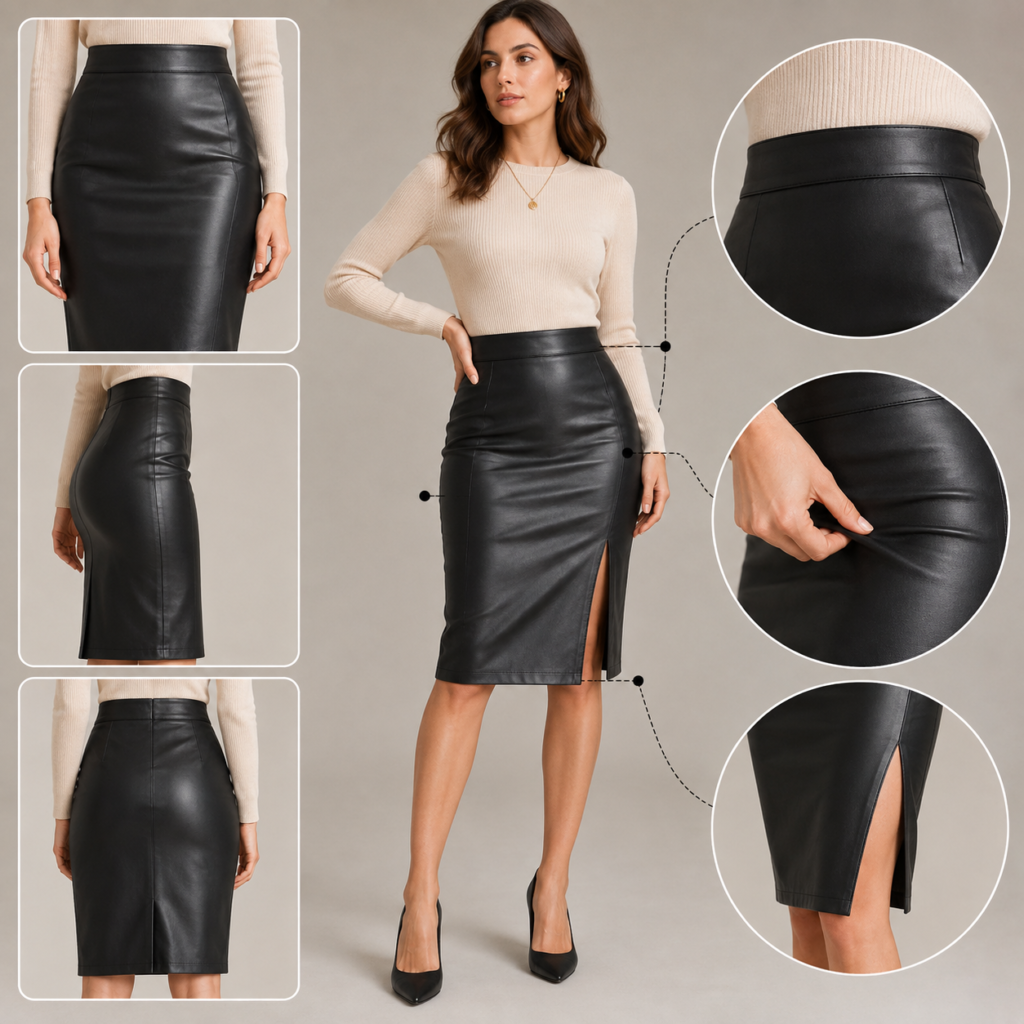
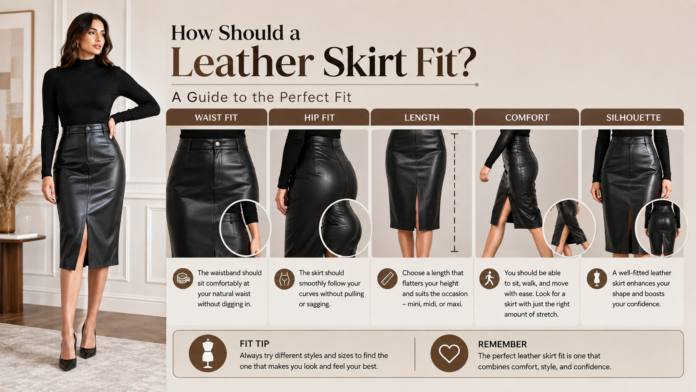
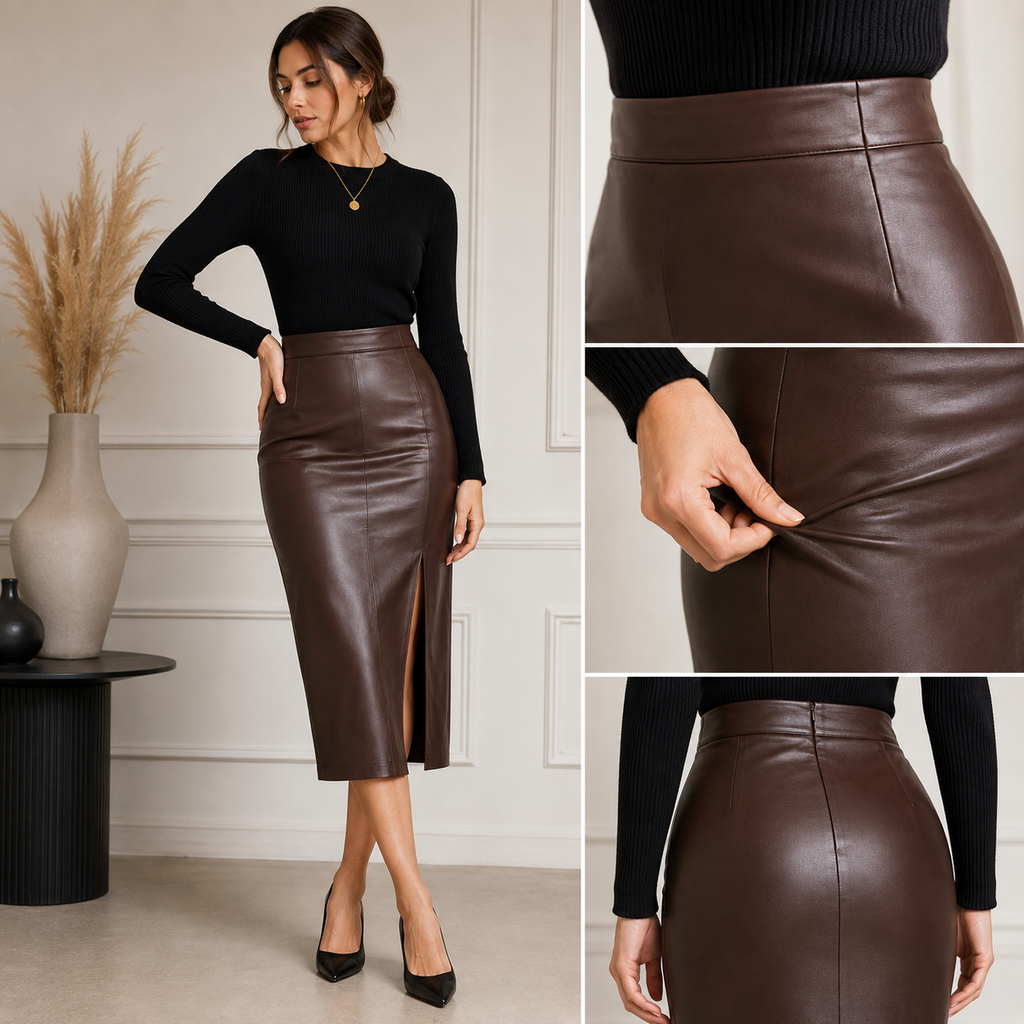
The waistband should sit comfortably without digging in or leaving visible marks after wearing the skirt for an hour or more. You should be able to fit one to two fingers comfortably between the waistband and your body, enough room to sit and move without restriction, but not so loose that the skirt shifts or slides during normal movement throughout the day.
Because leather doesn’t stretch, a waistband that feels slightly snug when standing still will likely feel too tight once you sit down, so it’s worth testing the fit in both positions before committing to a size, particularly for skirts you plan to wear for extended periods like a full workday.
How Should a Leather Skirt Fit at the Hips?
The hips are where leather skirts most commonly run into fit issues, since this is typically the widest point of the body that the fabric needs to accommodate. The skirt should skim the hips without pulling or straining across the fabric, and there shouldn’t be any visible stress lines radiating from the seams, which usually indicate the fit is tighter than the leather can comfortably handle.
For pencil skirts specifically, a small amount of built-in ease at the hips makes a significant difference in comfort, since this silhouette is already form-fitting by design and needs just enough room to allow for sitting and walking without excessive tension on the seams or hardware.
How Should a Leather Skirt Fit in Length?
Length affects both how a leather skirt looks and how practical it is to wear throughout the day. Mini skirts should allow you to sit and bend without excessive rising, while midi and maxi lengths should hang evenly around the entire hem without pulling unevenly at any single point around the body.
For pencil skirts, a back or side slit set at the appropriate depth allows for a full range of motion while walking, without which the fitted silhouette can become genuinely restrictive. Checking how the skirt moves while walking, not just standing still, is one of the most reliable ways to judge whether the length and cut actually work for daily wear rather than just looking good in a fitting room mirror.
Fit Differences Across Leather Skirt Styles
Fit expectations shift depending on the silhouette. Pencil skirts should fit closely through the hips and thighs with minimal excess fabric, while A-line skirts should skim rather than cling, flaring gently from the hip without pulling anywhere along the seams or waistband. Wrap skirts rely on the tie or buckle closure for fit, so the overlap should sit securely without gaping open during normal movement or sitting.
Because each style distributes fabric differently across the body, trying on multiple silhouettes in your usual size can reveal which cut naturally suits your proportions best, rather than assuming one universal sizing approach applies across every style equally.
Signs a Leather Skirt Doesn’t Fit Properly
Here’s a quick reference for spotting common fit issues before or after a purchase:
- Visible stress lines:Horizontal creasing across the hips or thighs signals the skirt is too tight
- Waistband digging in:Marks left after wearing for an hour indicate the waist is too small
- Excess bunching:Loose fabric pooling at the waist or hips signals the skirt is too big
- Restricted movement:Difficulty sitting, walking, or bending suggests the fit or length needs adjusting
- Uneven hem:A hem that doesn’t sit level all the way around often signals a sizing or alteration issue
Getting the Right Fit for Professional and Uniform Settings
For businesses sourcing leather skirts as part of a uniform program, consistent fit across different body types matters just as much as individual style, particularly for corporate uniforms that need to look polished and professional across an entire team of varying sizes and proportions.
Because different roles and body types require different sizing approaches, many businesses work with industry-specific work wear suppliers who can provide accurate sizing guidance and made-to-fit options rather than relying on generic, one-size-fits-most sourcing that often leads to inconsistent results.
Durability Considerations That Affect Fit Over Time
How a leather skirt fits can also change slightly over time as the material naturally softens and molds to the body. This is one reason construction quality matters just as much as initial sizing, a principle reflected in general workwear collections that prioritize durable construction capable of holding its shape through repeated wear.
For pieces worn regularly in unpredictable weather, a treated or finished leather with better moisture resistance helps the garment maintain its structure and fit over time, similar to the finishing approach used in waterproof workwear collections built to hold up against the elements.
The Role of Custom Manufacturing in Leather Apparel
As demand grows for well-fitted leather apparel, more businesses are turning to custom manufacturers who can produce leather skirts tailored to specific sizing requirements, rather than relying on generic off-the-shelf options that may not suit every body type.
At ECO-JERSEY, we manufacture and supply custom apparel including leather-based pieces and accessories to businesses around the world. Whether a company needs a full coordinated uniform program with accurate sizing across a team or individual tailored pieces, our team works directly with clients to produce apparel that matches their exact specifications.
Conclusion
Understanding how should a leather skirt fit at the waist, hips, and length makes shopping and wearing this piece far more comfortable and flattering. Because leather doesn’t stretch the way other fabrics do, getting the fit right from the start matters more than it would with a more forgiving material, and it’s worth trying on multiple sizes or styles before settling on the right one.
For businesses looking to source reliable leather apparel whether for uniform programs or branded professional wear working with an experienced manufacturer like ECO-JERSEY ensures every piece is built with the right fit and construction for the job.
FAQs
Should a leather skirt be tight or loose?
A leather skirt should fit closely without feeling restrictive, allowing about one to two fingers of space at the waist and no visible stress lines across the hips or thighs.
How do you know if a leather skirt is too small?
Signs include visible horizontal stress lines across the hips or thighs, a waistband that leaves marks after an hour of wear, and restricted movement when sitting or walking.
How do you know if a leather skirt is too big?
A leather skirt that’s too big will show excess fabric bunching at the waist or hips, and the waistband may shift or slide out of place during normal movement.
Does leather stretch to fit over time?
Leather has very little stretch compared to other fabrics, though it can soften and mold slightly to the body with regular wear, which is different from actually stretching to a larger size.