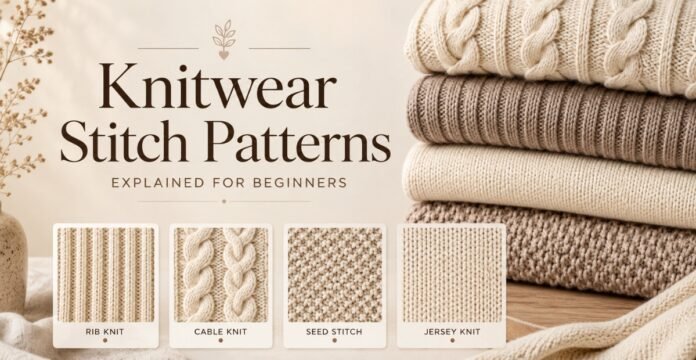
Knitwear stitch patterns create different designs in knitted clothes by looping yarn in different ways. Designers take these patterns into account when deciding on the look and feel of pullovers, cardigans, and hoodies. Some stitch patterns have a textured, raised look, while others are simple and smooth. For instance, a cable pattern gives a classic winter look while a rib pattern adds stretch. If you want to understand different knitted products in one place, you can explore the knitwear collection because it shows how different styles can use different stitch patterns in real clothing.
Why Knitwear Stitch Patterns Matter
Patterns add utility to knitwear in addition to their design. A good pattern adds warmth and comfort, while an inappropriate pattern can add heaviness and a lack of durability. Because of these trade-offs, it is important to assess a product’s stitch pattern along with its color and design. Patterns also assist in determining the type of wear the knit is designed for. For casual versus workplace wear, or even adult versus kidswear, a proper stitch pattern is also required to help garments retain their shape and structure over time.
Knitwear Stitch Patterns in Sweaters
Knitwear stitch patterns help design things like shape and warmth in a sweater. Examples of common stitch patterns used in sweaters are plain knit, rib knit, cable knit, waffle knit, and textured knit. A cable knit pattern used in a sweater helps a sweater look cozy and traditional. The texture of a plain knit sweater helps a modern and clean aesthetic. Ribbed patterns are used on cuffs, hems, and necklines to help a sweater keep its shape and improve a sweater’s fit. Ribbed patterns and a strong stitch pattern are common in a men’s sweater. A product like a knitted sweater for men is a good example of how stitch design can support comfort, structure, and everyday style.
Common Types of Knitwear Stitch Patterns
There are different patterns used in knitwear, but there are also those that are used more commonly in clothing. A plain knit pattern is the smoothest and easiest to wear. Patterns like rib knit have lines that return to shape after being stretched. Cable knit has a twisted pattern that looks thicker and more premium. A texture that looks small and box-like that is also a pattern is called a waffle knit. A seed stitch has a dotted surface and gives a soft textured feel. Knit patterns like a jersey knit are flexible and lighter and thus, more casual. The purpose of a garment and the season also affect the choice of a pattern.
Knitwear Stitch Patterns for Comfort and Fit
Stitch patterns in knitwear can impact comfort and fit. A rib stitch gives natural elasticity, so it becomes the likely choice for areas of the body requiring movement. A waffle stitch gives a nice texture but does not add much stiffness to the garment. A cable stitch can add a lot of warmth, but compared to a standard knit, it can be much heavier. A loose stitch pattern can add a lot of breathability, but a tight stitch pattern can add warmth and a more structural stiffness. This is why it is important to select appropriate knitwear based on its intended use.
Rib Stitch Pattern
Rib stitch is one of the more important knitwear stitch patterns. It creates a stretchability to the fabric along with a design of vertical lines. You will most likely find rib stitch in cuffs, waistbands, collars, hems, and more. It allows close fitting knitwear without the discomfort of tightness. It makes a garment return to its shape after stretching. This makes rib stitch essential in sweaters, hoodies, cardigans, and pullovers. A rib stitch knitwear pattern is especially important for flexible and comforted long-lasting knitwear.
Cable Stitch Pattern
One of the most intricate and signature styles of knitted patterns is the cable stitch. It gives the appearance of rope-like threads that interweave. Because of its thicker, classic signature appearance, many designers and manufacturers incorporate the cable stitch into their winter designs for cardigans and pullovers. The cable stitch elevates the design and style of the knitted apparel and also works for menswear. However, it is important to note that the cable stitch will add weight to the garment. For this reason, cable stitch is reserved and opted for cold-weather clothing and apparel where the design and style of the knitted pattern is key.
Waffle and Textured Knit Patterns
Waffle and textured knit patterns are other knitted patterns that add dimension and depth to the apparel. These patterns are also a great way to add interest to a plain garment while keeping it casual. Textured knits are often seen in womenswear in sweatshirts, cardigans, and sweaters, as they help create a stylish yet soft and cozy garment. A piece like a women’s knitted hoodie shows how a textured knit pattern can make everyday knitwear look more fashionable while still staying comfortable and practical.
Key Features of Good Knitwear Stitch Patterns
Good knitwear stitch patterns should look nice, feel comfortable, and support the garment’s purpose.
- The stitch should match the season and use.
- The pattern should not feel too rough on the skin.
- The fabric should stretch where movement is needed.
- The garment should keep its shape after wearing.
- The stitch should support warmth without making the piece too heavy.
- The design should look clean and balanced.
- The pattern should match the sweater, hoodie, cardigan, or pullover style.
How to Choose the Right Knitwear Stitch Patterns
The selection of appropriate knitwear stitch patterns is influenced primarily by the type of garment being constructed, the prevailing season, and the customer preference. For winter garments, cable, stitch patterns of ribbing, and thick, textured patterns are particularly suitable as they provide warmth and structure. For casual wear knitwear, plain stitching, waffle stitches, and softer rib patterns are more comfortable and easy to wear. In the case of knitwear for children, the stitch should be soft, flexible, and durable. This is due to the high level of movement experienced by children. For women’s knitwear, stylish textures and stitch patterns open front cardigans are a great addition.
Conclusion
Patterned stitches are important for determining the overall aesthetic and functionality of the knitwear. A plain stitch can produce the quintessential, minimalist knitwear staple. However, ribbed stitches, textured stitches, and waffle or cable stitches can produce far more elevated garments. Thoroughly assess the stitches of cardigans, pullovers, hoodies and knitwear, as the stitch impacts both the comfort and overall quality of the garment. The best knitwear stitch patterns are the ones that align with the garment’s purpose and season.
FAQs
What are knitwear stitch patterns?
Knitwear stitch patterns are different loop designs made with yarn to create texture, stretch, warmth, and style in knitted garments.
Which knitwear stitch patterns are best for winter?
Cable knit, rib knit, waffle knit, and thick textured knit patterns are good for winter because they add warmth and structure.
Are rib stitch patterns good for daily wear?
Yes, rib stitch patterns are good for daily wear because they stretch well, fit comfortably, and help the garment keep its shape.