When you’re building a fitness brand, the branding on your gear says a lot about who you are. And one of the most common questions new brand owners ask is simple: should I go with printed or embroidered gym tees? Both methods look great in photos. Both can represent your logo well. But when it comes to durability, cost, feel during a workout, and long-term brand perception — they perform very differently. If you’re ordering from an activewear manufacturer, this decision is worth getting right before you place your first bulk order.
Let’s break it all down so you can make a confident choice for your brand.
What Are Printed vs Embroidered Gym Tees, Really?
Before comparing the two, it helps to understand what each method actually involves. Printed gym tees use ink or dye applied directly to the fabric — through screen printing, sublimation, DTG (direct-to-garment), or heat transfer. Embroidered gym tees, on the other hand, use thread stitched directly into the fabric using a needle and machine to recreate your logo or design. Both printed vs embroidered gym tees have their place in the market — but they serve different brand identities and use cases. If you’re manufacturing gym t-shirts for a performance-focused line, the method you choose affects more than just aesthetics.
Durability: Which One Actually Holds Up Over Time?
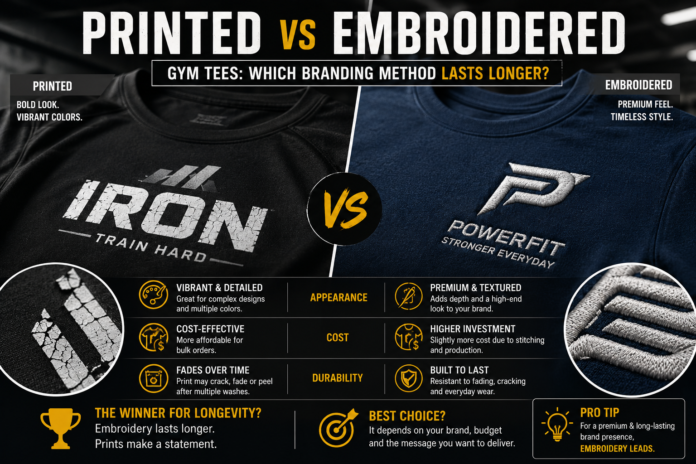
This is a common question brand owners have, and we completely understand why. You have a good amount of money on the line with branded apparel. You want that branding to last after dozens (if not hundreds) of washes. Between printed and embroidered gym tees, we have to give the edge to embroidered Printed vs Embroidered Gym Tees. Printed branding can alter the fabric, making it unwearable. With embroidery, the thread is only stitched to the fabric and does not alter it. Because of this, we can confidently say that embroidery will withstand washing, heavy use, and the treatment that gym apparel is generally put through.
Printing, however, varies a lot depending on the method. Sublimation printing — where dye is bonded into the fabric rather than sitting on top — is extremely durable and works especially well on fitness apparel made from polyester. Standard screen printing can crack over time if not done with quality inks and a proper curing process. So if you go the printing route, the quality of your manufacturer’s process matters just as much as the method itself.
Comfort and Feel During a Workout
Printed versus embroidered gym tees feel different when you are trying to comfortable enough to get a workout in. It’s not just the fabric that is raised. It’s branding that can get irritating. Gym apparel is designed for movement for lifting and running and all the workouts. So it is important to consider how a branding method feels. Something that can only irritate on a casual hoodie can feel very different on gym apparel.
Printing sits flatter against the fabric and generally doesn’t interfere with comfort. Sublimation in particular feels like part of the fabric because it essentially is — making it a popular choice for compression wear and other close-fitting performance pieces where any texture would be felt immediately.
Where Printed vs Embroidered Gym Tees Differ in Brand Perception
Here’s something worth thinking about: the branding method you choose communicates something about your brand before a customer even reads your logo. Embroidery feels premium. It signals craftsmanship, quality, and durability. Brands that position themselves in the mid-to-high price range often choose embroidery on their gym wear for exactly this reason — it looks and feels expensive.
Printing, especially sublimation or high-quality screen printing, gives you more creative freedom. Full-color graphics, gradients, photographic elements — none of that is possible with embroidery. If your brand identity is bold, colorful, and visually expressive, printing will serve you far better. Brands selling tank tops and tees with graphic designs, slogans, or all-over prints almost always go the printing route for this reason.
Cost Comparison Printed vs Embroidered Gym Tees
A brand needs to have some cost control and for new brands that is always a concern. Printing can be the more cost-effective option, especially at higher quantities. Screen-printing runs a relatively low cost with bulk production. Sublimation pricing usually works on a large enough size of a print area.
Embroidery is priced based on stitch count — the more complex and larger your design, the more it costs per piece. A small chest logo in embroidery is very affordable. A large back embroidery with a detailed design can get expensive quickly. If you’re ordering custom hoodies alongside your gym tees, embroidery on both can add up fast — so it’s worth mapping out your full product range before committing to a branding method across the board.
Which Method Works Best for Different Products?
Not all activewear is the same, and the right branding method often depends on the specific garment. For fitted, stretchy pieces like leggings, embroidery is usually a bad idea — the stitching can pucker when the fabric stretches and feels uncomfortable against the skin. Printing, especially sublimation, is the go-to for leggings and other tight-fitting performance wear.
For joggers and looser-fitting pieces, both methods can work depending on placement and design complexity. A small embroidered logo on the hip or thigh of a jogger looks clean and premium. A full sublimated print across the leg is eye-catching and bold. For gym shorts, the same logic applies — consider where the branding sits and how the garment moves before deciding.
Printed vs Embroidered Gym Tees: The Verdict on Longevity
So, what method lasts longer? In terms of physical durability, embroidery wins because thread holds up longer compared to the ink, which fades after many washes. But, with the advancement in printing technology, particularly sublimation, this field has more equality. A good sublimation print is better than a poorly done embroidery.
The more honest answer is this: longevity depends as much on your manufacturer’s quality as it does on the method. Printed vs embroidered gym tees both hold up well when produced correctly. Whether you’re building a yoga wear line or a high-performance training collection, the manufacturer you choose matters just as much as the branding technique. A skilled production team will help you pick the right method for each garment — and execute it in a way that lasts.
Tips for Making the Final Decision
Still deciding? Here are a few things to help weigh your options. One, photos are not the same as a sample of the actual fabric you plan to use. These can help tell you what material holds up better. Two, dependent on your budget, you may want to lean toward one option. If you’re a premium positioned brand, focusing on embroidery for gym tees and hoodies would benefit your brand. The opposite is true for the printing for brands with high-volume activewear. Lastly, keep in mind the design. Some logos and text can easily be done in embroidery and printed designs for more complex graphics.
And finally — talk to your manufacturer about what they actually do well. A good activewear manufacturer will be upfront about which method they specialize in and which garments each works best for. That conversation alone can save you from a lot of expensive mistakes down the road.
Final Thoughts
The printed vs embroidered gym tees debate doesn’t have a single right answer — it has the right answer for your brand. Both methods can produce high-quality, durable results when done well. The key is knowing what you’re building, who you’re building it for, and finding a manufacturing partner who can execute whichever method you choose at the level your customers expect. Get that right, and your branding will do exactly what it’s supposed to do — make people remember your brand every time they put on the shirt.
FAQs
Are printed or embroidered gym tees more durable?
Embroidery is generally more durable over time since thread doesn’t crack or peel. However, sublimation printing — where dye bonds into the fabric — is also extremely long-lasting and very popular for performance activewear. The quality of the manufacturer’s process matters as much as the method itself.
Can embroidery be used on stretchy gym fabrics?
It depends on placement and fabric type. Embroidery on highly stretchy fabrics like leggings or compression wear can pucker when the fabric stretches and may feel uncomfortable. For fitted performance pieces, printing (especially sublimation) is usually the better choice. Embroidery works well on less-stretchy areas and garments like gym tees and hoodies.
Which branding method is cheaper for bulk orders?
Printing is generally more cost-effective at higher quantities — especially screen printing, which has a one-time setup cost but a low per-unit price in bulk. Embroidery is priced by stitch count, so larger or more complex designs cost more per piece. For simple logos, embroidery is affordable; for detailed graphics, printing wins on cost.