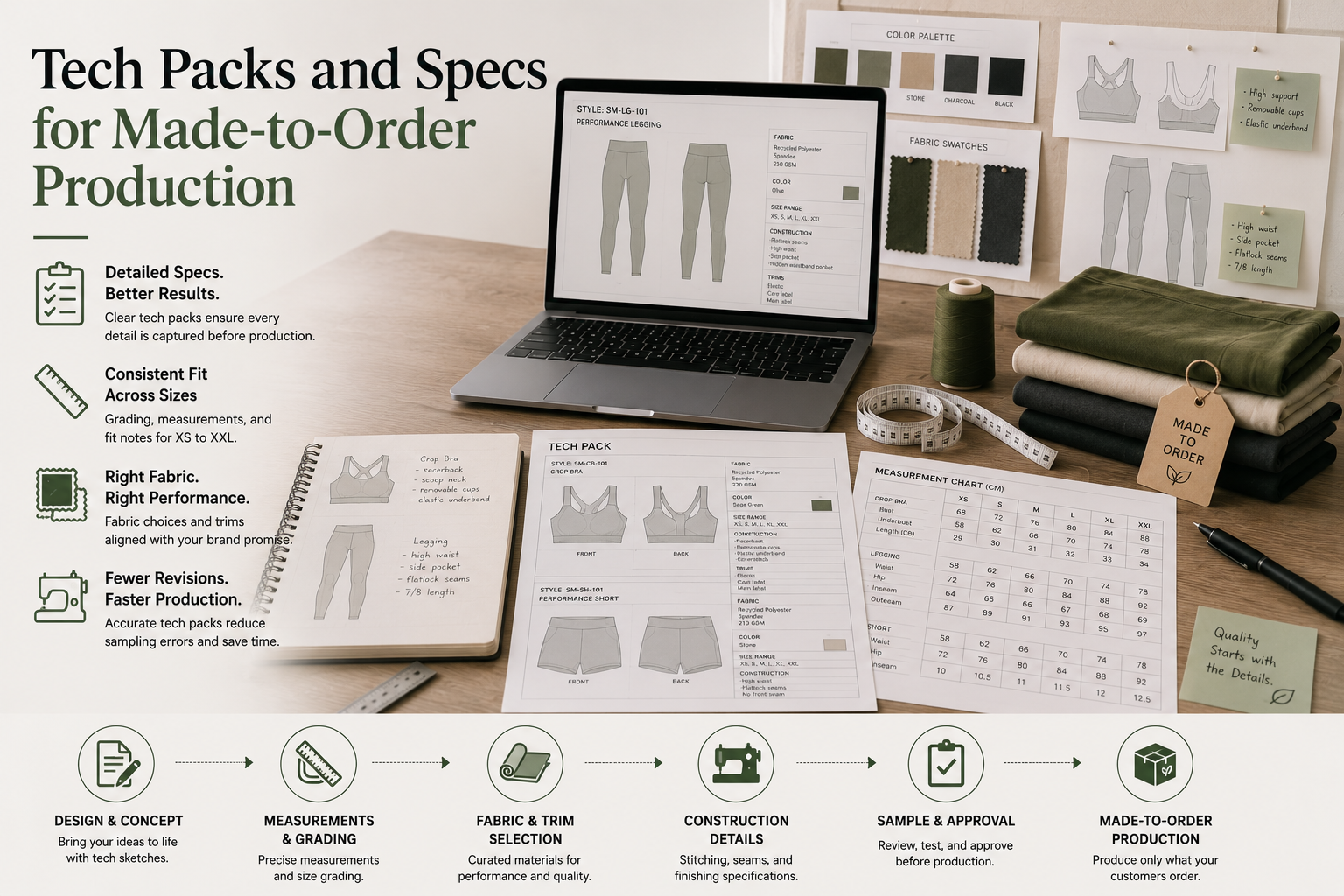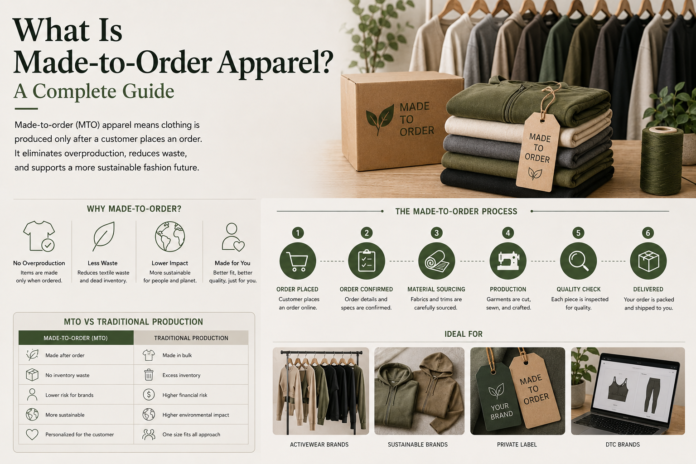
Made-to-order apparel is a production model where clothing items are manufactured only after a customer or brand places a confirmed order. In other words, nothing gets produced until demand exists. This approach stands in sharp contrast to traditional bulk manufacturing, where factories produce thousands of units upfront and then hope the market absorbs them.
As a result, what is made-to-order apparelhas gained strong momentum among fashion brands, startups, and wholesalers who want more control over their supply chain.
How Does Made-to-Order Apparel Work?
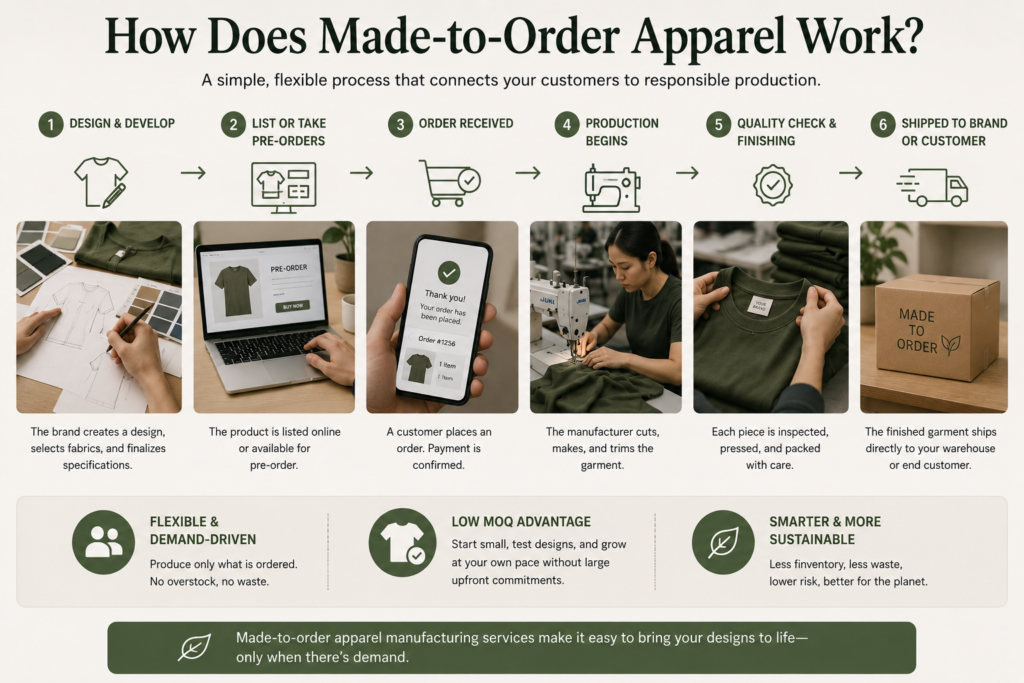
The process is straightforward. First, a brand designs a product and lists it for sale or takes pre-orders. Then, once orders come in, the manufacturer begins production. Finally, the finished garments ship directly to the brand or end customer.
This workflow connects closely with what is made-to-order apparel manufacturing services, where factories are equipped to handle flexible, demand-driven production runs efficiently.
Furthermore, this model works hand in hand with low MOQ clothing manufacturing, because brands do not need to commit to large quantities upfront. They simply produce what they sell.
Key Benefits of Made-to-Order Apparel
Made-to-order offers real, practical advantages for brands at every stage. Here are the most important ones:
- Zero or minimal overstock: Because production only begins after an order, unsold inventory becomes a much smaller problem. Brands save money, reduce storage costs, and avoid end-of-season markdowns. This is especially valuable for small brands and new product launches.
- Full customization on demand: Every garment can be made to exact specifications — specific sizes, colors, fabrics, and branding details — without committing to a fixed catalog. This makes the model a natural fit for contract clothing manufacturing arrangements where brands need tailored production agreements.
Made-to-Order vs. Bulk Manufacturing
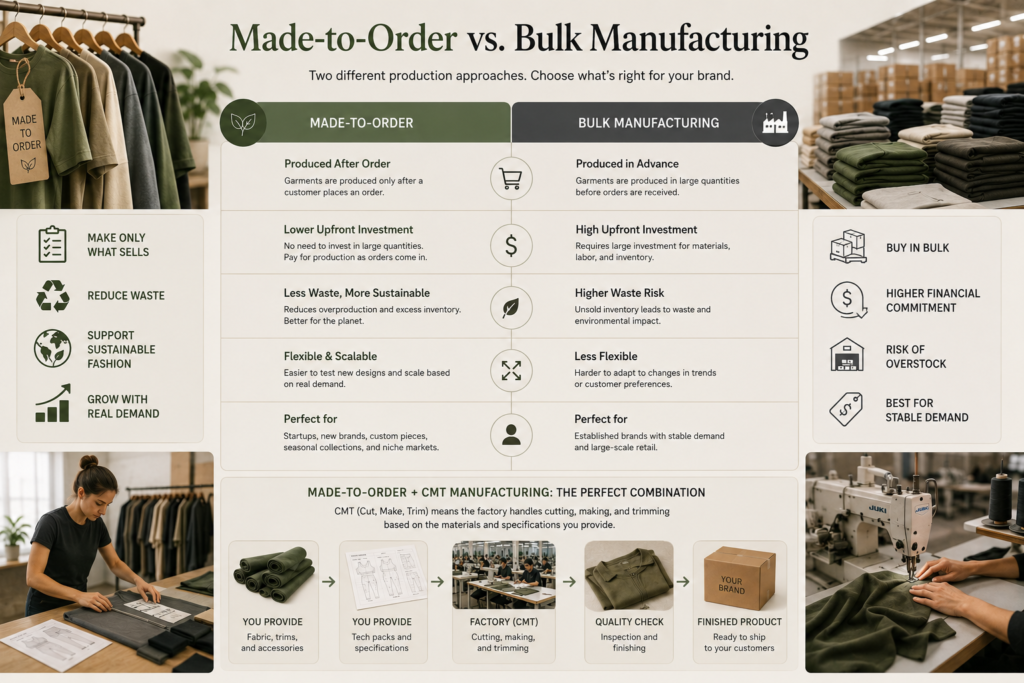
Many brands wonder whether to choose what is made-to-order apparel or traditional bulk apparel manufacturing. The answer depends on your business goals.
Bulk manufacturing works well when demand is predictable and consistent. On the other hand, what is made-to-order suits brands that want flexibility, lower upfront investment, and the ability to test new designs without financial risk.
Additionally, what is made-to-order apparel pairs naturally with CMT clothing manufacturing — where the factory handles cutting, making, and trimming based on materials and specifications the brand supplies. This gives brands creative control while keeping production lean.
The Sustainability Advantage
Made-to-order is also one of the most environmentally responsible production models available today. Because factories only produce what is needed, fabric waste drops significantly. Energy use decreases. Excess inventory — which often ends up in landfills — is largely eliminated.
This directly supports the goals of sustainable apparel manufacturing, making made-to-order an ideal choice for eco-conscious brands. Consequently, it appeals strongly to modern consumers who prefer brands with transparent, responsible supply chains.
Moreover, combining made-to-order with FPP apparel manufacturing — where the factory handles full package production including fabric sourcing, production, and finishing — creates a seamless, sustainable workflow from concept to delivery.
Who Should Use Made-to-Order Apparel?
Made-to-order works exceptionally well for:
- Independent fashion designers launching limited collections
- E-commerce brands testing new product lines before scaling
- Wholesalers and retailers seeking flexible restocking options
- Brands building sustainable, low-waste business models
In short, if your brand values agility, customization, and sustainability over mass-market speed, made-to-order is worth serious consideration.
Final Thoughts
Made-to-order apparel is not just a production method — it is a smarter way to build a brand. It reduces financial risk, supports sustainability, and gives you full control over your product. Whether you are a startup or an established brand exploring new strategies, this model offers a clear path to more intentional, efficient manufacturing.
FAQs
What is made-to-order apparel?
Made-to-order apparel refers to clothing that is produced only after a confirmed order is placed. Nothing is manufactured in advance, which reduces waste and overproduction.
Is made-to-order the same as custom clothing?
Not exactly. Custom clothing typically refers to garments made to an individual’s personal measurements. Made-to-order means production starts after an order is received, but the items may still follow standard sizing
What is the minimum order quantity for made-to-order apparel?
quantities vary by manufacturer. Many factories offer low MOQ options specifically for made-to-order production, making it accessible even for small brands.
How long does made-to-order production take?
Lead times typically range from two to six weeks, depending on the complexity of the garment, fabric availability, and the factory’s current capacity.
Is made-to-order apparel more expensive than bulk production?
Per-unit costs can be slightly higher than bulk manufacturing. However, brands save significantly on storage, unsold inventory, and markdowns — so the overall cost is often lower.