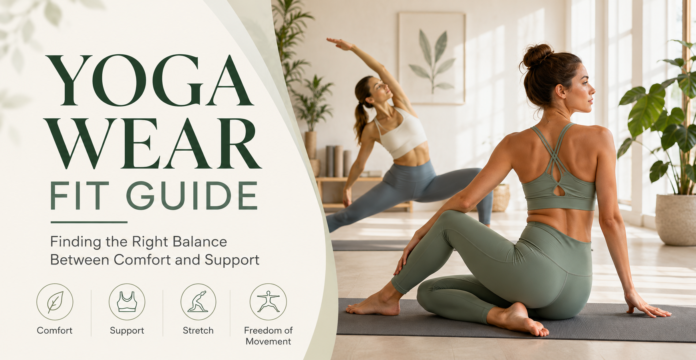
The right yoga outfit should feel calm, soft, and easy on the body. Yoga is not only about stretching; it is also about breathing, balance, bending, sitting, standing, and moving slowly with control. That is why fit matters so much. A good yoga wear fit guide helps you understand how your clothes should feel during practice, not just how they look in the mirror. If your leggings roll down, your top moves too much, or your waistband feels tight, your mind keeps going back to your clothes instead of your movement. The best yoga wear gives comfort and support at the same time. It should stretch when you move, stay in place when you bend, and feel light enough for long sessions. This yoga wear fit guide will explain how to choose pieces that support your body without making you feel squeezed, restricted, or uncomfortable.
Yoga Wear Fit Guide: Start With Comfort and Support
A helpful yoga wear fit guide always begins with two simple words: comfort and support. Comfort means the fabric feels soft, smooth, and gentle on your skin. Support means the clothing holds its shape and stays where it should during poses. If your yoga pants are too loose, they may slide down during downward dog or deep stretching. If they are too tight, they may press into your waist, knees, or hips. A good fit should sit close to the body without feeling harsh. For tops, the fit should allow easy arm movement without riding up too much. For bottoms, the waistband should feel secure but not painful. A balanced yoga outfit lets you move, bend, and breathe without distraction. This is why the best yoga wear is not always the tightest or loosest option. It is the one that helps your body feel steady, relaxed, and free.
Choose Fabric That Moves With Your Body
Fabric plays a big role in how yoga wear fits. A fabric may look nice, but if it does not stretch well, it can pull during lunges, twists, and seated poses. Yoga clothing should usually have good stretch and recovery. Stretch means the fabric expands when your body moves. Recovery means it returns to its shape after movement. This prevents sagging at the knees, hips, or waist. Smooth performance fabrics are often better for yoga than stiff casual fabrics because they move with the body more easily. When comparing different styles, a category like yoga wear can help you see how yoga-focused pieces are designed for movement, comfort, and shape control. A strong yoga wear fit guide should always remind you to check fabric feel, thickness, stretch, and softness before choosing your final outfit.
Understand the Difference Between Tight and Supportive
Many people think tight yoga wear automatically means supportive yoga wear, but that is not always true. Clothing can be tight and still feel uncomfortable, stiff, or poorly fitted. Supportive yoga wear should gently hold the body without creating pressure marks or stopping natural movement. For example, a waistband can be supportive if it stays up during poses, but it becomes too tight if it digs into your stomach when you sit or fold forward. A sports bra can be supportive if it reduces bounce, but it should not make breathing difficult. This yoga wear fit guide is useful because it separates “support” from “squeezing.” Good yoga clothing should feel like it is helping your body, not fighting against it. If you keep adjusting your clothes during practice, the fit is not right. The better choice is clothing that stays in place quietly while you move through your session.
Pick the Right Top for Your Yoga Style
The right yoga top depends on how you practice. For slow yoga, relaxed tanks, soft tees, or fitted crop tops can feel comfortable. For faster yoga, a closer fit is usually better because loose fabric may move around when you bend forward or go upside down. The top should allow your shoulders, arms, and upper back to move freely. It should not pull across the chest or feel too loose around the neckline. If you need extra support during active sessions, a supportive option like running sports bras can also work well for yoga because it helps control movement while keeping the upper body secure. A good yoga wear fit guide should explain that your top should match your body, your comfort level, and your practice type. The best top is one you do not need to fix again and again.
Choose Bottoms That Stay in Place
Yoga bottoms need to handle many movements. You may sit cross-legged, stretch one leg back, fold forward, twist sideways, or move from standing to the floor. This means your leggings, shorts, or yoga pants must stay in place without slipping, bunching, or feeling too tight. A high-rise waistband often gives better coverage and support, especially during forward bends. Mid-rise can also work if it feels secure on your body. The length matters too. Full-length leggings are good for cooler rooms and strong coverage. Cropped leggings feel lighter. Shorts work well for hot yoga, but they should not ride up too much. This yoga wear fit guide recommends testing bottoms by bending, squatting, and stretching before wearing them for a full class. If the waistband rolls down or the knees feel restricted, try another size, cut, or fabric.
One Simple Fit Checklist Before You Buy
Use this simple yoga wear fit guide checklist before choosing your outfit:
• The waistband should stay secure without digging into your skin.
• The fabric should stretch easily when you bend, sit, or twist.
• The top should not ride up too much during forward folds.
• The neckline should give coverage when you move.
• The seams should feel smooth and not rub against your body.
• The fabric should not become see-through during deep stretches.
• The outfit should let you breathe naturally.
• The bottoms should not slide down during movement.
• The fit should feel supportive but never painful.
• The clothing should make you feel confident, calm, and ready to practice. This one-paragraph checklist is simple, but it can save you from buying yoga wear that looks good but does not perform well during real movement.
Match Fit With Your Practice Level
Your yoga wear should match how you practice. A beginner may prefer softer and slightly more forgiving clothing because the body is still learning how to move. A regular yoga student may prefer more fitted pieces that stay in place through flows and balance poses. Someone doing hot yoga may need lightweight, sweat-friendly clothing. Someone practicing gentle stretching at home may feel better in relaxed pants and soft tops. For relaxed poses, meditation, or slower sessions, options like wide-leg yoga pants can feel comfortable because they allow easy movement without a tight leg fit. This yoga wear fit guide shows that there is no single perfect fit for everyone. Your best fit depends on your body, practice type, room temperature, and personal comfort. The right yoga wear should support your routine, not copy someone else’s style.
Check Coverage, Confidence, and Movement
Coverage is an important part of yoga wear fit. You should feel confident when bending, stretching, or lifting your arms. If a top gaps at the neckline, slides upward, or feels too open during poses, it may distract you. If leggings become see-through during squats or deep stretches, they may not be suitable for yoga. A simple test is to move in front of a mirror before practice. Bend forward, raise your arms, squat, twist, and sit down. Notice whether the outfit stays in place. This yoga wear fit guide recommends choosing clothes that give you peace of mind. Confidence matters because yoga is easier when you are not worried about your outfit. You should be able to focus on breath, posture, and balance. The best yoga clothing protects your comfort, your movement, and your confidence at the same time.
Common Fit Mistakes to Avoid
One common mistake is choosing yoga wear only because it looks stylish. Style is nice, but comfort and movement should come first. Another mistake is buying a smaller size because you think tighter means better support. This can make practice uncomfortable and limit breathing. A loose fit can also be a problem if the fabric keeps shifting during poses. Some people ignore fabric thickness, which can lead to see-through leggings or heavy clothing that feels hot. Others forget to test the waistband before practice. A good yoga wear fit guide helps you avoid these problems by focusing on real use, not just appearance. Always ask yourself: Can I bend easily? Can I breathe fully? Does this outfit stay in place? Do I feel calm wearing it? If the answer is yes, the fit is likely right for your yoga routine.
Conclusion
The best yoga outfit is the one that feels natural from the first pose to the last. It should support your body, stretch with your movement, and help you feel comfortable during breathing, balance, and relaxation. A trusted yoga wear fit guide does not tell you to choose only tight clothing or only loose clothing. It helps you find the middle point between comfort and support. Your leggings should stay up, your top should stay in place, and your fabric should feel soft against the skin. When your clothes fit well, you stop thinking about them and start focusing on your practice. That is the real goal. A good yoga wear fit guide helps you choose yoga clothing that makes movement easier, practice calmer, and confidence stronger every time you step on the mat.
FAQs
What is the best fit for yoga wear?
The best fit for yoga wear is close enough to stay in place but comfortable enough to let you breathe and move freely. A good yoga wear fit guide recommends clothing that supports the body without squeezing it.
Should yoga clothes be tight or loose?
Yoga clothes should be balanced. They should not be so tight that they restrict movement, and they should not be so loose that they shift during poses. The right fit depends on your practice style and comfort.
How do I know if my yoga leggings fit correctly?
Your yoga leggings fit correctly if the waistband stays up, the fabric does not become see-through, and the leggings move with your body during bends, twists, and stretches.
Why is fabric important in a yoga wear fit guide?
Fabric is important because yoga requires stretching, bending, and controlled movement. Soft, stretchy, and shape-retaining fabric helps your outfit stay comfortable and supportive during practice.