
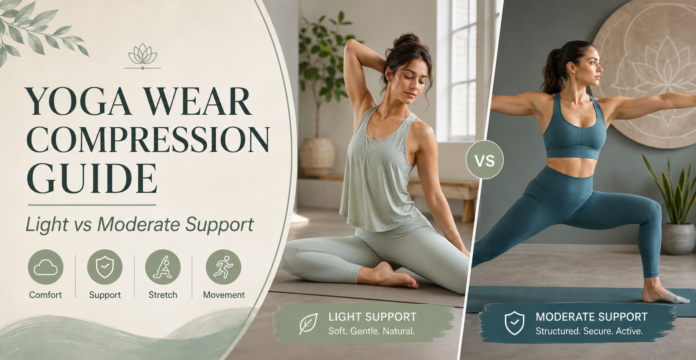
Choosing the right yoga outfit is not only about style. It is also about comfort, movement, support, and how your body feels during practice. Some yoga clothes feel soft and relaxed, while others feel closer to the skin and more supportive. This is where yoga wear compression becomes important. Yoga wear compression means the fabric gently holds your body while still allowing you to bend, stretch, twist, sit, and breathe. The right level of support can make yoga feel easier, smoother, and more comfortable. But the wrong level can feel too tight, too hot, or distracting. Many people hear the words light compression and moderate compression but do not know the real difference. This guide explains yoga wear compression in simple English so even a seventh-grade student can understand it. You will learn what light support means, what moderate support means, when each one works best, and how to choose the better option for your yoga routine.
What Is Yoga Wear Compression?
Yoga wear compression is the gentle pressure that yoga clothing gives to your body. It is usually made with stretch fabrics that sit close to the skin without stopping movement. Unlike normal loose clothing, yoga wear compression gives a smooth, held-in feeling. It can help clothes stay in place during poses, reduce extra fabric movement, and make the outfit feel more secure. However, yoga wear compression should never feel painful or make breathing difficult. Yoga is about balance, comfort, and control, so compression should support the body, not fight against it. Light support feels soft and easy, while moderate support feels firmer and more shaping. Both can be useful, but they are not for the same purpose. A person doing slow stretching may prefer light yoga wear compression, while someone doing power yoga or faster movements may like moderate yoga wear compression. The best choice depends on your body, your activity level, and how much support you want.
Yoga Wear Compression: Light vs Moderate Support
Yoga wear compression comes in different levels, but light and moderate support are the most common for everyday yoga clothing. Light support means the fabric gently touches and follows the body. It feels soft, flexible, and easy to wear for long sessions. Moderate support gives a firmer feel. It hugs the body more closely and helps the clothing stay stable during active movements. If you are shopping for general yoga outfits, a category like yoga wear can help you compare different pieces made for stretching, comfort, and controlled movement. Light yoga wear compression is usually better for gentle yoga, meditation, warm-ups, and home practice. Moderate yoga wear compression is better for active yoga, gym yoga, pilates-style movement, and poses where the body changes position quickly. Neither one is automatically better for everyone. Light support gives freedom, while moderate support gives more control. The better choice is the one that keeps you comfortable and confident.
Light Support: Best for Comfort and Easy Movement
Light yoga wear compression is the softest support level. It is made for comfort, breathability, and natural movement. This type of yoga clothing does not squeeze the body much. Instead, it lightly follows your shape and lets your skin feel relaxed. Light support is a good choice for beginners because it does not feel too tight or serious. It is also helpful for slow yoga styles like Hatha yoga, restorative yoga, yin yoga, breathing exercises, and stretching at home. If you sit, bend, or hold poses for a long time, light yoga wear compression can feel better because it puts less pressure on the waist, thighs, chest, and shoulders. It is also useful in warm weather because lighter support often feels cooler. People who dislike tight clothes usually feel more comfortable in light support. The main purpose of light yoga wear compression is not strong shaping. Its purpose is comfort, freedom, and easy body movement during calm practice.
Moderate Support: Best for Stability and Active Practice
Moderate yoga wear compression gives more hold than light support. It feels firmer on the body but should still stretch easily. This type of support is useful when yoga includes faster transitions, balance poses, or stronger movements. For example, in power yoga, vinyasa yoga, hot yoga, or yoga mixed with fitness training, clothes need to stay in place. Moderate yoga wear compression helps reduce slipping, rolling, and bunching. It can make leggings, shorts, bras, and tops feel more secure during movement. For upper-body support during yoga or fitness sessions, options like running sports bras show how supportive designs can help control movement while still allowing flexibility. Moderate support may also give a smoother body shape, which some people prefer for confidence. However, it should not feel like medical compression or heavy shapewear. If the fabric leaves deep marks, limits breathing, or makes poses uncomfortable, the support level may be too strong.
Key Differences in One Simple View
Light and moderate yoga wear compression may look similar, but they feel different during practice. Light support is easier, softer, and more relaxed. Moderate support is firmer, closer, and more controlled. Both support levels can be useful when matched with the right activity and body preference.
- Light yoga wear compression feels gentle and relaxed on the body.
- Moderate yoga wear compression feels firmer and more supportive.
- Light support is better for slow yoga, stretching, meditation, and daily comfort.
- Moderate support is better for active yoga, power yoga, pilates, and fitness movement.
- Light support usually feels cooler and easier for long wear.
- Moderate support usually keeps clothing more stable during movement.
- Light support is best for people who dislike tight clothing.
- Moderate support is best for people who want extra hold and confidence.
- Light compression focuses more on freedom.
- Moderate compression focuses more on control.
Choosing the Right Yoga Bottoms
Yoga bottoms are one of the most important parts of any yoga outfit because your legs move in many directions. You may bend forward, sit cross-legged, stretch wide, lift one leg, or move from standing to floor poses. Light yoga wear compression in yoga pants or shorts gives comfort and flexibility. It is useful when you want a relaxed feel around the waist, hips, and thighs. Moderate yoga wear compression in bottoms gives more hold and can help the fabric stay in place during deeper movements. Some people prefer wide-leg styles for gentle yoga because they feel open and relaxed, while others prefer fitted leggings or shorts for active sessions. A design like wide-leg yoga pants can be useful for people who want easy movement without a tight leg feel. The right choice depends on whether you want softness, coverage, support, or a more secure fit during movement.
Choosing the Right Yoga Tops
Yoga tops also need the right balance of stretch, comfort, and support. A loose top may feel comfortable while standing, but it can move too much during downward dog, plank, or floor poses. A fitted top with light yoga wear compression can stay closer to the body without feeling tight. This is useful for gentle practice, warm weather, and people who like soft clothing. A top with moderate yoga wear compression gives more body hold and can feel better during stronger sessions. It may reduce fabric movement and help the wearer feel more secure. For men and women, crop tops, fitted tanks, sports bras, and compression T-shirts can all provide different support levels. The main rule is simple: the top should move with the body, not against it. If you need to keep adjusting your top during every pose, the fit or compression level is probably wrong.
Fabric, Stretch, and Breathability Matter
The support level is important, but fabric quality matters just as much. Good yoga wear compression needs stretch, recovery, softness, and breathability. Stretch means the fabric can move when your body moves. Recovery means the fabric returns to its shape after stretching. If recovery is poor, the garment may become loose after a few uses. Breathability helps heat escape, which is important during warm yoga sessions. Moisture control also matters because sweat can make clothing feel heavy or sticky. A soft fabric with light yoga wear compression may feel best for calm practice, while a stronger stretch fabric with moderate yoga wear compression may work better for active yoga. The seams should also feel smooth, because rough seams can rub the skin during repeated movement. A good yoga outfit should feel comfortable at the start, during practice, and after many washes. Compression is useful only when the fabric supports movement naturally.
Which Is Better for Beginners?
For beginners, light yoga wear compression is usually the safer starting point. It feels easier on the body and allows new students to focus on breathing, balance, and learning poses. When someone is new to yoga, tight clothing can sometimes feel distracting. Light support gives enough shape without making the outfit feel restrictive. Beginners also need time to understand what kind of yoga they enjoy. If they later move into faster or stronger yoga styles, they can try moderate yoga wear compression. Moderate support can be helpful once the person wants more stability and body control during practice. Still, comfort should always come first. A beginner should be able to sit, bend, stretch, and breathe without thinking about the clothing too much. If the outfit helps the person feel calm and confident, it is doing its job. The best beginner choice is clothing that feels simple, soft, and easy to move in.
Which Is Better for Active Yoga?
For active yoga, moderate yoga wear compression is often the better choice because it gives more stability. Active yoga includes faster movement, stronger poses, sweating, and repeated transitions. Clothing needs to stay in place while the body moves from standing to floor positions. Moderate support can help reduce shifting around the waist, chest, thighs, and shoulders. It may also make the outfit feel more secure during lunges, planks, balances, and deep stretches. However, this does not mean every active yoga outfit must be very tight. Good moderate yoga wear compression should still feel flexible and breathable. If the fabric is too stiff, it can make movement harder. If the waistband is too tight, it can disturb breathing and focus. Active yoga needs a balance between support and freedom. Moderate support works best when it holds the body gently but still lets every pose feel natural and smooth.
Conclusion
The best choice between light and moderate yoga wear compression depends on how you practice, how your body feels, and what kind of support gives you confidence. Light support is better for comfort, slow yoga, stretching, meditation, and everyday wear. Moderate support is better for active yoga, stronger movement, and people who want a more secure fit. Yoga wear compression should never make the body feel trapped. It should help the clothing stay in place, support movement, and make practice feel easier. If you want soft freedom, choose light support. If you want firmer control, choose moderate support. Both can be good when used for the right reason. The most important thing is simple: your yoga clothing should let you breathe, bend, stretch, and focus without distraction. When yoga wear compression feels comfortable and natural, it becomes part of a better practice.
FAQs
What does yoga wear compression mean?
Yoga wear compression means yoga clothing gently holds the body with stretch fabric. It gives support while still allowing bending, stretching, breathing, and easy movement.
Is light compression better for yoga?
Light compression is better for gentle yoga, stretching, meditation, and beginners. It feels soft, relaxed, and comfortable for long practice sessions.
Is moderate compression good for yoga?
Yes, moderate compression is good for active yoga, power yoga, and faster movement. It gives more hold and helps clothing stay in place.
Should yoga wear compression feel tight?
Yoga wear compression should feel supportive, not painful. If it limits breathing, leaves deep marks, or makes movement hard, it is too tight.


