
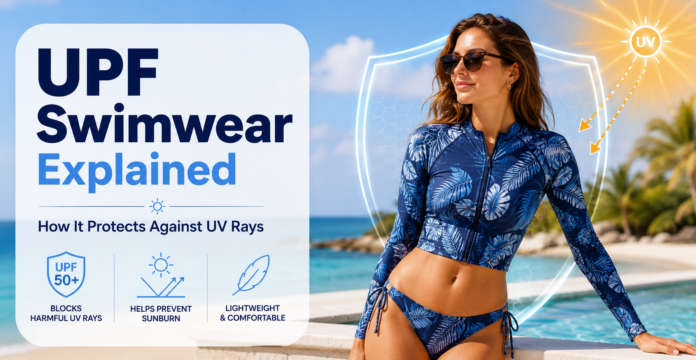
UPF swimwear is swimwear made with fabric that helps block harmful ultraviolet rays from reaching the skin. It is different from normal swimwear because it is designed not only for swimming but also for sun protection. When people spend time at the beach, pool, lake, or water park, their skin can be exposed to strong sunlight for many hours. Sunscreen helps, but it can wash off, fade with sweat, or be missed on some areas of the body. UPF swimwear gives extra protection because the fabric stays on the skin and covers the body while swimming, walking, or relaxing outdoors. This makes UPF swimwear useful for kids, adults, sensitive skin, and anyone who wants safer time in the sun.
What Is UPF Swimwear?
UPF swimwear is clothing for swimming that has a UPF rating, which means Ultraviolet Protection Factor. This rating tells how much UV radiation the fabric can block. For example, UPF 50 swimwear blocks about 98% of UV rays and allows only a very small amount to pass through. Normal swimwear may look protective, but thin, loose, or stretched fabric can let more sunlight reach the skin. UPF swimwear is made with tighter fabric construction, special yarns, darker or denser materials, and sometimes UV-protective finishes. It is commonly used in rash guards, swim shirts, full-cover swimsuits, leggings, modest swimwear, tankinis, swim dresses, and children’s swim sets. The main goal of UPF swimwear is simple: cover more skin and reduce direct sun damage.
How UPF Swimwear Protects Against UV Rays
UPF swimwear protects the skin by creating a physical fabric barrier between sunlight and the body. UV rays are invisible rays from the sun that can damage skin cells, cause sunburn, increase early aging, and raise long-term skin risk. The fabric in UPF swimwear reduces how much UVA and UVB radiation reaches the skin. UVA rays go deeper into the skin and are linked with aging, while UVB rays are more linked with sunburn. A good UPF fabric helps reduce both types. The protection depends on fabric thickness, weave tightness, color, stretch, moisture level, and garment coverage. This is why a long-sleeve swim shirt usually protects more skin than a small swimsuit. The more skin covered by UPF swimwear, the less skin needs sunscreen.
Why UPF Rating Is Important
A UPF rating helps buyers understand how protective the swimwear really is. Without a rating, it is hard to know if the fabric blocks enough sunlight. A white cotton T-shirt may feel like coverage, but when it becomes wet, it can lose much of its protection. UPF swimwear is designed for wet conditions, movement, and outdoor use, so it is more reliable for swimming days. If you are building a swimwear collection, it is better to choose pieces that clearly mention fabric coverage, comfort, stretch, and sun safety. A full swimwear range can include everyday options from women’s and men’s swimwear categories so customers can choose styles that match their coverage needs. UPF swimwear works best when the rating, fit, and body coverage are all considered together.
UPF Swimwear vs Regular Swimwear
Regular swimwear is usually designed for comfort, movement, shape, and style, while UPF swimwear adds stronger sun protection as a main feature. A regular swimsuit may still block some sunlight, especially if it is dark and thick, but it may not be tested or rated for UV protection. UPF swimwear gives clearer protection because the fabric is made or tested to reduce UV exposure. The difference becomes more important during long outdoor swimming, beach sports, boating, fishing, surfing, or family pool days. A person may swim for one hour and then sit under the sun for two more hours. During that time, regular swimwear may leave shoulders, arms, back, chest, and legs exposed. UPF swimwear can cover these areas better, especially through rash guards, leggings, swim shirts, and modest sets.
Key Features of Good UPF Swimwear
Good UPF swimwear should protect the skin, feel comfortable, and stay useful in real swimming conditions. The fabric should not become too loose when wet, and it should not feel heavy after swimming. It should allow easy movement, especially for arms, shoulders, waist, and legs. A good design should also be easy to wash and quick to dry. The best UPF swimwear is not only protective but also practical for daily beach and pool use.
• UPF 50 or UPF 50+ rating for stronger UV protection
• Long sleeves or extra coverage for arms and shoulders
• Stretch fabric that moves without becoming see-through
• Quick-dry material for comfort after swimming
• Flat seams to reduce rubbing on wet skin
• Secure fit so the garment stays in place in water
• Breathable fabric for hot beach weather
• Chlorine and saltwater resistance for longer use
Who Should Wear UPF Swimwear?
UPF swimwear is useful for almost everyone, but it is especially helpful for people who spend many hours outdoors. Children can benefit because they often stay in water longer and may forget to reapply sunscreen. People with sensitive skin can benefit because fabric protection feels less irritating than applying too many products. Travelers, beach workers, lifeguards, swimmers, surfers, and people who enjoy water sports can also benefit. For women who prefer more body coverage, modest swimwear options can make UPF swimwear more comfortable and practical. This type of swimwear allows people to enjoy swimming without feeling overexposed. UPF swimwear is also helpful for family trips because it makes sun protection easier to manage for different ages.
Best UPF Swimwear Styles for Women
Women can choose many UPF swimwear styles depending on comfort, coverage, and activity level. A long-sleeve rash guard is great for strong sun days because it covers the shoulders, arms, and upper body. Swim leggings are helpful for protecting the legs during paddleboarding, surfing, or beach walks. Tankinis are popular because they give more coverage than many bikinis while still feeling easy to wear. Swim dresses and skirted swimsuits add coverage around the hips and thighs while keeping a feminine look. For women who want a balanced design, tankinis for women’s swimwear can be a natural choice because they offer comfort, movement, and more coverage than smaller swim styles. UPF swimwear should feel secure, not tight, and should support easy swimming.
UPF Swimwear for Kids and Families
UPF swimwear is one of the easiest ways to protect children during outdoor water activities. Kids usually run, splash, swim, sit in sand, and move between shade and sun many times in one day. Sunscreen is still important on uncovered skin, but it can be hard to keep applying it again and again. Long-sleeve UPF swimwear can reduce the amount of sunscreen needed on arms, shoulders, chest, and back. Parents can choose bright colors to spot children more easily near water. A good kids’ swim set should be soft, stretchy, and simple to put on. It should not scratch the neck, underarms, or waist. UPF swimwear for kids should also dry fast because wet clothing can feel cold or heavy after swimming.
How to Choose the Right UPF Swimwear
Choosing UPF swimwear should start with coverage, not only style. A higher coverage design protects more skin. Long sleeves, high necklines, longer shorts, swim leggings, and full-cover tops can make a big difference during long sun exposure. Next, check the UPF rating. UPF 50 or UPF 50+ is usually the strongest common rating for swimwear. Then look at fabric quality. The fabric should stretch without becoming thin or transparent. It should hold its shape after getting wet. Fit also matters because very tight fabric may stretch too much and reduce protection, while very loose fabric may move around in the water. For regular beach use, UPF swimwear should feel light, smooth, quick-drying, and easy to wash.
Common Mistakes to Avoid
One common mistake is thinking that all swimwear gives strong sun protection. Some thin swimsuits block less UV light than people expect. Another mistake is wearing UPF swimwear but forgetting sunscreen on uncovered areas like the face, neck, hands, feet, and ears. UPF swimwear protects only the skin it covers. A third mistake is buying a size that is too small. If the fabric stretches too much, it may become thinner and less protective. People also forget that old, damaged, faded, or overstretched swimwear may not perform as well as new fabric. UPF swimwear should be checked after many washes, pool days, or saltwater use. If the fabric becomes loose, see-through, rough, or weak, it may be time to replace it.
Conclusion
UPF swimwear is worth it for people who spend time in strong sunlight, especially at beaches, pools, water parks, lakes, and outdoor resorts. It gives steady fabric-based protection and helps reduce direct UV exposure on covered skin. It does not replace sunscreen completely, but it reduces how much skin needs sunscreen and makes sun protection easier. UPF swimwear is useful for children, adults, travelers, athletes, modest dressers, and anyone who wants more comfort and safety outdoors. The best choice depends on your activity, coverage needs, fit, and fabric quality. In simple words, UPF swimwear is better than regular swimwear when sun protection matters.
FAQs
What does UPF swimwear mean?
UPF swimwear means swimwear made with fabric that helps block ultraviolet rays from the sun. UPF stands for Ultraviolet Protection Factor. A higher UPF rating means better sun protection for the skin covered by the garment.
Is UPF swimwear better than sunscreen?
UPF swimwear is not a full replacement for sunscreen, but it is better for covered areas because it does not wash off like sunscreen. You should still apply sunscreen on uncovered areas such as the face, neck, hands, and feet.
What is the best UPF rating for swimwear?
UPF 50 or UPF 50+ is usually the best common rating for swimwear. It blocks about 98% of UV rays and gives strong protection for outdoor swimming, beach trips, and long sun exposure.
Can UPF swimwear lose protection over time?
Yes, UPF swimwear can lose performance if the fabric becomes thin, stretched, faded, damaged, or worn out. To keep protection strong, wash it gently, avoid harsh chemicals, and replace it when the fabric looks weak.


