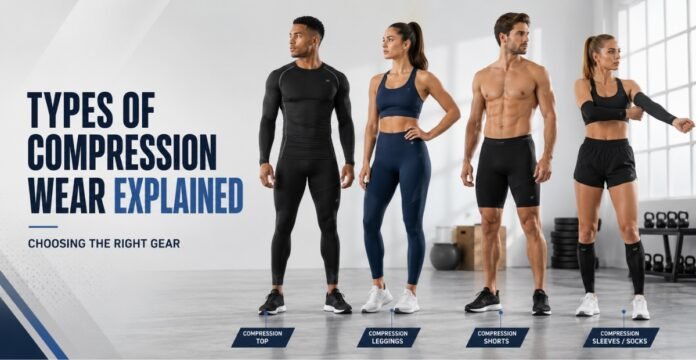
Compression wear is close-fitting clothing that applies gentle and even pressure to selected parts of the body. People commonly wear it during running, gym training, team sports, travelling, or everyday activities. Learning about the types of compression wear makes it easier to choose an item that matches your activity and comfort needs. Some types of compression wear cover large areas of the body, while others support only the arms, legs, feet, or upper body. A clear guide to the types of compression wear also prevents confusion between sports clothing and medical compression products. The best garment should feel firm without causing pain, numbness, or restricted movement. You can explore Eco Jersey’s compression wear collection to see different product styles.
Types of Compression Wear for Different Activities
Types of compression clothing range from T-shirts, hoodies, and long-sleeve tops to leggings, shorts, socks, stockings, and sports bras. Compression wear can also include items like arm and calf sleeves. While some compression clothing is designed specifically for workouts, others can be worn during travel, work, recovery, and for everyday support. Compression clothing come in many lengths. Full-length clothing typically covers larger muscle groups, while smaller clothing items cover and support smaller regions.
Compression T-Shirts for Upper-Body Activities
Compression T-shirts fit closely around the chest, shoulders, back, and arms. They are popular for running, football, basketball, martial arts, weight training, and other activities involving upper-body movement. Among the types of compression wear, these shirts are useful because you can wear them alone or under a sports jersey. A good compression shirt should stretch easily, manage moisture, and have smooth seams that do not rub against the skin. Eco Jersey’s compression T-shirts provide a useful example of fitted athletic tops made for active movement. When comparing types of compression wear, choose a shirt that allows normal breathing and lets you move your shoulders and arms freely.
Compression Leggings for Lower-Body Coverage
Compression leggings cover the waist, hips, thighs, knees, calves, and ankles. They are among the most widely used types of compression wear for running, cycling, gym training, yoga, hiking, and everyday active use. Their close fit keeps the fabric from moving, folding, or rubbing during squats, lunges, stretches, and fast runs. Features such as a wide waistband, flexible material, smooth seams, and secure pockets can make leggings more comfortable. Eco Jersey’s compression leggings show how fitted lower-body gear can combine stretch, coverage, shaping, and useful storage. When choosing between types of compression wear, leggings are practical when you need complete leg coverage.
Compression Hoodies for Cooler Weather
Compression hoodies are somewhat of an anomaly when it comes to compression apparel as they are not typically available like shirts and leggings. Compression hoodies are useful pieces of compression apparel for outdoor activities. There are multiple activities a compression hoodie would be ideal for such as running, cycling, hiking, warm-ups, football practice, and even layering under a coat. The fabric of a compression hoodie should be able to stretch in all directions and should never pull on the neck, shoulders, and elbows. Out of the compression apparel available, hoodies are the most suitable for individuals that want a snug athletic fit that provides extra warmth.
Compression Stockings, Socks, and Calf Sleeves
The final category of compression apparel is compression stockings, socks, and calf sleeves. Compression apparel in this category is most commonly found in running, long travel, jobs that require you to be on your feet, and some medical situations. When selecting sports compression apparel, comfort, sweat control, and covering the lower leg are the main priorities. Medical compression apparel is made with precise measurements and specialized pressure, therefore if you are considering these options due to a health condition, you should seek advice from a qualified medical practitioner.
Other Useful Compression Pieces
The following types of compression wear provide more focused body coverage:
- Compression shorts: Cover the hips and upper thighs during running, lifting, and team sports.
- Arm sleeves: Cover part or all of the arm without requiring a full compression shirt.
- Calf sleeves: Cover the lower leg while leaving the ankle and foot uncovered.
- Compression socks: Cover the foot and lower leg during sports, travel, or long standing periods.
- Compression sports bras: Provide a close and secure fit during medium-impact or high-impact exercise.
- Compression base layers: Fit under uniforms, sportswear, or winter clothing for smooth coverage.
These smaller types of compression wear are useful when full leggings or long-sleeve tops provide more coverage than you need.
Choosing the Correct Compression Level
Do not think that the tighter the compression gear the better it is. Light compression gear is ideal for daily comfort while low intensity activities. Medium compression gear is ideal while running or during your gym workout. Strong/Medical grade compression gear should be avoided at all costs. The right compression gear depends on the areas of the body, the purpose of the gear, the design of the gear, the size of the gear, and your overall health. Full length compression gear should be avoided if it causes pain. Seek medical help if symptoms continue.
Checking the Fit, Fabric, and Seams
When shopping for compression wear, fit matters more than how it looks. Look carefully at a brand’s size guide and measure the size of the body part that the garment will cover. Never select a size down for more pressure. A good compression fabric will utilize a blend of polyester, nylon, polyamide, and elastane. These fabrics will have good stretch recovery. Good seams will be flat or smooth, and good panels will be breathable. When trying on different styles of compression wear, see if the waist band rolls down, if the sleeves dig into your skin, and if the fabric becomes see through when stretched.
Caring for Compression Clothing
Getting compression wear to fit right means it’s important to wash them correctly so they keep their close fit. Always look at a garment’s care label to see how the brand suggests it should be washed, because fabrics will be constructed very differently. Compression wear should generally be washed in cool or lukewarm water, with gentle cycle and mild detergent, but be careful with other washes because they may be too harsh. With the right care, compression wear will perform better and last longer. After they become stretched and loose, or damaged, they should be thrown away.
Conclusion
Different types of compression apparel are ideal for different activities. Some types focus on specific areas of the body. Compression apparel ranges in tightness and method of coverage. Some garments have long sleeves, some have long pants, and some cover only the legs or arms. The tightness of a garment is not a measure of its usefulness. Different types of compression wear offer different levels of pressure and coverage using different types of fabric and seams. Additionally, exploring compression apparel will help you avoid overly restrictive apparel.
FAQs
What are the most common types of compression wear?
The most common types of compression wear include T-shirts, long-sleeve tops, leggings, shorts, socks, stockings, arm sleeves, calf sleeves, sports bras, and fitted base layers.
Should compression clothing feel extremely tight?
No. Compression clothing should feel firm and close to the body, but it should not cause pain, numbness, tingling, breathing difficulty, or restricted movement.
Can compression wear be used for every workout?
Compression clothing can be used for many workouts, including running, cycling, gym training, and team sports. However, the garment must match the activity, weather, and required coverage.